

Politics
Google to invest $15bn in AI data centre in biggest India investment



Google will invest $15 billion over five years to set up an artificial intelligence data centre in India’s southern state of Andhra Pradesh, a company official said on Tuesday, for its biggest ever investment in the world’s most populous nation.
Google has committed to spending some $85 billion this year to build out data centre capacity as big tech companies spend heavily on building new data centre infrastructure as they compete to fill booming demand for AI services.
“It’s the largest AI hub that we are going to be investing in anywhere in the world outside of the United States,” Google Cloud CEO Thomas Kurian said at a New Delhi event, adding that investment will be spread over the next five years.
“It is a part of a global network of AI centres in 12 different countries.”
The data centre campus in the port city of Visakhapatnam will have a capacity of 1 gigawatt initially, but will be scaled to “multiple gigawatts”, Kurian added.
Earlier, state officials had estimated the investment at $10 billion for the centre, which the state government has said is expected to generate 188,000 jobs.
Microsoft and Amazon have already poured billions into building data centres in India, a key growth market, in which nearly a billion users access the internet.
Indian billionaires Gautam Adani and Mukesh Ambani have also unveiled investments in building capacity for data centres.
AI requires enormous computing power, pushing demand for specialised data centres, enabling tech companies to link thousands of chips together in clusters.
Google parent Alphabet counts India as a key growth market where its YouTube video services have the most users, and Android phones dominate smartphone usage.
However, the US giant has been battling many antitrust challenges in India over its business practices, and also faces a lawsuit from a Bollywood couple challenging YouTube’s AI policy.


- Crew includes three Americans, one Canadian member.
- First woman, non-American, person of colour onboard.
- Mission mirrors Apollo 8’s historic 1968 lunar flyby.
WASHINGTOM: More than half a century after the groundbreaking Apollo programme’s last crewed flight to the Moon, three men and one woman are preparing for a lunar journey set to turn a new page in American space exploration.
The long-delayed Nasa mission dubbed Artemis II is slated to lift off from Florida and venture to Earth’s natural satellite as early as April 1.
They won’t land but are instead on a mission to fly by, much as Apollo 8 did in 1968.
Americans Reid Wiseman, Victor Glober, and Christina Koch — along with Canadian Jeremy Hansen — will carry out the approximately 10-day trip.
The odyssey will mark a series of firsts: the first time a woman, a person of colour, and a non-American will venture on a Moon mission.
It’s also the inaugural crewed flight of Nasa’s new lunar rocket, dubbed SLS.
The mammoth orange-and-white rocket is designed to allow the United States to repeatedly return to the Moon in years to come, with the goal of establishing a permanent base that will offer a stepping stone for further exploration.
“We’re going back to the Moon because it’s the next step in our journey to Mars,” said Wiseman, the Artemis II commander, on a Nasa podcast.
Space Race 2.0?
The Artemis program — named in honour of Apollo’s goddess twin — aims to test technologies needed to one day send humans to Mars, a far more distant journey.
That ambition presents an immense challenge, which is compounded by pressure to achieve it before China does.
China is currently aiming to land humans on the Moon by 2030.
Beijing is also targeting the lunar South Pole, not least for its rich natural resource potential.
The competition recalls the 1960s-era Space Race between the US and the Soviet Union — but Harvard professor Matthew Hersch said that rivalry was “unique” and “will not be repeated anytime soon.”
He told AFP the Chinese are “not really competing with anyone but themselves.”
Washington’s lunar program investment is significantly lower now than during the Cold War era — but the technology has changed dramatically.
“The computer technology that supports the Artemis 2 crew would be almost unimaginable to the Apollo 8 crew, which went to the Moon in a spacecraft with the electronics of a modern high-end toaster oven,” Hersch said.
And yet the Artemis 2 mission will not be without risks, even by Nasa’s own admission.
The crew will board a spacecraft that has never once carried humans or travelled to the Moon, which is more than 384,000 kilometres (238,855 miles) from Earth — or roughly 1,000 times further away than the International Space Station.
“We don’t accept anything less than perfect, otherwise we’re accepting greater risk,” Nasa’s former chief astronaut Peggy Whitson told AFP.
“That is an important process that everyone has to embrace in order for us to be really successful, because we have to live with that knowledge, because of our space flight history, that when accidents happen, people will die,” she said.
Minimising risks and preventing disaster will involve the crew performing a series of checks and manoeuvres while still in Earth’s vicinity.
If all goes well, they’ll set forth for the Moon.
Ambitious timeline
The crew’s objective will be to verify that both the rocket and the spacecraft are in working order, in the hopes of paving the way for a return and Moon landing in 2028 — the final year of President Donald Trump’s term.
That deadline has raised eyebrows among experts, in part because Washington is relying on the private sector’s technological headway.
The astronauts will require a second vehicle to descend to the moon’s surface, a lunar lander that remains under development by rival space companies owned by billionaires Elon Musk and Jeff Bezos.
The Artemis program has also been plagued by delays and massive cost overruns.
Still, Nasa hopes that Artemis 2 can succeed in recreating the rare moment of unity and hope that Apollo 8, when a crew flew by the Moon on Christmas Eve 1968, allowed for.
In the shadow of a tumultuous year, approximately one billion people worldwide tuned in to their flickering television sets to follow the monumental journey of Frank Borman, Jim Lovell, and Bill Anders.
The astronauts — who immortalised the famous “Earthrise” photograph taken from lunar orbit — were credited with having “saved 1968.”
Nearly 60 years later, the country is once again mired in deep division and uncertainty, and the crew of Artemis 2 will soon have their chance to inspire.


- Massive daytime drone attack rocks Ukrainian cities.
- Unesco World Heritage Site targeted in attack.
- Russia attacking crowded city centre: Ukrainian PM.
A rare Russian daytime drone attack on Ukraine killed at least three people, wounded 30 and set a building in the centuries-old centre of western Lviv aflame on Tuesday, officials said, following an overnight bombardment that killed five people across the country.
Over 400 drones were launched at Ukraine in the middle of the day, Ukraine’s air force said, an abrupt change from Russia’s usual tactic of launching similarly massive aerial attacks at night during its more than four-year-old war.
Video footage posted online showed a drone crashing into an old building next to a church in the historic centre of Lviv, some 60 kilometres (37 miles) from the Polish border.
Unesco site hit, casualties mount
In another western Ukrainian city, Ivano-Frankivsk, two people were killed and four injured, according to regional Governor Svitlana Onyshchuk. City mayor Ruslan Martsinkiv said windows at a maternity hospital had been blown out, but that nobody in the hospital was harmed.
Vinnytsia Governor Natalia Zabolotna said on Telegram that one person had been killed and 11 wounded in her region.
Lviv Mayor Andriy Sadovyi said a residential building was hit by a second drone, while debris from a third drone fell in a street.
“Russia is attacking a crowded city centre in broad daylight,” Prime Minister Yulia Svyrydenko wrote on X.
Lviv regional governor Maksym Kozytskyi said part of the Unesco World Heritage Site around the 17th-century St. Andrew’s Church had been damaged.
Air defences also engaged drones throughout the day near Kyiv.
Ukraine’s air force posted warnings on social media of drones overhead in more than a dozen areas across the country.
Officials in Vinnytsia and Ternopil, both several hundred kilometres from the frontline, said explosions were heard in their cities and told residents to remain in shelters.
Overnight attack
The daytime strikes came after a wave of overnight strikes that killed five people across Ukraine and caused disruption to power supplies in Moldova. Ukraine’s air force said Russia had launched 34 missiles and 392 drones overnight and that 25 missiles and 365 drones had been downed or neutralised.
Two people were killed and 12 injured, including a five-year-old child, in the attack near the eastern city of Poltava, a regional official said.
President Volodymyr Zelenskiy said damage had been reported in 11 regions and issued a new appeal for allies to supply Kyiv with air defence munitions.
He has repeatedly warned that Kyiv, whose main supplier of air defence systems against ballistic missiles is the United States, will face a deficit of missiles while Washington is focused on the US-Israeli war on Iran.
“It’s important to continue supporting Ukraine. It’s important that all agreements on air defence are implemented on time,” he said on X.
Moldovan Foreign Minister Mihai Popsoi said the Isaccea–Vulcanesti power line, Moldova’s key link with Europe, had been affected.
Moldovan President Maia Sandu wrote on X: “Alternative routes are in place, but the situation remains fragile. Russia alone bears responsibility.”
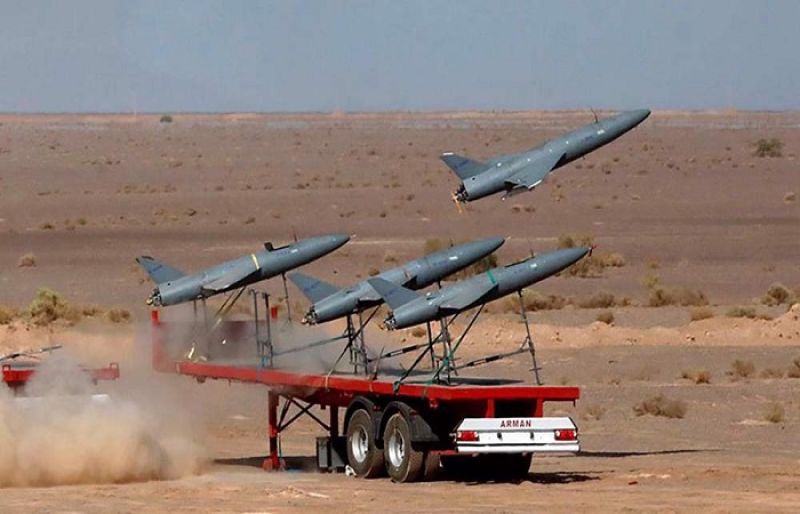
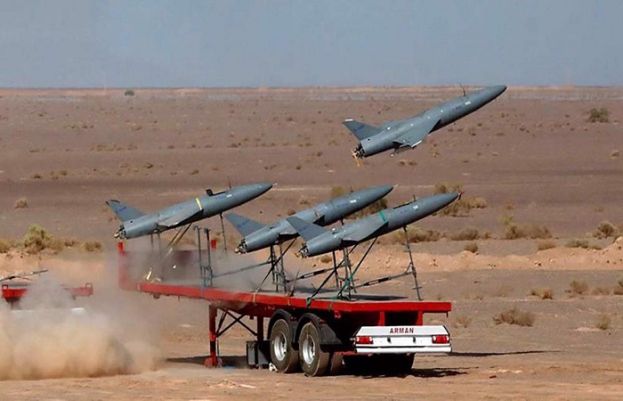
Iran’s Army says its drone fleet has delivered precision strikes on Israel’s key aerospace and weapons manufacturing industries.
Iran’s Army said in a statement on Tuesday that it successfully launched a series of drone strikes early in the morning.
The attacks targeted Rafael’s weapons industries in Haifa and aerospace facilities near Ben Gurion Airport in Tel Aviv.
The Iranian drones also hit several refueling aircraft stationed at the airport.
Rafael Weapons Industries is a key military technology developer responsible for advanced systems such as the Iron Dome and David’s Sling, according to the statement.
The Rafael logistics and military center had previously been targeted by ballistic missiles launched by the Islamic Revolution Guards Corps (IRGC).
Over the past 25 days, the Iranian Army conducted multiple operations as part of Operation True Promise 4, which was launched immediately after the US-Israeli joint military aggression against Iran on February 28.
The Army has vowed to continue its operations with determination and remain steadfast in “its sacred mission to defend the country’s “independence and territorial integrity.”


Queen Camilla daring move shocks Prince Harry after big announcement

US’ Torrid sees FY25 sales fall 9.4%, reports $7 mn loss

Wristband enables wearers to control a robotic hand with their own movements

-

 Fashion7 days ago
Sales at US apparel, clothing accessories stores up 4% YoY in Jan 2026
-
 Business1 week ago
Peloton is launching bikes and treadmills for gyms, accelerating commercial strategy
-

 Tech1 week ago
Justice Department Says Anthropic Can’t Be Trusted With Warfighting Systems
-

 Fashion1 week ago
Trump signs order to combat fraudulent ‘Made in America’ labels
-
 Business1 week ago
Stocks and pound rise as US rate call approaches
-

 Fashion1 week ago
Lenzing launches TENCEL Lyocell-HV100 at Intertextile Shanghai
-

 Sports7 days ago
March Madness 2026 – How to watch in SA, start time, schedule, TV channel for NCAA championship basketball tournament
-

 Entertainment7 days ago
Val Kilmer revived 1 year after death through AI