

Business
Government borrowing higher than expected after winter fuel payments U-turn

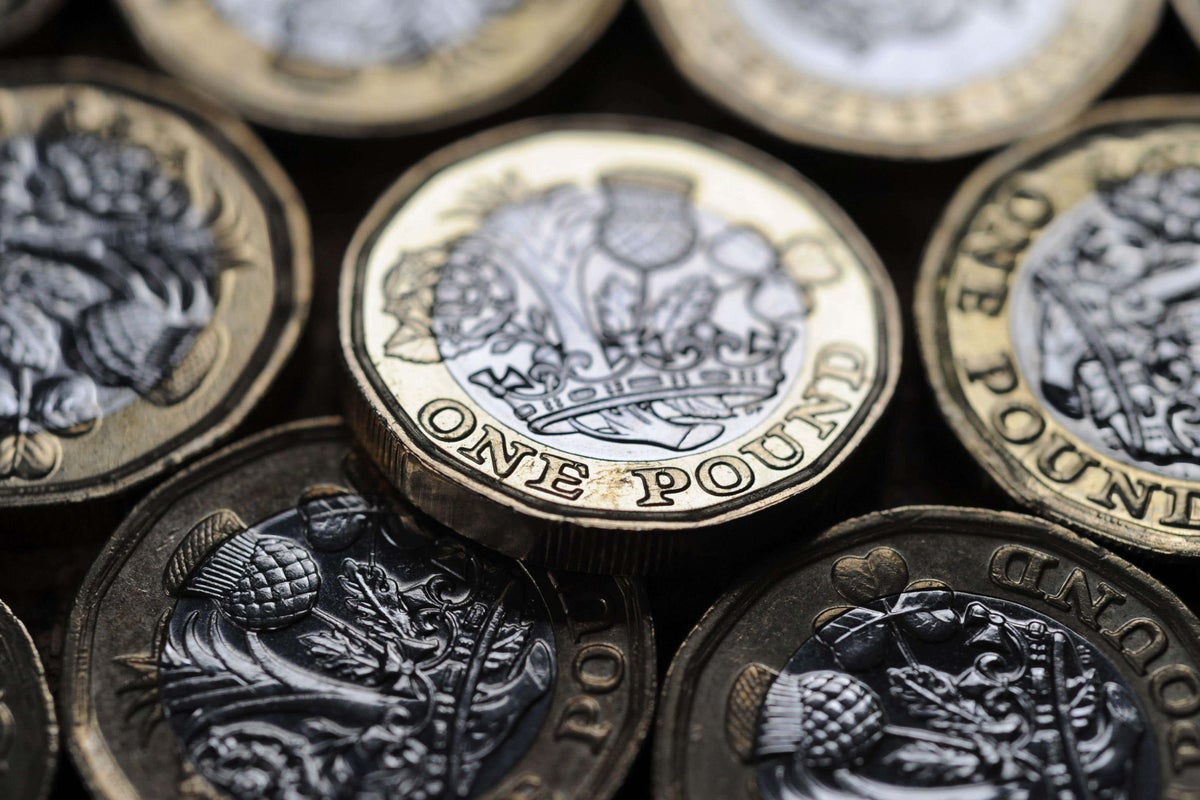
Borrowing fell last month to its lowest November level for four years but was still higher than expected as figures for the year so far were pushed higher due to the Government’s U-turn on winter fuel payments.
Official figures showed borrowing stood at £11.7 billion last month, £1.9 billion less than in November last year and the lowest for that month since 2021 thanks to a sharp fall in debt interest payments.
But the figure was more than the £10.3 billion expected by most economists and the £8.6 billion forecast in March by the UK’s independent fiscal watchdog, the Office for Budget Responsibility (OBR).
The OBR’s monthly forecasts from the budget on November 26 are not available until mid-January, according to the ONS.
Borrowing for the eight months of the financial year so far was £132.3 billion, £10 billion higher than the same period a year ago and £16.8 billion higher than the OBR forecast in March.
This was partly due to an extra £1.8 billion of spending on winter fuel payments after the Government U-turned on its previous decision to severely restrict payments through means testing, instead opting to give the payout to all pensioners except those earning above £35,000 a year.
This helped drive an upward revision to borrowing for the seven months to October by £3.9 billion.
ONS senior statistician Tom Davies said: “Despite an increase in spending, this month’s borrowing was the lowest November for four years.
“The main reason for the drop from last year was increased receipts from taxes and National Insurance contributions.”
November’s figure was pushed lower thanks to falling debt interest payments on borrowing, down by £200 million year-on-year to £3.4 billion and the lowest November level for six years.
Public sector net debt, including the Bank of England, reached £2.93 trillion at the end of November, which is around 95.6% of gross domestic product (GDP) and 0.3 percentage points more than a year ago, although remains at levels last seen in the early 1960s.
Elliott Jordan-Doak, senior UK economist at Pantheon Macroeconomics, said there was “very little Christmas cheer for the Chancellor” in the latest borrowing figures.
He added: “Ms Reeves has staked much fiscal credibility on chunky tax increases in the back end of the forecast period. But we think today’s figures further illustrate the shaky foundations of that gamble.
“Revenues continue to underperform, and the smorgasbord approach of tax increases relies on distortionary tax increases with uncertain yields.
“We also have serious doubts about the Government’s ability to follow through on the raft of spending cuts announced in the Budget.”
Chief Secretary to the Treasury James Murray said the debt interest payments underscored the need to bring borrowing down.
He said: “£1 in every £10 we spend goes on debt interest – money that could otherwise be invested in public services.
“That is why last month the Chancellor set out a Budget that delivers on our pledge to cut debt and borrowing.”
Martin Beck at WPI Strategy said “confidence remains the missing ingredient”.
“A clear and credible pro-growth strategy from the Government – and an end to the pervasive gloom surrounding the UK economy – may matter just as much for the public finances as the fine print of future tax and spending plans,” he said.
Business
Sky‑high losses: Iran war drives airlines to biggest crash since Covid – $50bn gone – The Times of India
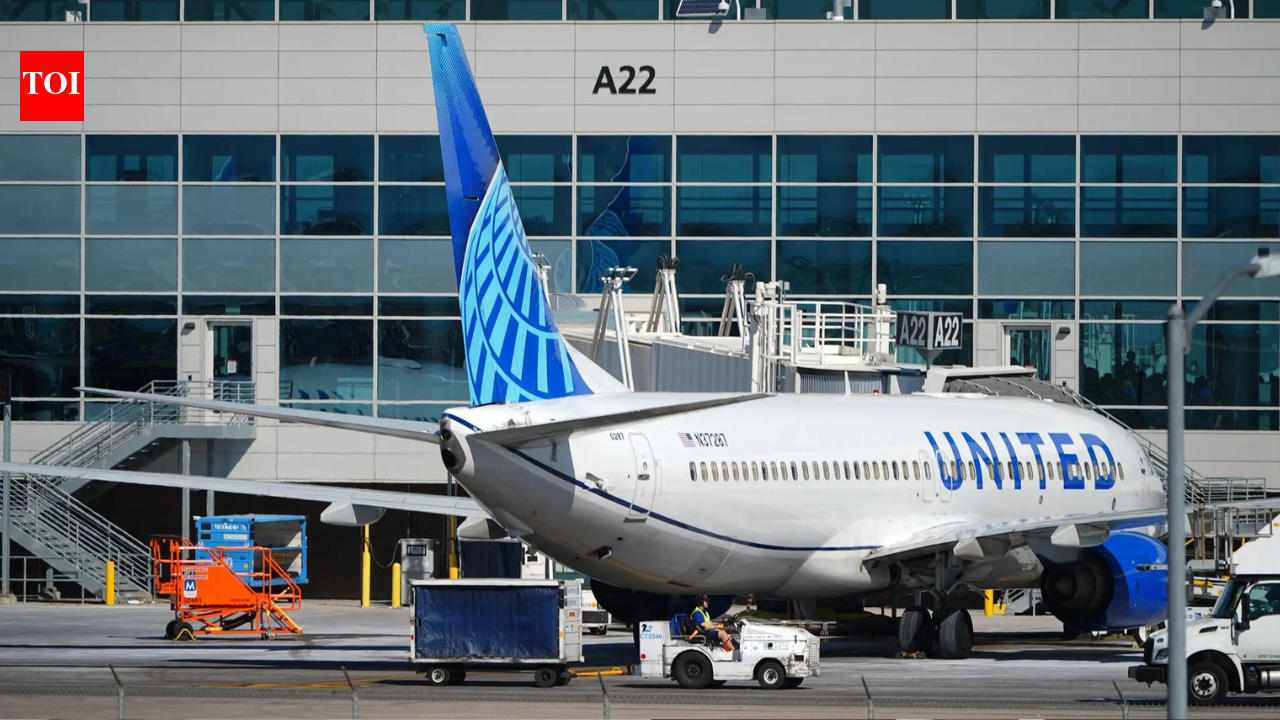
Global airlines have suffered their worst financial shock since the COVID‑19 pandemic as the ongoing war involving US Israel and Iran has disrupted industry operations, wiping more than $50 billion off the market value of the world’s largest carriers amid rising fears of fuel shortages.The conflict, now entering its fourth week, has grounded flights, disrupted key Gulf hub airports and driven jet fuel prices sharply higher, compounding pressure on an industry that was rebounding strongly following pandemic‑related losses.According to Financial Times calculations, the 20 largest publicly listed airlines have collectively lost about $53 billion in market capitalisation since the war began. In response, airline executives have warned of a potential rise in ticket prices as carriers seek to protect shrinking profit margins.Jet fuel, which accounts for roughly a third of operating costs for airlines, has doubled in price since the United States and Israel launched attacks on Iran at the end of February. Many carriers had hedged against fuel price swings, but the rapid rise is expected to force airlines to pass on costs to passengers.“Fuel spiked quite heavily after the Ukraine invasion in 2022 as well, but this has gone further north,” easyJet chief executive Kenton Jarvis told FT, describing the current crisis as the most significant upheaval since the pandemic closed global skies in 2020.Executives also point to broader structural challenges, including the risk that sustained high fares may dampen demand. Carsten Spohr, CEO of Lufthansa, said higher ticket prices were unavoidable but expressed concern that they could weaken long‑term demand. “Our average profit is about €10 per passenger, there’s no way you can absorb the additional cost,” he said.In addition to passenger traffic pressures, airlines are preparing contingency plans for possible jet fuel shortages. Air France‑KLM CEO Ben Smith said the carrier is drawing up measures to cope with potential supply squeezes, including scaling back services on some Asian routes.The crisis has hit Middle Eastern carriers particularly hard. Carriers such as Emirates, Etihad and Qatar Airways have had to sharply reduce schedules due to airspace closures and a collapse in regional tourism, industry officials say. Despite the severity of the current disruption, Willie Walsh, head of the International Air Transport Association (IATA), noted that it still falls short of the pandemic’s impact but is reminiscent of the downturn in transatlantic demand after the 9/11 attacks, according to FT.
Poll
What should airlines prioritize during the current crisis?
The conflict’s ripple effects are also visible in cargo operations, as freight traffic shifts from disrupted shipping routes to air cargo, straining airport facilities. At Geneva airport, for example, freight re‑routing has led to overflow onto services bound for Paris.Industry observers remain hopeful that airline valuations and demand will rebound once the conflict abates. “The share price has moved against all airlines since the start of the conflict,” Jarvis said, adding that short sellers would likely close positions quickly if a ceasefire is announced.
Business
Watch: Cargo ship Pyxis Pioneer, carrying LPG from US, arrives at Mangalore Port – The Times of India
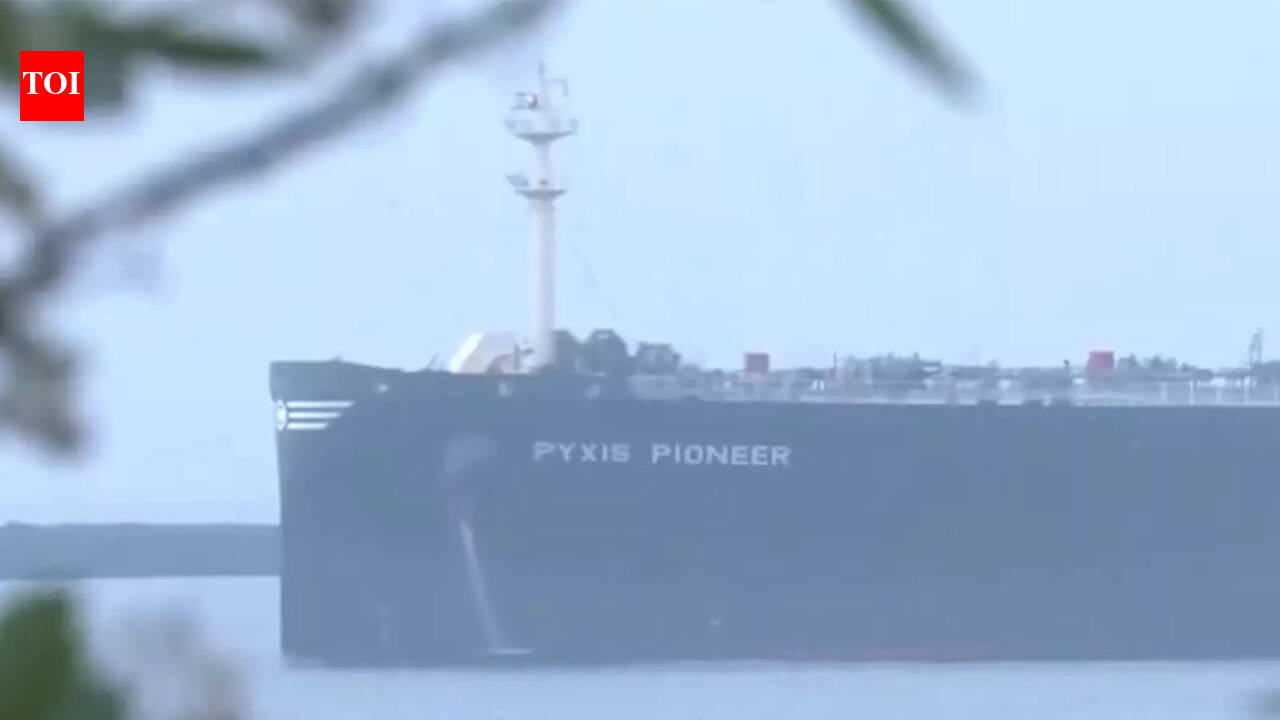
NEW DELHI: The Pyxis Pioneer, a Singapore-flagged cargo vessel carrying liquefied petroleum gas (LPG) from Texas in the United States, docked at New Mangalore Port in Karnataka’s Mangaluru on Sunday.Click here for live updates on Middle East crisis The tanker, built in 2019, arrived a day after the Aqua Titan, which is transporting 1.1 lakh tonnes of Urals crude, reached the port. The Aqua Titan had initially set sail from Primorsk in Russia for Rizhao Port in China before diverting to India.On Friday, the Shipping Ministry said that New Mangalore Port has waived cargo-related charges for crude oil and LPG between March 14 and 31 amid the ongoing Middle East conflict.Also Read | Watch: Missile strike rocks Israel’s ‘Little India’ as Iran attack injures over 40; videos show chaos Earlier this week, three Indian-flagged vessels — Shivalik, Nanda Devi, and Jag Laadki — docked at Gujarat’s Mundra Port carrying LPG. While Shivalik arrived on Monday, Nanda Devi and Jag Laadki reached on Tuesday and Wednesday, respectively.On February 28, the United States and Israel launched coordinated strikes on Iran, triggering the current conflict. In response, Iran has carried out retaliatory attacks on Israeli territory and on Gulf states hosting U.S. military bases. Tehran has also effectively disrupted traffic through the Strait of Hormuz — a critical global chokepoint through which around 20% of the world’s oil supply passes — raising concerns over energy security and global markets.Also Read | Under the sea: How Iran’s invisible fleet of ‘midget submarines’ is turning Strait of Hormuz into danger zone‘All Indian ships and sailors safe’ At Friday’s interministerial briefing on Friday, shipping ministry special secretary Rajesh Kumar Sinha said all 22 Indian ships and 611 sailors in the Persian Gulf are safe amid the ongoing conflict.“There has been no report of any maritime incident in the last 24 hours. All our 22 ships and 611 Indian sailors in the Persian Gulf region are safe, and we are continuously monitoring them… There is no congestion in any port… New Mangalore Port has issued a circular for waiver of all cargo-related charges for crude and LPG from March 14 to 31,” Sinha told reporters.Also Read | Iran invasion next? Pentagon plans for deployment of US troops on ground – reportMeanwhile, the petroleum ministry noted panic booking of LPG cylinders has eased significantly, with 55 lakh bookings reported on Thursday.“There is no panic booking now. Only 55 lakh LPG bookings were reported yesterday. There is adequate stock available, and no outlets are running dry,” joint secretary Sujata Sharma said at the briefing.However, she acknowledged that concerns persist.

Young people are driving a gym boom as more fitness spaces are transformed into vibrant hangouts.
Source link


Transfer rumors, news: Liverpool eye Gordon to replace Gakpo

Prince William ‘finalises’ one crucial detail for coronation ceremony

Give Your Phone a Huge (and Free) Upgrade by Switching to Another Keyboard

Tips and Advice for Buying Used or Refurbished Electronics

UAE savings strategies 2026 explained: Best apps, tools, budget rules and smart money hacks to beat rising cost of living in emirates – The Times of India

Iran threatens US-linked oil facilities after Kharg Island bombed

-
 Tech1 week ago
Tips and Advice for Buying Used or Refurbished Electronics
-
Business1 week ago
UAE savings strategies 2026 explained: Best apps, tools, budget rules and smart money hacks to beat rising cost of living in emirates – The Times of India
-
 Politics1 week ago
Iran threatens US-linked oil facilities after Kharg Island bombed
-
 Entertainment7 days ago
Strategic oil stocks to be released ‘immediately’ in Asia and Oceania: IEA
-
 Entertainment1 week ago
Iran at war
-

 Sports1 week ago
College Basketball Invitational abruptly cancels 2026 tournament
-

 Entertainment1 week ago
Meet one of the last true paparazzi
-

 Tech1 week ago
An Air Fryer That Makes Juicy Steak? Yes. It’s Nearly Half Off