

Entertainment
Govt introduces QR-powered national ID system

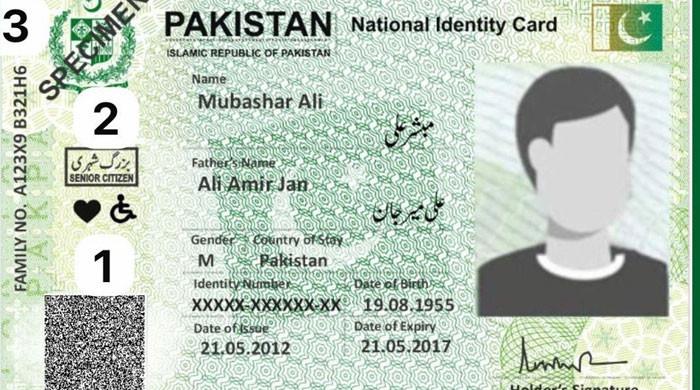
- Govt upgrades NIC, POC frameworks under ‘One Nation – One Identity’ vision.
- QR code formally introduced as legal security, authentication feature.
- Fingerprints, iris scans recognised as biometric authentication methods.
ISLAMABAD: In a major step toward a unified and digitally secure identity ecosystem, the Federal Government has formally upgraded the National Identity Card (NIC) and Pakistan Origin Card (POC) frameworks under its vision of “One Nation – One Identity.”
The amendments—issued through S.R.O. 330(I)/2026 and S.R.O. 331(I)/2026 and published in the Gazette on February 24, 2026 —modernise Pakistan’s identity system with QR-based verification, enhanced biometric features, stronger fraud controls, and improved citizen facilitation.
A key highlight is the legal introduction of the Quick Response (QR) code as a security and authentication feature across identity documents. The Rules now define the QR code as a secure, machine-readable, two-dimensional barcode that stores encoded identity information and enables instant verification when scanned. Importantly, the amendments also authorise NADRA to use “QR code or any other technological feature,” ensuring that Pakistan’s ID infrastructure can evolve with emerging innovations without requiring recurring legal changes.
With this reform, citizens will carry a uniform ID card, replacing the previously parallel formats of chip-enabled and non-chip cards. The QR-coded architecture strengthens Pakistan’s Digital ID ecosystem and aligns with the National Data Exchange Layer, allowing rapid offline and online verification, faster service delivery, reduced manual checks, and significantly lower risk of fraud or impersonation.
The government has also tightened fraud prevention mechanisms. Under the revised rules, once an identity card is suspended, all related verification and authentication services are automatically halted, blocking any attempt to use the suspended credential across digital or institutional channels.
Biometric security has been upgraded as well, with the Rules now explicitly recognising fingerprints and iris scans as formal modalities of authentication, reinforcing the shift toward multi-modal biometric identification.
In a major facilitation step, citizens aged 60 and above—whether resident or overseas—will be issued a lifetime-validity ID card carrying a distinct senior-citizen logo. This removes the need for repeated renewals and reflects a more service-oriented approach for elderly Pakistanis.
The amendments also introduce standardised identification for individuals belonging to Azad Jammu & Kashmir, requiring their cards to include a specific inscription defining their residency status.
To complete the modernisation drive, the government has comprehensively updated the specimen formats for all major ID categories, including resident citizens, overseas Pakistanis, persons with disabilities, child certificates, organ donors, combined categories, and AJK residents. These new formats unify the design language and embed QR-based security as a core feature.
Overall, the 2026 amendments strengthen the backbone of Pakistan’s national identity system—enhancing digital trust, protecting against fraud, enabling real-time verification, and delivering meaningful facilitation measures for citizens. The reforms also advance Pakistan’s readiness for future digital governance through an interoperable, secure, and modern identity architecture.

Reese Witherspoon has broken her silence following a wave of criticism over her support for artificial intelligence, insisting that she is not being paid to promote the technology.
Taking to Instagram on Tuesday, the Morning Show star addressed the backlash that followed her recent “AI revolution” post, clarifying that her interest stems from being a “curious human” rather than a corporate spokesperson.
While acknowledging that her original comments certainly got people talking, she noted that her children are already learning about these tools and that she is seeing AI impact every sector of business, from “vibe coding” founders to traditional industries.
The Oscar-winning actress had previously sparked controversy by warning that women were 25 percent less likely to use AI than men, despite their jobs being three times more likely to be automated.
This prompted a fierce reaction from followers who raised concerns about intellectual property theft, the environmental impact of data centres, and the potential for computers to replace human creativity.
In her latest response, Witherspoon admitted these concerns are valid, stating she understands the worries regarding job security and the environment.
She also expressed her own reservations about the rise of Artificial General Intelligence (AGI), making it clear she does not believe computers should ever replace humanity.
Despite the pushback, Witherspoon remains committed to her “learn along with me” approach, viewing the technological shift as an inevitability for the future of filmmaking.
She previously told Glamour that while people can lament the change, it is already here, though she believes physical manual building and human ingenuity will always remain the highest forms of art.
The actress even shared a few of the specific tools she currently uses, including AI Assistant, the search platform Perplexity, and the shopping agent Vetted AI, as part of her effort to stay educated.
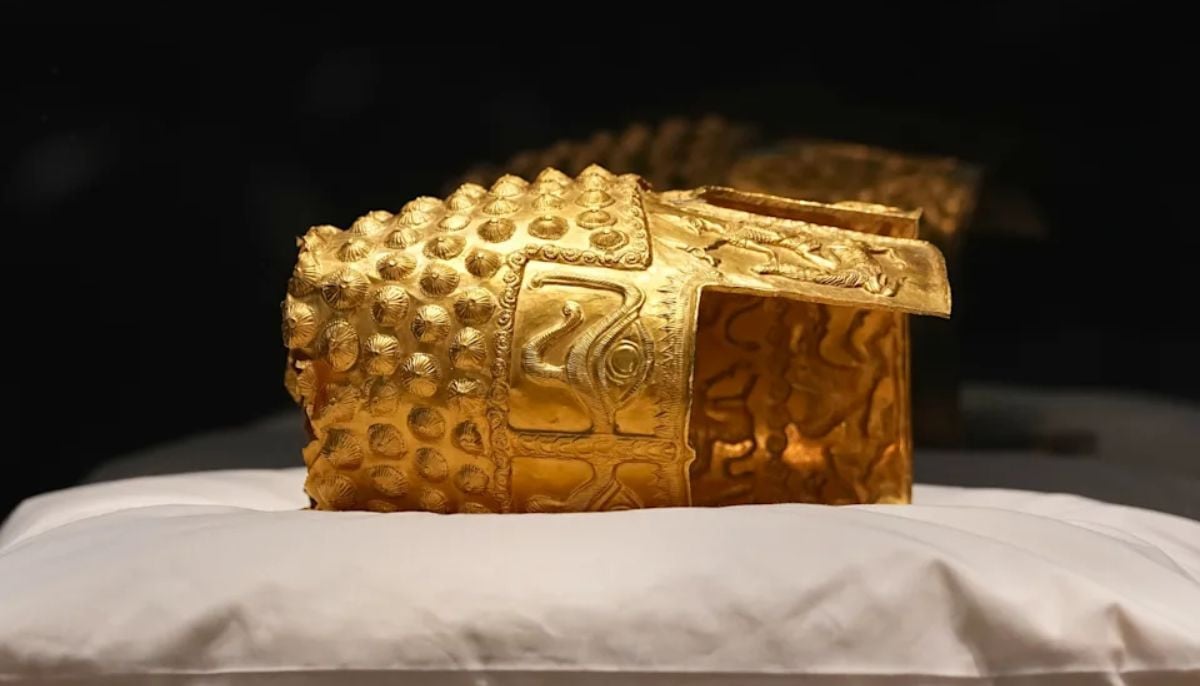
Thieves broke into the Drents Museum in the Netherlands in the early hours of the morning, pried open a door with a crowbar, triggered an explosion, and made off with some of Romania’s most precious ancient treasure in January 2025.
Now the authorities have recovered the artifacts. The centrepiece of the recovery is the Cotofenesti helmet, a 2,500-year-old golden artefact from the Dacia civilisation and one of Romania’s most revered national heirlooms.
Three golden bracelets were also taken in the raid. Most of the stolen items arrived at Bucharest Henri Coanda International Airport and were transported under armed guard to the National History Museum, where they were placed in a glass cabinet flanked by masked, armed officers.
The return came after 14 months of investigations, diplomatic negotiations between Romania and the Netherlands, and an ongoing criminal trial involving three suspects. The whereabouts of a third golden bracelet remain unknown, though the Drents Museum’s director Robert van Langh vowed the search would continue.
Van Langh, who attended Tuesday’s handover, acknowledged the weight of the moment for Romanian people in particular.
He said, “The grief, the anger and now the relief have naturally been even greater here than in the Netherlands,” adding, “Romanian national heritage has returned home.”
The theft had shocked the art world when it happened. Security footage captured three figures forcing their way into the museum in what appeared to be a swift and deliberate operation.
In the weeks that followed, fears grew that the helmet might have been melted down. Its fame and instantly recognisable appearance made it virtually impossible to sell on any legitimate market, but that same notoriety also made it a target.
When Dutch prosecutors unveiled the recovered items at a news conference earlier this month, it emerged that the helmet had been slightly dented during its disappearance. The recovered bracelets, however, were found to be in perfect condition.
For Romania, the return carried a significance that went well beyond the monetary value of the objects. Cornel Constantin Ilie, the National History Museum’s interim director, described the artefacts as “relics of our historical memory” and said the country had lived for months with the fear that part of its past could be lost forever.
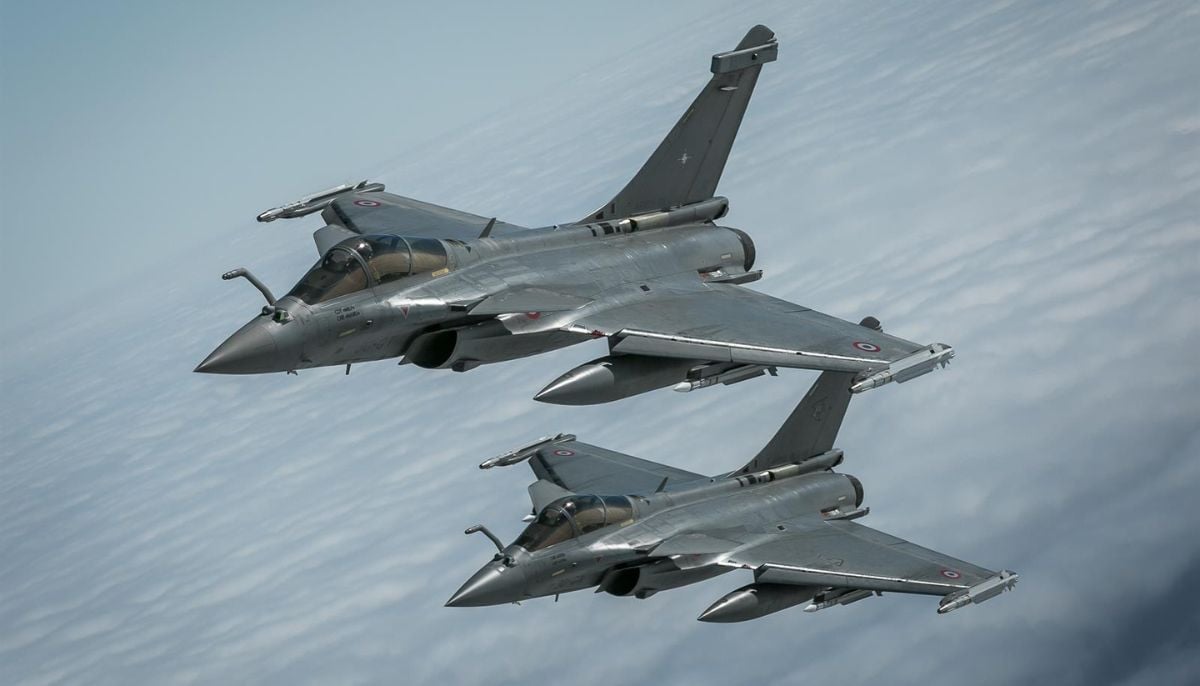
The North Atlantic Treaty Organisation (NATO) forces deployed a number of jets to intercept Russian bombers and fighter jets flying over the Baltic Sea in an impressive display of power on Monday.
French Rafales took off from a Lithuanian air base and joined fighter jets from Sweden, Finland, Poland, Denmark and Romania to intercept the hostile jets; however, no aerial engagement occurred as Russian jets remained in airspace over neutral waters.
The French detachment, stationed in Lithuania as part of the NATO’s air policing effort, said their jets kept watch over Russian aircraft, adding, “The Russian mission included 10 fighter jets taking turns in escorting two supersonic Tu-22M3s.”
In a statement on Telegram, the Russian Defence Ministry said that the flight of their bombers was over four hours long and it occurred in neutral airspace.
The ministry said: “All flights of Russian Aerospace Forces aircraft are carried out in strict compliance with international rules for the use of airspace.”
It added that their aircraft regularly conduct flights in international airspace over the Baltic and Black Seas and the Pacific, the Arctic and the North Atlantic Ocean.
NATO’s muscular display of airpower comes after the United States (U.S.) President Donald Trump described the alliance as a “paper tiger” due to its refusal to take part in the U.S.-Israeli military aggression against Iran.
The incident comes just a week after the British Royal Air Force jets were scrambled to intercept unidentified aircraft approaching the British airspace. However, no interception took place as the jet remained outside UK airspace.


Reese Witherspoon breaks silence after AI support controversy

Duke lands John Blackwell, top guard in transfer portal

Tackling the housing shortage with robotic microfactories

-

 Fashion6 days ago
France’s LVMH Q1 revenue falls 6%, shows resilience amid Iran war
-

 Sports1 week ago
The case for Man United’s Fernandes as Premier League’s best
-

 Entertainment1 week ago
Palace left in shock as Prince William cancels grand ceremony
-
 Business1 week ago
UK could adopt EU single market rules under new legislation
-

 Entertainment6 days ago
Is Claude down? Here’s why users are seeing errors
-

 Fashion1 week ago
Energy emerges as biggest cost driver in textile margins
-
 Business1 week ago
Delta Air Lines unveils first new Delta One suite in premium cabin arms race
-

 Fashion1 week ago
Asia claims largest share of markets on Kearney FDI Confidence Index