

Entertainment
Grand Sumo Tournament comes to London for the second time outside Japan in the sport’s 1,500-year history

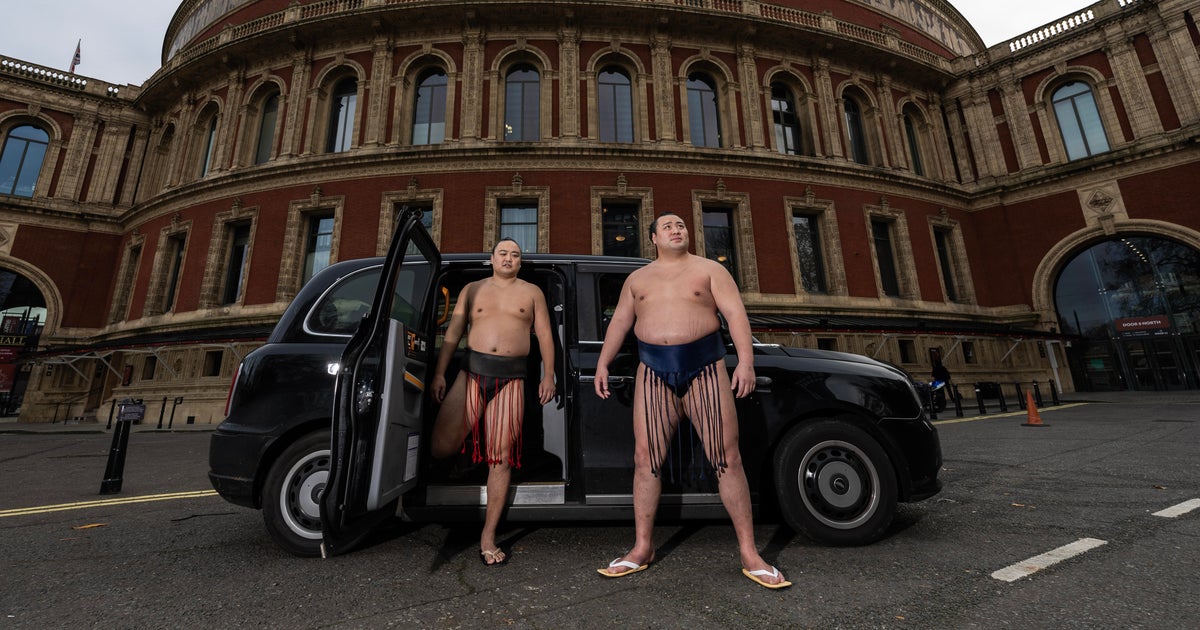
London — The world of professional sumo wrestling stepped outside of Japan for only the second time in its centuries-long history on Wednesday night, as fighters clashed on a specially constructed ring in the middle of London’s Royal Albert Hall.
The iconic venue in the British capital is hosting the Grand Sumo Tournament —the roughly 1,500-year-old sport’s most important competition — for the second time, drawing more than 44 professional wrestlers, or Rikishi, to compete in 100 bouts over five days. The only other time the tournament was held outside Japan was in 1991, when it also came to the Royal Albert Hall.
There are unique challenges in bringing sumo to London, as the contemporary national sport of Japan is rooted in two millennia of tradition, interwoven with the Shinto religion, and thus treated with the utmost respect and protection to ensure adherence to its rituals and norms.
Ryan Pierse/Getty
“One of the things that we’ve worked really hard at is to make sure that we have a good understanding of the cultural and religious significance that sumo has,” Matthew Todd, the Royal Albert Hall’s programming director, told CBS News.
He said attention to detail was “really critical to the authentic presentation that we’re able to make here.”
That meant shipping 11 tons of clay from Japan to construct the ring, or dohyo, in the center of the concert venue, where the wrestlers compete. Shipping containers were at sea for three months making the voyage. A big team of ring attendants (yobisdashi), also had to make the trip from Japan — alongside 11 interpreters to help them communicate with British workers.
Ryan Pierse / Getty Images 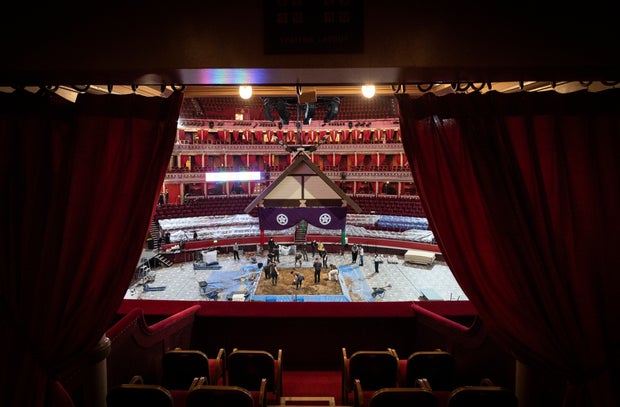
The roof for the dohyo, now suspended from the Albert Hall ceiling, was built in Britain, but its design is taken straight from traditional Japanese Shinto shrines, which, according to Todd, “helps to show that this is a sacred area,” in which routines and holy ceremonies are conducted as part of the tournament.
It’s a vital step, he said, to ensure the Shinto gods are paid their due respects before the fights.
Sumo is deeply intertwined with Japanese culture and religion in ways that many Western sports fans may find difficult to comprehend. According to legend, it originated as a ritual to ask the gods for a bountiful harvest, but it transformed over almost 2,000 years into the sport it is today, drawing competitors still primarily from Japan, but also from around the world.
Many of the most recent champions have been from Mongolia, and this year’s tournament features two rishiki from Ukraine. While Americans have competed successfully in past tournaments, there are no U.S. rishiki competing in this year’s event in London.
Jordan Pettitt/PA Images/Getty 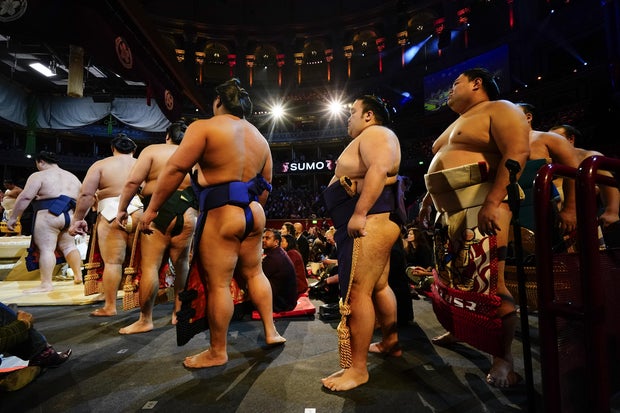
The nuance of the wrestling competition itself can also be difficult to fully grasp, with 82 winning techniques called kimirate, numerous ranks and divisions and a host of other rules. So to help translate all this for a largely Western audience, in-ear English language commentary is provided at the Royal Albert Hall, alongside video replay screens to describe and explain the bouts, which can sometimes end in just seconds when a competitor is forced out of the ring.
The wrestlers themselves live an incredibly regimented life. They are forbidden from driving cars and, somewhat counterintuitively, eating breakfast, and are normally required to take a long nap after their hefty lunch, to help them pack on the pounds.
The average weight of a rikishi is about 330 pounds, but some tip the scales at 550.
Jordan Pettitt/PA Images/Getty 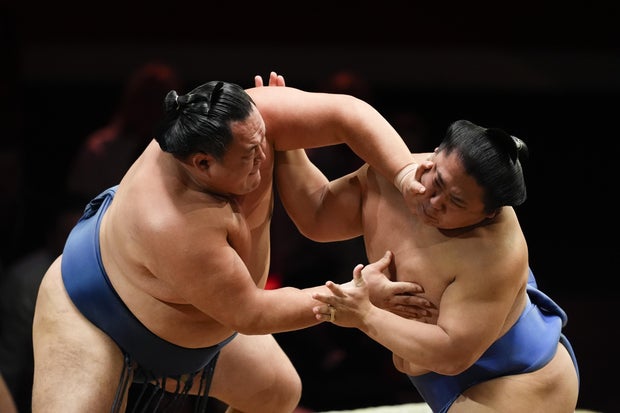
They have been given some leave during their visit to the British capital to enjoy themselves, however — with organizers likely seeing the value in some degree of publicity.
During the lead-up to the tournament, social media platforms were full of photos and videos of the traditionally kimono-clad wrestlers sightseeing around London.
The Albert Hall will also be graced this week by the presence of two yokozuna, the highest ranking of all sumo wrestlers. The word yokozuna is generally translated as grand champion, but it translates literally to “horizontal rope,” in a reference to the special rope worn around their waists to display their rank.
Krisztian Elek/SOPA Images/LightRocket/Getty 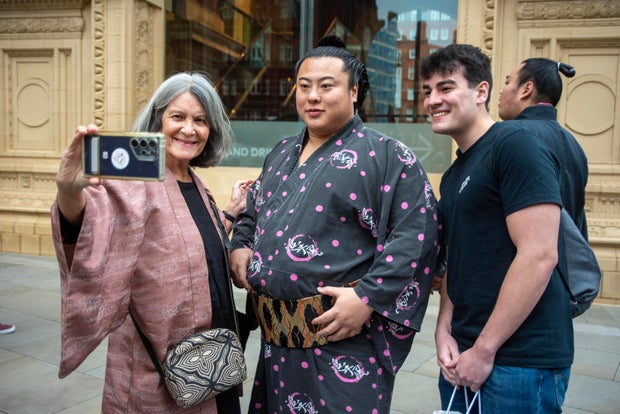
Once a rishiki is promoted to the rank of yokozuna, they keep it until retirement. In nearly 400 years of professional sumo, only 75 men have attained the vaunted grand champion status. The honor typically requires not only multiple consecutive championship wins, but approval by a dedicated council that judges rishiki on their wrestling skills, but also a range of other personal attributes.
The tournament is due to end on Sunday, when the wrestler with the most victories in the ring will be crowned this year’s champion.
The field is considered wide open this year, but many, especially back at home in Japan, will be hoping for 25-year-old Yokozuna Onasato, the country’s first grand champion in almost a decade, to emerge victorious.







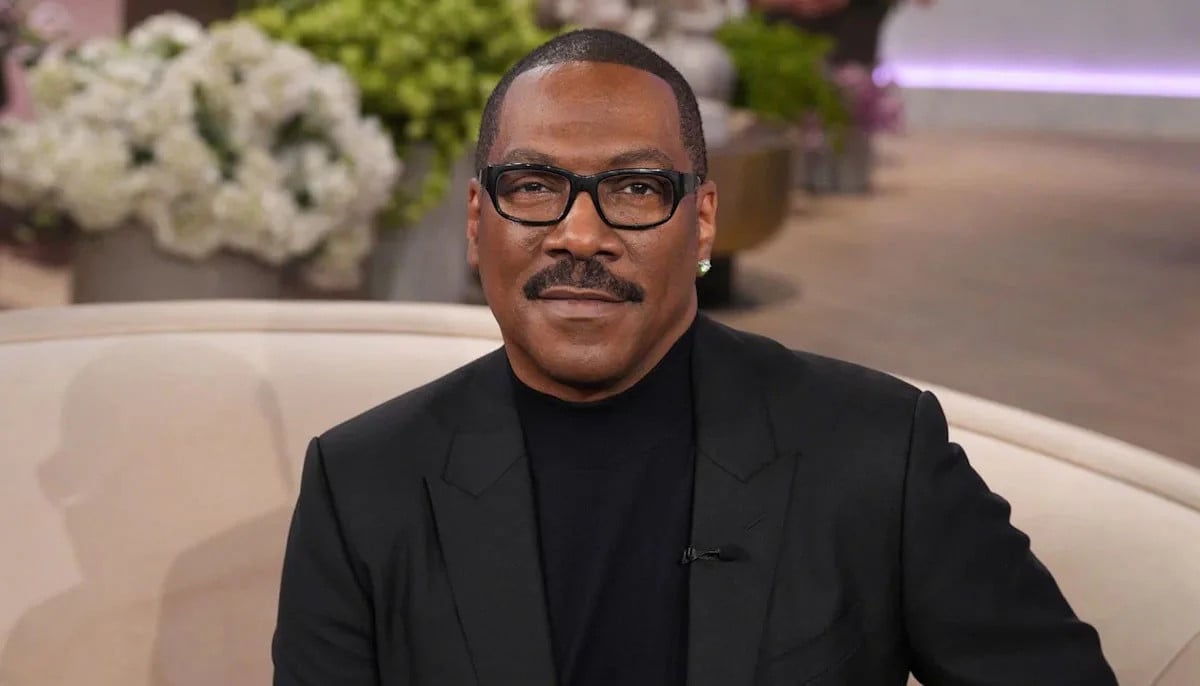
Eddie Murphy is having quite the year for new arrivals.
The comedy legend has revealed he has welcomed not one but two grandchildren in the space of a fortnight, a grandson and a granddaughter, and he could not be happier about it.
Speaking to Entertainment Tonight at the American Film Institute Achievement Award Ceremony on Saturday, 18 April, Murphy, 65, shared the news with characteristic warmth.
“I just had my first grandson two months ago,” he said, referring to the baby boy born to his daughter Bria, 36, and her husband Michael Xavier, who married in July 2022.
Bria had offered a glimpse of her pregnancy at the November premiere of her father’s documentary Being Eddie.
He also confirmed the birth of his third granddaughter, just two weeks ago, to his son Eric and Jasmin Lawrence, daughter of comedian Martin Lawrence.
The couple married last May and announced they were expecting in February. Murphy revealed the baby girl’s name to E! News: Ari Skye.
“So all this stuff is happening,” Murphy said, grinning. “I’m like it’s raining blessings on me. Raining blessings.”
When asked whether he had been dispensing parenting wisdom to the new arrivals, Murphy was direct.
“Oh, you don’t give advice like that. You know, your kids don’t go by your advice. Your kids go by the example you set. They watch you. The stuff you be saying, they don’t even pay that s— no mind. They watch and see what you do. So, I don’t give a lot of advice.”
Murphy is father to ten children across several relationships, including sons Eric, 36, Christian, 35, Myles, 33, and Max, 7, and daughters Bria, Shayne, 31, Zola, 26, Bella, 24, Angel, 19, and Izzy, 9.
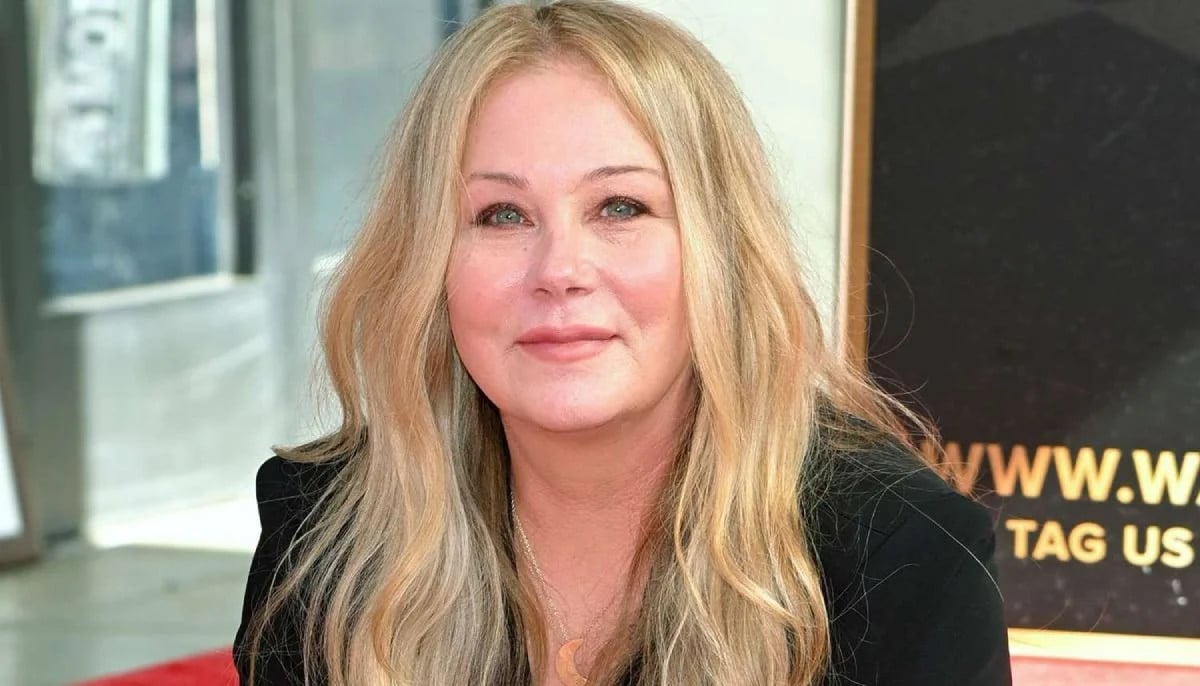
Christina Applegate has broken her silence following reports of a recent hospitalisation, reassuring fans that she is on the mend and determined as ever.
“Thank you for the outpouring of love and well wishes,” the actress wrote on Instagram on Monday.
“Health issues are a constant for me, but I’m a strong chick and I’m getting stronger and better every day. I’m taking a moment to focus on my health, but I’ll be back with more to say soon enough.”
The post comes after reports began circulating that Applegate had been hospitalised in late March, with outlets reporting that those close to her had been deeply concerned.
The 54-year-old did not specify the nature of the latest health episode, but her MS diagnosis, which she made public in August 2021, has been an ongoing part of her life in the years since.
Applegate has been notably open about her journey with multiple sclerosis, both through her 2026 memoir You with the Sad Eyes and the podcast she co-hosts with Jamie-Lynn Sigler, who also has MS.
Her final acting role was in the comedic thriller series Dead to Me, a job she finished while her diagnosis was still new territory.
Season three was already in production when she found out, and she has spoken candidly about how difficult that period was.
She used a wheelchair to get to set, was “sleeping all the time,” and had to call the cast and crew to tell them what she was dealing with.
“I had to call everybody and be like, ‘I have multiple sclerosis guys. Like, what the fuck!'” she told Variety in 2022.
Best known for her long-running role in Married… with Children, which ran on Fox for 11 seasons from 1987 to 1997, Applegate has since retired from acting.
Her message on Monday was short but carried the same directness that has defined how she has handled her illness throughout, no sugarcoating, and no backing down either.


UN Security Council denounces killing of French peacekeeper in Lebanon
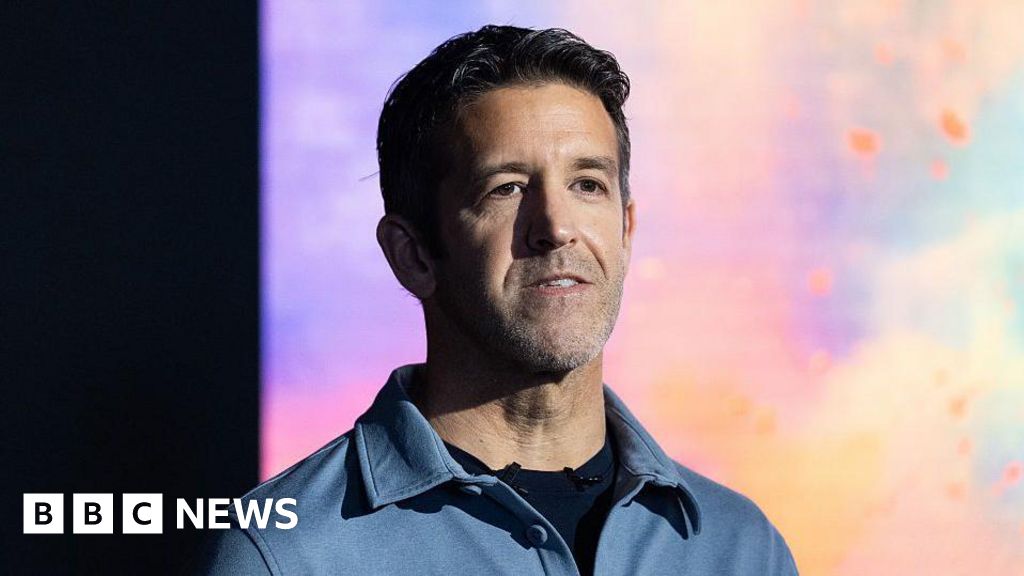
Apple names new boss to replace Tim Cook after 15 years

India, US to resume BTA talks today

-

 Fashion5 days ago
France’s LVMH Q1 revenue falls 6%, shows resilience amid Iran war
-

 Sports1 week ago
The case for Man United’s Fernandes as Premier League’s best
-

 Entertainment1 week ago
Palace left in shock as Prince William cancels grand ceremony
-
 Business1 week ago
UK could adopt EU single market rules under new legislation
-

 Entertainment6 days ago
Is Claude down? Here’s why users are seeing errors
-

 Fashion1 week ago
Energy emerges as biggest cost driver in textile margins
-
 Business1 week ago
Delta Air Lines unveils first new Delta One suite in premium cabin arms race
-

 Tech1 week ago
A Lot of Shops Won’t Fix Electric Bikes. Here’s Why