

Tech
Grindr Goes ‘AI-First’ as It Strives to Be an ‘Everything App for the Gay Guy’


Every Grindr user is unique. Italian men love feet. South Koreans prefer open relationships. The highest percentage of self-proclaimed “daddies” call the US home and Switzerland is overrun with twinks. Delivered by annual trend report Grindr Unwrapped, those critical insights offer the type of information that will help usher the company into its “AI-first” era where it’s “the everything app for the gay guy,” CEO George Arison tells WIRED.
Grindr was the first to leverage geo-location tech when it burst onto the scene in 2009. Arison arrived at the company in 2022 from the world of automotive ecommerce. With him at the helm, the company has undergone “a bit of a refounding,” he says, including a major overhaul of staff—85 percent of current 160 US employees were hired in the last three years—and bigger investments in product.
All of his moves, he says, have been about building trust with users. Grindr may indeed be the most popular gay dating and hookup app in the world, but its popularity has only made it a target of controversy, including a 2024 lawsuit that alleged users’ HIV status and testing information was shared with third-party vendors and, in July, criticism for blocking users who posted the phrase “no Zionists” in their profile. Skepticism over Arison’s conservative politics probably hasn’t helped either.
Even so, Arison tells me he is laser focused on the task ahead. One that almost didn’t happen. Controlling stakeholders Raymond Zage and James Lu submitted an offer to take the company private in October. The bid—a buyout that valued the company at $3 billion—came to an anticlimactic end in November when they failed to come up with the money. The acquisition could have potentially derailed Arison’s priorities, but for now, that’s all behind him.
This interview has been edited for clarity and length.
JASON PARHAM: Grindr is now positioning itself as more than a place for hookups. It wants to be a social everything app—why?
GEORGE ARISON: We didn’t really have a mission before 2023. But it was always more than a hookup app because it was being used for so many different things, but no one had said, OK, this is what we want to be. This year is when we really went after the gayborhood vision. Now we are actually building features that intentionally support all these different use cases in which people are engaged in on the app.











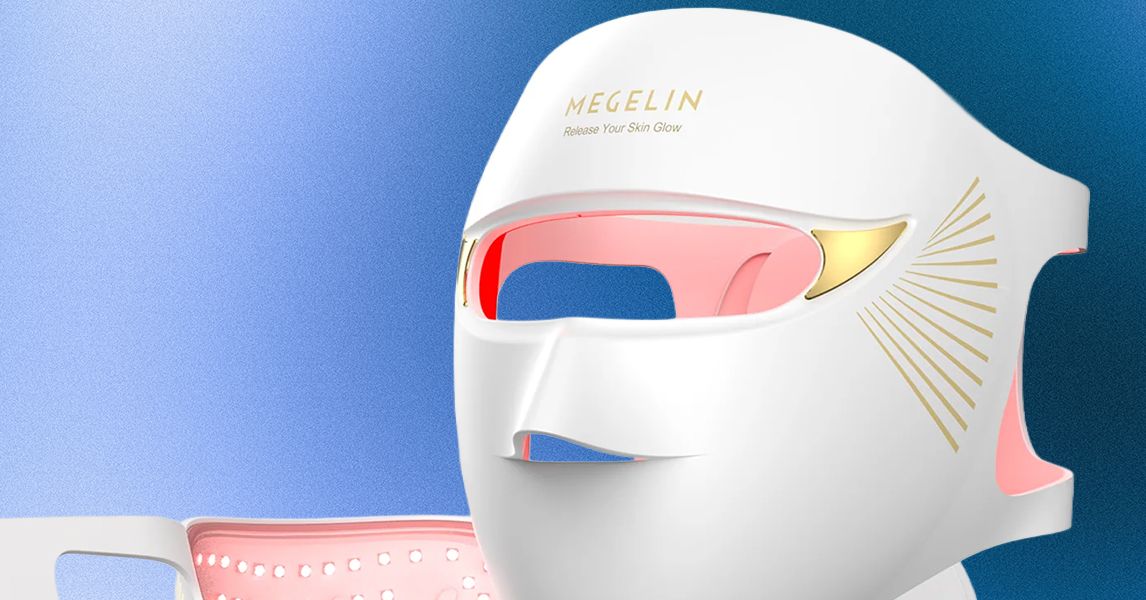
The red-light therapy market shows no signs of slowing down. According to Fortune Business Insights, the industry is projected to grow from $1.21 billion in 2026 to $1.76 billion by 2034. Riding that wave is Hong Kong-based Megelin, which is currently running its largest Mother’s Day sale yet, offering major discounts on most of its LED devices and select electrical muscle stimulation (EMS) tools.
I’ve been testing the Duo Lux Laser & LED Light Therapy Mask for the past two weeks as part of a six-week trial. While I’m still forming my final verdict, I already have some early thoughts (more on that below). In the meantime, check out the standout deals because some of these discounts might be too good to pass up while they’re live.
This Laser & LED Light Therapy Mask Is $270 Off
The Megelin Duo Lux Laser & LED Light Therapy Mask combines 660-nanometer (nm) and 1,064-nm lasers with a 660-nm LED light for a more intensive treatment. The brand claims it can help smooth wrinkles, soothe inflammation, reduce pigmentation, and minimize redness. After two weeks of testing, I haven’t noticed any visible changes in my skin just yet, though to its credit, I also haven’t experienced any irritation or adverse reactions.
My biggest issue was the initial unboxing experience: The mask had a strong chemical odor that reminded me of formaldehyde. For a device that sits against your face and doesn’t have a mouth opening, that’s not exactly reassuring. Wiping it down and letting it air out significantly reduced the smell, but it definitely made for a less-than-ideal first impression.
That said, the mask itself is extremely comfortable. The soft, flexible silicone contours well to the face, and the dual-strap design keeps it secure without feeling restrictive. Treatments are quick and easy to customize thanks to four different modes, all controlled through an attached remote. And because it’s cordless, you’re free to move around while using it.
At full price, it’s a steep investment compared to its competitors. But with the current $270 discount, it becomes a much more compelling option, especially given the added laser therapy component, which isn’t as common at this price point. I’ll continue testing through the full six-week period before sharing my final verdict, but if you’re tempted to take advantage of the sale now, Megelin does offer a 60-day money-back guarantee and a one-year warranty.

Trump first teased the release in February in a Truth Social post. The Pentagon coordinated the release in partnership with the White House, Director of National Intelligence Tulsi Gabbard, the Energy Department, NASA, and the FBI. Many of the files in this new drop contain documents that are already publicly available. However, some versions of these known documents in the new files contain more pages, or fewer redactions, than previously released versions.
More than 60 percent of Americans believe that the government is concealing information about UAP, according to YouGov, while 40 percent think UAP are likely alien in origin, according to Gallup. Congress has held hearings into whether there’s been a decades-long program to recover “non-human” technologies, yet evidence remains elusive.
Courtesy of the US Department of Defense
“If it’s just more blobby photos or redacted documents that don’t have any details in them, it’s more of the same,” Adam Frank, an astrophysicist at the University of Rochester who studies the search for alien life, says of the new files. “What we need are actual scientific results from the investigations that should have been done if the most extraordinary claims being made are true.”
The document drop follows a week of high-profile discussions of aliens, including Stephen Colbert’s interview with former President Barack Obama, released on Wednesday. Obama cast doubt on government cover-ups about aliens by joking that “some guy guarding the installation would have taken a selfie with the alien and sent it to his girlfriend.”

Courtesy of the US Department of Defense
Members of the Artemis II crew also second-guessed the idea of a vast government-wide conspiracy to hide the discovery of extraterrestrial life in a discussion with The Daily this week.
“Do you realize that if we found alien life out there, and we came back and reported on it, NASA would never have a budget issue for the rest of eternity?” said Reid Weisman, the commander of Artemis II. “So trust me.”
Victor Glover, the astronaut who piloted the mission, added: “Why would we hide that from you?”
Philosopher Nick Bostrom recently posted a paper, where he postulated that a small chance of AI annihilating all humans might be worth the risk, because advanced AI might relieve humanity of “its universal death sentence.” That upbeat gamble is quite a leap from his previous dark musings on AI, which made him a doomer godfather. His 2014 book Superintelligence was an early examination of AI’s existential risk. One memorable thought experiment: An AI tasked with making paper clips winds up destroying humanity because all those resource-needy people are an impediment to paper clip production. His more recent book, Deep Utopia, reflects a shift in his focus. Bostrom, who leads Oxford’s Future of Humanity Institute, dwells on the “solved world” that comes if we get AI right.
STEVEN LEVY: Deep Utopia is more optimistic than your previous book. What changed for you?
NICK BOSTROM: I call myself a fretful optimist. I am very excited about the potential for radically improving human life and unlocking possibilities for our civilization. That’s consistent with the real possibility of things going wrong.
You wrote a paper with a striking argument: Since we’re all going to die anyway, the worst that can happen with AI is that we die sooner. But if AI works out, it might extend our lives, maybe indefinitely.
That paper explicitly looks at only one aspect of this. In any given academic paper, you can’t address life, the universe, and the meaning of everything. So let’s just look at this little issue and try to nail that down.
That isn’t a little issue.
I guess I’ve been irked by some of the arguments made by doomers who say that if you build AI, you’re going to kill me and my children and how dare you. Like the recent book If Anyone Builds It, Everyone Dies. Even more probable is that if nobody builds it, everyone dies! That’s been the experience for the last several 100,000 years.
But in the doomer scenario everybody dies and there’s no more people being born. Big difference.
I have obviously been very concerned with that. But in this paper, I’m looking at a different question, which is, what would be best for the currently existing human population like you and me and our families and the people in Bangladesh? It does seem like our life expectancy would go up if we develop AI, even if it is quite risky.
In Deep Utopia you speculate that AI could create incredible abundance, so much that humanity might have a huge problem with finding purpose. I live in the United States. We’re a very rich country, but our government, ostensibly with support of the people, has policies that deny services to the poor and distribute rewards to the rich. I think that even if AI was able to provide abundance for everyone, we would not supply it to everyone.
You might be right. Deep Utopia takes as its starting point the postulation that everything goes extremely well. If we do a reasonably good job on governance, everybody gets a share. There is quite a deep philosophical question of what a good human life would look like under these ideal circumstances.
The meaning of life is something you hear a lot about in Woody Allen movies and maybe in the philosophers community. I’m worried more about the wherewithal to support oneself and get a stake in this abundance.
The book is not only about meaning. That’s one out of a bunch of different values that it considers. This could be a wonderful emancipation from the drudgery that humans have been subjected to. If you have to give up, say, half of your waking hours as an adult just to make ends meet, doing some work you don’t enjoy and that you don’t believe in, that’s a sad condition. Society is so used to it that we’ve invented all kinds of rationalizations around it. It’s like a partial form of slavery.


Renée Zellweger joins cast of ‘A Woman in the Sun’

The Best LED Skincare Deals I’ve Seen This Mother’s Day Are at Megelin

Rihanna embraces new tattoo given by children

-

 Politics5 days ago
Iran weighs US reply delivered via Pakistan as Trump signals opposition to deal terms
-

 Tech1 week ago
This Indigenous Language Survived Russian Occupation. Can It Survive YouTube?
-
 Business1 week ago
PSX plunges over 4,800 points | The Express Tribune
-

 Fashion1 week ago
Canada’s Lululemon appoints Esi Eggleston Bracey to board of directors
-

 Tech1 week ago
Almost half of UK businesses hit by cyber attacks | Computer Weekly
-

 Fashion7 days ago
US’ J.Jill, Inc. appoints Kimberly Wallengren as CMO
-

 Entertainment1 week ago
David Allan Coe, country singer who wrote “Take This Job and Shove It,” dies at age 86
-
 Business1 week ago
Government hikes jet fuel prices by 5% for international airlines – The Times of India