

Politics
Group leading Morocco protests demands govt dismissal

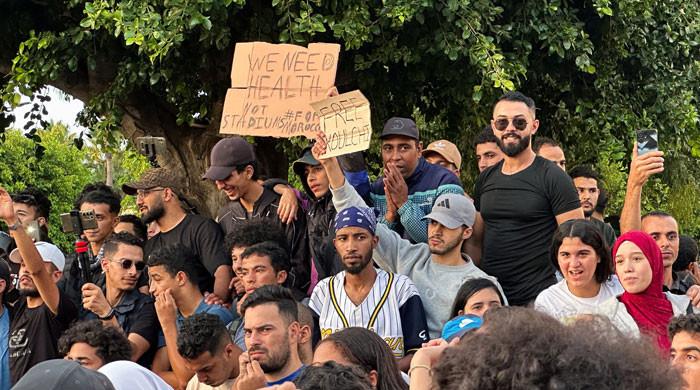
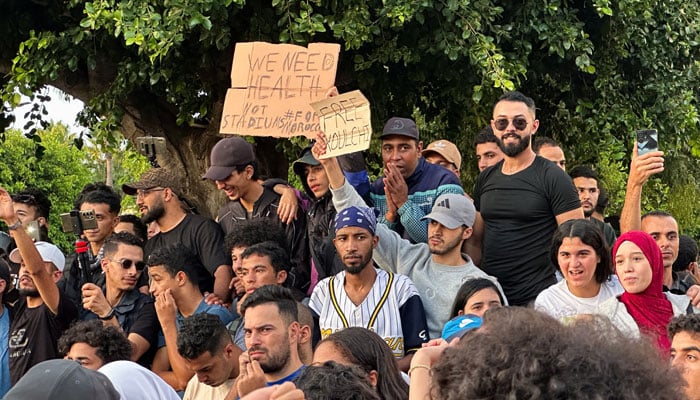
The group leading Morocco’s mass protests called on Friday for the government’s dismissal, following days of unrest that have seen the deaths of three people.
The demand came after fresh demonstrations demanding reforms to the health and education sectors took place across the kingdom on Thursday, a sixth consecutive day of largely peaceful protests pockmarked with spates of violence.
“We demand the dismissal of the current government for its failure to protect the constitutional rights of Moroccans and respond to their social demands,” protest group GenZ 212 said.
The group, whose organisers remain unknown, also demanded the “release of all those detained in connection with the peaceful protests”.
The rallies across the usually stable country have been fuelled by anger over social inequality, particularly following reports last month of the deaths of eight pregnant women at a public hospital in the city of Agadir.
Many Moroccans feel that the public health and education sectors should be improved as the kingdom pushes forward with major infrastructure projects to host the Africa Cup of Nations in December and part of the 2030 World Cup.
GenZ 212 said it was basing its demand for the firing of the government on an article in the constitution that “grants His Majesty the King the power to appoint and dismiss the Prime Minister and members of the government”.
The group has largely used the Discord online messaging platform to spread its calls for protest, and has repeatedly distanced itself from the violence and vandalism seen in some cities.
In the capital Rabat on Thursday, demonstrators carrying Moroccan flags demanded “health and not just stadiums”, according to an AFP journalist, who said there were no violent incidents.
Other rallies were reported in Casablanca, Marrakech and Agadir, also with no sign of unrest.
‘Dialogue’
Earlier on Thursday, Prime Minister Aziz Akhannouch said in his first public address since the unrest started that his government was willing to “engage in dialogue” and “respond to the (protesters’) demands”.
The premier also said three people had been killed during protests the night before, describing the events as “regrettable”.
An interior ministry spokesman said that all three demonstrators were killed after attempting to storm a local law enforcement station on Wednesday night.
The authorities had initially said two protesters were killed when officers opened fire on a group of demonstrators that they accused of wielding “bladed weapons” and said had attempted to “storm” the station near Agadir.
Health minister Amine Tehraoui said in a speech to parliament on Wednesday that several reforms were underway but acknowledged that they were “still insufficient to close the sector´s gaps”.
Since the demonstrations started, hundreds of mostly young people have been arrested.
GenZ 212 has urged demonstrators against violence and had called for Thursday’s protests to be peaceful “as part of a civilised and responsible expression of our demands”.
As of Wednesday night, more than 400 people had been arrested during the rallies, with nearly 300 people — mainly from the security forces — injured, according to the interior ministry.
The ministry also said 80 public and private establishments have been vandalised, adding that demonstrators had also damaged hundreds of cars.
Some 134 people, six of whom are in detention, are set to be tried in Rabat soon, according to lawyers.
‘Dignity, social justice’
Demonstrators have called for “the fall of corruption” as well as “freedom, dignity and social justice”.
Despite its calls for protests, GenZ 212 has also asserted its “love for the homeland and king”, referring to Morocco’s monarch Mohammed VI.
However, it says it stands against some political parties.
Clashes have erupted in some cities, including in Sidi Bibi, near Agadir, where demonstrators set offices of the local commune headquarters on fire, according to media reports and videos on social media.
In the city of Sale, north of the capital Rabat, an AFP journalist saw hooded demonstrators set fire to two police cars and a bank branch.
“The young people I saw vandalising and breaking things in Sale have nothing to do with GenZ 212,” said resident Hicham Madani.
“They are young thugs who came with the intention of vandalising.”
- New Delhi incurs $120m losses after exiting port development deal.
- Congress leader terms move “a new low” in India’s foreign policy.
- Experts say actions raise concerns about India’s role at Chabahar.
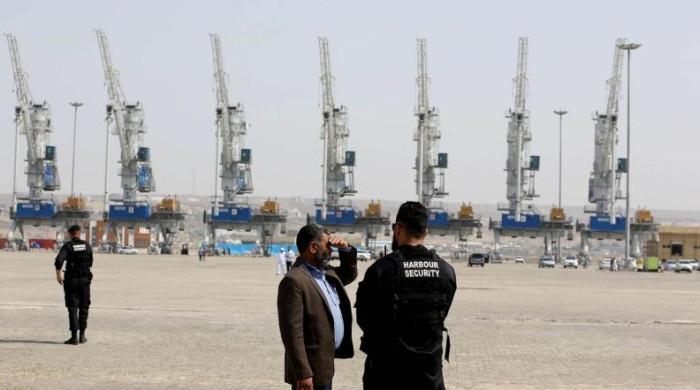
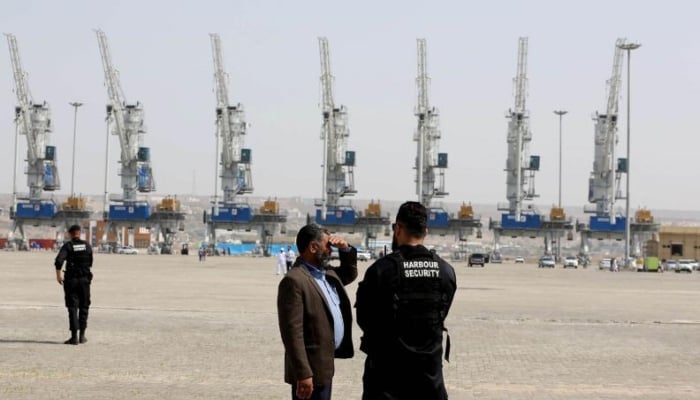
The Indian government, led by Prime Minister Narendra Modi, has come under heavy fire at home after it withdrew from the Chabahar port agreement with Iran, with critics arguing the move was a strategic retreat rather than a proactive foreign policy decision.
New Delhi was forced to abandon its involvement in the port after the United States imposed a 25% tariff on countries doing business with Tehran, The Economic Times reported on Thursday.
According to the publication, India’s withdrawal was carried out without any formal announcement, resulting in the loss of $120 million already paid to Iran.
The amount had been transferred before the decision to disengage and is now considered unrecoverable, the report stated.
The state-run company working at the port, India Ports Global Limited (IPGL), saw its board of directors submit collective resignations after the decision, while the company’s official website has also been shut down.
Congress party leader Pawan Khera termed the move “a new low” in the Modi-led government’s foreign policy.
“So the question is not of Chabahar Port or of Russian oil. The question is: Why is Modi allowing USA to arm-twist India?” he asked in an X post.
India assumed responsibility in 2024 for developing Chabahar port under a 10-year arrangement with Iran.
Meanwhile, a foreign journal reported that the $120 million already paid to Iran can now be used by it at its discretion for the port’s construction and development.
Observers described India’s withdrawal from Chabahar port as another major setback for New Delhi.
The Congress party sharply criticised the Modi-led government over the decision, saying the Indian prime minister “has once again surrendered to Trump”.
“$120 million of India’s taxpayers’ money was invested by the Modi government in this strategically important project, but now it’s all gone up in smoke,” read a post on the party’s X handle.
The Indian opposition party recalled Modi hailing the agreement as “a major strategic win”, saying India’s control over the port has been relinquished, with complete silence from the government.
“Unfortunately, Modi has bowed before Trump’s pressure and compromised India’s national interest,” the party stated.
Meanwhile, economic affairs experts believe the latest actions reinforced concerns surrounding India’s role at Chabahar.
They voiced concerns that India was using the port for nefarious objectives, saying that IPGL’s conduct suggested it was created primarily to acquire control of Chabahar.
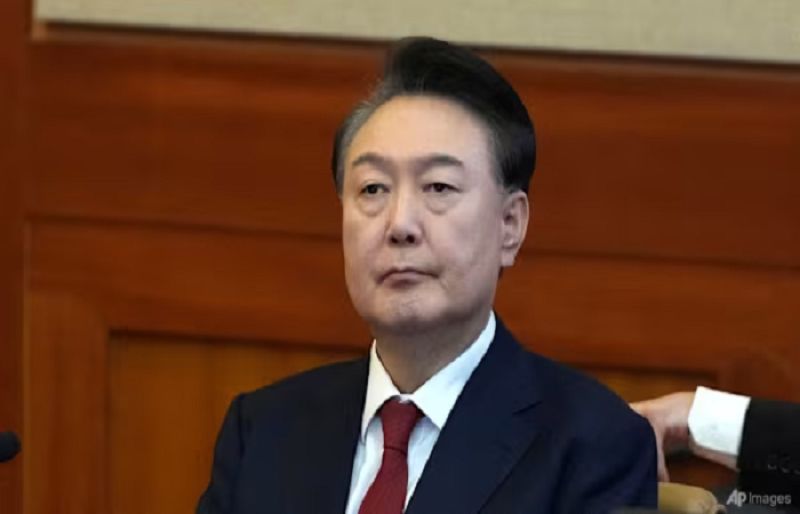

A South Korean court on Friday sentenced former President Yoon Suk Yeol to five years in prison on charges that included obstructing attempts by authorities to arrest him following his failed bid to impose martial law in December 2024.
The Seoul Central District Court found Yoon guilty of mobilising the presidential security service to block authorities from executing an arrest warrant that had been legally issued by a court to investigate him for his martial law declaration.
In televised proceedings, he was also found guilty of charges that included fabricating official documents and failing to comply with the legal process required for martial law.
The ruling is the first related to the criminal charges Yoon faces over his botched martial law declaration.
“The defendant abused his enormous influence as president to prevent the execution of legitimate warrants through officials from the Security Service, which effectively privatised officials … loyal to the Republic of Korea for personal safety and personal gain,” the lead judge on the three-justice panel said.
Speaking outside the court immediately after the decision, one of Yoon’s lawyers, Yoo Jung-hwa, said the former president would appeal the ruling. “We express regret that the decision was made in a politicised manner,” she said.
He could face the death sentence in a separate trial on a charge of masterminding an insurrection by declaring martial law without justification.
Yoon has argued it was within his powers as president to declare martial law and that the action was aimed at sounding the alarm over the obstruction of government by opposition parties.
Yoon, who also denied Friday’s charges, could have faced up to 10 years in jail over the obstruction charges related to when he barricaded himself inside his residential compound in January last year and ordered the security service to block investigators.
He was finally arrested in a second attempt involving more than 3,000 police officers. Yoon’s arrest was the first ever for a sitting president in South Korea.
Parliament, joined by some members of Yoon’s conservative party, voted within hours to overturn his surprise martial law decree and later impeached him, suspending his powers.
He was removed from office in April last year by the Constitutional Court, which ruled he violated the duties of his office.
While Yoon’s bid to impose martial law lasted only about six hours, it sent shockwaves through South Korea, which is Asia’s fourth-largest economy, a key US security ally, and long considered one of the world’s most resilient democracies.
- Judge finds Yoon guilty of obstructing justice and other crimes.
- Separate insurrection verdict is scheduled for February 19.
- Yoon faces another trial over alleged drone flights to North Korea.
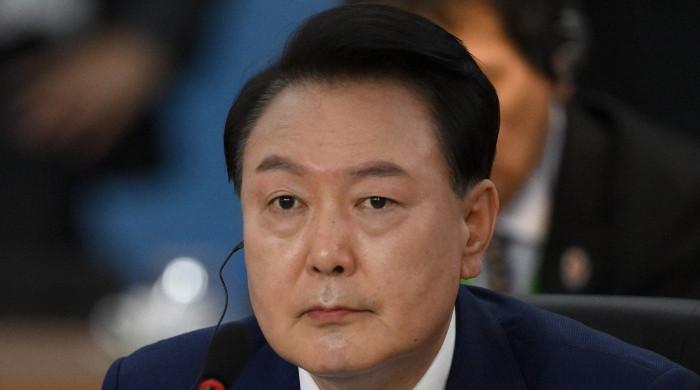
SEOUL: A South Korean judge sentenced former president Yoon Suk Yeol on Friday to five years in prison for obstructing justice and other crimes linked to his disastrous martial law declaration and in its chaotic aftermath.
It is the first in a series of verdicts for the disgraced ex-leader, whose brief suspension of civilian rule in South Korea on December 3, 2024 prompted massive protests and a showdown in parliament.
Now ousted from power, he faces multiple trials for actions taken during that debacle and in the turmoil that followed.
On Friday Judge Baek Dae-hyun at Seoul’s Central District Court said he found Yoon guilty of obstruction of justice by blocking investigators from detaining him.
Yoon was also found guilty of excluding cabinet members from a martial law planning meeting.
“Despite having a duty, above all others, to uphold the Constitution and observe the rule of law as president, the defendant instead displayed an attitude that disregarded the… Constitution,” Baek said.
“The defendant’s culpability is extremely grave,” he said.
But Yoon was not guilty of forging official documents due to lack of evidence, the judge said.
Yoon has seven days to appeal, he added.
Prosecutors had called for a 10-year prison term, while Yoon had insisted no law was broken.
Yoon defiant
It comes days after prosecutors in a separate case demanded Yoon be sentenced to death for his role as the “ringleader of an insurrection” in orchestrating the imposition of martial law.
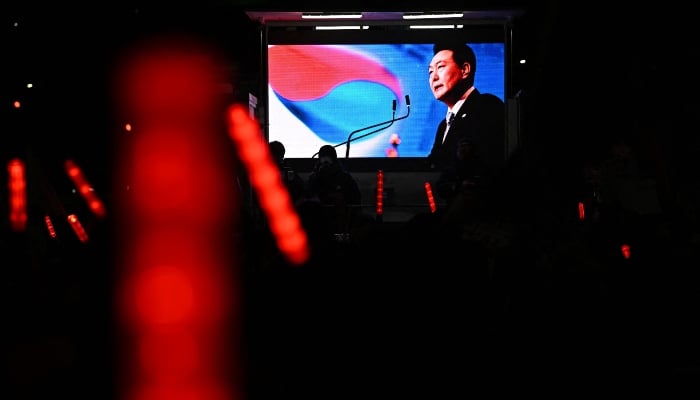
They argued Yoon deserved the severest possible punishment as he had shown “no remorse” for actions that threatened “constitutional order and democracy”.
If he is found guilty it is highly unlikely the sentence will actually be carried out, as South Korea has had an unofficial moratorium on executions since 1997.
Yoon was seen smiling in court as the prosecutors demanded the punishment.
And the former leader and top prosecutor has remained defiant, saying his martial law declaration was a lawful exercise of his presidential authority.
In closing remarks on Tuesday, he insisted the “exercise of a president’s constitutional emergency powers to protect the nation and uphold the constitutional order cannot be deemed an act of insurrection”.
He accused the then-opposition party of having imposed an “unconstitutional dictatorship” through their control of the legislature.
“There was no other option but to awaken the people, who are the sovereign.”
The court is scheduled to rule on the insurrection charges on February 19.
Yoon also faces a separate trial on charges of aiding the enemy, over allegations he ordered drone flights over North Korea to bolster his case for declaring martial law.


PSL 11 to kick off from March 26, says PCB

Ariana Grande speaks out after fan comment sparks debate

Former USDS Leaders Launch Tech Reform Project to Fix What DOGE Broke

-

 Politics1 week ago
UK says provided assistance in US-led tanker seizure
-

 Entertainment1 week ago
Does new US food pyramid put too much steak on your plate?
-

 Entertainment1 week ago
Why did Nick Reiner’s lawyer Alan Jackson withdraw from case?
-
 Sports6 days ago
Clock is ticking for Frank at Spurs, with dwindling evidence he deserves extra time
-
 Business1 week ago
Trump moves to ban home purchases by institutional investors
-
 Sports1 week ago
PGA of America CEO steps down after one year to take care of mother and mother-in-law
-

 Tech4 days ago
New Proposed Legislation Would Let Self-Driving Cars Operate in New York State
-
Sports7 days ago
Commanders go young, promote David Blough to be offensive coordinator