

Business
Has 8th Pay Commission Come Into Effect From 1 January 2026? Implementation, Launch, Panel Constitution, ToR And Other Key Points Explained

New Delhi: Lakhs of central government employees are expecting a salary hike under the 8th Pay Commission. Several employees are expecting an immediate salary increase from 1 January 2026, assuming that the 8th Pay Commission has automatically taken effect from the said date.
However, in order to clear up any confusion regarding salary hikes, employees must understand that the formation of the Pay Commission and its methodology for deciding salary hikes is a highly systematic and structured process that follows a defined sequence of steps and takes into account various economic and social factors.
Here’s a detailed explanation on key point of discussion viz 8th CPC Implementation, 8th CPC Launch, 8th CPC Panel Constitution, 8th CPC ToR And Other Key Points.
When was the 8th Pay Commission announced?
The 8th Pay Commission was announced by the Narendra Modi-led government on 16 January 2025. The Union Cabinet on 28 October 2025 approved the Terms of Reference (ToR) for the Pay Commission which will review salaries, allowances and pension benefits for central government employees and pensioners. The tenure of the 7th Pay Commission ended on December 31.
What has govt said regarding 8th CPC?
According to an official note issued last year, “Usually, the recommendations of the pay commissions are implemented after a gap of every ten years. Going by this trend, the effect of the 8th Central Pay Commission recommendations would normally be expected from 01.01.2026.”
Has 8th Pay Commission Come Into Effect From 1 January 2026?
Since the 7th Pay Commission officially ended on December 31, 2025, it is widely being discussed in the media that 8th CPC will come into effect from 1 January 2026. While the 8th Pay Commission has been formally constituted, its recommendations are still in progress. Going by past trends, once the report is submitted, the government usually takes another 3 to 6 months to examine, approve and notify the recommendations. This makes late 2027 or early 2028 a more realistic timeline for implementation. Even if 1 January 2026 is being set as implementation date retrospectively, we can’t assume it as a formal and official date.
Why is 8th CPC taking time to implement?
The 8th Pay Commission must go through a multi-layered process that includes financial assessment, comprehensive stakeholder consultations, policy review and cabinet approval before it can be implemented and benefits distributed to beneficiaries.
8th Pay Commission: How will salary hike be decided?
The 8th Pay Commission salary increase will be determined based on the fitment factor proposed by the CPC members. The fitment factor is the multiplier that the new CPC employs to determine the new basic pay. The 7th Pay Commission’s fitment factor is 2.57.
8th Pay Commission: Why will salaries not increase immediately?
Many employees are expecting to start receiving new salaries and pensions from 1 January 2026. However, it is important to note that although the government has approved the ToR for the 8th Pay Commission but its recommendations are yet to be submitted or implemented. A Pay Commission is considered operational only after the commission submits its recommendations, the government formally accepts them and an official notification is published in the Gazette. In the case of the 8th Pay Commission, these stages have not been completed so far. Hence an official cut off date as 1 January 2026 can not be loosely used.
8th Pay Commission: When will salaries increase?
The Commission is still working and a decision on implementation is pending. Revised pay will start only after the Union Cabinet approves the recommendations. The government employees and pensioners will have to wait for the pay commission to raise their salaries since it takes time to properly implement a big commission like the pay commission.
8th Pay Commission: Employees will get arrears?
In the case of the 7th Pay Commission, the revised salaries and pensions were rolled out from July 2016 but employees were paid six-month arrears for the period starting from January 2016. The precedent set by the previous pay panel indicates that the 8th Pay Commission’s recommendations are likely to come into effect retrospectively from January 2026. If the 8th Pay Panel submits its recommendations by the end of 2027 and implementation stretches to 2028, the employees are expected to get arrears as per the new pay effective from January 1, 2026, provided the cut off date for implementation is declared so.




The project was part of a package of tech investment promising the UK could become an AI superpower.
Source link

People gather at the Magic Kingdom theme park before the “Festival of Fantasy” parade at Walt Disney World in Orlando, Florida, U.S. July 30, 2022.
Octavio Jones | Reuters
Disney is planning to begin its next phase of cost cutting, which will include as many as 1,000 layoffs, according to a person familiar with the matter.
The cost-cutting initiative comes shortly after Josh D’Amaro took the helm as CEO in mid-March.
The layoffs are expected to mostly affect Disney’s marketing department, according to the person, who requested to speak anonymously because the moves had not yet been made public. That department was recently consolidated under Asad Ayaz, who was named chief marketing and brand officer in January.
Ayaz, who reports directly to D’Amaro and Dana Walden, Disney’s president and chief creative officer, oversees marketing for all of Disney’s divisions — entertainment, experiences and sports — in the newly created role. It’s the first time that Disney brought all of its units under one marketing chief.
Disney’s stock was slightly down in afternoon trading on Thursday. The layoffs were first reported by The Wall Street Journal.
The changes to the marketing department structure occurred in January, when Bob Iger was still CEO of the company. Disney announced shortly after that that D’Amaro would take take over the top job — a long-awaited decision for the company.
D’Amaro, who previously was chairman of Disney Experiences, succeeded Iger after a period of uncertainty for the media and theme park giant — which had included a succession race and recent reorganization and turnaround of the business.
Iger reclaimed the Disney CEO role in late 2022, about two years after his initial departure. He was immediately tasked with a turnaround of the business as its stock price had fallen and earnings began to miss expectations.
By February 2023, Disney had announced sweeping plans that reorganized the structure of the company, cut $5.5 billion in costs and eliminated 7,000 jobs from its workforce.
On D’Amaro’s first official day as CEO in March, he noted the work Iger had done to get the company past one of its most difficult periods.
“When Bob returned to the company a few years ago, his goal was to fortify our business and lay the groundwork for long-term growth, by reigniting creativity and improving performance at our studios, building a robust and profitable streaming business, transforming ESPN for a digital future, and turbocharging our parks and experiences,” D’Amaro said on stage at the company’s investor day.
“We’ve accomplished all of those things, and we’re operating from a place of strength, with ample opportunity for growth.”
Loan default rates are rising, but the true impact on households is yet to come as consumers brace for price rises due to the Iran war, experts have warned.
The latest Credit Conditions Survey from the Bank of England, which measures demand for new borrowing, shows defaults on loans from January to March have risen to 6.2 per cent.
In the previous quarter, there were hardly any defaults on mortgage debt, say lenders. The figures suggest consumers were already feeling the squeeze even before the Iran war, as the economy flatlined.
Karim Haji, Global and UK Head of Financial Services at accountancy firm KPMG, said: “Rising default rates show that underlying pressure is building. The impact of the prolonged conflict on fuel prices is adding new pressure on household finances, and the full impact of higher costs and mortgage rates is still feeding through.”
But the mortgage and property market is still expected to see rising demand in the coming months, experts say.
For secured lending defaults, which include mortgages, the Bank recorded 6.2 per cent in the first quarter of 2026, the highest since the last three months of 2024 (7.8 per cent), when the UK had seen multiple hikes in interest rates. The data for the first three months of 2026 marked a reversal from the fall in defaults reported in the last six months of 2025.
For unsecured lending defaults, such as credit cards, the Bank reported a fourth consecutive quarter of rising defaults (18.6 per cent in the first quarter of 2026). This was the highest figure since the last quarter of 2023 (25.7 per cent).
According to the Bank, demand for home loans and other debt remained high in the run-up to the Iran war, as borrowing costs fell.
Get a free fractional share worth up to £100.
Capital at risk.
Terms and conditions apply.
ADVERTISEMENT

Get a free fractional share worth up to £100.
Capital at risk.
Terms and conditions apply.
ADVERTISEMENT
Lenders had expected demand to keep growing as interest rates came down, but that may now have changed as borrowers become less optimistic, or have to refinance mortgages at higher rates as fixed-rate deals came to a close.
Mr Haji added: “Stable demand for unsecured lending shows households turning to credit to manage their increasing day-to-day spend. While some borrowers are still able to access credit, others are beginning to struggle with repayments, pointing to possible early stages of credit deterioration.”
Bond yields, the amount the government pays in interest on its borrowing, which link to mortgage prices, have eased this week following the announcement of a ceasefire.
Aside from credit wobbles, the Bank of England’s Credit Conditions Survey finds that lenders expect mortgage demand to increase over the coming months.
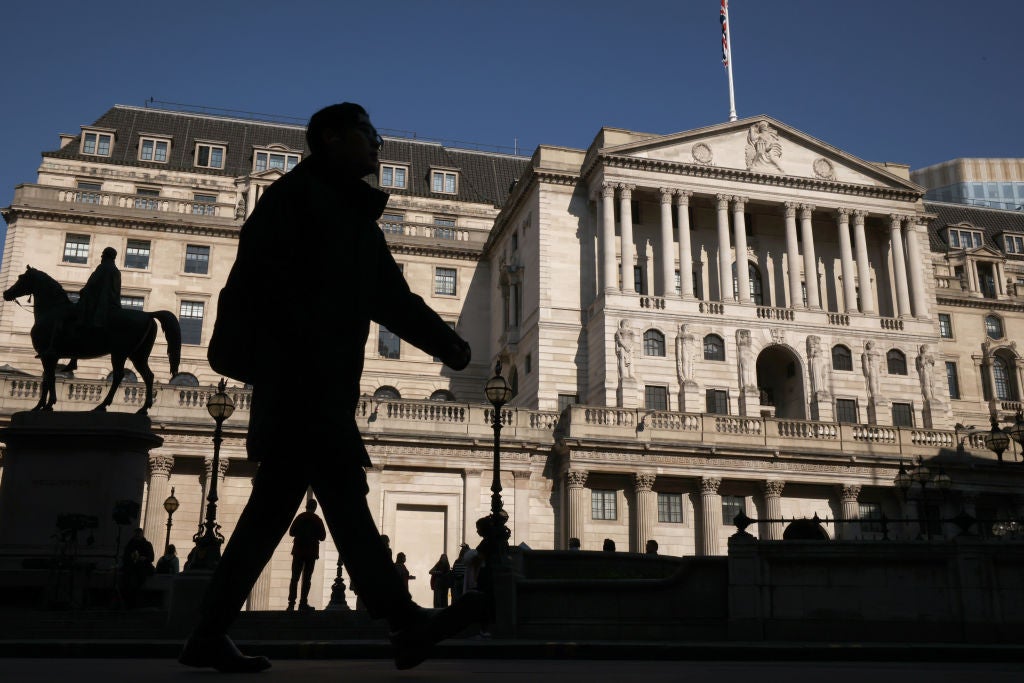
Damien Burke, Head of Regulatory Practice at consultancy Broadstone, said: “The latest Credit Conditions Survey suggests a cautiously improving outlook for the mortgage market at the start of the year, with lenders expecting demand to pick up in the coming months, particularly for house purchases and remortgaging. This reflects a degree of pent-up demand as home buyers awaited lower interest rates and a more certain fiscal landscape.”
But the survey was done just as the Middle East conflict began. The longer it continues, the worse the blow to borrower and lenders, brokers warn.
Raj Abrol, CEO of risk platform Galytix, said: “What started as a conflict in the Middle East is now showing up in borrowing costs right across the economy. Mortgage rates have jumped from 4.8 per cent to over 5.5 per cent — that’s an extra £1,000 a year on a typical £200,000 mortgage. The ongoing turmoil of the Iran crisis has spooked many of the big banks, leading to a surge in mortgage rates and increased pressure on homeowners. Against this complex backdrop, a rise in defaults could well continue for many months as inflation persists and cost-of-living crisis worsens. The longer this uncertainty continues, lenders will continue to remain risk-averse, making access to credit a bigger challenge for consumers.”
For companies, the cost of short-term borrowing has also jumped. When credit gets more expensive, it hurts businesses’ funding for payroll, small and medium-sized businesses refinance, and consumers whose credit cards and car loans quietly reset higher. With a million fixed-rate mortgage deals expiring by September and inflation heading towards 3.5 per cent, the longer this goes on, the more defaults move from a slow creep to something banks have to take seriously, risk experts warn.
Mr Burke adds: “The fall-out from the Ukraine conflict on inflation and mortgage rates remains fresh in the minds of households, and even short-term disruption to supply chains can have a long-term impact on the cost of goods. This further amplifies the need for understanding consumers’ individual affordability when assessing for credit products.”


Olympic gold winner dismisses athletes’ negative comments on representing US: ‘I think we’re the best country’
OpenAI pauses UK investment deal over energy costs and regulation
[CinePlex360] Please moderate: “Sensex gains fo

-
 Business1 week ago
Jaguar Land Rover sees sales recover after cyber attack
-
Uncategorized7 days ago
[CinePlex360] Please moderate: “Trump signals p
-

 Entertainment6 days ago
Joe Jonas shares candid glimpse into parenthood with Sophie Turner
-

 Tech6 days ago
Our Favorite iPad Is $50 Off
-

 Fashion1 week ago
China’s Anta Sports posts record $11.62 bn revenue in 2025
-

 Politics6 days ago
Iran can sustain Strait of Hormuz closure for years, will cut US military logistics: Official
-

 Sports6 days ago
UConn Final Four run could trigger a $50M furniture giveaway for Massachusetts-based Jordan’s Furniture
-

 Sports6 days ago
PSL 11: Lahore Qalandars defeat Multan Sultans in rain-shortened clash