

Business
Higher tariffs are kicking in. Here’s what Walmart and other retailers said about their impact


Customer with shopping cart in the snack aisle of a Walmart store in Florida City, Florida, Aug. 5, 2025.
JC Milhet | AFP | Getty Images
As some of the biggest names in retail, including Walmart and Home Depot, delivered earnings results in recent weeks, they updated Wall Street on how they and their shoppers are responding to President Donald Trump‘s wave of tariff increases.
The takeaway?
Tariff costs are rising for retailers, and they’ve had to get creative to avoid widespread price hikes.
Yet consumer spending has largely stayed strong so far — and the pinch from higher duties hasn’t been as severe as some companies had feared. Compared with their concerns in the spring, retail executives struck a measured tone and said they don’t expect their costs, or customers’ prices, to jump dramatically.
Walmart had given one of the strongest warnings in May, as CFO John David Rainey said he expected some prices to rise during the summer. In an interview with CNBC on Thursday, however, Rainey said the nation’s biggest retailer has raised prices on some items, but in other parts of its stores has kept prices down or expanded discounts.
“There are certainly areas where we have fully absorbed the impact of higher tariff costs,” he said. “There are other areas where we’ve had to pass some of those costs along. But when you look across the basket of items, we’re certainly trying to keep prices as low as we can.”
Scot Ciccarelli, a retail analyst for Truist, said retailers are raising prices “but not nearly to the degree that might have been expected in early April” when Trump first announced his steep tariffs on dozens of countries.
“Most of the companies are kind of downplaying the impact of tariffs,” he said. “They’ve all talked about substantial mitigation efforts, whether that is diversifying sourcing, whether that is pushing price back to vendors.”
Here are three takeaways from a busy couple of weeks of retail earnings.
Consumer spending is steady — with some exceptions
The drumbeat of steady, but selective, U.S. consumer spending continued this quarter.
At Walmart, the nation’s largest grocer by revenue, sales of private-label items, which tend to cost less than national name brands, were roughly flat, Rainey told CNBC. When customers trade down to those cheaper brands or smaller packs of items, it can signal U.S. households feel strapped for cash.
As companies closely watch the consumer, Rainey said Walmart has seen shopper behavior that’s “very consistent.”
“They continue to be very resilient,” he said.
Walmart and Coach parent company Tapestry both raised their sales outlooks for the full year. Both companies said they saw healthy sales of discretionary items, such as clothing and handbags.
Sales of fashion items, including ladies’ apparel and shoes, accelerated at Walmart in the quarter, Rainey said.
One of Coach’s handbags, the large Kisslock bag that costs $695, sold out within minutes of launching in July, Tapestry CEO Joanne Crevoiserat said last week on the company’s earnings call.
Yet some categories are still a tough sell. And lower-income shoppers have been more sensitive to price changes.
Walmart CEO Doug McMillon said Thursday that the effect of tariffs on spending “has been somewhat muted.” Still, he added some shoppers have noticed and responded when prices creep up.
“As we replenish inventory at post-tariff price levels, we’ve continued to see our costs increase each week, which we expect will continue into the third and fourth quarters,” he said. “Not surprisingly, we see more adjustments in middle- and lower-income households than we do with higher-income households and discretionary categories where item prices have gone up.”
Sales at Home Depot and Lowe’s improved as the quarter went on, with the strongest in July. Still, the companies weren’t ready to predict a turnaround for home improvement.
Lowe’s CEO Marvin Ellison attributed some of the recent pickup in demand to better weather and said “it’s too early for us to call that a trend.” Higher mortgage rates and borrowing costs have dinged homeowners’ willingness to tackle a major renovation or move to a new home, which tends to spur home projects.
Other brands had more dire warnings about spending. On the company’s earnings call, Crocs CEO Andrew Rees described the backdrop for the second half of the year as “concerning” and said its retail orders are weak.
He described Crocs’ customers as “super cautious.”
“They’re not purchasing. They’re not even going to the stores, and we see traffic down,” he said, adding that’s also true at its outlets, which draw more lower-income households.
Customers shop at a Home Depot store on August 19, 2025 in Chicago, Illinois.
Scott Olson | Getty Images
Retailers have blunted the effects of tariffs … so far
Retailers have jumped into action to try to minimize cost increases from tariffs or avoid them altogether.
Those tactics have included importing goods from a wider range of countries, getting items to the U.S. early and stocking up on high-frequency purchases or fresh merchandise that consumers are more likely to buy, even at higher prices, according to interviews of retail executives and earnings calls.
Yet as Walmart showed, retailers have been strategic about price increases — to not only avoid spooking customers, but also to dodge potential scrutiny from the White House. Trump criticized Walmart in May after the company warned it would have to raise prices.
Sharkninja, which makes a wide range of items including blenders and hairstyling tools, has “increased sell price on products, but done it very, very carefully,” CEO Mark Barrocas said in an interview. And in some cases, it had to roll back part of those price increases, he said.
The company has also reduced discounting and raised the price of new merchandise when it debuts. For example, Sharkninja initially planned to launch a new infrared skin care mask called CryoGlow at $299, but instead decided to price it at $349, he said.
For Walmart, Target and Tapestry-owned Coach, importing goods early and having merchandise in warehouses before tariffs took effect have helped them curb the hit from higher rates.
Home Depot Chief Financial Officer Richard McPhail told CNBC most of the imported products the company sold during the quarter landed ahead of tariffs. And Home Depot is taking more steps to blunt the effects: More than half of what the company sells comes from the U.S. and it aims to import no more than 10% from any single country by the end of the year.
Yet the tariff bill is still adding up. Walmart’s McMillon said he expects higher costs from duties to continue through the second half of the fiscal year. Other companies also provided specific estimates of how much the higher duties will cost them.
Even as Tapestry posted sales growth, its shares tumbled last week after it said costs from higher duties would total $160 million this upcoming fiscal year and ding profits.
While Trump’s tariff policy appears more settled than in the spring, tariffs on some countries could still rise.
Many of Trump’s tariffs on countries began in early August, but one of the key rates still hangs in the balance. He delayed higher tariffs on China for 90 days last week. Those had jumped as high as 145%, but are now at 30% as negotiations continue.
Target acknowledged the trade uncertainty with its own strategy. It gave a wider than usual range for its full-year earnings per share outlook.
Inside a Crocs store at Queens Center in New York.
Ryan Baker | CNBC
Strong brands, new moneymakers matter more than ever
Strong brand loyalty and lucrative new businesses have made it easier for some companies to weather the uncertainty.
As homeowners postpone larger projects, Home Depot and Lowe’s have bulked up their business among home professionals to attract steadier traffic and prepare for when demand picks up again. Along with reporting earnings this week, Lowe’s announced it’s buying Foundation Building Materials for $8.8 billion, marking its second acquisition of a home professional-focused company in recent months.
Home Depot announced its own pro-focused deal earlier this summer and made the largest acquisition in its history when it bought SRS Distribution last year.
Walmart also has benefited from newer revenue streams, especially its advertising business and third-party marketplace. Global advertising grew 46% in the most recent quarter, including ad-enabled smart TV maker Vizio, which it acquired last year.
Its marketplace revenue grew by 17% year over year. That business includes sellers who get charged a commission and often pay for services, such as ads on Walmart’s site to promote their products or fulfillment services to have the big-box retailer store pack and ship orders to customers.
Those “more diversified set of profit streams,” which have higher margins than selling a gallon of milk or a T-shirt, make Walmart’s earnings steadier even as the company faces profit pressures, Rainey said on the company’s earnings call.
“We are more than just a standard brick-and-mortar retail business,” he said on the call.
For some brands, customer demand is high enough to help offset tariffs or allow them to charge more.
Sandal maker Birkenstock, for instance, “saw no pushback or cancellations” after its tariff-related July 1 price increases, CEO Oliver Reichert said on the company’s earnings call.
Coach, which has driven up its average price of items over the past five years and reduced its level of markdowns, can better “absorb a lot of these input costs,” Coach CEO Todd Kahn told CNBC.
On the flip side, tariff costs have hit some brands harder, especially if they don’t have the new products customers seem to want or are skittish about what sales will look like later this year. High-performing companies with massive scale such as Walmart often have leverage with vendors to pass on costs — but other businesses might not.
“If you’re a struggling brand, or you’re not really growing your business with a vendor, that vendor has less incentive to absorb incremental costs, whether it’s from tariffs or supply chain or whatever,” Truist’s Ciccarelli said.
Target said its profit margins in the quarter were hurt by the costs of cancelling orders. Crocs also said it is reducing orders for the back half of the year.
Crocs took another unusual step: Rees said the company is taking back older inventory from retailers that sell its Heydude shoe brand and swapping it out with fresher styles.






Citigroup initiated its coverage of Pine Labs with a buy rating and a target price of Rs 235. Analysts said that India’s payments fintech is on a monetization improvement trajectory, with leading players increasingly entrenched in respective core areas of leadership. While product, services and distribution build-outs into comprehensive plays will continue across the fintech ecosystem, large players don’t face significant disruption risks owing to: Across-the-board profitability push; rising regulatory costs and compliance requirements; and stickiness borne out of integration into enterprise business workflows. Further, while consumer payments have seen flux in competitive positioning in the past decade, there have been relatively fewer changes in positioning and leadership within segments in merchant payments.BoFA Securities has initiated its coverage of Groww (Billionbrains Garage Ventures) with a buy rating and a target price of Rs 235. Analysts said Groww is well positioned to capitalize on India’s retail investing tailwinds and they expect compounded annual growth rate (CAGR) for revenue at 30% over FY26-FY28. The company produces best-in-class profitability with further upside from operating leverage. Analysts have valued Groww at 39x FY28E price-to-earnings. They, however, said that the near-term risks for the stock are a weak capital market performance and the expiry of the six-month lock-in of shares post-IPO.Elara Capital initiated its coverage of Jindal Saw with a buy rating and a target price of Rs 280. Analysts said earnings recovery is expected over FY27–FY28, driven by water, and oil & gas demand. The company’s order book is at an all-time high, indicating strong visibility. They also feel Jal Jeevan Mission spending revival to drive domestic pipe demand, while the global pipeline capex is supported by energy security concerns. Analysts also pointed out that exports are rising, with diversification reducing dependence on domestic capex. The company’s capacity expansion to support margins and operating leverage. They feel the stock’s valuations are attractive, with rerating potential driven by execution and growth.Jefferies has downgraded Indus Towers to underperform from buy with a target price cut to Rs 375 from Rs 530. Analysts downgrade the stock due to site-renewal risks bunched up over second half of 2026 (H2CY26) and first half of 2027 (H1CY27) which could impact revenues and growth. Elevated capex levels due to higher growth and maintenance capex which will impact earnings growth as well free cash flow and payouts. They cut Indus Towers’ revenue and profit after tax (PAT) estimates by 2-6% to factor renewal risks post which stock offers 3% EPS growth and a 4% yield. They said risks on growth outlook should weigh on re-rating potential too.Kotak Institutional Equities has a buy on Ujjivan SFB with a target price of Rs 72. Analysts said that the RBI has returned Ujjivan SFB’s application for a universal bank license, citing need for further loan portfolio diversification. While the outcome is clearly not favourable, the regulator has flagged no concerns relating to governance, compliance or operational soundness. Analysts said their investment thesis did not factor in any benefit from a potential transition to a universal bank. Hence, they maintained a buy but remained watchful of any sharp changes in asset mix strategy in response to RBI’s feedback.(Disclaimer: Recommendations and views on the stock market, other asset classes or personal finance management tips given by experts are their own. These opinions do not represent the views of The Times of India)
The better-than-expected GDP data comes as Asian countries have been hit hard by the impact of the conflict.
Source link
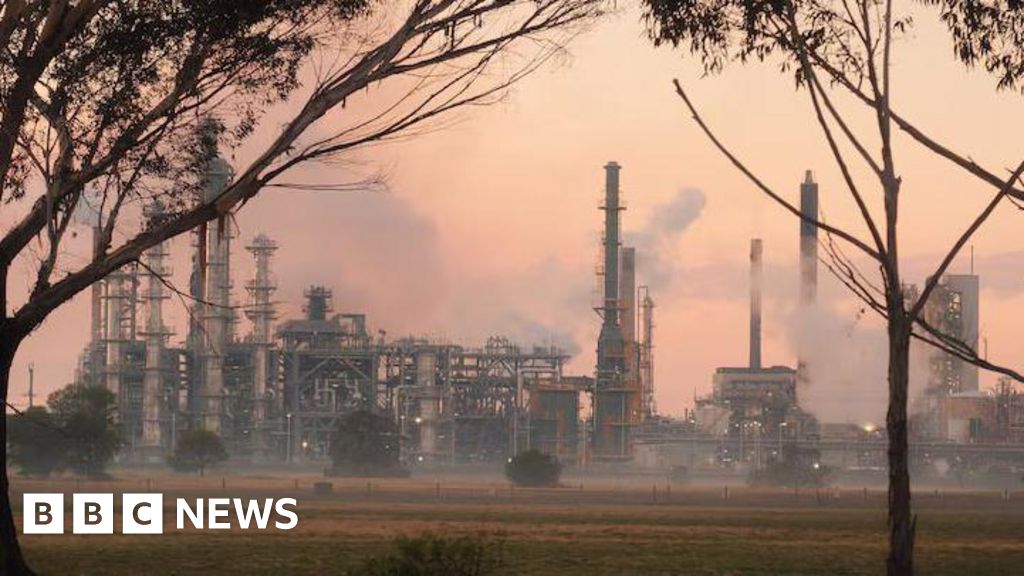
The fire has deepened fears over the nation’s petrol supplies amid a global crunch.
Source link


No vote after NCAA urges further study of age eligibility changes to college sports

Taylor Swift on bond with Dakota Johnson: ‘Curious’
Pine Labs, Groww & more: Top stocks to watch on April 16 – The Times of India

-

 Fashion1 week ago
India’s exports face reset as EU links trade to carbon metrics: EY
-

 Entertainment1 week ago
Lamar Odom shocking response to Khloé Kardashian account of his overdose
-

 Entertainment1 week ago
Queen Elizabeth II emotional message for Archie, Lilibet sparks speculation
-

 Tech1 week ago
Azure customers up in arms over ‘full’ UK South region | Computer Weekly
-

 Tech1 week ago
As the Strait of Hormuz Reopens, Global Shipping Will Take Months to Recover
-

 Fashion1 week ago
CII submits 20-pt agenda to Indian govt to back firms hit by Iran war
-

 Tech7 days ago
This AI Button Wearable From Ex-Apple Engineers Looks Like an iPod Shuffle
-

 Politics6 days ago
Indian airlines hit hardest after Dubai limits foreign flights until May 31