

Politics
How can US get out of Iran war?

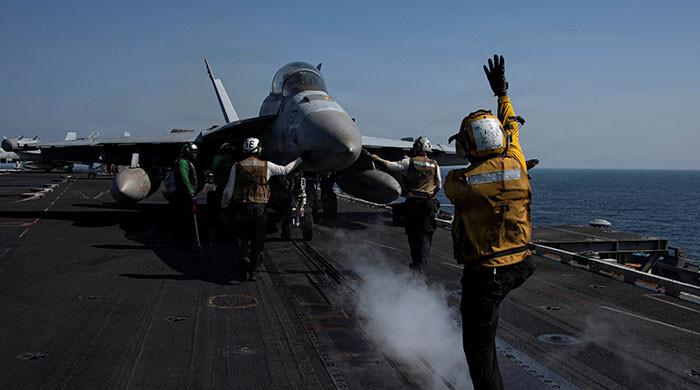
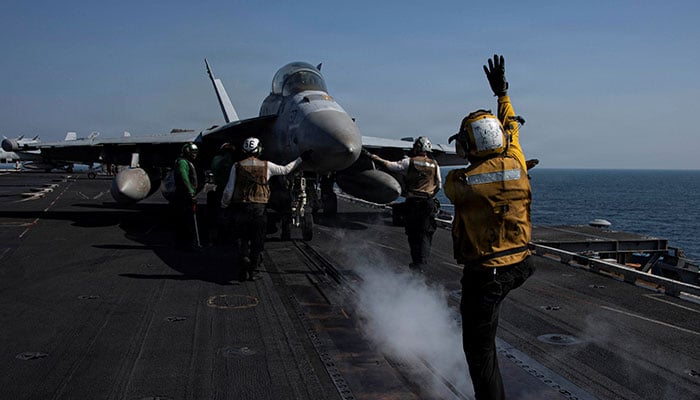
PARIS: US-Israeli strikes killed Iran’s supreme leader but have not toppled the government, which now, from its perch on the Strait of Hormuz, has put the entire world economy on the war’s frontlines.
The initial US victory in martyring supreme leader Ali Khamenei has given way to a conflict that Washington cannot completely control, sharply limiting President Donald Trump’s options.
Two weeks into a bloody air war, Iran holds many cards as it chokes the world’s oil supply and strikes US allies in the Middle East, including Gulf states who had for years staked their reputations on political and economic stability.
It makes for a drastic turn from the early hours of February 28, when the first clouds of black smoke rose over Tehran.
Amid the smouldering ruins of a housing complex in the Iranian capital were Khamenei and dozens of top-ranking officials, martyred in strikes that took years of espionage and planning.
The government had been decapitated.
And yet — such strategies have “never been effective” in state-versus-state warfare, writes American professor Robert Pape in his book “Bombing to Win”, a study of military air campaigns. And Iran itself is no stranger to history.
“We’ve had two decades to study defeats of the US military to our immediate east and west,” Iran’s foreign minister, Abbas Araghchi, said recently. “We’ve incorporated lessons accordingly.”
The government quickly put in place a new supreme leader, while its decentralised “mosaic defence” allowed the military to retaliate without losing much of a step.
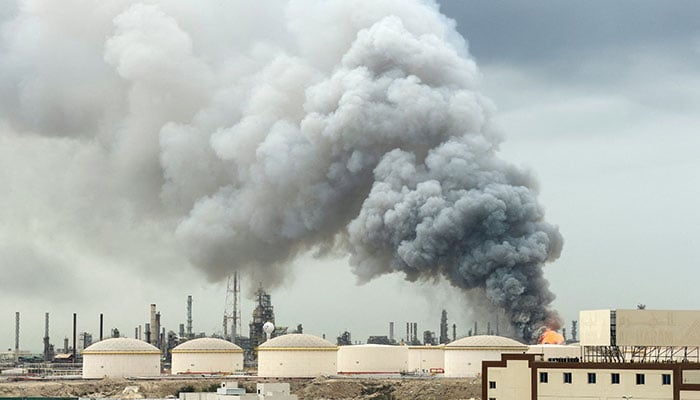
The military doctrine was developed in 2005, after the United States toppled the governments of Iraq and Afghanistan, said French researcher Elie Tenenbaum, of the French Institute of International Relations (IFRI).
It was meant to help a decentralised military command evade a debilitating loss of top leadership, and “the regime seems pretty intact, despite the fact that it has lost some very senior leaders,” said Ali Vaez, Iran project director at International Crisis Group.
That allows Tehran to roll out a “three-part strategy,” Vaez said: “First, ensure survival. Second, keep enough retaliatory capacity to be able to stay in the fight. And then third was to prolong the conflict” so that “you can end it on your terms.”
All of which spells trouble for Trump as the war draws in US allies and drives up the cost of living at home and abroad.
Global fallout
With its missiles and a vast supply of relatively cheap drones, Iran has struck a marina in Dubai and oil tankers at sea, expanding the war to US allies in the Gulf, Turkey, Cyprus, and elsewhere.
Meanwhile, in Lebanon, the Iran-backed armed group Hezbollah is trading missile fire with Israel, and Iranian forces have all but closed the Strait of Hormuz, a vital artery that normally hosts a fifth of the world’s crude oil traffic.
Oil and petrol prices have spiked or sparked rationing in countries from the United States to Bangladesh to Nigeria.
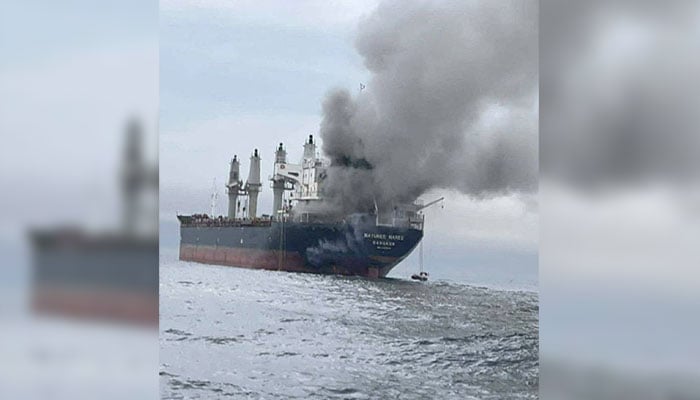
Air traffic has slowed and foreigners are fleeing the Gulf, whose image of business-friendly stability has taken a huge hit.
Oil importing countries around the world have released some 400 million barrels of strategic fuel reserves, though it has hardly eased the pain.
In Kenya, tea sellers are watching stocks pile up unsold as maritime trade lines come under pressure and shipping insurance spikes.
Bangladesh has rationed fuel and deployed the military to ward off unrest.
“We knew that this will open up a Pandora’s box of chaos,” said the Gulf International Forum’s Aziz Alghashian, a Saudi analyst.
He also said there was “anger” among Gulf states that had put “so much investment in” diplomacy with Iran.
False confidence?
The worldwide fallout has sparked questions over Washington’s strategy.
Trump has called for Iran’s “unconditional surrender,” while Defence Secretary Pete Hegseth has said the operation’s goals are “laser focused,” as the administration dodges questions over the war’s ill-defined, shifting objectives.
“There is a stark difference between the operational superiority that we have over Iran — we know where everyone [is] and where we can hit them — and the strategic understanding of Iran,” said Danny Citrinowicz, a senior fellow at Israel’s Institute for National Security Studies.
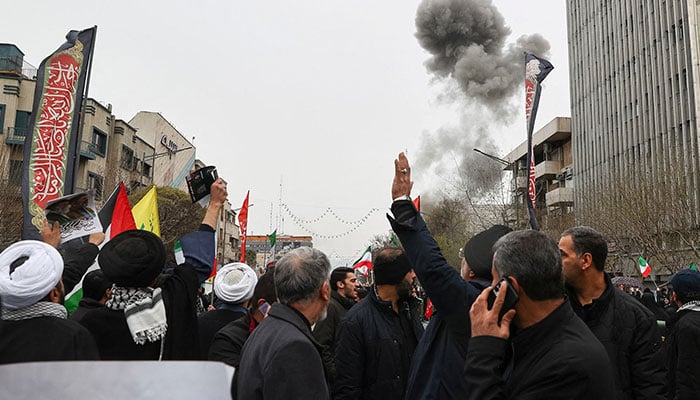
Jonathan Paquin, a political science professor at Canada’s Universite Laval, told AFP: “The American administration was undoubtedly presumptuous in believing it held all the cards.”
There were reasons Washington could find a way to assure itself of such confidence, Paquin noted: a US operation toppled the Venezuelan government of Nicolas Maduro at the beginning of the year.
The government in Iran, meanwhile, has been struggling through US sanctions, and was shaken by major demonstrations in December and January, sparking a security crackdown that killed thousands.
US elections
Yet in the short term, Tehran still has plenty of pressure points it can hit via oil and shipping threats, including via Yemen’s Houthi rebels, who previously disrupted shipping through the Red Sea with their own missile attacks.
Iran is taking “the global economy hostage” as a means of “putting pressure on Trump,” said Crisis Group’s Vaez.
All the while, Iranian missiles launched at US allies are eating up American interceptors, including expensive Patriot and THAAD systems.
And domestically, Trump — who ordered the surprise strikes without seeking public support for a war —is facing upcoming congressional elections.
As price-sensitive voters prepare to head to the polls, “certainly Republican representatives and senators calling the White House to say they risk losing their districts,” said Paquin, the political science professor.
Not that Iran, facing its own political, military and economic upheaval from the war, is without its own long-term difficulties.
“I think the most likely scenario is that of a zombie state,” said IFRI researcher Clement Therme — a government that maintains its security apparatus but struggles to fulfil functions such as revenue collection or oil exportation.
“They are already struggling to pay public salaries this month,” he noted.
The popular uprising called for by Trump to replace the government amid the bombardment seems a far way off — though Therme noted “it’s still too early to judge” the effects of the war on potential protests down the line.
No exit?
With no easy exit, Trump is likely to “revise the concept of victory, setting aside the prospect of surrender or regime change” and claiming that the Iranians should rise up on their own, said Paquin.
But while Trump might want to walk away boasting of martyring Khamenei and degrading the Iranian military, “Iran might not give him that off-ramp,” said Nate Swanson, of the Atlantic Council.
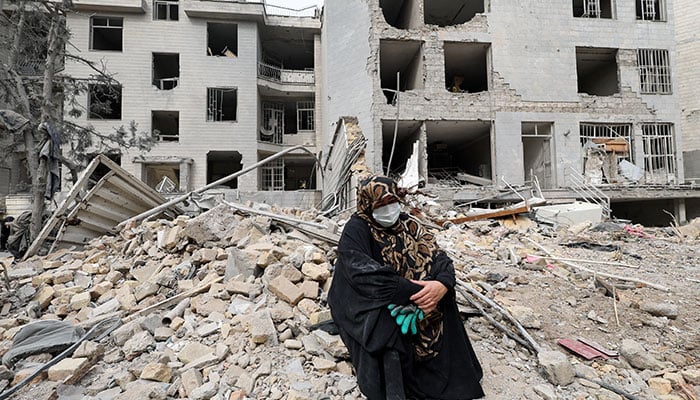
The remaining options seem increasingly bloody.
Iran could keep up the hostilities even after the United States lays down its arms.
Or, Trump “doubles down. We put some form of troops on the ground,” whether for special operations or long-term fighting.
The last possibility, worried Swanson, is that the war is “outsourced into an ethnic conflict” by Washington and Israel arming Iranian opposition groups.
For now, the missiles continue to rain down, inside Iran and increasingly further afield.
- Clerks falsely claimed as crime victims.
- Fake armed robberies caught on surveillance.
- Victims allegedly paid to join scheme.
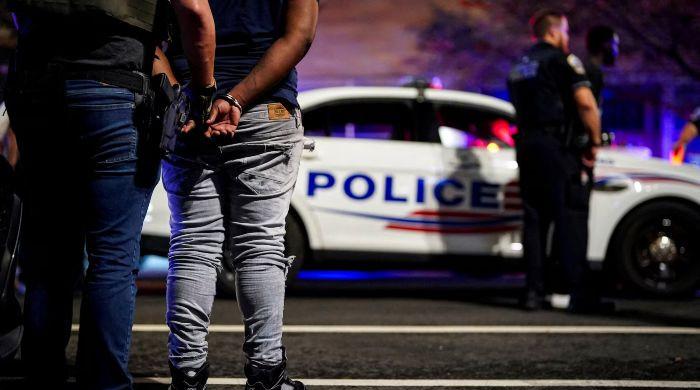
Eleven Indian nationals have been charged in the United States over an alleged visa fraud conspiracy involving staged armed robberies at stores so clerks could falsely claim to be victims of violent crime on immigration applications.
According to the United States Attorney’s Office for the District of Massachusetts, the alleged purpose of the scheme was to enable participants to seek a U non-immigration status, or a U Visa, which is available to victims of certain crimes who have suffered mental or physical abuse and have helped law enforcement in investigating or prosecuting criminal activity.
Prosecutors alleged that in March 2023, Patel and his co-conspirators set up and carried out staged armed robberies at at least six convenience/liquor stores and fast-food restaurants in Massachusetts and elsewhere.
During the alleged robberies, the “robber” would threaten store clerks and/or owners with an apparent firearm before taking cash from the register and fleeing, while the interaction was captured on store surveillance video, according to court documents.
The clerks and/or owners would then allegedly wait five or more minutes until the “robber” had escaped before calling police to report the “crime”.
Prosecutors said the supposed “victims” each paid Patel to take part in the scheme, while Patel allegedly paid store owners for the use of their stores in the staged robberies.
The statement said Patel, the “robber”, and the getaway driver were previously charged and convicted.
The eleven defendants charged in the latest case are alleged to have either arranged with the organiser to set up each robbery, or paid for themselves or a family member to participate as a “victim”.
Those charged with one count of conspiracy to commit visa fraud are:
- Jitendrakumar Patel, 39, unlawfully residing in Marshfield, Massachusetts;
- Maheshkumar Patel, 36, unlawfully residing in Randolph, Massachusetts;
- Sanjaykumar Patel, 45, unlawfully residing in Quincy, Massachusetts;
- Dipikaben Patel, 40, deported to India after unlawfully residing in Weymouth, Massachusetts;
- Rameshbhai Patel, 52, unlawfully residing in Eubank, Kentucky;
- Amitabahen Patel, 43, unlawfully residing in Plainville, Massachusetts;
- Ronakkumar Patel, 28, unlawfully residing in Maryland Heights, Missouri;
- Sangitaben Patel, 36, unlawfully residing in Randolph, Massachusetts;
- Minkesh Patel, 42, unlawfully residing in Perrysburg, Ohio;
- Sonal Patel, 42, unlawfully residing in Perrysburg, Ohio; and
- Mitul Patel, 40, unlawfully residing in Worcester, Massachusetts.
According to the statement, Jitendrakumar Patel, Maheshkumar Patel, Sanjaykumar Patel, Amitabahen Patel, Sangitaben Patel and Mitul Patel were arrested in Massachusetts and released following initial appearances in federal court in Boston.
It said Rameshbhai Patel, Ronakkumar Patel, Sonal Patel and Minkesh Patel were arrested and made their initial appearances in Kentucky, Missouri and Ohio, and will appear in federal court in Boston at a later date.
The charge of conspiracy to commit visa fraud carries a sentence of up to five years in prison, three years of supervised release and a fine of $250,000.
The announcement was made by United States Attorney Leah B Foley and Ted E Docks, Special Agent in Charge of the FBI’s Boston Division.
The statement added that the details in the charging documents are allegations and that the defendants are presumed innocent unless and until proven guilty beyond a reasonable doubt in a court of law.


AMSTERDAM: An explosion damaged a Jewish school in Amsterdam early on Saturday, in what the city’s mayor described as “a deliberate attack against the Jewish community”.
The explosion at the school in an upscale residential neighbourhood on the south side of Amsterdam only caused limited damage, Mayor Femke Halsema said in a press release, as police and firefighters arrived at the scene quickly.
No injuries were reported.
An investigation has been opened, and the incident comes after nighttime attacks this week in front of synagogues in the Belgian city of Liege and the Dutch port city of Rotterdam.
Security at synagogues and Jewish institutions in the Dutch capital had already been heightened after an overnight arson attack at a synagogue in the centre of Rotterdam on Friday.
In neighbouring Belgium, an explosion caused a fire at a synagogue in Liege on Monday.
“This is a cowardly act of aggression against the Jewish community,” Halsema said. She added that the police have CCTV footage of a person placing the explosive device.
“Jewish people in Amsterdam are increasingly confronted with antisemitism. This is unacceptable.”
Concerns about possible attacks against Jewish communities around the world have risen following US and Israeli attacks on Iran and a subsequent response from Tehran.
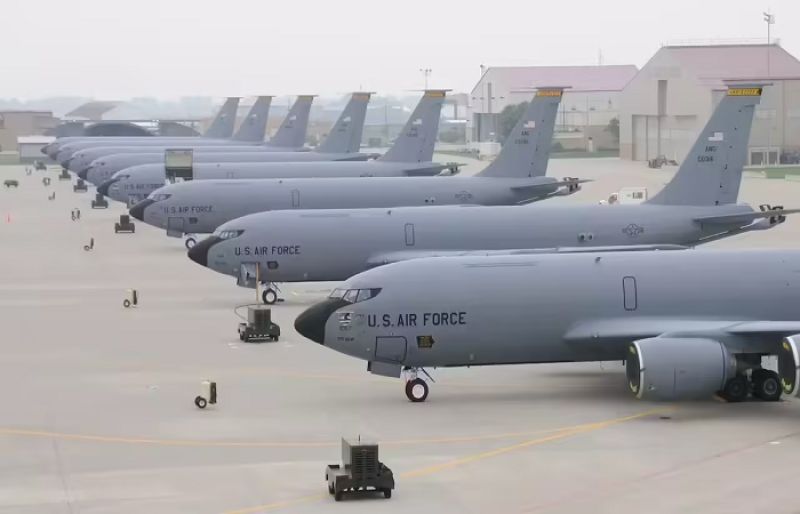

Five US Air Force refuelling planes were damaged in an Iranian missile strike on a key military base in Saudi Arabia, a media report said.
According to a report by the Wall Street Journal, the planes were struck while they were on the ground at the Prince Sultan Air Base, a major facility hosting US forces in Saudi Arabia.
The aircraft sustained damage during the missile attack, the report added.
The report said that the attack occurred amid missiles and drone strikes launched by Iran targeting US military installations in the region.
The damaged planes were identified as Boeing KC‑135 Stratotanker aircraft manufactured by Boeing.
The report noted that although the aircraft were damaged in the missile strike, they were not completely destroyed and are currently undergoing repairs.
No casualties were reported in the incident.
Prince Sultan Air Base is located about 70km southeast of Riyadh, the capital of Saudi Arabia.
The incident is being seen as part of a series of recent setbacks for the United States Air Force in the region.
Earlier, two KC-135 refuelling aircraft collided during an operation, causing one of the planes to crash.
The Pentagon confirmed that all six personnel aboard the aircraft destroyed in the collision were killed.
Following the latest incident, the number of US aerial refuelling aircraft damaged or destroyed in recent days has risen to at least seven.


Tips and Advice for Buying Used or Refurbished Electronics

June Marlow, star of ‘Doc Martin’ dies days after celebrating 95th birthday

A Paramount-Warner Bros. movie slate could rule the 2027 box office, but is it sustainable?

-

 Politics1 week ago
India let Iran warship dock the day US sank another off Sri Lanka, say officials
-

 Sports1 week ago
Pakistan set for FIH Pro League debut | The Express Tribune
-
 Business1 week ago
Restaurant group changes name after bid to buys pubs across the UK
-

 Entertainment1 week ago
Harry Styles kicks off new era with ‘One Night Only’ comeback show
-

 Sports1 week ago
Winners and losers of the 2026 NHL trade deadline
-
 Business1 week ago
Home heating oil: ‘Most of my pension has gone on home heating oil’
-
 Business2 days ago
Stock market crash today (March 12, 2026): Nifty50 opens below 23,600; BSE Sensex down over 900 points on continuing US-Iran war – The Times of India
-

 Entertainment1 week ago
Kanye ‘Ye’ West trips during trial: ‘Is he asleep?’