

Tech
If every US home and personal vehicle goes electric, power outages could spike unless key measures are taken

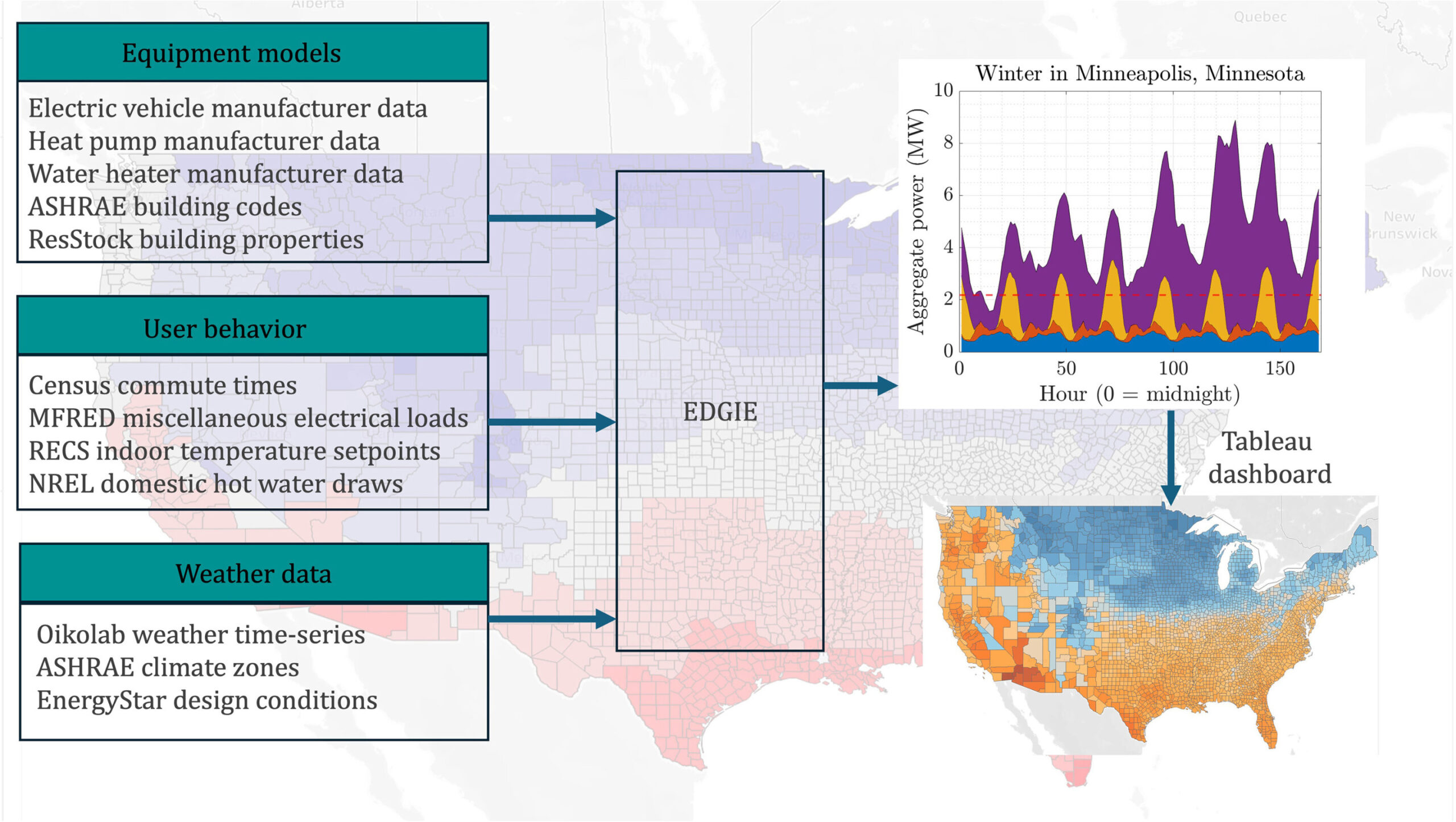
A future where all homes and vehicles in the U.S. are fully electrified could overwhelm power supply and risk outages unless key upgrades are made, says a new study conducted by Purdue University engineers. But a few strategies could cut two-thirds of the potential costs of reinforcing the nation’s distribution grid to handle this demand.
Electrifying would mean switching a home’s heating system from a boiler to a heat pump and transitioning from gas- or diesel-fueled vehicles to electric vehicles.
“If we install a whole bunch of new electric heating systems for homes and use more electric vehicles and electric water heaters, then we’re going to increase electricity demand a lot. And that’s basically going to require putting in thicker wires, bigger transformers and other infrastructure into the power grid,” said Kevin Kircher, a Purdue assistant professor of mechanical engineering and faculty member in the university’s Ray W. Herrick Laboratories. “And if that happens, utilities will pass the cost of those upgrades to us, the customers.”
The study, published in Cell Reports Sustainability on Sept. 16, found that reinforcing the U.S. distribution grid, which provides power to residential areas, could cost $350–$790 billion—about $2,000–$6,400 total per household between now and 2050. Much of this cost would be due to increased electric space heating, with the coldest regions of the U.S. experiencing electricity demand peaks up to five times higher than today’s peaks.
But taking measures such as installing better insulation and air sealing, improving equipment efficiency, and coordinating the operation of the home’s electric devices could mitigate the costs of upgrading the grid.
An example of boosting the efficiency of a home’s electrical equipment would be using ground-source heat pumps instead of air-source heat pumps, because the constant ground temperature reduces the energy needed to heat and cool homes. Coordinating the home’s electrical device operation could mean adjusting when the home’s electric vehicle charges so that it doesn’t happen at the same time as the heat pump is in use.
“If electric vehicles could communicate with the heating, ventilation and air conditioning units that we install in the house, and if they can coordinate when they have to charge or when they have to heat or precool the homes, this strategy could contribute to a 40% decrease in grid reinforcement costs,” said Priyadarshan, a Ph.D. student in Purdue’s School of Mechanical Engineering and the first author of this paper.
“Let’s say there’s a cold snap coming. The heat pump could preheat the house, and the home’s electric vehicles could be charged at a different time to reduce strain on the grid.”
The study focused on each county of the Lower 48 U.S. states. The researchers modeled the grid impacts of fully electrifying homes and vehicles using public surveys of home electricity usage and electric vehicle travel where available for each county, specifications from equipment manufacturers, building code guidelines, and weather data. The team also calibrated the home data against a fully electrified test house in West Lafayette called the DC Nanogrid House.
After analyzing the impact of full electrification on the distribution grid, the researchers adjusted the parameters of their model to include the home weatherization and equipment efficiency strategies they were proposing to cut grid upgrade costs. For their strategy to coordinate electric device operation, they used an optimization algorithm to take into consideration heating, electricity demand and electric vehicle usage and devise an optimal solution for when to charge the vehicles and how hard to run the heat pumps.
Other studies have investigated the future of increased home and vehicle electrification in the U.S. but not on the scale of residential areas by county nationwide.
“On the one hand, it’s kind of scary—if we electrify everything, we might have a crazy expensive future. But on the other hand, if we electrify in a smart way, then we don’t have nearly as many of those problems,” Kircher said.
More information:
Priyadarshan et al, Distribution Grids May Be a Barrier to Residential Electrification, Cell Reports Sustainability (2025). DOI: 10.1016/j.crsus.2025.100518. www.cell.com/cell-reports-sust … 2949-7906(25)00214-9
Citation:
If every US home and personal vehicle goes electric, power outages could spike unless key measures are taken (2025, September 16)
retrieved 16 September 2025
from https://techxplore.com/news/2025-09-home-personal-vehicle-electric-power.html
This document is subject to copyright. Apart from any fair dealing for the purpose of private study or research, no
part may be reproduced without the written permission. The content is provided for information purposes only.












Tech
I Tested Garmin Watches for a Decade While Hiking, Biking, and Climbing. Here’s What You Should Buy

Last year, Garmin introduced a Pro version that incorporates the inReach’s satellite communications savvy. Not only does it cost at least $400 more than the Apple Watch Ultra and $200 more than the regular Fenix 8, but you also have to pay for the inReach subscription plan, which has several tiers and ranges from $8/month to $50/month depending on whether you want features like unlimited texting or sending photo messages.
What you get for this mind-boggling price is a sports watch that can do anything and everything. It has best-in-class battery life (every Fenix can last for weeks on a single charge, and up to a month with solar charging) and features like the depth sensor from Garmin’s Descent line, which means this watch works as a full-on dive computer for scuba and free diving. It has a microphone and speaker for basic voice commands (although no onboard cellular connectivity), the surprisingly useful built-in LED flashlight, and Garmin’s signature built-in topographic maps, 24/7 health monitoring, and tracking for over a hundred different activities.
I’ve taken the 51-mm version on pretty much every outdoor sport—snowboarding, trail running, mountain biking, and rock climbing. Every time I use it, its capabilities far outclass my own. I have irritated many a fellow climber by attempting to track route difficulty, duration, and falls while integrating my Body Battery metrics and so on. The danger is always that you’ll spend more time fiddling with your Garmin Fenix 8 than you do with your actual sport. I have the version with the sapphire glass face and the titanium bezel, and have smashed it into rock faces with nary a scratch. If you’re up for paying the price and want a good-looking watch that will last forever (I have friends who are still wearing their Fenix 5s and 6s, and honestly, they’re fine), this is the one to get.
Best Running Watch
The Garmin Forerunner series launched in the early 2000s and has become the quintessential runner’s watch. Like all Garmins, the Forerunner comes in a range of price points, each offering different features. Last year, Garmin released the Forerunner 570 ($550), a midrange model with no LED flashlight or onboard maps, and the Forerunner 970 ($750), which is the premium version. Before I go into detail about why the Forerunner 970 is the best option, I should also say that I have tested many previous Garmin Forerunners at various price points. If you’re not a triathlete, the older Forerunners are still worth considering, and the entry-level $200 Forerunner 165 is aimed explicitly at runners, instead of including triathletes as the more expensive models do.

Acer is one of the top largest PC manufacturers in the world, perhaps best known for its gaming line and budget-friendly options. If you’ve already got your eye on an Acer product like a laptop or monitor, and are shopping at the company’s online storefront, you should be using one of these Acer promo codes and coupons to save some cash on your purchase.
Save 40% on Accessories When You Build an Acer Bundle
If you’re buying from Acer, you’re most likely shopping for either a desktop PC or laptop. With this discount, you can get a really solid deal on accessories if you bundle it with a mouse, laptop bag, or headset. When you go to purchase a PC, just click “Build Bundle” and you’ll see some of the eligible options, all of which are reduced by 40%. The Nitro Mechanical Keyboard, for example, goes from $50 to just $30. That 40% is a real discount, too, as that same keyboard costs $50 on Amazon when I checked.
Beyond peripheral add-ons, you can also save 10% off Acer Care Plus extended service plans or McAfee LiveSafe antivirus subscriptions. You can bundle up to five products together to save the most money. If you’re headed off to college (or have a kid in the family), a bundle like this can get you everything you need for a gaming or studying setup on the go.
Shop Rotating Weekly Deals on Monitors and Gaming Gear
Acer’s PC gaming offerings come in either the flagship Predator brand or the budget-tier Nitro. Acer offers rotating weekly deals on everything from monitors to gaming laptops, some of which are my favorites that I’ve tested in their given category. The Acer Nitro V 16, for example, was a budget gaming laptop that I recommended quite a lot last year because of its incredible price. The one I tested was the entry-level version with an Nvidia RTX 5050 inside, but Acer has the RTX 5060 model in its own storefront. It’s $100 off right now at $1,200, which comes with 16 GB of RAM and a terabyte of storage. In fact, it’s only $30 more than the RTX 5050 model, despite offering a significant jump in gaming performance. These discounts are reflected right on the product pages, so there’s no promo code, discount code, or coupon code required.
Acer has a wide selection of monitors available, too, whether that’s a massive 49-incher or a more modest 27-inch gaming workhorse. One of my favorite discounts I saw right now was the Acer Nitro XV2, a 27-inch 1440p display with a 300 Hz refresh rate. It’s 44% off at the time of writing, bringing the price down to just $250. Because these discounts are swapped out on a weekly basis, it’s worth checking back to see if the product you’re eyeing has a new discount.
Select Customers Can Get 15% Off Their Purchase
Acer also offers a number of added discounts at checkout, including 15% off for students. Students will need to verify through Student Beans or SheerID. Because a lot of the devices Acer offers are budget-friendly, they can be attractive for students, and the extra 15% off is the icing on the cake.
We tested the Acer Swift 16 AI last year and really enjoyed the high-resolution, OLED screen and impressively quiet performance. Acer has the smaller version of this same laptop available, the Swift 14 AI, which is currently $150 off. You also might check out the Acer Chromebook Plus 514, a laptop we liked quite a bit when we reviewed it in 2024.
Acer offers this same 15% discount for active duty military, veterans, and their families. It also applies to healthcare professionals, which can be verified through its healthcare discount portal.

The world’s top AI research conference, the Conference on Neural Information Processing Systems—better known as NeurIPS—became the latest organization this week to become embroiled in a growing clash between geopolitics and global scientific collaboration. The conference’s organizers announced and then quickly reversed controversial new restrictions for international participants after Chinese AI researchers threatened to boycott the event.
“This is a potential watershed moment,” says Paul Triolo, a partner at the advisory firm DGA-Albright Stonebridge who studies US-China relations. Triolo argues that attracting Chinese researchers to NeurIPS is beneficial to US interests, but some American officials have pushed for American and Chinese scientists to decouple their work—especially in AI, which has become a particularly sensitive topic in Washington.
The incident could deepen political tensions around AI research, as well as dissuade Chinese scientists from working at US universities and tech companies in the future. “At some level now it is going to be hard to keep basic AI research out of the [political] picture,” Triolo says.
In its annual handbook for paper submissions, issued in mid-March, NeurIPS organizers announced updated restrictions for participation. The rules stated that the event could not provide services including “peer review, editing, and publishing” to any organizations subject to US sanctions, and linked to a database of sanctioned entities. It included companies and organizations on the Bureau of Industry and Security’s entity list and those on another list with alleged ties to the Chinese military.
The new rules would have affected researchers at Chinese companies like Tencent and Huawei who regularly present work at NeurIPS. The database also includes entities from other countries such as Russia and Iran. The US places limits on doing business with these organizations, but there are no rules around academic publishing or conference participation.
The NeurIPS handbook has since been updated to specify that the restrictions apply only to Specially Designated Nationals and Blocked Persons, a list used primarily for terrorist groups and criminal organizations.
“In preparing the NeurIPS 2026 handbook, we included a link to a US government sanctions tool that covers a significantly broader set of restrictions than those NeurIPS is actually required to follow,” the event’s organizers said in a statement issued Friday. “This error was due to miscommunication between the NeurIPS Foundation and our legal team.”
Before they reversed course, the conference organizers initially said that the new rule was “about legal requirements that apply to the NeurIPS Foundation, which is responsible for complying with sanctions,” adding that it was seeking legal consultation on the issue.
Immediate Backlash
The new rule drew swift backlash from AI researchers around the world, particularly in China, which produces a large quantity of cutting-edge machine learning papers and is home to a growing share of the world’s top AI talent. Several academic groups there issued statements condemning the measure and, more importantly, discouraging Chinese academics from attending NeurIPS in the future. Some urged Chinese academics to contribute instead to domestic research conferences, potentially helping increase the country’s influence in relevant science and tech fields.
The China Association of Science and Technology (CAST), an influential government-affiliated organization for scientists and engineers, said Thursday that it would stop providing funding for Chinese scholars traveling to attend NeurIPS and would use the money instead to support domestic and international conferences that “respect the rights of Chinese scholars.”
CAST also said it will no longer count publications at the 2026 NeurIPS conference as academic achievements when evaluating future research funding. It’s unclear if the organization will reverse course now that NeurIPS has walked back the new rule.


‘Strictly Come Dancing’ in chaos as Tess Daly and Claudia Winkleman exit

Man City show why they are worthy WSL title winners as tired United wilt

Trevor Oakes of ‘Showaddywaddy’ dies aged 79, know the reason here

-
 Business1 week ago
Flipkart group CFO to leave co amid IPO plans – The Times of India
-

 Fashion1 week ago
China’s textile & apparel exports surge 17% to $50 bn in Jan-Feb 2026
-

 Sports1 week ago
Rating Adidas’ 2026 World Cup away shirts: Argentina, Spain, Mexico and more
-

 Sports1 week ago
American Conference Commissioner Tim Pernetti thanks Trump for Army-Navy game executive order
-
Tech1 week ago
The Corsair 4000D RS PC Case Keeps Your System Cool
-

 Tech1 week ago
Gamers Hate Nvidia’s DLSS 5. Developers Aren’t Crazy About It, Either
-
 Business4 days ago
Property Play: Home flippers see smallest profits since the Great Recession, real estate data firm says
-
 Business1 week ago
‘Marriage penalty’ in Washington state’s new millionaire tax stirs debate