

Business
IMF Raises India’s 2025 Growth To 7.3%


Washington: The International Monetary Fund on Monday raised India’s economic growth projection for 2025 by a sharp 0.7 percentage point to 7.3 per cent, citing stronger-than-expected performance in the second half of the year, even as it expects growth to moderate in the coming years.
In its World Economic Outlook Update, the IMF said the upward revision reflects a “better-than-expected outturn in the third quarter of the year and strong momentum in the fourth quarter,” underscoring India’s position as one of the fastest-growing major economies in the world.
The IMF projected that India’s growth would ease to 6.4 per cent in 2026 and 2027 as cyclical and temporary factors wane.
Despite the expected moderation, India remains a key driver of growth among emerging market and developing economies, which the IMF said are projected to expand at just over 4 per cent in 2026 and 2027.
Emerging and developing Asia continues to benefit from strong technology-related investment and trade, even as global momentum becomes uneven.
The update noted that global growth is projected to hold steady at 3.3 per cent in 2026, supported by easing trade tensions, accommodative financial conditions and a surge in investment linked to technology, particularly artificial intelligence.
Inflation trends were also favourable for India. The IMF said inflation in India “is expected to go back to near target levels after a marked decline in 2025, driven by subdued food prices,” offering additional support to domestic demand.
However, the IMF cautioned that risks to the outlook remain tilted to the downside. A reassessment of expectations around AI-driven productivity gains could lead to a pullback in investment and tighter global financial conditions, with spillover effects for emerging economies.
On the upside, the Fund said faster adoption of artificial intelligence could lift global growth, provided productivity gains materialise, and financial risks are contained.




Adrienne MurrayBusiness reporter, Helsinki
 Aker Arctic Technology
As President Donald Trump continues to insist that the US needs to own Greenland, his wider focus on the Arctic region has seen Washington order new icebreakers.
For these ships, which can sail through seas covered in solid ice, the US has gone to the world expert – Finland.
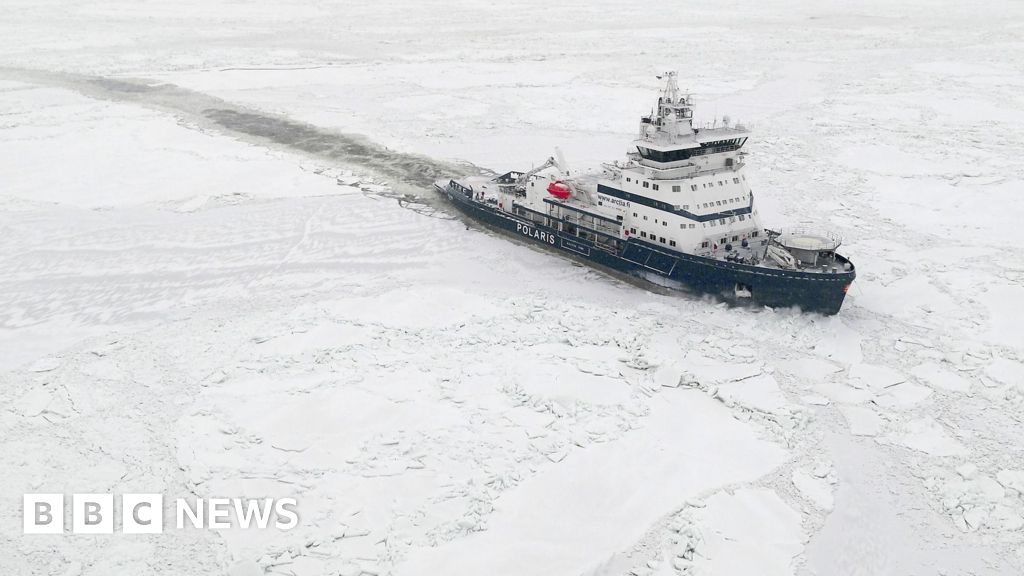
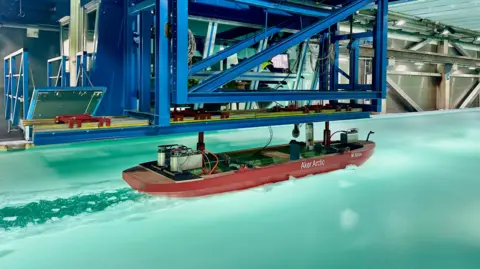
Temperatures are sub-zero inside Aker Arctic Technology’s ice laboratory, as the scale model of an icebreaker cruises down a 70m-long simulation tank.
It ploughs a neat channel through the frozen surface of the water.
Undergoing testing at a facility in Helsinki, Finland’s capital, this is a design for the next generation of the country’s icebreakers.
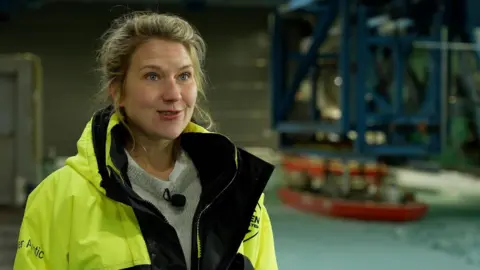
“It’s crucial that it has sufficient structural strength and engine power,” says ice performance engineer, Riikka Matala.
Mika Hovilainen, the firm’s chief executive, adds that the shape of the vessel is also crucial. “You have to have a hull form that breaks ice by bending it downwards,” he says. “It’s not cutting, it’s not slicing.”
Finland is the undisputed world leader when it comes to icebreakers. Finnish companies have designed 80% of all those currently in operation, and 60% were built at shipyards in Finland.
The country leads the way out of necessity, explains Maunu Visuri, president and chief executive of Finnish state-owned company Arctia, which operates a fleet of eight icebreakers.
“Finland is the only country in the world where all the harbours may freeze during wintertime,” he says, adding that 97% of all goods to the country are imported by sea.
During the coldest months, icebreakers keep Finland’s ports open, and work as pathfinders for big cargo ships. “It’s really a necessity for Finland. We say that Finland is an island.”
It was this expertise that saw Trump announce in October that the US planned to order four icebreakers from Finland for the US Coast Guard.
A further seven of the vessels, which the US is calling “Arctic Security Cutters”, are to be built in the US, using Finnish designs and expertise.
“We’re buying the finest icebreakers in the world, and Finland is known for making them,” said Trump.

 Adrienne Murray
Under US law, the country’s naval and coastguard ships must be domestically-built, but in this case the president waived that requirement on national security grounds. He cited “aggressive military posturing, and economic encroachment by foreign adversaries”, by which he means Russia and China.
This US concern comes as climate change continues to make the Arctic Ocean more navigable for cargo ships, at least if icebreakers lead the way by cutting a path. This opens up commercial trade routes from Asia to Europe, either above Russia, or north of Alaska and Canada’s mainland, and down past Greenland.
Reduced ice levels also mean that oil and gas fields beneath the Arctic are more accessible.
“There’s simply a lot more traffic in that part of the world now,” notes Peter Rybski, a retired US Navy officer and Helsinki-based, Arctic expert.
“You have an active oil and gas exploration and extraction industry in Russia, as well as a newly-emerging trans-shipment route from Europe to Asia.”
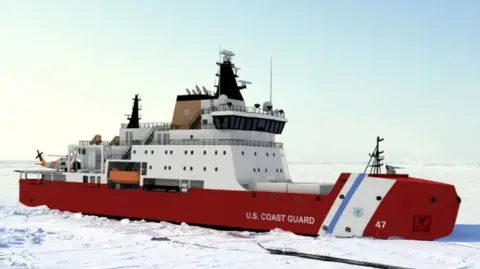 Rauma Marine Constructions
Following Trump’s outline announcement last autumn, the first contracts were awarded on 29 December.
Finland’s Rauma Marine Constructions is to build two icebreakers for the US Coast Guard at its shipyard in the Finnish port of Rauma. The first ship is due to be delivered in 2028.
A further four will be constructed in Louisiana, with all six using an Aker Arctic Technology diesel-electric powered design.
The US orders are part of an effort to catch up with the number of Russian icebreakers. Currently Russia has around 40, including eight that are nuclear powered.
By contrast, the US presently only has three in operation.
Meanwhile China operates around five polar-capable vessels. “None of them are technically icebreakers,” says Rybski, pointing to their design not meeting the strict criteria. “But they are increasing their fleet.”
He adds that China has increasingly been sending these “research” ships into Arctic waters between Alaska and the far east of Russia, including areas that the US considers its “exclusive economic zone”.
“With limited means to respond this becomes a problem [for the US].”
Trump’s desire to enlarge its icebreaker fleet goes beyond the practicalities of operating in ice-clad Arctic seas, assesses Lin Mortensgaard, a researcher at the Danish Institute of International Studies. She says it is also about projecting power.
“No matter how many aircraft carriers you have and how much you use them to threaten states with, you cannot sail your aircraft carrier into the central Arctic Ocean,” she says.
“Icebreakers are really the only kind of naval vessel to signal that you are an Arctic state, with Arctic capabilities. And I think this is what much of the US discourse is about.”
 James Brooks
Back in Finland, Helsinki Shipyard occupies a dock on the capital’s waterfront. It is where half of the world’s icebreakers have been made. Today owned by Canadian firm Davie, it also hopes to win new contracts from the US Coast Guard.
“The geopolitical situation has changed definitely,” says the shipyard’s managing director, Kim Salmi.
“We have our eastern neighbour here [Russia]. They are building their own [new] fleet. And the Chinese are building their fleet.”
He adds: “The US, Canada and the western allies in general, are looking for the power balance.”
Inside a cavernous shipbuilding hangar, workers cut and weld steel for the yard’s latest icebreaker, a heavy-duty Arctic vessel, called Polarmax that’s destined for the Canadian coastguard.
The Finns can build these complex vessels remarkably swiftly – it takes between two-and-a-half and three years – thanks to a streamlined production method, and decades of experience.
“Over 100 years, we have practised this,” says Arctia’s Visuri. “You’ve got this cycle of designers, operators, builders. That’s why Finland is the superpower of icebreakers.”
Business
Gold price today: How much 22K, 24K gold cost in Delhi, Mumbai & other cities – Check rates – The Times of India
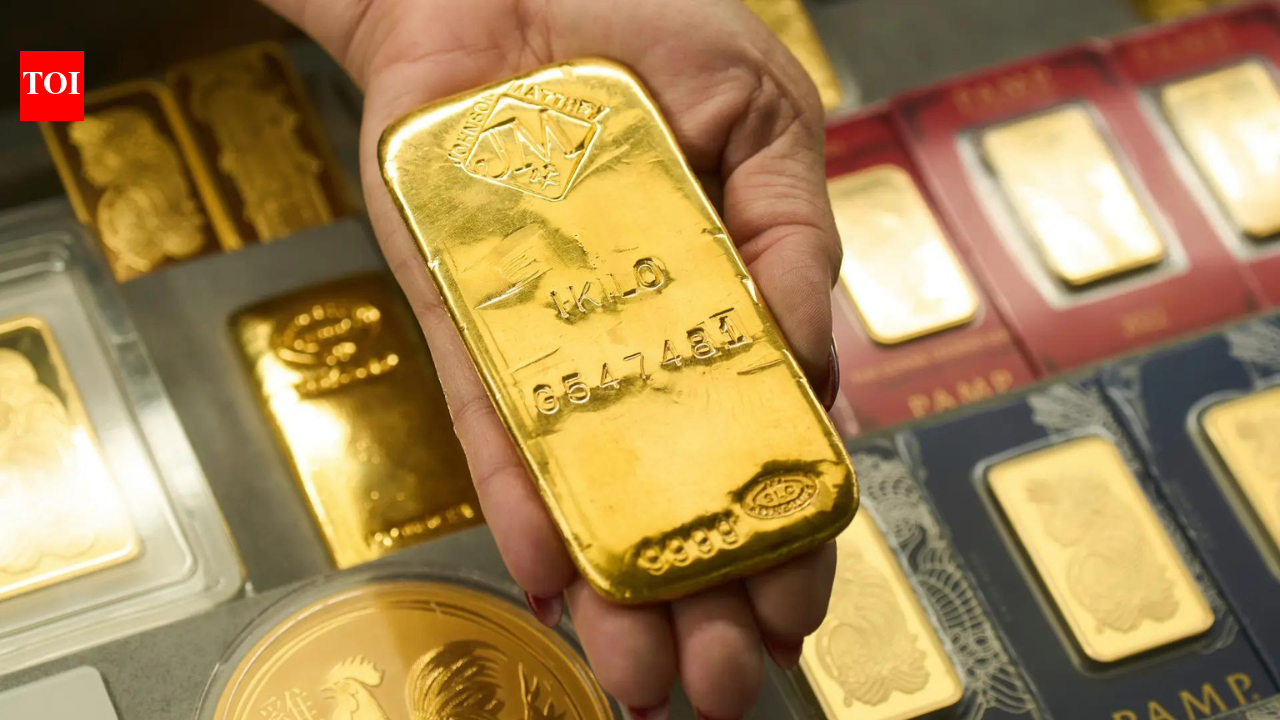
Gold prices remained high on Monday as investors continued to seek safety amid rising geopolitical tensions and trade-related uncertainties.Gold and silver prices surged to fresh record levels as escalating geopolitical risks and shifting US monetary expectations boosted demand for safe-haven assets. Renewed unrest in Iran, fresh US tariff threats against several European countries over Greenland and broader global uncertainty supported buying in precious metals.On the MCX, gold February futures jumped nearly Rs 3,000, or over 2%, to hit a fresh all-time high of Rs 1,45,500 per 10 grams. Silver also outperformed, with futures rising sharply to record levels.In international markets, spot gold climbed 1.7% to a new high of $4,673 an ounce, while silver rose about 3% to around $94 per troy ounce. Overseas silver futures surged more than 6% to hit a record $94.35 per ounce.
Gold prices in Delhi today
Gold prices in Delhi rose on Monday. The price of 24-carat gold stood at Rs 14,584 per gram, up by Rs 191. The rate for 22-carat gold was Rs 13,370 per gram, higher by Rs 175, while 18-carat gold was priced at Rs 10,942 per gram, up by Rs 143.
Gold prices in Mumbai today
In Mumbai, 24-carat gold was priced at Rs 14,569 per gram, up by Rs 191. The price of 22-carat gold stood at Rs 13,355 per gram, up by Rs 175, while 18-carat gold was trading at Rs 10,927 per gram, up by Rs 143.
Gold prices in Chennai today
Gold prices in Chennai also moved higher. The price of 24-carat gold was Rs 14,673 per gram, up by Rs 186. The rate for 22-carat gold stood at Rs 13,450 per gram, up by Rs 170, while 18-carat gold was priced at Rs 11,230 per gram, up by Rs 140.
Gold prices in Ahmedabad today
In Ahmedabad, 24-carat gold was trading at Rs 14,574 per gram, up by Rs 191. The price of 22-carat gold rose to Rs 13,360 per gram, up by Rs 175, while 18-carat gold was priced at Rs 10,932 per gram, up by Rs 143.
Gold prices in Bhubaneswar today
Gold prices in Bhubaneswar rose on Monday, with 24-carat gold at Rs 14,569 per gram, up by Rs 191. The rate for 22-carat gold was Rs 13,355 per gram, up by Rs 175, while 18-carat gold stood at Rs 10,927 per gram, up by Rs 143.
Gold prices in Hyderabad today
In Hyderabad, gold prices remained firm. The price of 24-carat gold stood at Rs 14,569 per gram, up by Rs 191. The rate for 22-carat gold was Rs 13,355 per gram, up by Rs 175, while 18-carat gold was priced at Rs 10,927 per gram, up by Rs 143.
Gold prices in Kolkata today
Gold prices in Kolkata also moved higher. The price of 24-carat gold was Rs 14,569 per gram, up by Rs 191. The rate for 22-carat gold stood at Rs 13,355 per gram, up by Rs 175, while 18-carat gold was priced at Rs 10,927 per gram, up by Rs 143.
Gold prices in Jaipur today
In Jaipur, 24-carat gold was priced at Rs 14,584 per gram, up by Rs 191. The price of 22-carat gold stood at Rs 13,370 per gram, up by Rs 175, while 18-carat gold was trading at Rs 10,942 per gram, up by Rs 143.
Gold prices in Lucknow today
Gold prices in Lucknow rose on Monday, with 24-carat gold at Rs 14,584 per gram, up by Rs 191. The rate for 22-carat gold was Rs 13,370 per gram, up by Rs 175, while 18-carat gold was priced at Rs 10,942 per gram, up by Rs 143.
Gold prices in Bengaluru today
In Bengaluru, gold prices were higher, with 24-carat gold trading at Rs 14,569 per gram, up by Rs 191. The price of 22-carat gold stood at Rs 13,355 per gram, up by Rs 175, while 18-carat gold was priced at Rs 10,927 per gram, up by Rs 143.
Gold prices in Patna today
Gold prices in Patna also edged higher. The price of 24-carat gold stood at Rs 14,574 per gram, up by Rs 191. The rate for 22-carat gold was Rs 13,360 per gram, up by Rs 175, while 18-carat gold was priced at Rs 10,932 per gram, up by Rs 143.

 Reuters
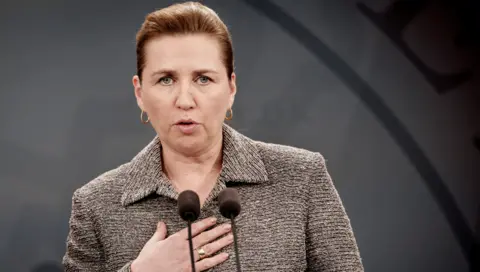
Denmark’s Prime Minister Mette Frederiksen says “Europe won’t be blackmailed” by Donald Trump’s tariff threats over Greenland.
She and other European leaders issued a joint statement on Sunday saying the plan risks a “dangerous downward spiral” with the US.
Early on Monday morning, Trump said, “NATO has been telling Denmark, for 20 years, that “you have to get the Russian threat away from Greenland.” […] Now it is time, and it will be done!!!”
The US president has said he will impose new taxes on eight US allies in February if they oppose his proposed takeover of the autonomous Danish territory.
Trump insists Greenland is critical for US security and has not ruled out taking it by force – a move that has drawn widespread criticism.
In a post on Truth Social in the early hours of Monday morning, Trump said that Nato has been telling Denmark to “get the Russian threat away from Greenland” for 20 years. Denmark, he continued, “has been unable to do anything about it”.
The new tariffs would be imposed on Denmark, Finland, France, Germany, the Netherlands, Norway, Sweden and the UK.
In their joint statement, the eight countries said that “tariff threats undermine transatlantic relations”, reiterating that they “stand in full solidarity with the Kingdom of Denmark and the people of Greenland”.
The countries stressed they are “committed to strengthening Arctic security as a shared transatlantic interest” as members of the Nato military alliance.
“We stand ready to engage in a dialogue based on the principles of sovereignty and territorial integrity that we stand firmly behind,” the statement reads.
Separately, Frederiksen wrote on Facebook: “We want to cooperate and we are not the ones seeking conflict. And I am happy for the consistent messages from the rest of the continent: Europe will not be blackmailed.”
“It is all the more important that we stand firm on the fundamental values that created the European community.”
Meanwhile, UK Prime Minister Sir Keir Starmer said he had had phone calls on Sunday with Frederiksen, as well as European Commission President Ursula von der Leyen and Nato Secretary-General Mark Rutte, before speaking to Trump.
A spokeswoman for Starmer’s office said he had reiterated his position that Greenland’s security was a priority for all Nato members. “He also said that applying tariffs on allies for pursuing the collective security of Nato allies is wrong,” the spokeswoman added.
Trump has threatened to impose a 10% tariff on goods from Denmark, Norway, Sweden, France, Germany, the UK, the Netherlands and Finland, which would come into force on 1 February, but could later rise to 25% – and would last until a deal was reached.
“These Countries, who are playing this very dangerous game, have put a level of risk in play that is not tenable or sustainable,” he wrote, adding: “This is a very dangerous situation for the Safety, Security and Survival of our Planet”.
The US president insists Greenland is critical for US security and has said previously that Washington would get the territory “the easy way” or “the hard way”.
Greenland is a sparsely populated but resource-rich and its location between North America and the Arctic makes it well placed for early warning systems in the event of missile attacks and for monitoring vessels in the region.
US Treasury Secretary Scott Bessent on Sunday told NBC News’ Meet the Press that “Greenland can only be defended if it is part of the US, and it will not need to be defended if it is part of the US”.
“I believe that the Europeans will understand that this is best for Greenland, best for Europe and best for the United States,” he said.
Speaking to BBC Newshour, Norwegian Foreign Minister Espen Barth Eide said mutual respect for sovereignty is the “non-negotiable” core principle of international law and co-operation.
“If we are to live in peace and if we are to be able to co-operate on shared problems, we have to start by the mutual recognition of each others sovereignty and territorial integrity,” she added.
It is still unclear how the tariffs will affect those Trump has already imposed on the UK and EU. French President Emmanuel Macron, who is working to co-ordinate the European response to the tariff threats, said he would request that the EU activate its “anti-coercion instrument” if Trump does impose them.
The US president is due to speak at the World Economic Forum in Davos, Switzerland on Wednesday on the theme “how can we co-operate in a more contested world?” Macron, as well as the leaders of Germany and the EU, will also be attending the annual conference.
Canadian Prime Minister Mark Carney, who will also be there, said his country was “concerned by the recent escalation” and that it would be “significantly increasing Arctic security — strengthening our military and investing in critical infrastructure”.
“Canada strongly believes that the best way to secure the Arctic is by working together within Nato,” he also wrote on X.
Mark Rutte, meanwhile, said he had spoken to Trump “regarding the security situation in Greenland and the Arctic”.
“We will continue working on this, and I look forward to seeing him in Davos later this week,” he added.
 EPA/Shutterstock
Public anger in both Denmark and Greenland at Trump’s threats over Greenland appears undiminished. Demonstrations against Trump’s takeover plans were held in Greenland’s capital, Nuuk, on Saturday – before the tariff announcement – as well as in Danish cities.
These rallies coincide with a visit to Copenhagen by a delegation from the US Congress. Its leader, Democratic Senator Chris Coons, described Mr Trump’s rhetoric as “not constructive”.
The island’s representative to the US has said that the last time Greenlanders were asked if they wanted to be part of the US, in January 2025, only 6% were in favour of doing so, while 85% were against.
A recent poll suggests that most Americans also oppose US control of Greenland. A Reuters/Ipsos poll, which was released last Wednesday, indicated just 17% of Americans support the US taking Greenland, compared to 47% who said they opposed Trump’s push to acquire the island.

What to know from the NFL playoffs: The next star quarterbacks are emerging

Several killed in blast in Afghan capital Kabul: Taliban interior ministry

After 2025’s dispute, DSquared2 and Staff International renew their license deal

-

 Tech7 days ago
New Proposed Legislation Would Let Self-Driving Cars Operate in New York State
-

 Sports1 week ago
Clock is ticking for Frank at Spurs, with dwindling evidence he deserves extra time
-

 Entertainment6 days ago
X (formerly Twitter) recovers after brief global outage affects thousands
-

 Fashion1 week ago
South India cotton yarn gains but market unease over US tariff fears
-

 Fashion1 week ago
China’s central bank conducts $157-bn outright reverse repo operation
-

 Sports1 week ago
US figure skating power couple makes history with record breaking seventh national championship
-

 Sports4 days ago
Pak-Australia T20 series tickets sale to begin tomorrow – SUCH TV
-
 Business1 week ago
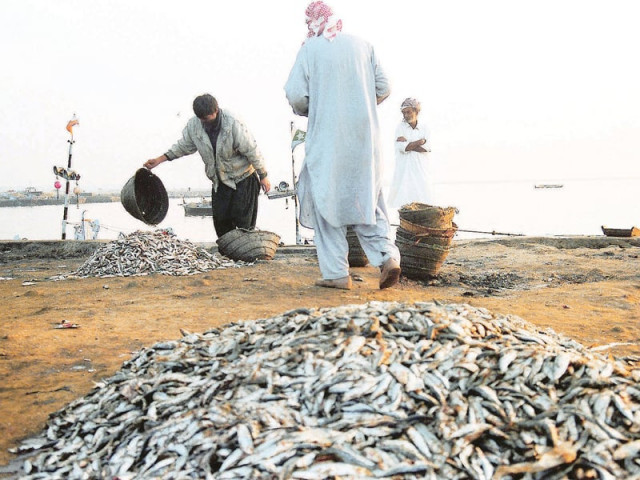
Modern seafood processing zone planned at Korangi harbour | The Express Tribune