

Business
India-Russia ties: Moscow signals readiness to fix trade deficit; energy, defence and new payment architecture on agenda – The Times of India


Russia on Tuesday said it is ready to address India’s concerns over the widening trade deficit and proposed building a framework to shield bilateral commerce from pressure by third countries. Kremlin spokesperson Dmitry Peskov, speaking ahead of President Vladimir Putin’s visit to New Delhi, said Moscow is also working to stabilise crude supplies after a brief dip linked to Western sanctions, according to PTI.Peskov told reporters during a video-streamed news conference that Friday’s summit between Putin and Prime Minister Narendra Modi will focus on strengthening trade, energy cooperation, small modular nuclear reactors and additional defence projects. Putin is scheduled to arrive on Thursday for the annual meeting.Russia signals efforts to ease trade deficitPeskov acknowledged India’s concern over the large trade gap and said Russia is keen to increase its imports from India. “There is a real imbalance in our trade. We know our Indian friends are concerned about that. We are jointly looking at the possibilities of increasing imports from India. We want to buy more from India,” he said.India’s purchases of Russian goods and services amount to around $ 65 billion, while Russia’s imports from India are around $ 5 billion.He also said Moscow is taking steps to ensure crude supplies remain stable despite the impact of Western restrictions. India’s purchase of Russian oil, he said, may dip only for a “very brief period.”Push for alternative payment systems and sanctions-proof tradePeskov urged the creation of an “architecture” to insulate India-Russia trade from geopolitical pressure. “We should create an architecture of our relationship that must be free of any influence coming from any third country,” he said. He stressed that bilateral trade must be protected from external pressure and that Russia rejects the use of the dollar-denominated global payment system as a “political tool.”He indicated that settlement through national currencies may feature in the Modi-Putin talks. “We understand the pressure on India,” he said, referring to the US.The visit comes at a tense moment in India-US ties, with Washington imposing a 50% tariff on Indian goods and an additional 25% levy linked to New Delhi’s procurement of Russian crude.Defence, nuclear cooperation and technology sharingPeskov highlighted joint production of the BrahMos missile system as a model for high-technology collaboration and said discussions may cover potential supplies of Su-57 fighter jets and additional S-400 air defence systems. He also said cooperation in small and medium nuclear reactors is expected to be part of the talks. Russia has experience producing these systems and is prepared to share the technology with India.On China, Peskov said Russia’s “limitless” partnership with Beijing does not diminish its willingness to deepen ties with India. “We are ready to go as far as India is ready,” he said, adding that Moscow respects India-China relations and hopes both sides resolve their issues to preserve global stability.Ukraine conflict, counter-terrorism and Afghanistan tiesPeskov welcomed recent US mediation efforts in the Ukraine conflict, calling them “very effective” and expressing hope for progress. He said the Russia-Ukraine war will be an important part of the Modi-Putin agenda. “Russia is open for peaceful negotiation; we have to reach our goals. We appreciate the position of India,” he said.He added that Russia is ready to work with India “to combat terrorism,” and said Moscow is strengthening its engagement with Afghanistan. “We’ll continue to develop our relationship with Afghanistan,” he noted.On overall ties, Peskov said Russia is proud to stand “shoulder-to-shoulder” with India during its period of historic growth.




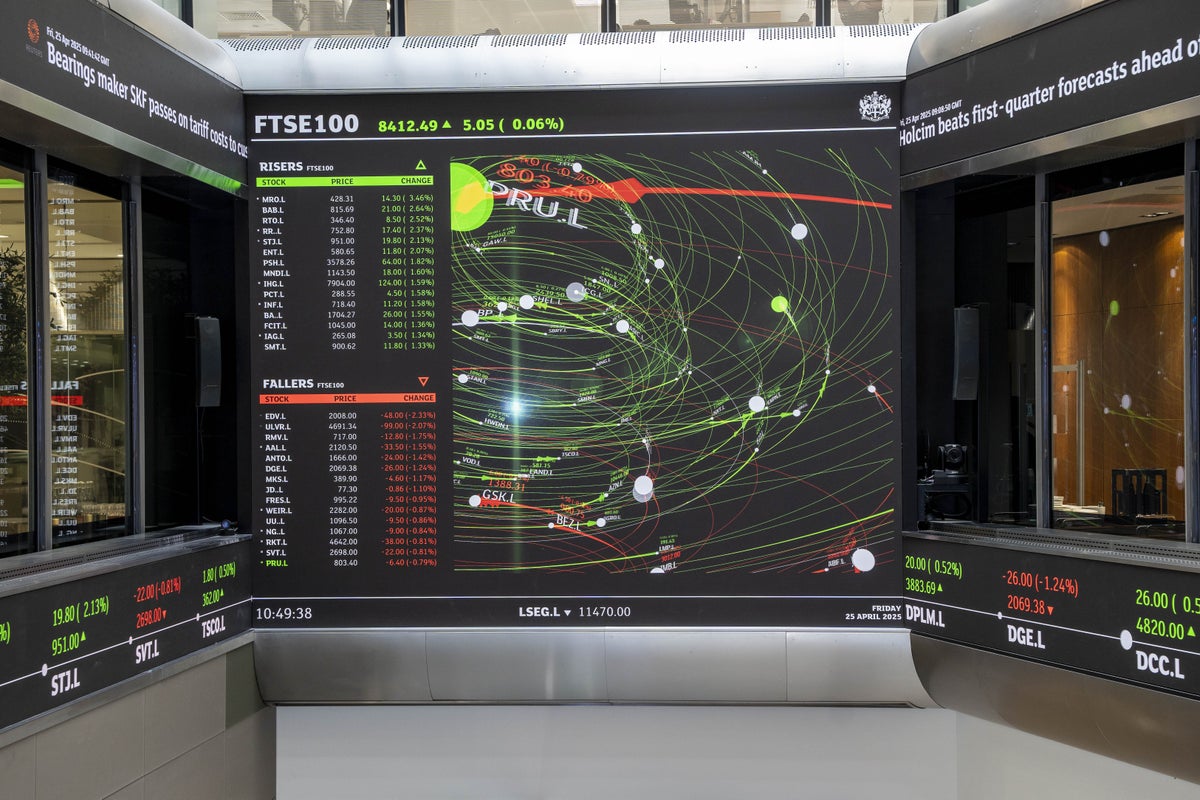
Stocks in London ended little changed on Friday, with blue chips edging lower after notching another record as investors held fire ahead of the long weekend in the US.
“Investors have been kept on their toes year-to-date with non-stop geopolitical issues, and mixed messages from the business world. A quieter day on the corporate reporting calendar gave investors a chance to catch their breath and take stock of events,” said Dan Coatsworth, head of markets at AJ Bell.
The FTSE 100 index closed down just 3.65 points at 10,235.29. It had earlier hit a new intra-day best level of 10,257.75.
The FTSE 250 ended up 31.39 points, 0.1%, at 23,311.37, and the AIM All-Share closed just 0.27 of a point higher at 804.75.
For the week, the FTSE 100 rose 1.1%, the FTSE 250 climbed 1.2%, and the AIM All-Share advanced 2.1%.
In European equities on Friday, the CAC 40 in Paris closed down 0.7%, while the DAX 40 in Frankfurt ended 0.2% lower.
“There was a slightly negative tone across European stock indices on Friday,” commented David Morrison, senior market analyst, at Trade Nation. “It appeared that investors were more comfortable taking some risk off the table, no doubt mindful that US markets will be closed on Monday for Martin Luther King Day.”
In London, the FTSE 100 was pegged back by weak mining stocks, a key factor behind recent index strength.
The price of copper fell 3.0%, and silver slumped 3.7%, giving up some recent gains, while gold nursed less severe falls.
Gold was quoted at 4,594.24 dollars an ounce on Friday, down from 4,616.76 on Thursday.
In response, Endeavour Mining fell 2.7%, Anglo American declined 2.4%, Antofagasta dipped 2.9%, and Glencore fell 2.5%.
Strategists at Bank of America downgraded the mining sector to ‘underweight’ and lifted energy to ‘market weight’.
“After sharp outperformance for mining, the potential downside risks stemming from the sector’s macro drivers are becoming hard to ignore,” BofA said.
BofA noted that a historical divergence in commodity prices has led to a decoupling among European resources with a surge in metal prices over recent months, including a 50% rally in copper, alongside a “roll-over” in energy prices, with the oil price down 30% to four-year lows recently.
As a result, the copper-to-oil ratio has risen close to a 40-year high, which in turn has led to significant divergence between European resources sectors, with mining outperforming by 40% since April, while energy has underperformed by nearly 15%.
“Resources sector pricing looks stretched in both directions,” BofA added.
Brent oil traded higher at 64.48 dollars a barrel on Friday, up from 63.55 late on Thursday.
Pearson ended a miserable week for investors, with a further 4.1% decline.
The educational publisher has seen its shares fall 12% this week after a poorly received trading update.
A previously undisclosed contract loss for US student assessment in New Jersey, which will drag on first-half growth, was blamed for the stock fall, although analysts note Pearson is confident that the loss of the contract will have no bearing on other renewals in the coming years.
Heading higher were property companies British Land and Land Securities, up 1.4% and 1.3% respectively, on hopes lower interest rates will spark a sector upturn, while BAE Systems, up 2.3%, remained in favour amid geopolitical jitters.
Stocks in New York were little changed. The Dow Jones Industrial Average was slightly lower, while the S&P 500 index was up 0.1%, as was the Nasdaq Composite.
Economic data showed that US industrial production rose faster than expected in December.
The Federal Reserve said that on a monthly basis, industrial production increased by 0.4% in December, the same pace as in November, which was revised up from 0.2%. It was better than the FXStreet-cited consensus of a 0.1% uptick.
On an annual basis, total industrial production was 2.0% higher in December than a year prior.
Shannon Glein, analyst at Wells Fargo, said the underlying details show a “key theme from last year – everything high-tech and AI related outperformed”.
“We expect this trend to persist going forward, but it’s also worth noting that the slow yet steady ascent in all other industrial production on a year-ago basis is a sign that broader activity may be starting to recover,” she added.
The pound was quoted lower at 1.3382 dollars at the time of the London equities close on Friday, compared to 1.3388 on Thursday.
The euro stood at 1.1596 dollars, lower against 1.1607.
The yield on the US 10-year Treasury was quoted at 4.21%, widening from 4.16%. The yield on the US 30-year Treasury was quoted at 4.82%, stretched from 4.78%.
Back in London, Genus led the FTSE 250 risers, advancing 7.8%, after reporting that adjusted pretax profit for the six months to December 31 would be about £50 million, ahead of expectations.
Berenberg pointed out it was “the second guidance raise in the past three months, making it one of the standout performers within our coverage”.
“Importantly, the upgrades are being driven by strong trading in the PIC (pigs) business, which reflects the benefits of the group’s shift towards a royalty-driven model. This is increasing the defensiveness and predictability of earnings and sets a very positive tone for a year that we believe has more positive catalysts to come”, the bank added.
The biggest risers on the FTSE 100 were BAE Systems, up 47.0 pence at 2,088.0p, NatWest, up 13.8p at 652.8p, Smiths Group, up 50.0p at 2,612.0p, Schroders, up 8.6p at 467.0p and National Grid, up 20.5p at 1,201.5p.
The biggest fallers on the FTSE 100 were Pearson, down 39.6p at 939.0p, Entain, down 23.8p at 703.0p, Antofagasta, down 105.0p at 3,560.0p, Endeavour Mining, down 110.0p at 3,996.0p and Glencore, down 12.4p at 478.6p.
Monday’s global economic calendar features a slew of data from China, including GDP, retail sales, and industrial production.
In Canada, inflation figures will be published, while US financial markets are closed for Martin Luther King Jr Day.
Monday’s UK corporate calendar has a trading statement from building materials firm Marshalls.
Later in the week, trading statements are due from luxury goods retailer Burberry, sports retailer JD Sports Fashion and miner Rio Tinto.
Contributed by Alliance News.

Car-sharing firm Zipcar has confirmed it is stopping operations in the UK after launching a consultation late last year.
The move will hit the company’s roughly 650,000 drivers across the country.
On December 1, the US-based company told customers in the UK that it planned to suspend new bookings temporarily at the turn of the year.
The business, which had 71 UK employees at the end of 2024, launched a formal consultation with staff as a result.
On Friday, in a fresh email to customers, the business said it “can now confirm that Zipcar will cease operating in the UK”.
The company added: “In accordance with clause 7.5 of the member terms, please take this as your written notice that we will formally close your account in 30 days’ time.
“It’s not possible to make any new bookings with Zipcar UK at this time, but your account will remain open until February 16.”
It added that customers will be entitled to a pro-rated refund for any remaining periods on current plans or subscriptions, from the start of 2026.
Zipcar said this will be done automatically and will not require any action from users.
Accounts showed that the van and car hire firm saw losses deepen to £5.7 million in 2024 after a decrease in customer trips.
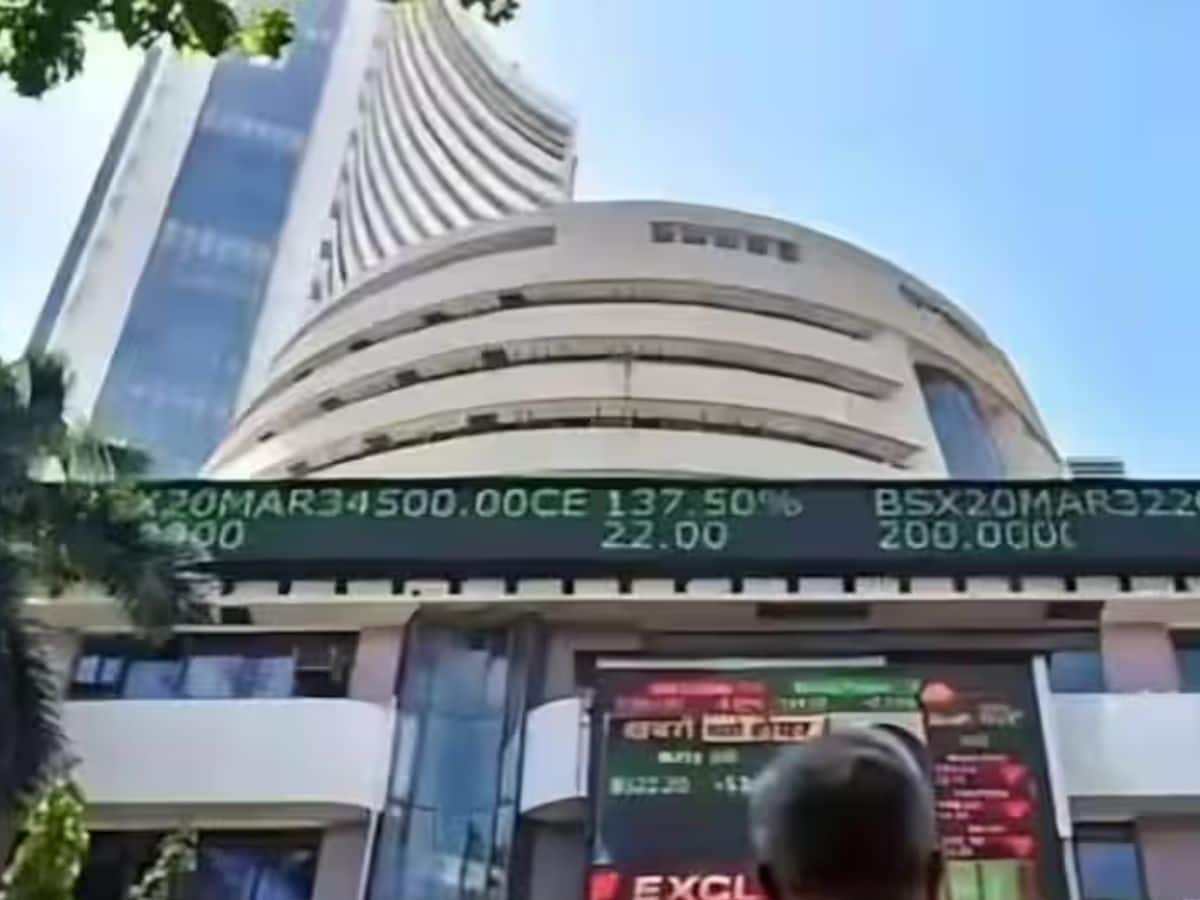
New Delhi: Good news for investors and market watchers! Even though February 1 falls on a Sunday this year, the Indian stock markets will remain open for trading on Budget Day. Both the BSE and NSE announced on January 16 that trading will take place as per normal market hours on February 1 for Budget 2026. This special arrangement ensures that investors can react to Budget announcements in real time, without waiting for the next trading session.
The NSE clarified the special trading arrangement in a circular, stating, “On account of the presentation of the Union Budget, members are requested to note that Exchange shall be conducting live trading session on February 01, 2026, as per the standard market timings (9:15 am-3:30 pm),” said NSE in a circular.
Union Budget 2026 to be presented on February 1 at 11 am
The Union Budget for 2026 will be presented at 11 am on Sunday, February 1, the Lok Sabha Speaker confirmed on January 12. In recent years, February 1 has become the fixed date for the annual Budget presentation, a trend that continued with the 2025 Budget as well. The upcoming Budget will also be a significant milestone for Finance Minister Nirmala Sitharaman, as it will be her ninth consecutive Union Budget, placing her among finance ministers with the longest uninterrupted Budget tenures.
Trading details for Budget Day explained
While most core market segments will remain open during regular trading hours on Budget Day, some services will stay shut. The BSE has clarified that the T+0 settlement session and the auction session meant for settlement defaults will not be operational. At the same time, the NSE confirmed that trading in capital markets and derivatives will continue as usual.
Stock market holiday list remains the same
The stock market holiday calendar for 2026 remains unchanged, with Indian exchanges observing 16 public holidays apart from weekends. The next scheduled market closure this month will be on January 26. In the first half of the year, markets will remain shut on key occasions such as Holi (March 3), Ram Navami (March 26), Mahavir Jayanti (March 31) and Good Friday (April 3). Trading will also be suspended on Ambedkar Jayanti (April 14), Maharashtra Day (May 1) and Bakri Id (May 28).
In the second half of the year, markets will close on Muharram (June 26), Ganesh Chaturthi (September 14), Gandhi Jayanti (October 2), Dussehra (October 20), Diwali Balipratipada (November 10) and Guru Nanak Jayanti (November 24). Christmas, on December 25, will be the final market holiday of 2026.


Dolphins’ Darren Waller says he was kicked out of exit meeting with coach Mike McDaniel before firing

Iran protest movement subsides after waves of unrest

Mets agree to deal with All-Star Bo Bichette after missing out on Kyle Tucker: reports

-

 Politics1 week ago
UK says provided assistance in US-led tanker seizure
-

 Entertainment1 week ago
Why did Nick Reiner’s lawyer Alan Jackson withdraw from case?
-

 Sports6 days ago
Clock is ticking for Frank at Spurs, with dwindling evidence he deserves extra time
-

 Tech4 days ago
New Proposed Legislation Would Let Self-Driving Cars Operate in New York State
-
 Business1 week ago
Trump moves to ban home purchases by institutional investors
-

 Sports1 week ago
PGA of America CEO steps down after one year to take care of mother and mother-in-law
-
Sports7 days ago
Commanders go young, promote David Blough to be offensive coordinator
-

 Fashion6 days ago
South India cotton yarn gains but market unease over US tariff fears