

Politics
Indian billionaire’s son offers home for Escobar’s hippos



An Indian billionaire’s son offered on Tuesday to take hippos descended from those introduced to Colombia by drug kingpin Pablo Escobar, rather than have the animals killed.
Anant Ambani, the son of tycoon Mukesh Ambani, said he had formally requested the Colombian government to stay a decision to kill the animals, which have wreaked havoc on rivers in the South American nation.
Instead, he has asked to allow the “safe, scientifically-led translocation that would bring the 80 animals to a permanent home” at his Vantara animal centre.
The vast zoo in India’s western state of Gujarat bills itself as the “one of the world’s largest wildlife rescue, care and conservation centres”.
Vantara is already home to hundreds of elephants, as well as 50 bears, 160 tigers, 200 lions, 250 leopards and 900 crocodiles, among other animals, according to India’s Central Zoo Authority.
Experts have repeatedly sounded the alarm on Vantara’s massive animal intake, including the import of critically endangered and rare species.
Escobar brought hippos — which are native only to Africa and can weigh up to several tonnes — to Colombia in the 1980s.
After Escobar’s death, hippos from his private zoo made a new life in the lush river banks of the Colombia’s Magdalena River — where they have attacked fishermen, prompting moves to cull them.
Anant Ambani, son of the billionaire head of the multinational conglomerate Reliance Industries, said he had submitted a detailed plan to give the animals a new home at Vantara.
The animal centre is sited alongside the Reliance Jamnagar Refinery Complex, which the conglomerate says is the world’s largest crude oil refinery.
Summers there can get extremely hot, with temperatures soaring above 40°C.
Ambani’s proposal sets out a veterinary-led capture and transport, as well as the creation of a “purpose-designed naturalistic setting” for the hippos, according to a statement.
“Vantara has the expertise, infrastructure and resolve to support this effort, entirely on Colombia’s terms,” the statement said.
“These 80 hippos did not choose where they were born, nor did they create the circumstances they now face,” Ambani added.
“They are living, sentient beings, and if we have the ability to save them through a safe and humane solution, we have a responsibility to try.”


A federal appeals court on Tuesday rejected the Trump administration’s practice of subjecting most people arrested in its immigration crackdown to mandatory detention without the opportunity to seek release on bond.
A three-judge panel of the New York-based 2nd US Circuit Court of Appeals ruled that President Donald Trump’s administration had adopted a novel but wrong interpretation of a decades-old immigration law to support a mass detention policy.
That ruling came after two other appeals courts ruled the other way, overturning rulings that favored detainees who were denied bond hearings before immigration judges. The differing decisions increase the odds that the US Supreme Court will be forced to weigh in.
US Circuit Judge Joseph Bianco, writing for the court, acknowledged the other appellate courts’ rulings. But he said the panel was parting ways with them and instead joining with over 370 lower-court judges nationally who have rejected the administration’s position and held it is misapplying the law.
His ruling upheld an order by a judge in New York that had led to the release of Brazilian national Ricardo Aparecido Barbosa da Cunha, who was arrested by immigration officials last year while driving to work after living in the United States for over 20 years.
Bianco, a Trump appointee, said a ruling to the contrary would result in the 2nd Circuit endorsing “what would be the broadest mass-detention-without-bond mandate in our Nation’s history for millions of noncitizens.”
Bucking a long-standing interpretation of immigration law, the US Department of Homeland Security last year took the position that non-citizens already residing in the United States, and not just people arriving at the border, qualify as “applicants for admission” subject to mandatory detention.
Under federal immigration law, “applicants for admission” to the United States are subject to mandatory detention while their cases proceed in immigration courts and are ineligible for bond hearings.
The Board of Immigration Appeals, which is part of the Justice Department, issued a decision in September that adopted that interpretation, leading to immigration judges nationally employed by the department to mandate detention.
“The court was right to conclude the Trump administration can’t just reinterpret the law at its own whim,” Michael Tan, a lawyer for Barbosa at the American Civil Liberties Union, said in a statement.
The US Department of Justice, which is defending the policy in court, did not respond to a request for comment.
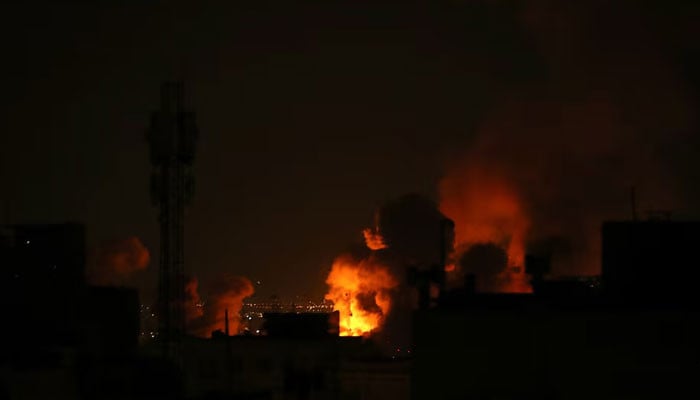
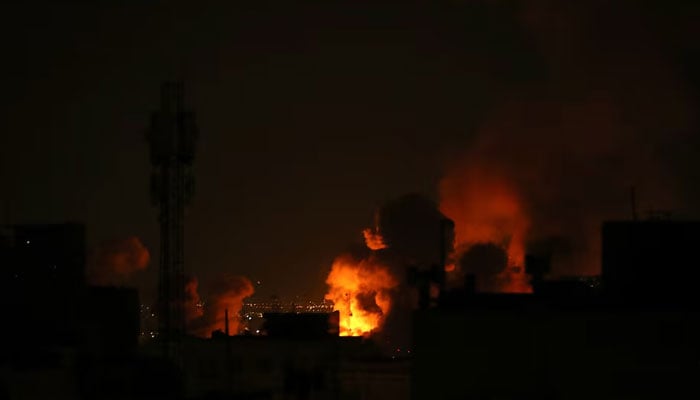
The ongoing Middle East conflict has entered a Cold War-like phase, with both the United States and Iran holding firm to their positions and claiming battlefield success, while the consequences of the confrontation are being felt across the world.
Citing US officials, Axios, a US-based media outlet, reported that there is currently no immediate end in sight to the US-Iran stalemate.
The conflict has entered “a Cold War-like phase, with financial sanctions, gunboat interdictions, and talks about having talks,” it added.
The US is being drawn into a “frozen conflict of no war and no deal”, the report said quoting the officials, adding that in this case, Washington would have to keep its forces in the region for many more months.
If that were to happen, the Strait of Hormuz would remain closed, the US blockade would continue, and both sides would carry on waiting for the other to “blink or fire first,” the US-based media outlet reported.
The report claimed that US President Donald Trump is “undecided” on whether to launch new military strikes or wait to see if his “maximum pressure” and financial sanctions will bring Iran to the negotiating table.
An official close the president said that a “frozen conflict” is the worst thing for Trump politically and economically as midterm elections coming closer.
“I would describe him [Trump] as frustrated but realistic,” the official said. “He [Trump] doesn’t want to use force. But he’s not backing down.”
The report further said that some of Trump’s senior advisers are urging him to maintain the US blockade of the Strait of Hormuz for now and increase economic sanctions on Iran before considering further bombing.
US-Israel war on Iran
The Mideast conflict emerged when the US and Israel launched a war on Iran on February 28, killing top Iranian leadership, including Supreme Leader Ayatollah Ali Khamenei.
In response, Iran launched missile strikes on US bases across Gulf countries and Israel, inflicting heavy losses.
On April 8, US President Donald Trump said he had agreed to a two-week ceasefire with Iran, less than two hours before his deadline for Tehran to reopen the Strait of Hormuz was set to expire, following discussions with Prime Minister Shehbaz Sharif and Chief of Army Staff and Chief of Defence Forces Field Marshal Asim Munir.
Earlier, Trump had warned that “a whole civilisation will die tonight” if his demands were not met.
In order to solve the Mideast crisis Pakistan hosted peace talks between the US and Iran earlier this month. However, after more than 21 gruelling hours of negotiations, American and Iranian diplomats left Pakistan’s capital on April 12 without a formal agreement.
On April 22, President Donald Trump extended the US ceasefire with Iran to allow more time for peace talks, at Pakistan’s request.
Meanwhile, Gulf leaders met in person in Saudi Arabia on Tuesday (today) for the first time since their states became a front in the Iran war. A Gulf official said the meeting aimed to craft a response to the thousands of Iranian missile and drone attacks they faced since the US and Israel launched the war on Iran.
Trump faces domestic pressure to end war
With his approval ratings falling, Trump faces domestic pressure to end a war for which he has given the US public shifting rationales.
Senior Iranian officials, speaking on condition of anonymity, told Reuters the proposal carried by Araghchi to Islamabad over the weekend envisioned talks in stages, with the nuclear issue to be set aside at the start.
A first step would require ending the US-Israeli war on Iran and providing guarantees that the US cannot start it up again. Then negotiators would resolve the US Navy’s blockade of Iran’s trade by sea and the fate of the Strait of Hormuz, which Iran aims to reopen under its control.
Only then would talks look at other issues, including the longstanding dispute over Iran’s nuclear programme, with Iran still seeking some kind of US acknowledgment of its right to enrich uranium.
— With additional input from Reuters
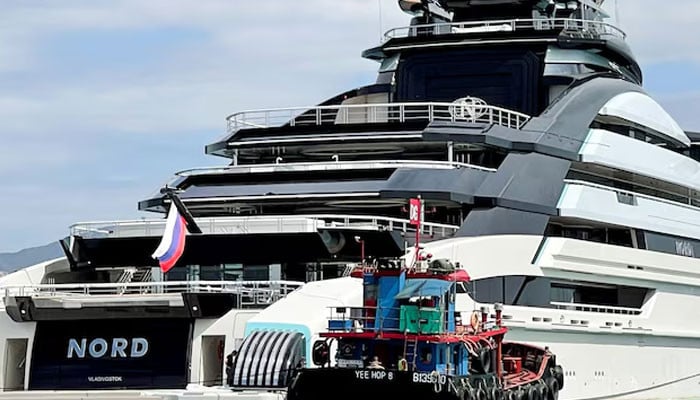
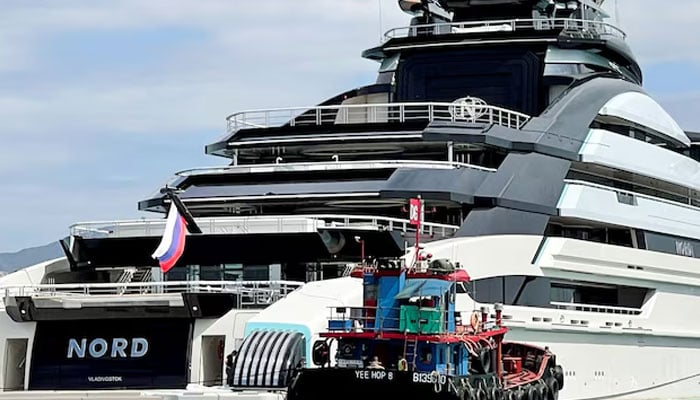
A superyacht owned by Russian billionaire Alexey Mordashov was able to transit the blockaded Strait of Hormuz after undergoing maintenance in Dubai because neither Iran nor the United States objected, a source close to Mordashov said on Tuesday.
It has been unclear how the multi-deck pleasure vessel, worth over $500 million, gained permission to sail on Saturday through the commercially important waterway at the heart of the US-Iran conflict, where traffic has been severely restricted since February.
Sailing under a Russian flag, the yacht, called Nord, crossed the strait on an approved route in compliance with international maritime law, the source said.
“Iran did not interfere with the movement of the yacht, as it is a civilian vessel of a friendly country conducting a peaceful transit. The American side also raised no questions regarding the yacht’s movement, as it did not call at Iranian ports and has no connection to Iran,” the source said.
Just a few, mainly merchant vessels, have been passing daily through the crucial waterway at the entrance to the Gulf as Washington and Tehran maintain an uneasy ceasefire. This represents a fraction of the average 125 to 140 daily passages before the Iran war began on February 28. In response, the US has imposed a blockade of Iranian ports.
Russia is a longstanding ally of Iran. Iranian Foreign Minister Abbas Araqchi travelled to St Petersburg on Monday for a meeting with Russian President Vladimir Putin, after discussions with peace mediators in Pakistan and Oman over the weekend.
After crossing the Strait, Nord has been located near the coast of Oman since Sunday, according to LSEG data.


King Charles opens Congress speech with ‘everything in common except language’

‘It’s Undignified’: Hundreds of Workers Training Meta’s AI Could Be Laid Off

Babar Azam equals three PSL records with ton against Islamabad United

-

 Sports1 week ago
NCAA men’s gymnastics championship: All-time winners list
-

 Sports1 week ago
WWE WrestleMania 42 Night 2: Live match results and analysis
-

 Politics1 week ago
UK’s Starmer seeks to deflect blame over Mandelson appointment
-

 Fashion1 week ago
UK’s Sosandar returns to profitability amid robust FY26 performance
-
 Business1 week ago
How Trump’s psychedelics executive order could unlock stalled cannabis reform
-

 Entertainment1 week ago
Lee Anderson, Zarah Sultana kicked out of UK Parliament for calling PM ‘liar’
-

 Fashion1 week ago
India, US to resume BTA talks today
-
 Business1 week ago
Us-India Trade Talks: US–India trade deal: Where do talks stand & what to expect – explained – The Times of India