

Business
‘Indian Economy Continues To Gain Momentum Despite Uncertain Global Outlook’: FinMin Report

Last Updated:
‘Demand conditions across rural and urban India strengthened with…GST reforms and the festive season,’ the finance ministry says in latest Monthly Economic Review.
The finance ministry said the combination of macroeconomic stability, regulatory reforms, and ongoing structural initiatives is expected to have a positive multiplier effect on economic activity.
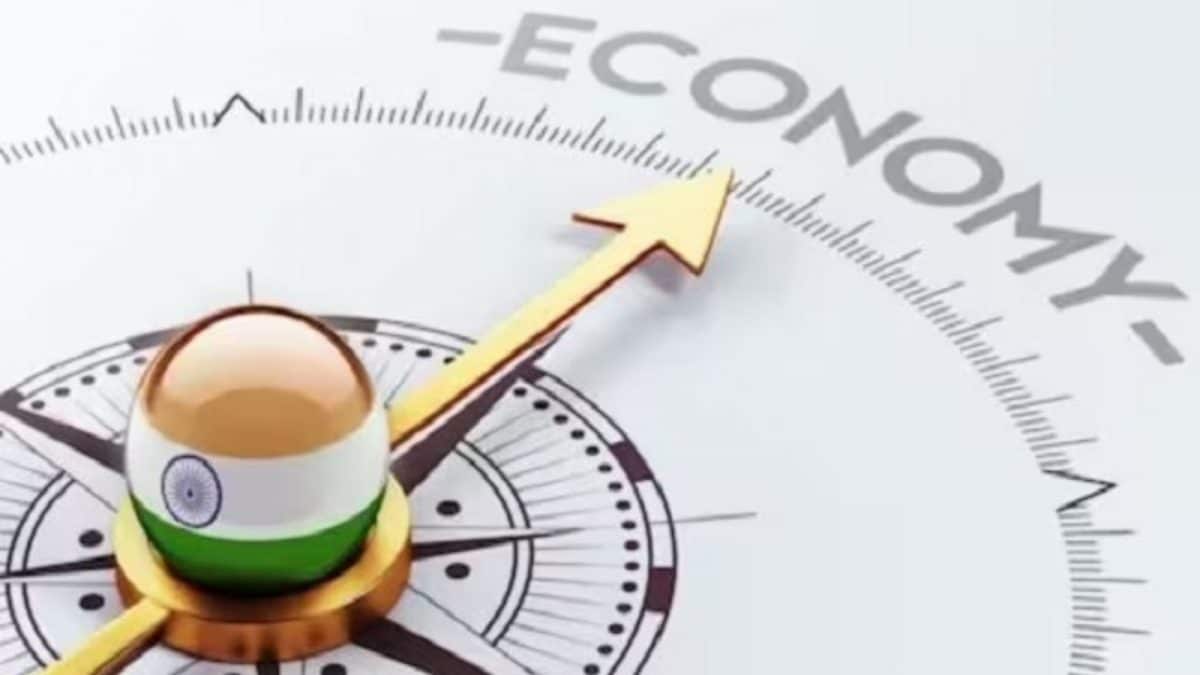
Despite global economic uncertainties and trade disruptions, India’s economy has continued to gather strength, supported by robust domestic demand, strong manufacturing and services activity, and contained inflation, according to the finance ministry’s Monthly Economic Review for September 2025 released on October 27.
“Amidst…uncertain global outlook, India’s economy continues to gain momentum. Demand conditions across rural and urban India strengthened with the implementation of the GST reforms and the festive season, coinciding with industry reports signalling robust growth in sales, particularly in sectors such as automobiles. On the supply side, the manufacturing and services sectors expanded healthily. Taking into account the higher-than-anticipated growth in Q1 FY26 and steady upward trends visible in Q2 FY26, India’s growth forecasts for FY26 have been upgraded,” the finance ministry said in the report.
The report noted that economic activity worldwide has remained steady over the past few months, despite adverse trade policy disruptions. As a result, global economic growth this year is now expected to fare better than initially feared. This is reflected in the International Monetary Fund’s (IMF) upward revision of the global growth forecast for 2025 to 3.2 per cent in October 2025, compared with 3 per cent in July 2025 and 2.8 per cent in April 2025. Several transitory factors, such as a lower effective tariff rate in the US and frontloading of trade, have contributed to propping up growth. However, this resilience masks underlying structural weaknesses which are coming to the fore, leaving projections for global growth in 2026 broadly unchanged since July 2025.
The IMF now expects India’s real GDP to grow 6.6% in FY26, while the Reserve Bank of India’s (RBI) Monetary Policy Committee (MPC) projects an even higher 6.8% growth, reflecting upgrades of 20 and 30 basis points, respectively.
Inflation Under Control, Price Stability Expected to Continue
The report highlighted that inflation remains well within control, aided by continued deflation in food categories. Retail headline inflation eased to 1.54% in September 2025, bringing the Q2 FY26 average to 1.7%.
Core inflation (excluding food and fuel) stood at 4.6% in September, with prices of non-food items staying stable. The ministry said, barring any adverse weather events or supply chain shocks, price stability is likely to prevail.
The RBI expects inflation to average 1.8% in Q3 FY26, with a slight uptick in Q4 FY26 and Q1 FY27 as base effects fade.
RBI Measures Support Liquidity and Credit Flow
The finance ministry credited the RBI’s liquidity management for ensuring adequate credit availability to support growth. The transmission of monetary policy into money and credit markets remains effective, reflecting the central bank’s calibrated approach.
It added that the RBI’s recent regulatory and development policies demonstrate a “balanced response” to evolving macroeconomic conditions — combining prudence with reforms aimed at strengthening banks, boosting credit flow, simplifying forex management, and internationalising the Indian Rupee.
External Trade Remains Resilient
India’s external sector has also shown resilience despite a volatile global trade environment. Total exports of goods and services grew 4.4% year-on-year in the first half of FY26 to reach USD 413.3 billion.
While merchandise exports rose 3%, services exports expanded 6.1% during the same period. Core merchandise exports, excluding petroleum and gems & jewellery, grew a strong 7.5%, underscoring the competitiveness of India’s manufacturing base.
Labour Market, Reforms, and Innovation Drive Growth
The government’s emphasis on skill development and job creation has helped stabilise the labour market in H1 FY26, with rising labour force participation and employment growth in both industry and services.
The introduction of GST 2.0 is expected to further stimulate consumption and investment, creating a multiplier effect on employment and demand.
The report also highlighted the government’s focus on research and innovation to boost global competitiveness. The Promotion of Research & Innovation in Pharma-MedTech Sector (PRIP) scheme, launched by the Department of Pharmaceuticals, will provide around ₹11,000 crore in support for R&D projects. The initiative aims to transform India’s Pharma-MedTech sector into a globally competitive, innovation-driven ecosystem by funding early-stage research and promoting flexible collaborations focused on public health priorities.
Outlook: Growth Momentum to Sustain
The finance ministry said the combination of macroeconomic stability, regulatory reforms, and ongoing structural initiatives is expected to have a positive multiplier effect on economic activity. These efforts, it said, will support domestic demand, enhance resilience, and help sustain India’s growth momentum despite a challenging global environment.
“Looking ahead, the lower GST rate is expected to support a positive demand outlook by reducing the tax burden on consumers and businesses, stimulating consumption and investment across sectors and boosting employment generation in the economy. Moreover, a strong performance in the industries and services sector, along with a stable labour market, will further enhance domestic demand. Nevertheless, global uncertainties warrant caution and will continue to affect external demand, presenting downside risks to the growth outlook,” the ministry said.
The implementation of various growth-enhancing structural reforms and government initiatives, including GST 2.0, is expected to mitigate some of the negative impacts of these external challenges, it added.

Haris is Deputy News Editor (Business) at news18.com. He writes on various issues related to personal finance, markets, economy and companies. Having over a decade of experience in financial journalism, Haris h…Read More
Haris is Deputy News Editor (Business) at news18.com. He writes on various issues related to personal finance, markets, economy and companies. Having over a decade of experience in financial journalism, Haris h… Read More
October 27, 2025, 13:22 IST
Read More




Motorists are facing higher fuel prices ahead of Easter break due to the conflict in the Middle East, the RAC says.
Source link

Hyderabad: Pharma player Hetero on Friday said it has rolled out exports of its generic semaglutide injection portfolio as part of a multi-year plan to widen access to treatments for type 2 diabetes and obesity in more than 75 countries.The Hyderabad-based pharmaceutical company said initial rollouts are under way in Africa, Asia and the Middle East, with additional launches planned in other markets subject to regulatory approvals.The injectable therapies will be sold under the brand names Truglyx, Rolmodl and Moto G. Semaglutide belongs to the GLP-1 class of medicines, which are used in diabetes care and weight management.Hetero said the export launch is part of its broader strategy to improve access to advanced cardio-metabolic therapies, particularly in emerging markets.The company said the products will be offered in multi-dose disposable pen devices designed in line with innovator formats and will be available in several strengths, including 0.25 mg, 0.5 mg, 1 mg, 2 mg, 1.7 mg and 2.4 mg, allowing dosing flexibility for both diabetes and obesity treatment.Hetero said it is also awaiting approval from India’s Central Drugs Standard Control Organisation (CDSCO) after completing clinical trials in type 2 diabetes and obesity and plans an India launch after regulatory clearance.Hetero managing director Dr Vamsi Krishna Bandi said the company aims to provide high-quality, affordable generic semaglutide through a single global product platform backed by its manufacturing and development capabilities.He said Hetero would use its commercial networks across Asia, the Middle East, Africa and Latin America to support supply and access. The Hyderabad-headquartered Hetero operates in more than 145 countries and employs over 30,000 people.
Business
India-US trade deal update: Piyush Goyal meets USTR Jamieson Greer, discusses next steps in BTA talks – The Times of India
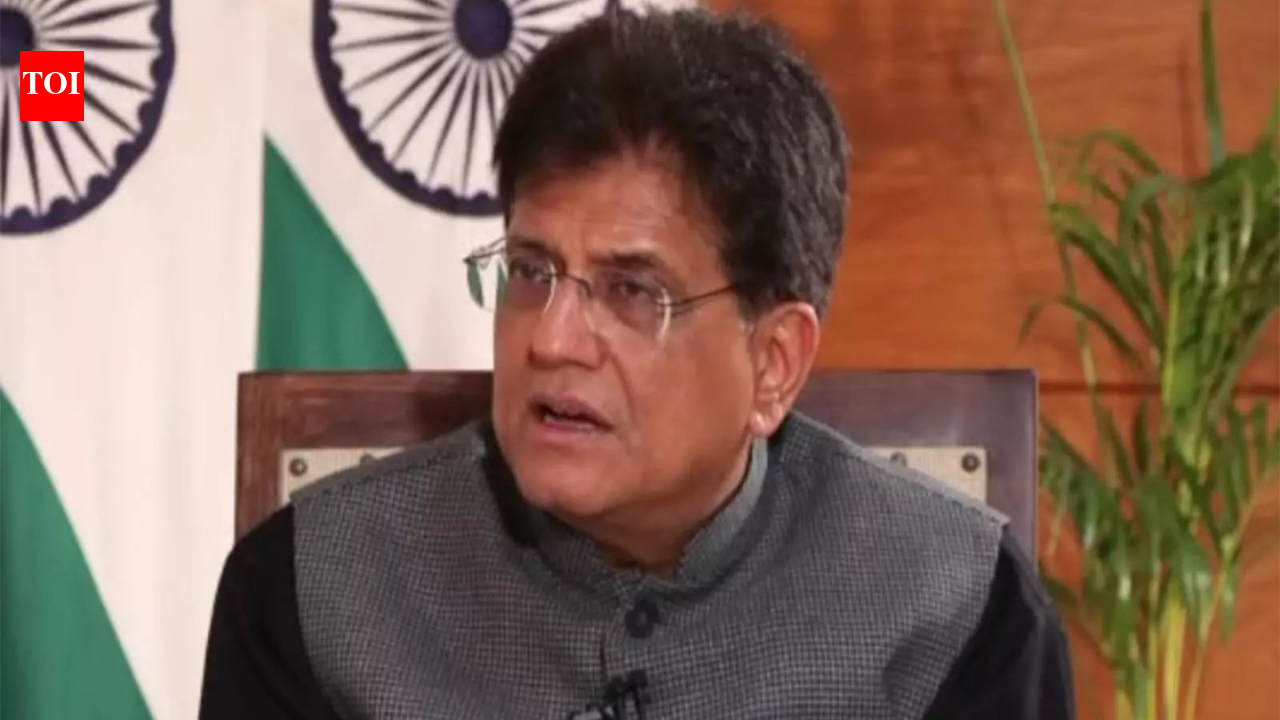
Commerce and industry minister Piyush Goyal on Friday met US Trade Representative Jamieson Greer and reviewed the next steps in negotiations for the proposed India-US bilateral trade agreement (BTA).The meeting took place on the sidelines of the 14th ministerial conference (MC14) of the World Trade Organisation in Yaounde, Cameroon, where both sides also exchanged views on issues related to the WTO agenda.“Had a very productive discussion with @USTradeRep Jamieson Greer on the sidelines of the WTO Ministerial Conference. Exchanged views on the #WTOMC14 agenda, next steps in the India-US BTA negotiations and explored ways to further deepen our economic cooperation and bilateral trade ties,” Goyal said in a social media post.The development comes amid ongoing efforts by both countries to finalise an interim trade pact. Last month, India and the US announced that they had finalised a framework for the first phase of the agreement, though it is yet to be signed.The two sides had earlier announced a trade deal on February 2, followed by a joint statement on February 7 outlining the contours of the agreement.As part of the framework, the US had agreed to reduce tariffs on Indian goods to 18%. However, the tariff structure has since undergone changes after the US Supreme Court struck down sweeping tariffs imposed under earlier measures.Following the ruling, US President Donald Trump introduced a 10% tariff on all countries for a period of 150 days starting February 24.In view of these developments, a planned meeting between chief negotiators of India and the US — aimed at finalising the legal text of the agreement — has been postponed. The pact was earlier expected to be signed this month.An official had earlier said that the interim trade agreement would be signed once the new global tariff framework of the US is fully in place.

Asda boss rejects profiteering claims as petrol price tops 150p

Britney Spears turns a new page after recent legal trauma

This Premium Sennheiser Soundbar Is $1,000 Off

-

 Entertainment1 week ago
Val Kilmer revived 1 year after death through AI
-

 Fashion7 days ago
China’s textile & apparel exports surge 17% to $50 bn in Jan-Feb 2026
-
 Business1 week ago
Video: The Effects of High Oil Prices
-
 Business7 days ago
Flipkart group CFO to leave co amid IPO plans – The Times of India
-

 Sports7 days ago
Rating Adidas’ 2026 World Cup away shirts: Argentina, Spain, Mexico and more
-

 Sports7 days ago
American Conference Commissioner Tim Pernetti thanks Trump for Army-Navy game executive order
-
Tech1 week ago
The Corsair 4000D RS PC Case Keeps Your System Cool
-

 Tech1 week ago
‘Uncanny Valley’: Nvidia’s ‘Super Bowl of AI,’ Tesla Disappoints, and Meta’s VR Metaverse ‘Shutdown’