

Fashion
India’s cotton production holds steady at 311.4 lakh bales: CAI


CAI’s August estimates are: 29.55 lakh bales in the North Zone, 186.50 lakh bales in the Central Zone, 89.50 lakh bales in the South Zone, and 5.85 lakh bales in Odisha and other states.
The Cotton Association of India (CAI) has kept its August 2025 cotton production estimate unchanged at 311.40 lakh bales, with higher consumption projected at 314 lakh bales.
Total supply for the 2024-25 season is expected to reach 389.59 lakh bales, including 39 lakh bales of imports.
Exports are forecast at 18 lakh bales, down from 28.36 lakh bales last season.
State-wise estimates are: Punjab – 1.50 lakh bales, Haryana – 8.05 lakh bales, upper Rajasthan – 10.35 lakh bales, lower Rajasthan – 9.65 lakh bales, Gujarat – 77.50 lakh bales, Maharashtra – 90 lakh bales, Madhya Pradesh – 19 lakh bales, Telangana – 49.50 lakh bales, Andhra Pradesh – 12 lakh bales, Karnataka – 24 lakh bales, Tamil Nadu – 4 lakh bales, Odisha – 3.85 lakh bales, and other states – 2 lakh bales.
Total cotton supply until the end of July 2025 is estimated at 374.43 lakh bales, comprising pressings of 302.24 lakh bales, imports of 33 lakh bales, and an opening stock of 39.19 lakh bales.
CAI estimates domestic cotton consumption up to the end of July 2025 at 261.66 lakh bales, while export shipments during the same period are estimated at 16 lakh bales. Stocks at the end of July 2025 are estimated at 96.77 lakh bales, including 32.50 lakh bales with textile mills and 64.27 lakh bales with CCI, the Maharashtra Federation, and others (MNCs, traders, ginners, exporters, etc), including cotton sold but not delivered.
For the full 2024-25 cotton season (ending September 30, 2025), CAI projects total supply at 389.59 lakh bales, compared to the previous estimate of 380.59 lakh bales. This includes the opening stock of 39.19 lakh bales on October 1, 2024, production of 311.40 lakh bales, and imports of 39 lakh bales (up from 15.20 lakh bales in the 2023-24 season).
The CAI has also increased its domestic consumption estimate for 2024-25 to 314 lakh bales, from 308 lakh bales previously. Exports for the season are projected at 18 lakh bales, down from 28.36 lakh bales in 2023-24.
Fibre2Fashion News Desk (KUL)












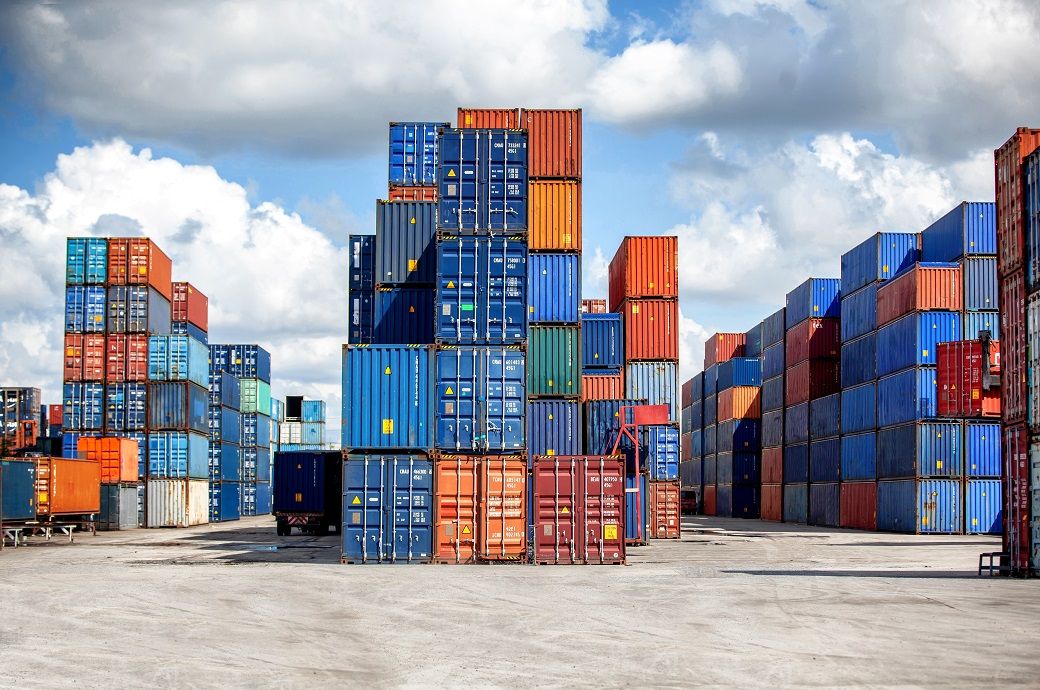
According to the Drewry WCI index, the spot rates from Shanghai to New York and Los Angeles decreased by 3 per cent to $3,552 and $2,810, respectively, per 40-foot container. As per Drewry’s Container Capacity Insight, 9 blank sailings have been announced on the Transpacific trade route for next week to maintain capacity. A few carriers have announced a Peak Season Surcharge (PSS) of around $2,000 per 40ft container, effective May 1. Drewry expects freight rates to remain relatively stable in the coming weeks before the implementation of the announced PSS.
Drewry WCI snapped a six-week rally, falling 2.72 per cent to $2,246 per FEU amid easing freight rates.
Declines on Asia–Europe and Transpacific routes drove the drop, though carriers plan PSS hikes from May.
Despite Middle East tensions, rates are expected to remain relatively stable, with capacity shifts and blank sailings influencing movements.
Spot rates on the Shanghai–Rotterdam trade route decreased 3 per cent to $2,229 per 40ft container, while rates on Shanghai–Genoa fell 2 per cent to $3,343 per 40ft container. Carriers are increasing effective capacity on this trade route, with only one blank sailing announced so far. Meanwhile, ZIM has announced a new bunker factor (NBF) of $850 per container, effective May 1, but for now Drewry expects freight rates to remain stable in the coming week.
Rates from New York to Rotterdam decreased 4 per cent to $1,022 per FEU, while Rotterdam to New York increased 3 per cent to $2,030 per FEU. Rotterdam-Shanghai rose 1 per cent to $599 per FEU, and Los Angeles–Shanghai steadied at $762 per 40-foot container.
The US-led naval blockade around the Strait of Hormuz has halted or restricted ships linked to Iran, with multiple vessels turned back. The disruption has strongly impacted global oil supply chains and pushed oil prices even higher. If ongoing negotiations fail, shippers should prepare for reduced schedule reliability, potential port omissions, longer lead times and upwards pressure on freight rates.
Fibre2Fashion News Desk (KUL)

The country has ensured import of refined fuel from alternative sources despite the global situation, and there will be no adverse impact on oil supply due to ERL’s low feed operations, Energy Division joint secretary Monir Hossain Chowdhury was cited as saying by domestic media outlets.
Bangladesh’s Energy Division recently said the capacity of Eastern Refinery Limited (ERL) would affect little the fuel supply system as the unit contributes only a fifth of the country’s petroleum supply system while the rest is imported in refined form.
It has ensured import of refined fuel from alternative sources, and there will be no adverse impact on oil supply due to ERL’s low feed operations.
The facility is now operating two of its four units to refine oils with ‘dead stocks’ and is expected to make two other units operational again, he said. The process to import crude is under way.
Chowdhury said production slowdowns at two ERL units due to crude oil shortages would not disrupt the nation’s fuel supply as over 255,000 metric tonnes of refined fuel is in stock now.
The Strait of Hormuz has been almost closed since February 28 preventing scheduled arrival of 2,00,000 metric tonnes of crude oil to Bangladesh during that period, he noted.
A ship carrying 100,000 tonnes of crude was supposed to arrive from Saudi Arabia in March, but is currently stuck at Rastanura Port as it could not cross the Hormuz Strait, he informed reporters at a press conference. Another ship from the United Arab Emirates (UAE) also met the same fate.
A third ship carrying 100,000 tonnes of Arabian light crude is scheduled to depart from the UAE on April 20 and expected to reach Chattogram via an alternative route on May 2 or 3, he said.
The government has also requested Saudi Arabia to provide another 100,000 tonnes of crude oil in May, he added.
A work order has been issued with the approval of the cabinet to import 100,000 tonnes of crude oil through direct purchase to meet urgent needs.
Fibre2Fashion News Desk (DS)


2026 MLB draft rankings: Top 85 prospects, mini-mock draft

Iran declares Hormuz open for commercial vessels as Trump expects deal ‘soon’

Netflix was long ‘a builder not a buyer.’ Is that era over?

-

 Tech1 week ago
As the Strait of Hormuz Reopens, Global Shipping Will Take Months to Recover
-

 Tech1 week ago
This AI Button Wearable From Ex-Apple Engineers Looks Like an iPod Shuffle
-

 Politics1 week ago
Indian airlines hit hardest after Dubai limits foreign flights until May 31
-

 Entertainment4 days ago
Palace left in shock as Prince William cancels grand ceremony
-

 Sports4 days ago
The case for Man United’s Fernandes as Premier League’s best
-

 Politics1 week ago
Chinese, Taiwanese will unite, Xi tells Taiwan opposition leader
-

 Entertainment6 days ago
Dua Lipa hits major career high ahead of wedding with Callum Turner
-
 Business4 days ago
UK could adopt EU single market rules under new legislation