

Politics
Iran rejects ‘excessive’ US peace plan, delivers response to proposal through Pakistan



Iran’s initial response to the US proposal to end the war has not been “positive”, a senior Iranian official told Reuters on Wednesday, adding that Tehran is still reviewing it.
The official said that Tehran’s initial response has been delivered to Pakistan to be conveyed to Washington.
The development came after Pakistan delivered a US proposal to Iran, a senior Iranian source told Reuters, but the venue of any talks between Tehran and Washington to end the war has yet to be decided.
However, Iran’s state-owned broadcaster Press TV reported on Wednesday that Tehran had responded negatively to an American proposal aimed at ending the US-Israeli war on the country.
“The official with knowledge of the details of the proposal, speaking exclusively to Press TV, said Iran will not allow US President Donald Trump to dictate the timing of the war’s end,” the report said.
“Tehran will end the war only at a time of its own choosing and if its conditions are met,” the report quoted official as saying.
The official drew parallels with two previous rounds of negotiations held in the spring and winter of 2025, noting that the US carried out military operations against Iran in both instances, said the broadcaster.
“Tehran has therefore categorised the latest overture, which was delivered via a friendly regional intermediary, as a ploy to heighten tensions and has responded negatively,” Press TV reports.
The official outlined five specific conditions under which Iran would agree to end the war. These include:
- A complete halt to “aggression and assassinations”.
- The establishment of concrete mechanisms to ensure that the war is not reimposed on Iran.
- Guaranteed and clearly defined payment of war damages and reparations.
- The conclusion of the war across all fronts and for all resistance groups involved throughout the region.
- International recognition and guarantees regarding Iran’s sovereign right to exercise authority over the Strait of Hormuz.
Two days ago, the Financial Times reported that Pakistan is positioning itself as the lead mediator trying to broker an end to the US and Israeli war against Iran.
Chief of Defence Forces (CDF) and Chief of Army Staff (COAS) Field Marshal Asim Munir spoke with US President Donald Trump on Sunday, Reuters quoted the newspaper that cited two people briefed on the call.
It also reported that senior Pakistani officials were back-channelling communications between Tehran, Steve Witkoff and Jared Kushner.
The White House also confirmed Trump’s call with Field Marshal Asim Munir.
On the other hand, CNN reported, Pakistan could host a meeting between the United States and Iran later this week under a proposal now being considered. The report said US Vice President JD Vance could attend the proposed meeting.
Prime Minister Shehbaz Sharif also took to X, saying that Islamabad was ready to host talks between the US and Iran to settle the conflict in the Middle East.
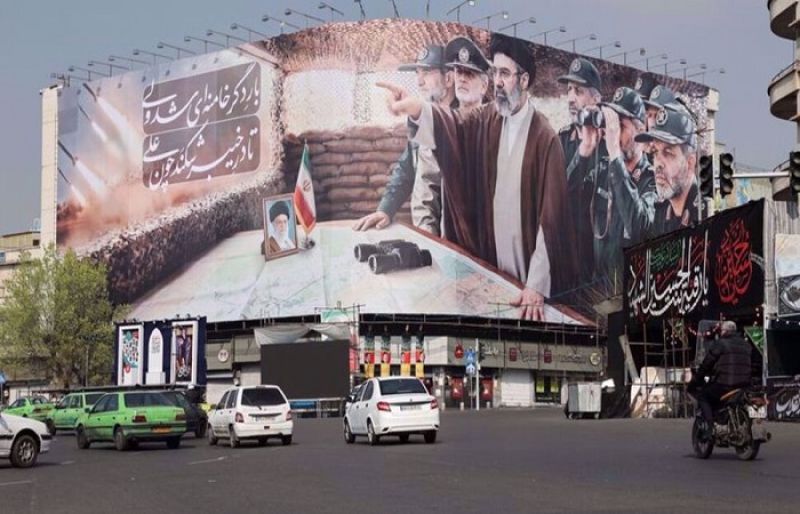
Iran has responded negatively to an American proposal aimed at ending the ongoing imposed war, insisting that it will only occur on Tehran’s own terms and timeline, a senior political-security official said.
The official with knowledge of the details of the proposal said Iran will not allow US President Donald Trump to dictate the timing of the war’s end.
“Iran will end the war when it decides to do so and when its own conditions are met,” the official said, emphasizing Tehran’s resolve to continue its defense and inflict “heavy blows” on the enemy until its demands are fulfilled.
According to the official, Washington has been pursuing negotiations through various diplomatic channels, putting forward proposals that Tehran views as “excessive” and disconnected from the reality of America’s failure on the battlefield.
The official drew parallels with two previous rounds of negotiations held in the spring and winter of 2025, characterising them as deceptive.
In both instances, the official stressed, the United States had no genuine intention to engage in meaningful dialogue and subsequently carried out military aggression against Iran.
Tehran has therefore categorized the latest overture, which was delivered via a friendly regional intermediary, as a ploy to heighten tensions and has responded negatively.
The official outlined five specific conditions under which Iran would agree to end the war. These include:
A complete halt to “aggression and assassinations” by the enemy.
The establishment of concrete mechanisms to ensure that the war is not reimposed on the Islamic Republic.
Guaranteed and clearly defined payment of war damages and reparations.
The conclusion of the war across all fronts and for all resistance groups involved throughout the region
Iran’s exercise of sovereignty over the Strait of Hormuz is and will remain Iran’s natural and legal right, and it constitutes a guarantee for the implementation of the other party’s commitments, and must be recognized.
The official further noted that these stipulations are in addition to demands previously presented by Tehran during the second round of negotiations in Geneva, which took place just days before the US and Israel carried out a fresh round of aggression on February 28.
Iran has communicated to all intermediaries acting in good faith that a ceasefire is contingent upon the acceptance of all of its conditions.
“No negotiations will be held prior to that,” the official stressed, reiterating that the continuation of Iran’s defensive operations will persist until the outlined conditions are met.
“The end of the war will occur when Iran decides it should end, not when Trump envisions its conclusion,” he hastened to add.
The unprovoked and illegal war was launched on February 28 – in the middle of indirect nuclear talks – with the assassination of the Leader of the Islamic Revolution, Ayatollah Seyyed Ali Khamenei, and some top-ranking military commanders and government officials.
In response, Iranian armed forces have so far carried out nearly 80 waves of retaliatory strikes targeting Israeli and American military assets across the region.
In recent days, the American side has courted some regional countries to persuade Iran to cease its retaliatory strikes that have decimated American and Israeli military infrastructure in the region as well as to allow American vessels to pass through the Strait of Hormuz.
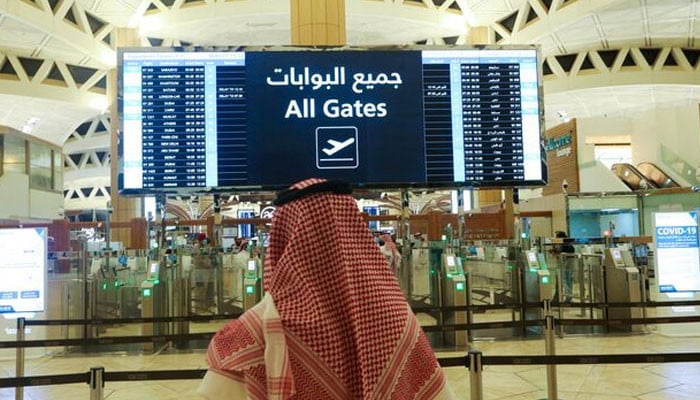
In a bid to facilitate stranded visitors who could not leave due to the current situation in the region, Saudi Arabia on Wednesday extended the validity of all types of visas until April 18, 2026.
In a statement, the Ministry of Interior said that those whose visas — including visit, Umrah, transit and final exit — expired as of February 25, 2026, and who were unable to depart the kingdom due to the current situation, can benefit from this offer.
The ministry asked holders of expired visas to go directly to departure ports, where their exit procedures will be completed smoothly without the need for prior measures.
“This service does not require the payment of any fees for beneficiaries who wish to depart directly,” it added.
A large number of foreigners were unable to depart the Kingdom due to the ongoing war between the United States, Israel and Iran, which disrupted air travel across the region.
Several countries closed their airspace and airlines suspended operations after Tehran launched retaliatory attacks across Gulf nations.
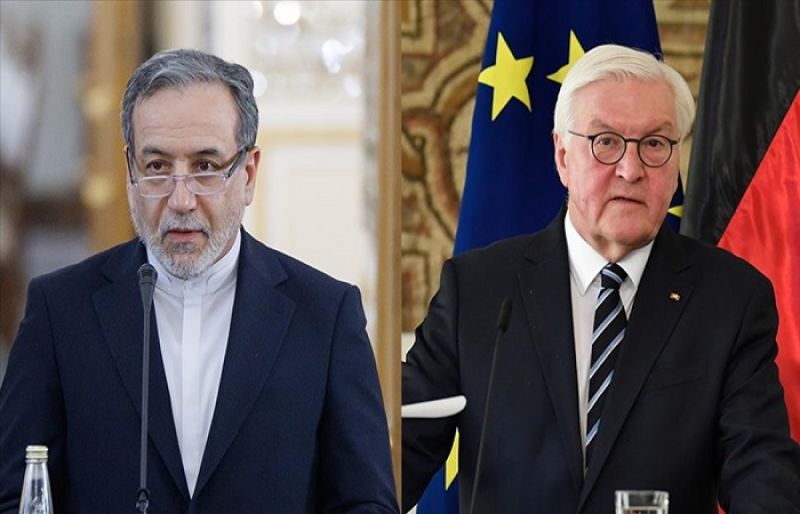
Iranian Foreign Minister Abbas Araghchi has lauded German President Frank-Walter Steinmeier for his outspoken condemnation of human rights violations against the Iranian people as the United States and Israel continue their aggression against the country.
Araghchi expressed his appreciation through a post on his X account on Wednesday, highlighting Steinmeier’s comments that described the US-Israeli war against Iran as not only aggressive but also a breach of international law.
The commendation comes at a time when many global leaders have opted for silence or inaction regarding the issue, marking Steinmeier’s stance as relatively unprecedented among Western figures.
Earlier, President Steinmeier, speaking at a ceremony in Berlin, described the US and Israeli war against Iran as “wrong” and “a violation of international law.”
Steinmeier, who previously served as Germany’s foreign minister, took a stance against the war, stating: “In my view, this war is a violation of international law.”
In his post, the Iranian foreign minister said, “International law is dead in practice—driven by Western double standards on Gaza vs. Ukraine and silence on Israel–US aggression on Iran.
“Still, credit to President Steinmeier for condemning the violations against Iranians. Those who value the rule of law should also speak up.”
Steinmeier also expressed skepticism about the claims of an “imminent threat” against American targets, saying the justification for starting the war of aggression against Iran was not convincing.
On February 28, the United States and the Israeli regime launched an unprovoked war on Iran, assassinating former Leader of the Islamic Revolution Ayatollah Seyyed Ali Khamenei as well as several top military commanders.
Iran immediately began to retaliate against the aggression by launching barrages of missiles and drone attacks on the Israeli-occupied territories as well as on the US bases in regional countries.


Messi to Dowman: Who’s the world’s best player at every age?

Trump says he could send National Guard to airports ‘for more help’

OpenClaw Agents Can Be Guilt-Tripped Into Self-Sabotage

-

 Fashion1 week ago
Sales at US apparel, clothing accessories stores up 4% YoY in Jan 2026
-

 Tech1 week ago
Justice Department Says Anthropic Can’t Be Trusted With Warfighting Systems
-

 Entertainment7 days ago
Val Kilmer revived 1 year after death through AI
-
 Business1 week ago
Stocks and pound rise as US rate call approaches
-

 Sports1 week ago
March Madness 2026 – How to watch in SA, start time, schedule, TV channel for NCAA championship basketball tournament
-
 Business1 week ago
Brits cashing in jewellery as gold price hits record high
-

 Politics1 week ago
Iran strikes Tel Aviv with cluster-warhead missiles in retaliation of Larijani’s martyrdom
-

 Sports1 week ago
WBC championship: USA-Venezuela preview, live updates, analysis