

Politics
Iran rejects US proposal, lays out five conditions for ending imposed war

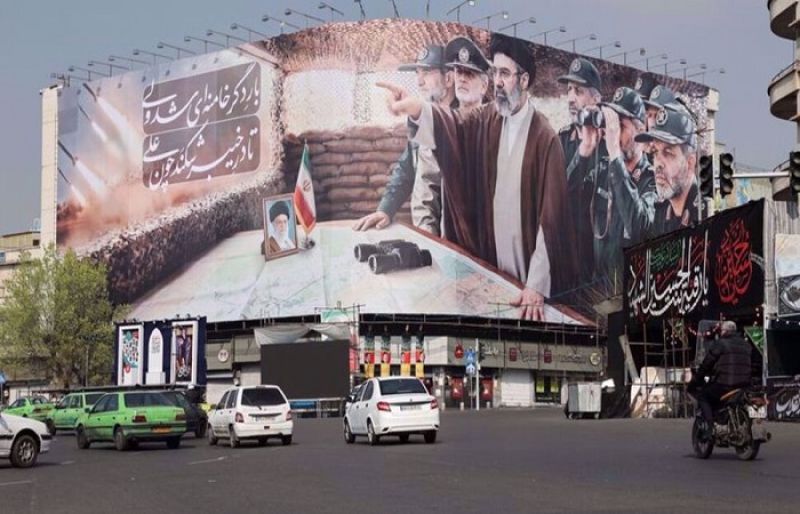
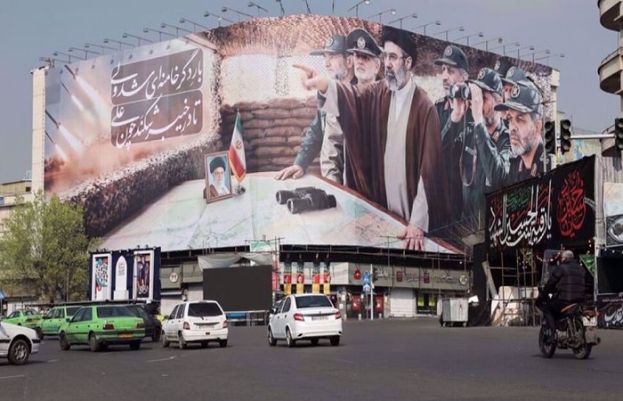
Iran has responded negatively to an American proposal aimed at ending the ongoing imposed war, insisting that it will only occur on Tehran’s own terms and timeline, a senior political-security official said.
The official with knowledge of the details of the proposal said Iran will not allow US President Donald Trump to dictate the timing of the war’s end.
“Iran will end the war when it decides to do so and when its own conditions are met,” the official said, emphasizing Tehran’s resolve to continue its defense and inflict “heavy blows” on the enemy until its demands are fulfilled.
According to the official, Washington has been pursuing negotiations through various diplomatic channels, putting forward proposals that Tehran views as “excessive” and disconnected from the reality of America’s failure on the battlefield.
The official drew parallels with two previous rounds of negotiations held in the spring and winter of 2025, characterising them as deceptive.
In both instances, the official stressed, the United States had no genuine intention to engage in meaningful dialogue and subsequently carried out military aggression against Iran.
Tehran has therefore categorized the latest overture, which was delivered via a friendly regional intermediary, as a ploy to heighten tensions and has responded negatively.
The official outlined five specific conditions under which Iran would agree to end the war. These include:
A complete halt to “aggression and assassinations” by the enemy.
The establishment of concrete mechanisms to ensure that the war is not reimposed on the Islamic Republic.
Guaranteed and clearly defined payment of war damages and reparations.
The conclusion of the war across all fronts and for all resistance groups involved throughout the region
Iran’s exercise of sovereignty over the Strait of Hormuz is and will remain Iran’s natural and legal right, and it constitutes a guarantee for the implementation of the other party’s commitments, and must be recognized.
The official further noted that these stipulations are in addition to demands previously presented by Tehran during the second round of negotiations in Geneva, which took place just days before the US and Israel carried out a fresh round of aggression on February 28.
Iran has communicated to all intermediaries acting in good faith that a ceasefire is contingent upon the acceptance of all of its conditions.
“No negotiations will be held prior to that,” the official stressed, reiterating that the continuation of Iran’s defensive operations will persist until the outlined conditions are met.
“The end of the war will occur when Iran decides it should end, not when Trump envisions its conclusion,” he hastened to add.
The unprovoked and illegal war was launched on February 28 – in the middle of indirect nuclear talks – with the assassination of the Leader of the Islamic Revolution, Ayatollah Seyyed Ali Khamenei, and some top-ranking military commanders and government officials.
In response, Iranian armed forces have so far carried out nearly 80 waves of retaliatory strikes targeting Israeli and American military assets across the region.
In recent days, the American side has courted some regional countries to persuade Iran to cease its retaliatory strikes that have decimated American and Israeli military infrastructure in the region as well as to allow American vessels to pass through the Strait of Hormuz.
- Putin seeks stronger Chinese support after Trump’s Beijing visit.
- Xi, Putin expected to discuss “Power of Siberia 2” gas pipeline.
- Kremlin says leaders to discuss regional, global developments.
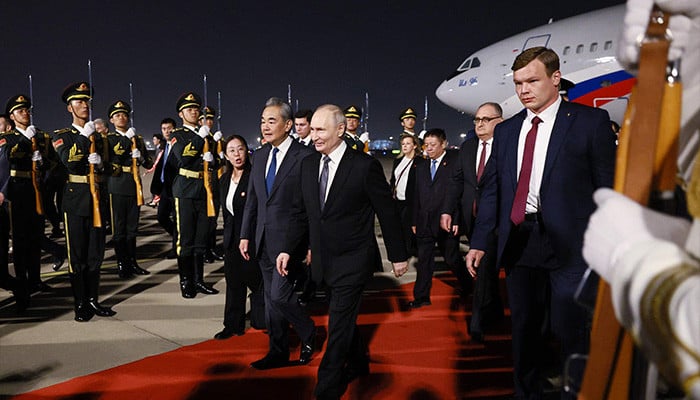
Russian President Vladimir Putin arrived in Beijing late on Tuesday for talks with his Chinese counterpart and “long-time good friend” Xi Jinping, intending to show their ties are unshakeable days after a visit by Donald Trump.
The confirmation of Putin’s trip came just hours after Trump wrapped up his visit on Friday, the first to China by a US president in nearly a decade and one aimed at stabilising their turbulent relations.
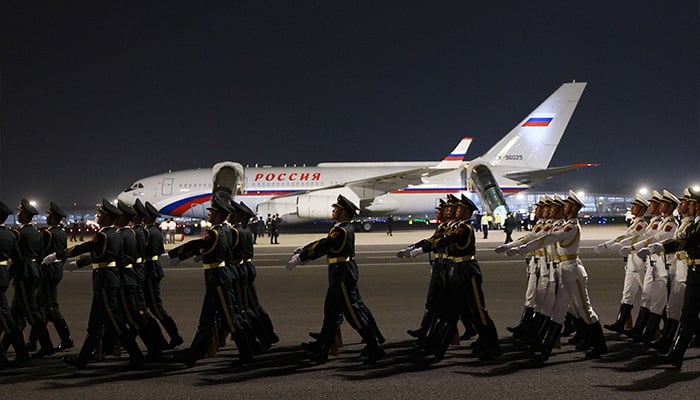
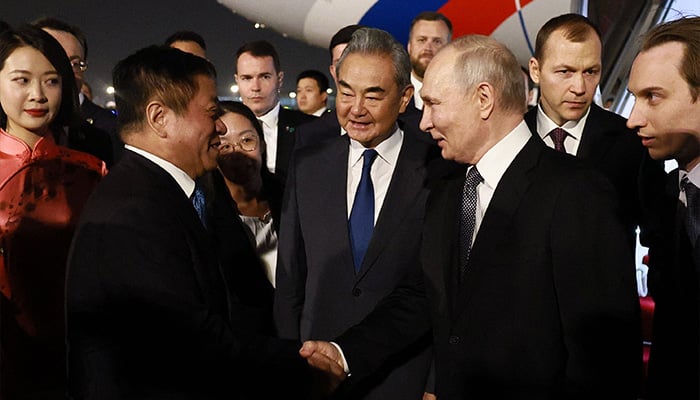
Putin arrived at Beijing Capital International Airport around 11:15pm (1515 GMT) on Tuesday, where he was greeted by Chinese Foreign Minister Wang Yi and a military band.
It was a near-mirror image of Trump’s arrival days earlier, with both leaders stepping out of their planes onto a red carpet as Chinese youths chanted “welcome, welcome” — this time, waving Russian flags instead of American.
Putin and Xi are set to discuss how to strengthen Russia and China’s strategic partnership and “exchange views on key international and regional issues”, according to a Kremlin statement.
Their ties have deepened since Russia’s invasion of Ukraine in 2022, with Putin visiting Beijing every year since as his country is cut off diplomatically on the world stage.
However, their relationship is far from equal, with Moscow heavily dependent economically on Beijing, the main buyer of sanctioned Russian oil.
Among topics Xi and Putin could discuss is the construction of the major “Power of Siberia 2” natural gas pipeline from Russia to China through Mongolia — a land alternative to crude imported by sea from the Middle East — which Moscow is keen to get underway.
Setting a warm tone for the visit, Xi and Putin exchanged “congratulatory letters” on Sunday to mark 30 years of their countries’ strategic partnership.
Chinese foreign ministry spokesperson Guo Jiakun lauded “the enduring friendship between China and Russia” on Tuesday.
And in a video message to the Chinese people released on Tuesday, Putin said relations have reached “a truly unprecedented level”, and that “trade between Russia and China continues to grow”.
“The close strategic relationship between Russia and China plays a major, stabilising role globally. Without allying against anyone, we seek peace and universal prosperity,” Putin said, without mentioning any third country.
The two leaders are also expected to sign a joint declaration after their talks.
‘Dear, old friends’
Xi welcomed Putin with open arms as an “old friend” when he last visited Beijing in September 2025 — language the Chinese leader did not extend to Trump last week.
Putin, who in turn called Xi his “dear friend”, will be keen to show the world that their relations are unaffected by Trump’s visit.
While Putin’s visit is not expected to receive the same pomp as Trump’s, “the Xi-Putin relationship does not require that kind of performative reassurance”, said Patricia Kim from the Brookings Institution in Washington.
Both sides view ties as “structurally stronger and more stable” than those between China and the United States, she said.
Beijing has regularly called for talks to end the war in Ukraine but has never condemned Russia for sending in troops, presenting itself instead as a neutral party.
Trump and Xi discussed Ukraine last week, but the US president left China without a breakthrough.
“Xi will almost certainly brief Putin on his summit with Trump,” Kim said.
The lack of clear outcomes from the Xi-Trump meeting, though, “likely reassures Moscow that Xi did not strike any understanding with Trump that would materially undercut Russian interests”.
Appetite for oil
Putin will be hoping for China to deepen its commitment to Moscow, after Trump told Fox News during his visit that Beijing had agreed to buy US oil to feed its “insatiable” appetite for energy.
With Russia reliant on sales to China to sustain its war effort, “Putin does not want to lose that support”, Asia Society’s Lyle Morris told AFP.
“Putin will likely be keen to hear from Xi about China’s next step in the Middle East,” Morris said, after “Trump signalled clearly that he hopes Beijing will play a leading role”.
When it comes to the US-Israeli war on Iran, though, China and Russia may have different priorities.
“(China) relies on the freedom of the world’s major waterways to sustain its economic activities, and would prefer that the standoff in the Strait of Hormuz end sooner rather than later,” James Char of Singapore’s Nanyang Technological University told AFP.
On the other hand, Moscow has “been benefitting economically from the fighting in Iran due to the relaxation of sanctions against Russian energy supplies, so may have a different view”, he said.
Russia’s top diplomat Sergei Lavrov said after meeting Xi in April that Russia could “compensate” for China’s energy shortages as the Middle East war hits global supplies.
“Expanded energy ties may feature prominently at the meeting (as) Beijing seeks more Russian energy,” said Joseph Webster from the Atlantic Council.
“From Moscow’s perspective, shipping more oil east may be more attractive in the wake of Ukraine’s relentless campaign targeting Russian energy infrastructure.”
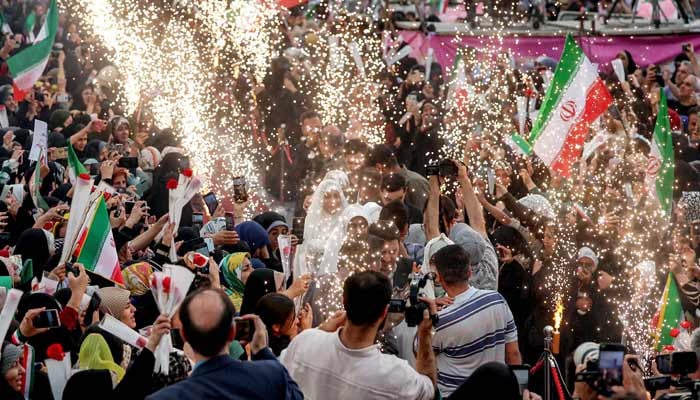
Iranian authorities held mass public weddings in Tehran for couples who signed up to a state-sponsored scheme declaring their readiness to sacrifice their lives in the war against the US and Israel.
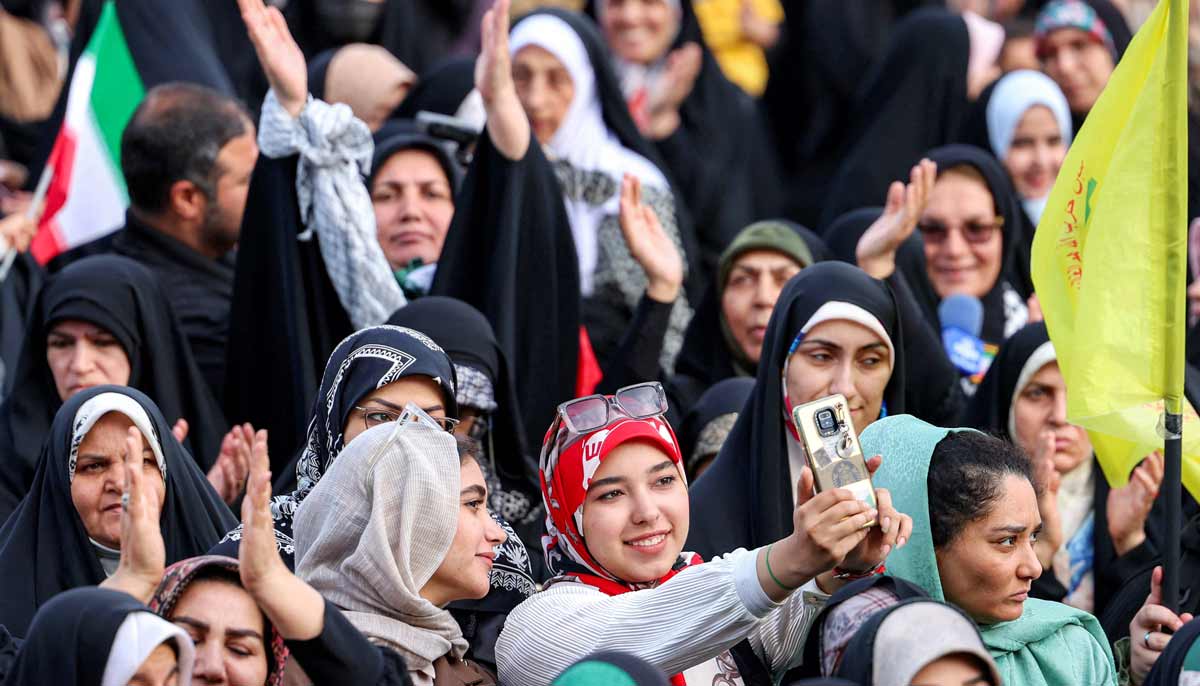
The ceremonies conducted late on Monday involved hundreds of couples in several major squares in the capital, including more than 100 in the vast Imam Hossein square in central Tehran, according to reports in Iranian media.
They were broadcast on state TV in a bid to boost wartime morale, with US President Donald Trump repeatedly threatening new military action against Iran amid a shaky ceasefire which halted the fighting that began on February 28.
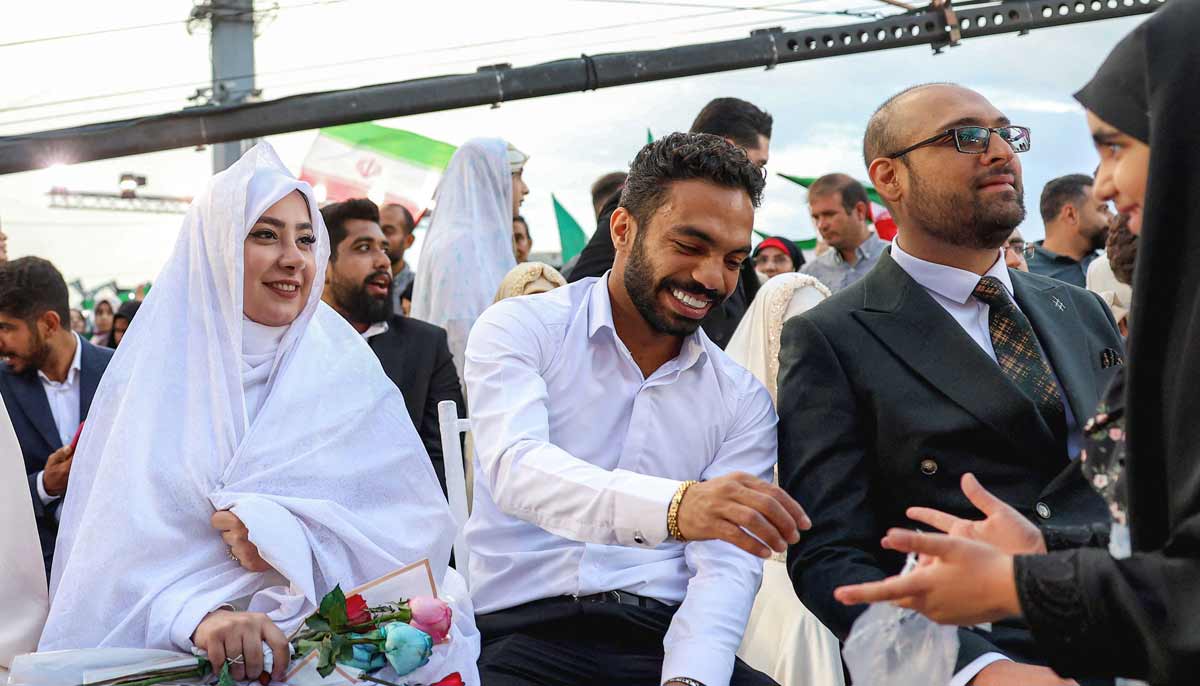
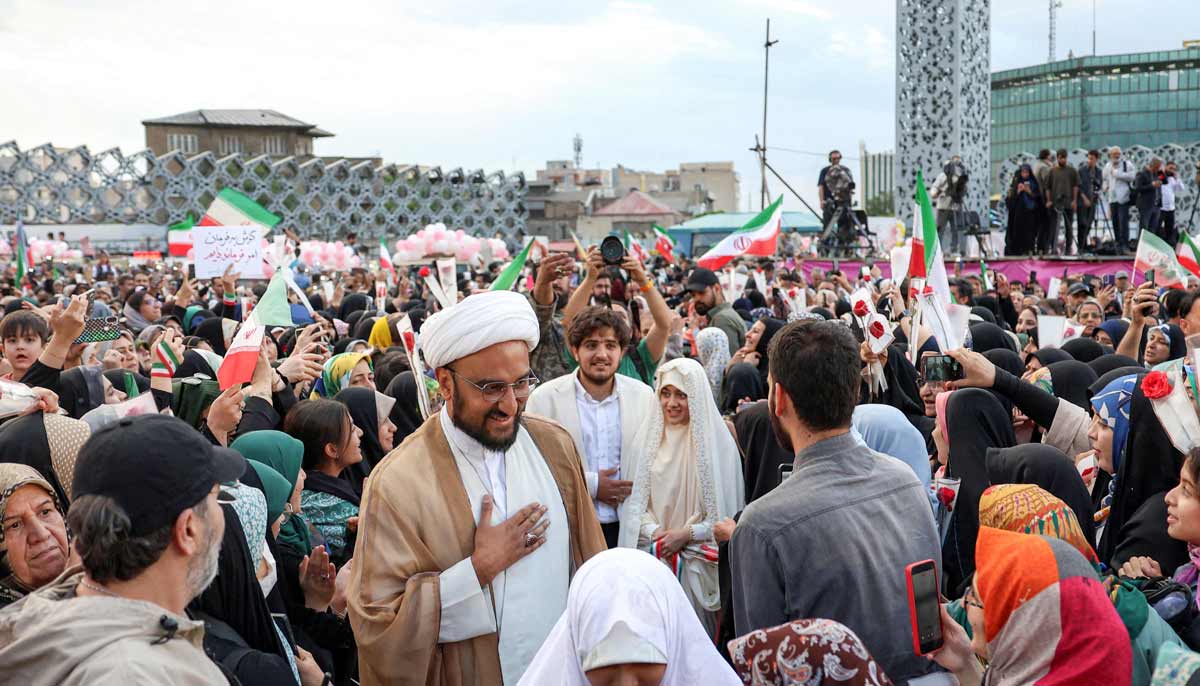
Those involved had signed up, according to Iranian media, for the “self-sacrifice” scheme (janfada in Persian) where people pledged to put their lives on the line in the war by, for example, forming human chains outside power stations.
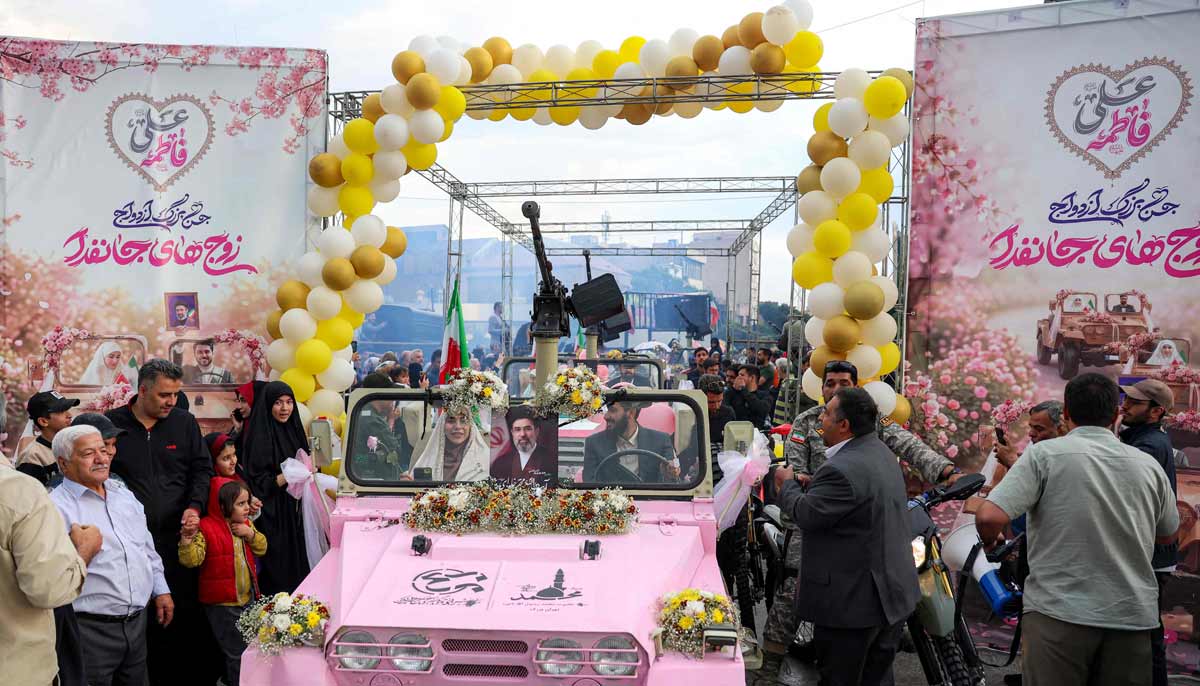
Iranian authorities say millions of people, including top figures such as speaker of parliament Mohammad Bagher Ghalibaf and President Masoud Pezeshkian, have put their names forward.
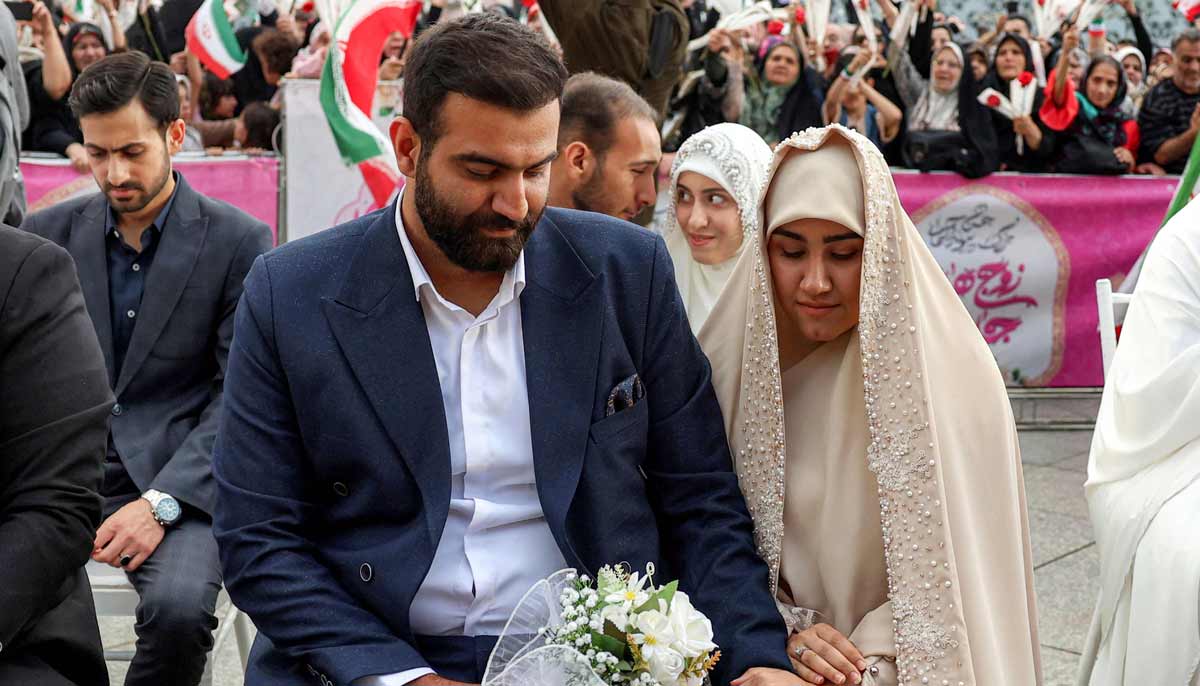
Couples arrived at the Imam Hossein square in military jeeps with mounted machine guns and were married on a stage in a ceremony presided over by a cleric, AFP images showed.
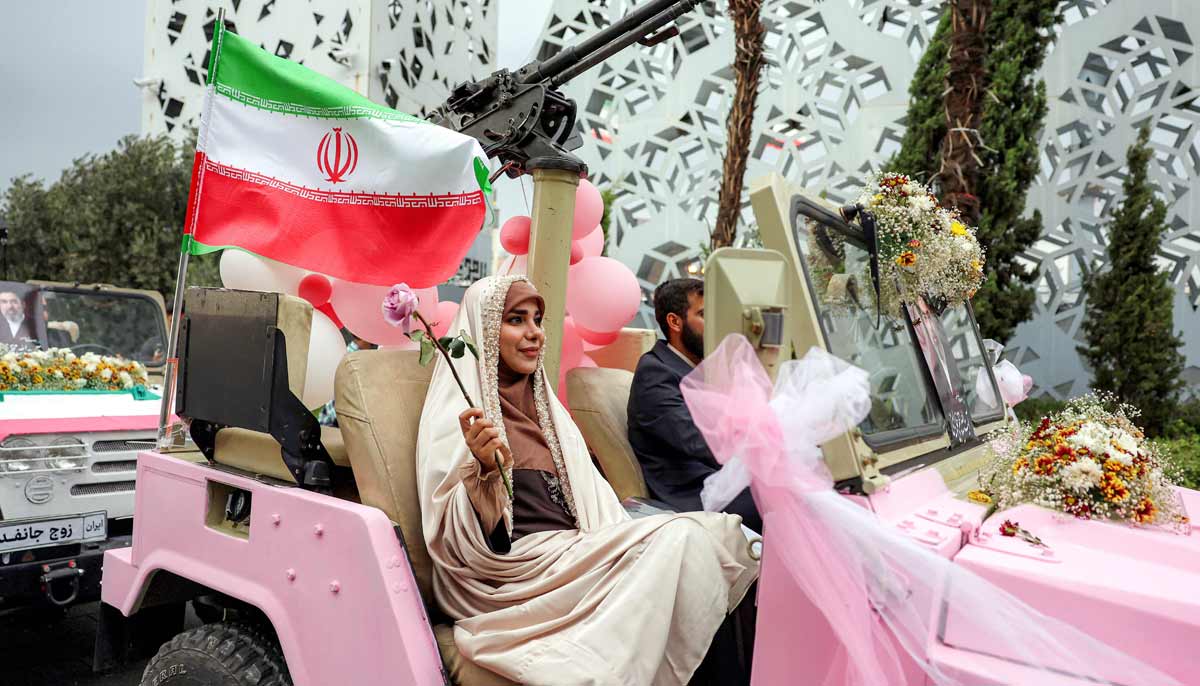
The stage was festooned with balloons and with a giant image of Supreme Leader Mojtaba Khamenei.
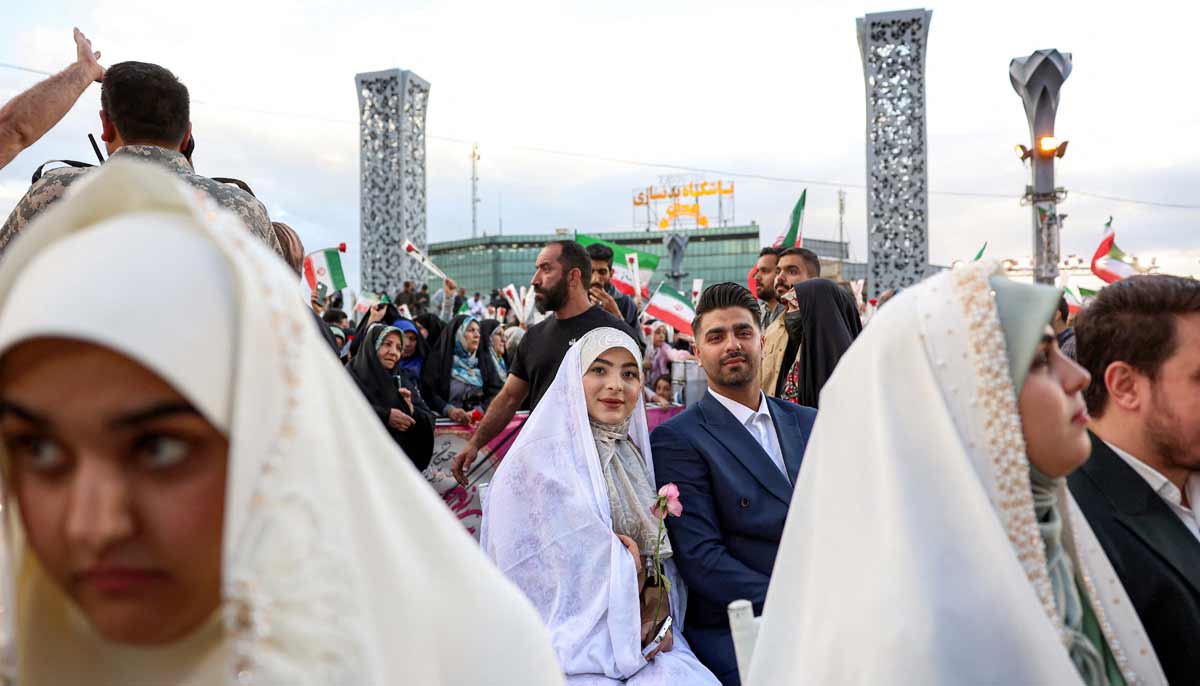
“Certainly, the country is at war, but young people also have the right to marry,” one young woman in a white Islamic bridal dress, who was not named, said beside her groom in footage published by the Mehr news agency.
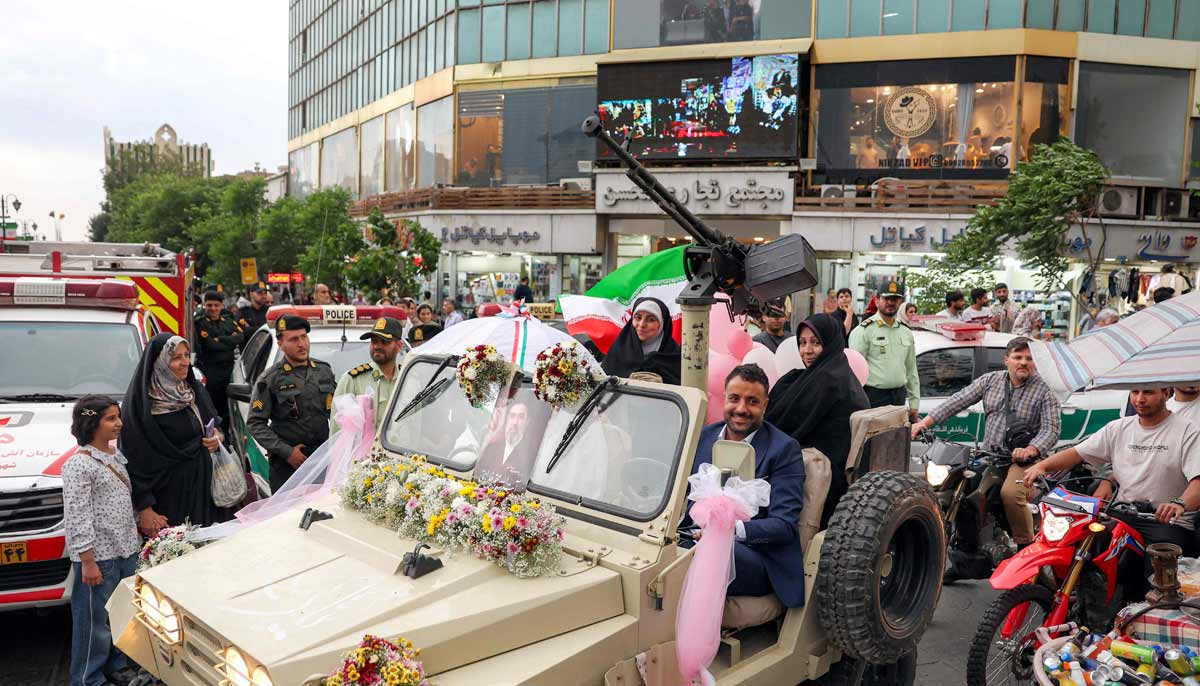
A man in a dark suit, beside his bride-to-be, said they were happy the occasion marked the anniversary of the marriage of Hazrat Ali (RA) to Hazrat Fatima, the daughter of the Prophet Muhammad (PBUH).
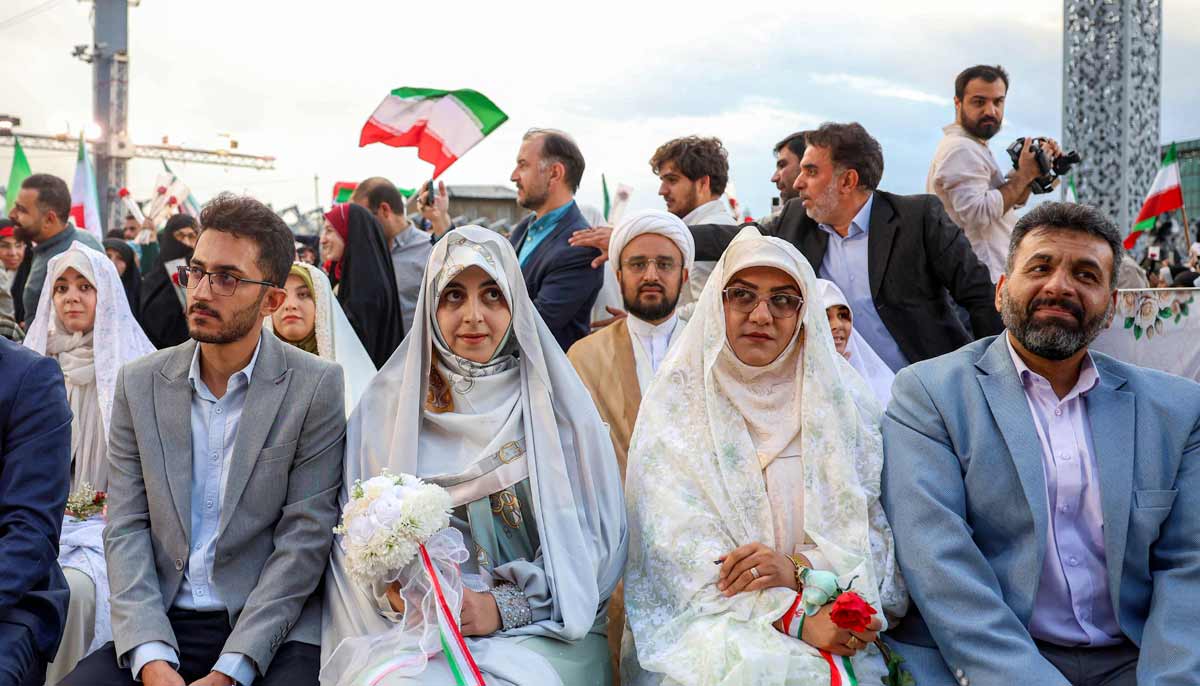
“We received their blessings. Furthermore, we came to offer our best wishes to the people in the streets,” he said.
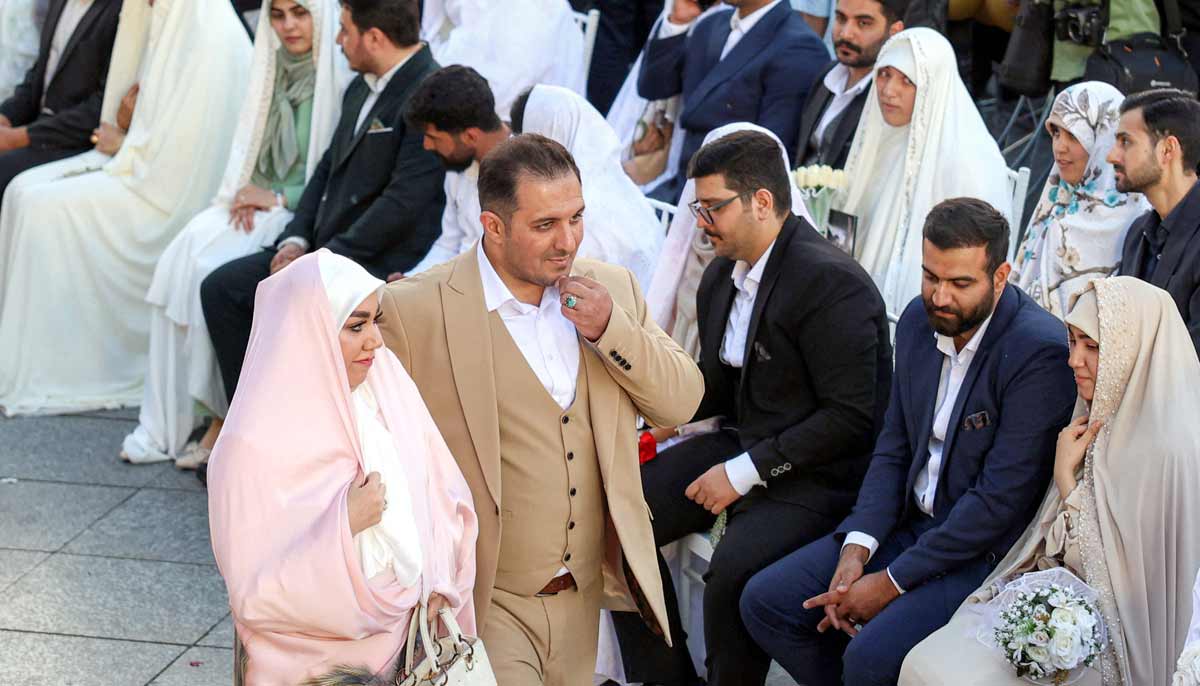
Mehr said 110 couples had taken part in the Imam Hossein square ceremony alone. The AFP images showed crowds of well-wishers clasping roses and watching on.
- Two-decade worship arrangement ended.
- Muslim side plans Supreme Court challenge.
- Critics warn of a grave threat.
Muslims will no longer be able to offer Friday prayer at a disputed mosque-temple complex in India’s Madhya Pradesh after a court declared the site a Hindu temple and authorities allowed daily Hindu worship there.
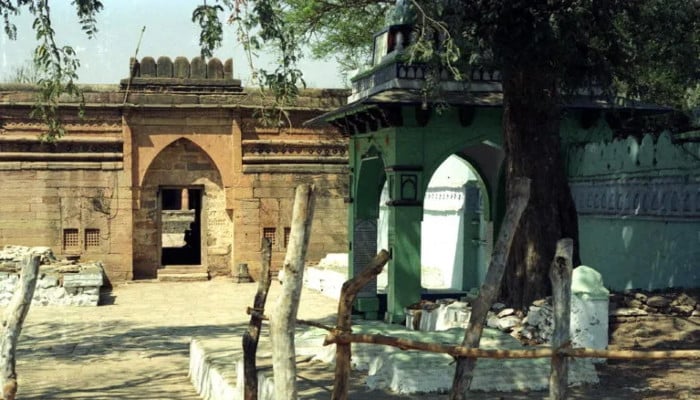
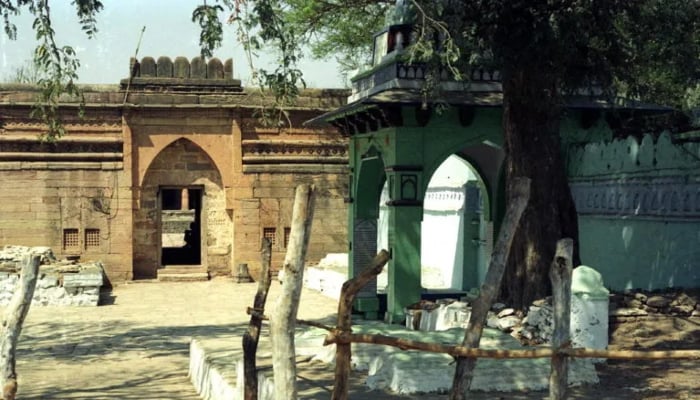
An Indian court ruling has ended a two-decade worship arrangement at the Bhojshala-Kamal Maula mosque complex, with the Archaeological Survey of India (ASI) allowing daily Hindu prayers after the site was declared a temple.
The Indore bench of the Madhya Pradesh High Court ruled that the complex in Dhar district was a temple dedicated to goddess Vagdevi, also known as Saraswati, Indian media reported.
Following the ruling, the ASI issued a May 16 order allowing Hindu devotees unrestricted daily worship rights at the site. The order superseded previous directives, including a 2003 arrangement under which Hindus were allowed to worship on Tuesdays and Muslims were allowed to offer Friday prayer.
Advocate Vishnu Shankar Jain, who represented the Hindu petitioners, said Hindus could now visit and worship at the complex “without any restriction”.
The ASI said the site would remain a protected monument under the Ancient Monuments and Archaeological Sites and Remains Act, 1958, while worship timings would be determined by the superintending archaeologist in consultation with the district administration.
The court relied on a 2024 ASI report which said the Bhojshala-Kamal Maula mosque complex was constructed using remnants of earlier temples, with the mosque built centuries later, according to Indian media.
The court also said the Muslim side could approach the state government for land at an alternative site in Dhar district to build a mosque. Dhar city Qazi Waqar Sadiq indicated that the Muslim petitioners would approach the Supreme Court, adding that the Muslim community had no intention of accepting alternative land.
The protected monument has long been contested, with Hindu groups claiming it is a temple dedicated to Saraswati and Muslims maintaining that it is the Kamal Maula mosque.
According to Al Jazeera, the ruling has placed the mosque out of bounds for Muslims in Dhar, where it had been used for prayer for decades.
The decision has drawn criticism from Muslim-side lawyers, historians and politicians, who argue that it threatens protections for Muslim places of worship in India. Lawyer Ashhar Warsi, who argued from the Muslim side, called the verdict “an erroneous judgement” and “a clear violation of the established rule of law”.
Asaduddin Owaisi, a five-time member of parliament, told Al Jazeera that the ruling sent a message of “grave threat” to Muslim places of worship in India. He also said the Babri judgement had “opened the floodgates” for similar claims.
Al Jazeera also quoted historian Audrey Truschke as saying the current trend of targeting mosques in India was part of the “entrenched Islamophobia of Hindu nationalism”.
The dispute comes amid a wider Hindutva push targeting medieval mosques and Islamic-era monuments in India, with campaigners claiming that they were built over Hindu temples. Such claims have gained momentum since Prime Minister Narendra Modi came to power in 2014.


Putin lands in China for trip to show unshakeable ties after Trump pomp

Angelina Jolie celebrates daughter Zahara’s graduation without Brad Pitt

Pro wrestling podcaster Dwayne Swayze talks teaming with MVP for show, partnership with BZZR

-

 Entertainment7 days ago
Conan O’Brien hat tricks as Oscar host
-

 Fashion6 days ago
Italy’s Zegna Group’s Q1 growth boosted by strong organic performance
-

 Entertainment1 week ago
Tom Brady gets back at Kevin Hart during Netflix roast
-

 Tech1 week ago
Papa Johns Is Getting Into Drone Delivery—but Not for Pizza
-

 Tech1 week ago
CUDA Proves Nvidia Is a Software Company
-
 Business1 week ago
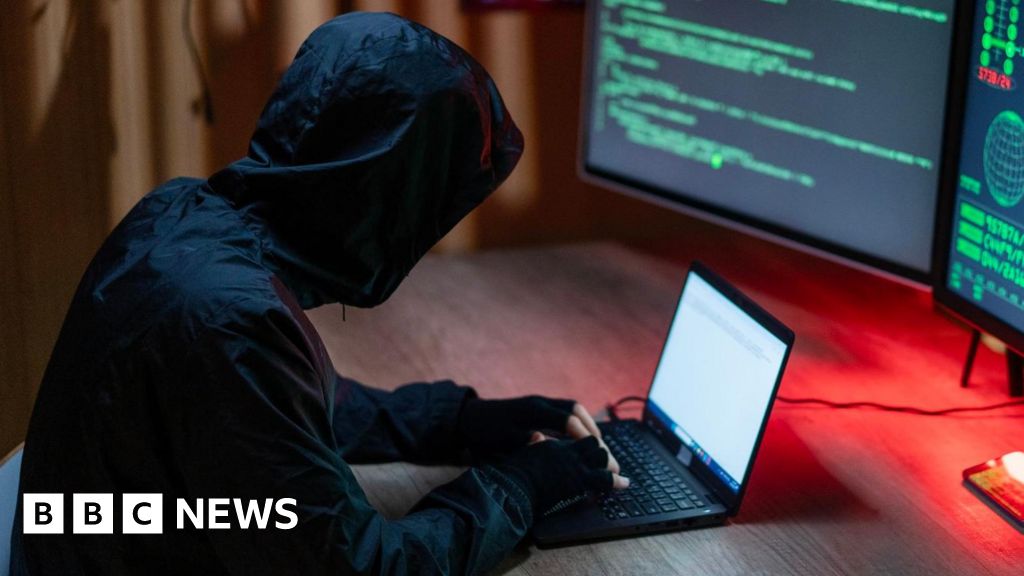
Cyber-crime increasingly coming with threats of physical violence
-

 Tech1 week ago
Chevron Wants a School District Tax Break for a Data Center Power Plant in Texas
-

 Fashion1 week ago
EC clears €5-bn German state aid to back decarbonisation of industry