

Politics
Iran says ‘No talks with US’, and wants end to war on its terms

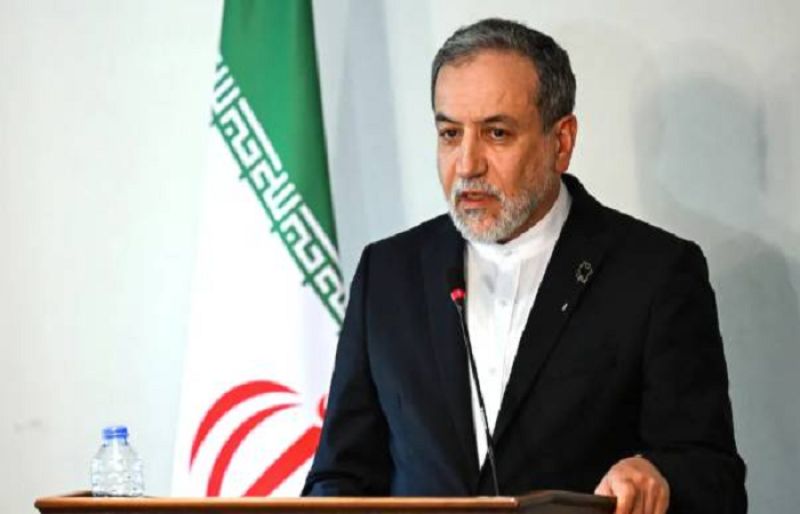
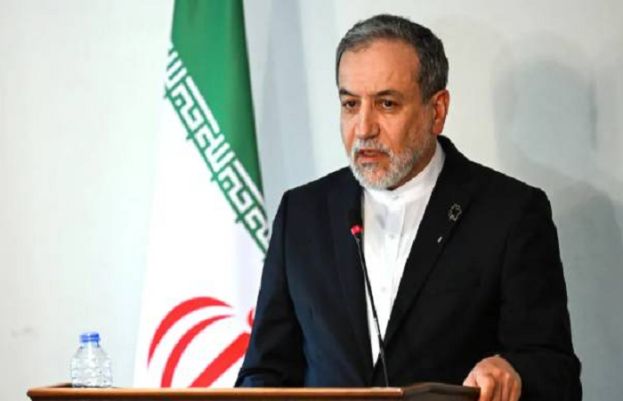
“We do not intend to negotiate,” Araghchi told state TV. “We seek an end to the war on our own terms.”
US President Donald Trump is ready to “unleash hell” if Iran does not accept a deal to end the nearly four-week Middle East war, the White House warned Wednesday, but a defiant Tehran said it did not intend to negotiate.
The ramped-up rhetoric dashed hopes of any imminent de-escalation as violence on the ground showed no sign of abating, with Iran, Israel, Lebanon, Bahrain, Kuwait, Jordan and Saudi Arabia all coming under fire.
Trump insisted later Wednesday that Iran was taking part in peace talks, but Tehran is denying it because their negotiators fear being killed by their own side.
“They are negotiating, by the way, and they want to make a deal so badly,” Trump told a dinner for Republican members of Congress.
“But they’re afraid to say it, because they figure they’ll be killed by their own people,” he said. “They’re also afraid they’ll be killed by us.”
Iranian Foreign Minister Abbas Araghchi denied that Iran was negotiating with the United States, saying an exchange of messages through “friendly countries” did not equate to talks with Washington. “We do not intend to negotiate,” Araghchi told state TV. “We seek an end to the war on our own terms.”
In Pakistan, officials said Islamabad had conveyed to Tehran a 15-point American plan to stop the fighting that began on February 28.
Iran’ state-controlled Press TV cited an unidentified official as saying Tehran had “responded negatively” to the plan and the war would end only on Tehran’s terms, which include guarantees against future attacks.
– ‘Unleash hell’ –
White House Press Secretary Karoline Leavitt said talks had been “productive” but declined to say whom the United States was dealing with in Tehran following the assassination of supreme leader Ali Khamenei.
His son and successor Mojtaba Khamenei has not been seen in public.
“If Iran fails to accept the reality of the current moment… Trump will ensure they are hit harder than they have ever been hit before,” Leavitt said. “President Trump does not bluff and he is prepared to unleash hell.”
With thousands more US troops reportedly headed to the Middle East, Iran also threatened to open a new front by targeting Red Sea shipping should the United States launch a ground invasion.
Iran’s military said cruise missiles fired at the USS Abraham Lincoln carrier group had “forced it to change its position” and warned of “powerful strikes” when the fleet comes into range.
Admiral Brad Cooper, head of US Central Command, said the United States had hit two-thirds of Iran’s production facilities for missiles and drones, and drone and missile launch rates were down by 90 percent.
In a video on X, Cooper also estimated that 92 percent of the Iranian navy’s largest vessels had been damaged or destroyed.
“They’ve now lost the ability to meaningfully project naval power and influence around the region and around the world,” he said.
UN Secretary-General Antonio Guterres said the war was “out of control” and had “gone too far.”
– Iranian conditions –
According to The New York Times, the 15-point US plan touches on Iran’s contested nuclear and missile programmes as well as “maritime routes.”
Tehran has largely blocked the vital Strait of Hormuz oil route in retaliation for the US-Israeli attacks, pushing up global energy prices.
The Iranian official quoted by Press TV said Tehran had put forward its own five conditions for hostilities to end.
They include a robust mechanism guaranteeing that neither Israel nor the United States will resume the war, and compensation for war damages.
Iran’s conditions also include a cessation of hostilities on all regional fronts and against all “resistance groups,” a reference to the Tehran-backed Lebanese group Hezbollah that has been under attack from Israel.
Tehran also wants international recognition and guarantees of Iran’s rights to exercise its sovereignty over the Strait of Hormuz.
In the event of a US ground invasion, Iran would also block the Bab al-Mandeb Strait, which connects the Indian Ocean to the Red Sea and the Suez Canal, an unidentified military official told local media.
Iran supports and arms the Houthi rebel group in Yemen, which greatly reduced Red Sea traffic in October 2023 when it began attacking vessels in retaliation for Israel’s bombardment of Gaza.
– “Closed only to enemies’ –
While striking targets in Iran on Wednesday, Israel also kept up its campaign against Hezbollah in Lebanon, with planes pounding the southern suburbs of Beirut.
Israeli Prime Minister Benjamin Netanyahu said his forces were “expanding” a “buffer zone” in Lebanon, while Hezbollah chief Naim Qassem said negotiating with Israel under fire would amount to “surrender” for Lebanon.
Lebanon was pulled into the war when Hezbollah began firing rockets into Israel on March 2 to avenge the killing of Ayatollah Khamenei.
According to Lebanese authorities, more than 1,000 people have been killed and upwards of one million people displaced in over three weeks of Israeli strikes.
With the war sending energy prices soaring, fuelling fears of higher inflation and weaker global growth, markets remained focused on the Strait of Hormuz, through which one-fifth of the world’s oil usually passes.
Araghchi said the strait was “closed only to enemies,” adding that “There is no reason to allow the ships of our enemies and their allies to pass.”
Stock markets rallied and oil prices had tumbled on initial reports of potential negotiations, but on Wednesday the Brent crude benchmark crept back above $100 a barrel.
– US targets missile capacities –
The United States has hit two-thirds of Iran’s production facilities for missiles and drones, and a similar proportion of its naval production, a top officer said.
Admiral Brad Cooper, head of Central Command, also estimated that Iran’s drone and missile launch rates were down by 90 percent, and “we’ve also removed the regime’s ability to rebuild them.”
– Kuwait arrests six over Hezbollah ‘assassinations’ –
Kuwait arrested six people allegedly linked to the Iran-backed Hezbollah group in Lebanon who were planning “assassinations” in the Gulf state, the interior ministry said.
– ‘Enemies preparing to occupy’ Iran island –
Iran’s powerful parliament speaker warned of the possible invasion of an Iranian island with the support of an unnamed regional country.
“Based on some intelligence reports, Iran’s enemies are preparing to occupy one of the Iranian islands with support from one of the regional states,” Mohammad Bagher Ghalibaf posted on X.
– Gulf issues Iraq demand –
Several Gulf countries, as well as Jordan, demanded in a joint statement that Iraq act immediately to stop attacks from its territory by armed pro-Iran groups.
The statement was signed by Saudi Arabia, the United Arab Emirates, Qatar, Kuwait, Bahrain and Jordan.
– US rejects Iran talks rejection –
The United States and Iran are still engaged in peace talks, the White House said, despite Iranian state media saying Tehran had rejected Washington’s plan to end the war.
“Talks continue. They are productive,” Press Secretary Karoline Leavitt said when asked about the Iranian report, adding that there were “elements of truth” to media reports on the details of a 15-point US plan setting out demands on Tehran.
– Hormuz ‘toll booth’ legally risky –
Maritime trackers reported that a handful of vessels are still crossing daily through the Strait of Hormuz, which is guarded by Iran’s Revolutionary Guard Corps (IRGC), with most of them leaving the Gulf.
Shipping journal Lloyd’s List reported that the handful of vessels crossing daily through the strait were taking a new Iranian-approved route dubbed the “Tehran Toll Booth”.
At least one vetted vessel paid $2 million to use the corridor around Larak Island just off Iran’s coast, Lloyd’s reported.
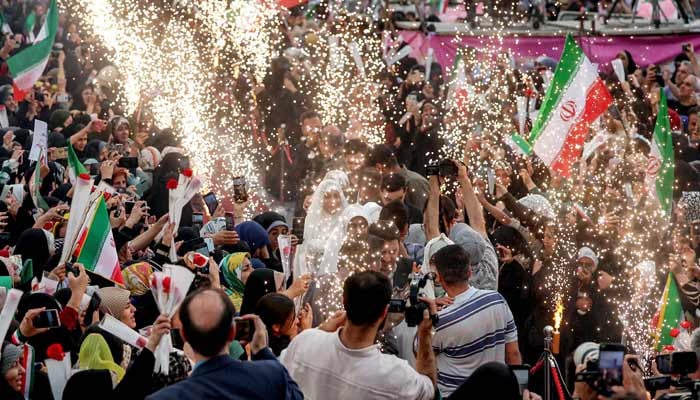
Iranian authorities held mass public weddings in Tehran for couples who signed up to a state-sponsored scheme declaring their readiness to sacrifice their lives in the war against the US and Israel.
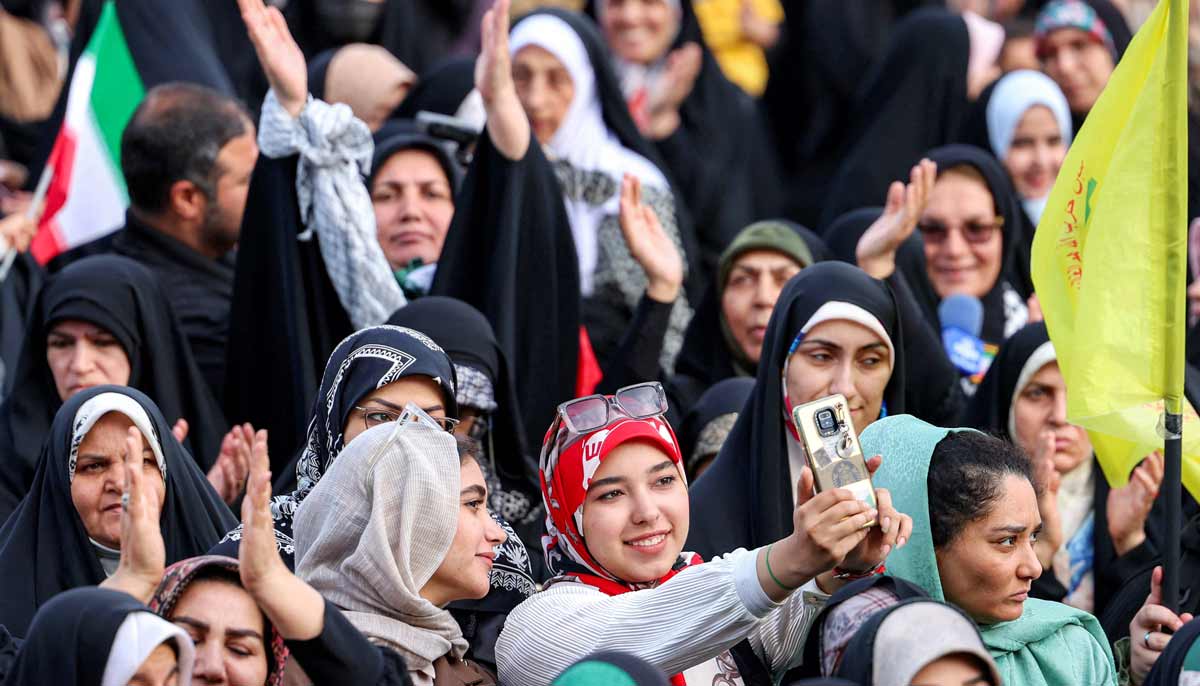
The ceremonies conducted late on Monday involved hundreds of couples in several major squares in the capital, including more than 100 in the vast Imam Hossein square in central Tehran, according to reports in Iranian media.
They were broadcast on state TV in a bid to boost wartime morale, with US President Donald Trump repeatedly threatening new military action against Iran amid a shaky ceasefire which halted the fighting that began on February 28.
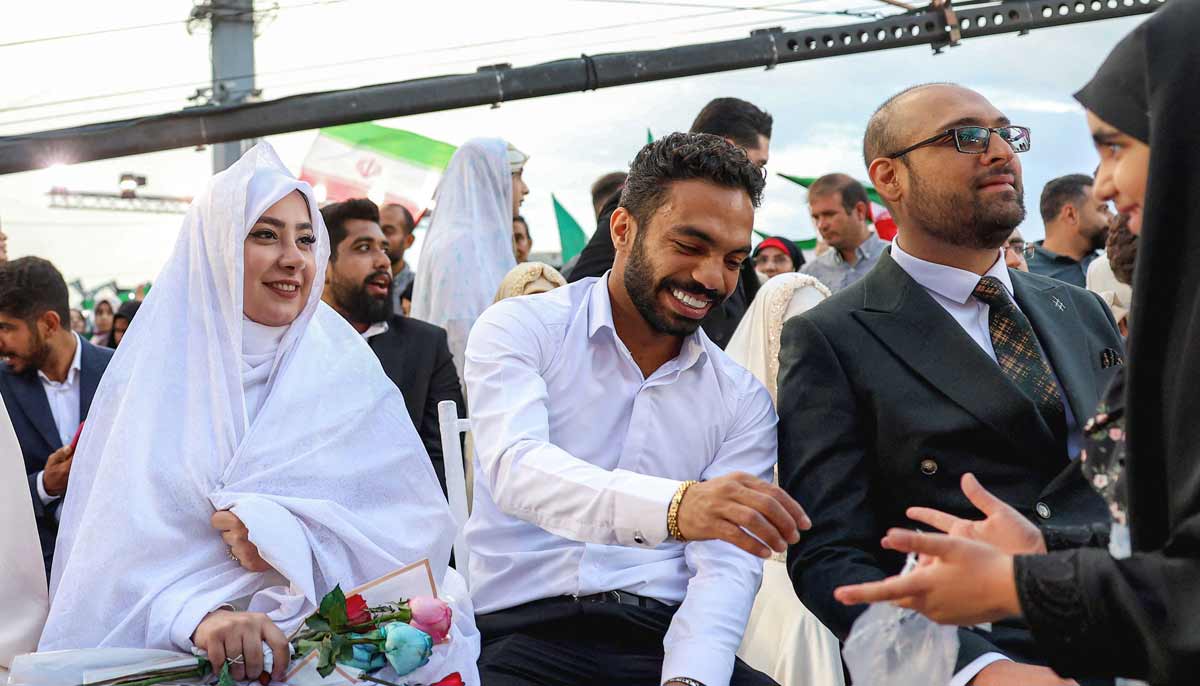
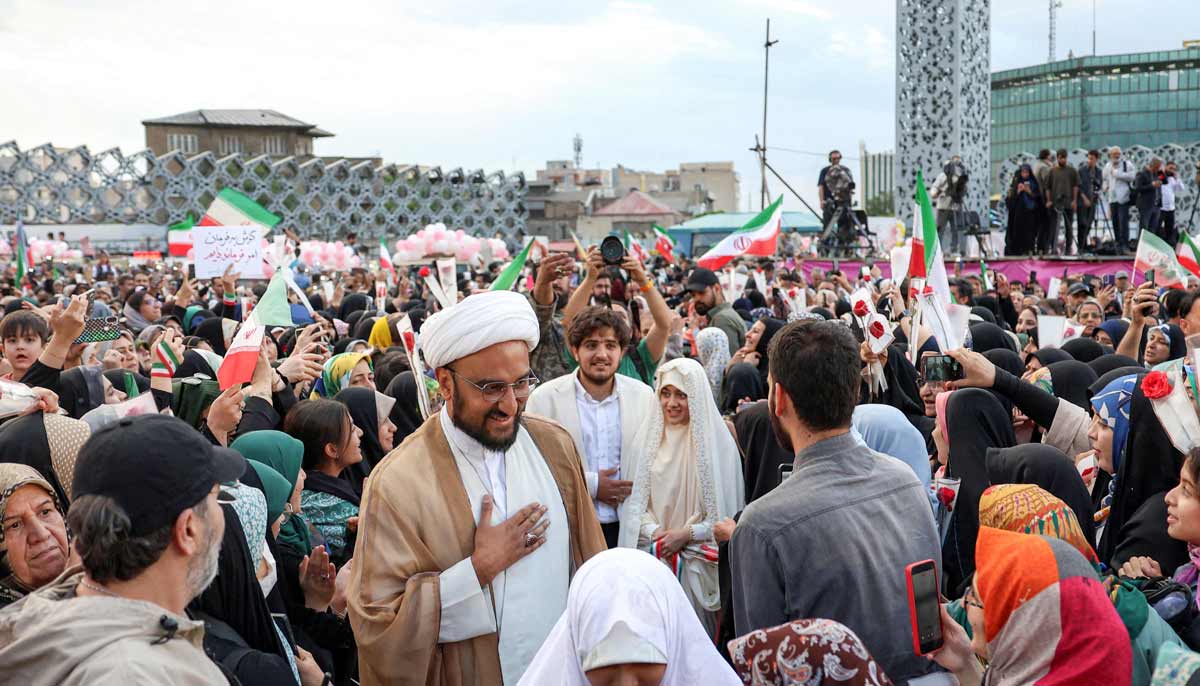
Those involved had signed up, according to Iranian media, for the “self-sacrifice” scheme (janfada in Persian) where people pledged to put their lives on the line in the war by, for example, forming human chains outside power stations.
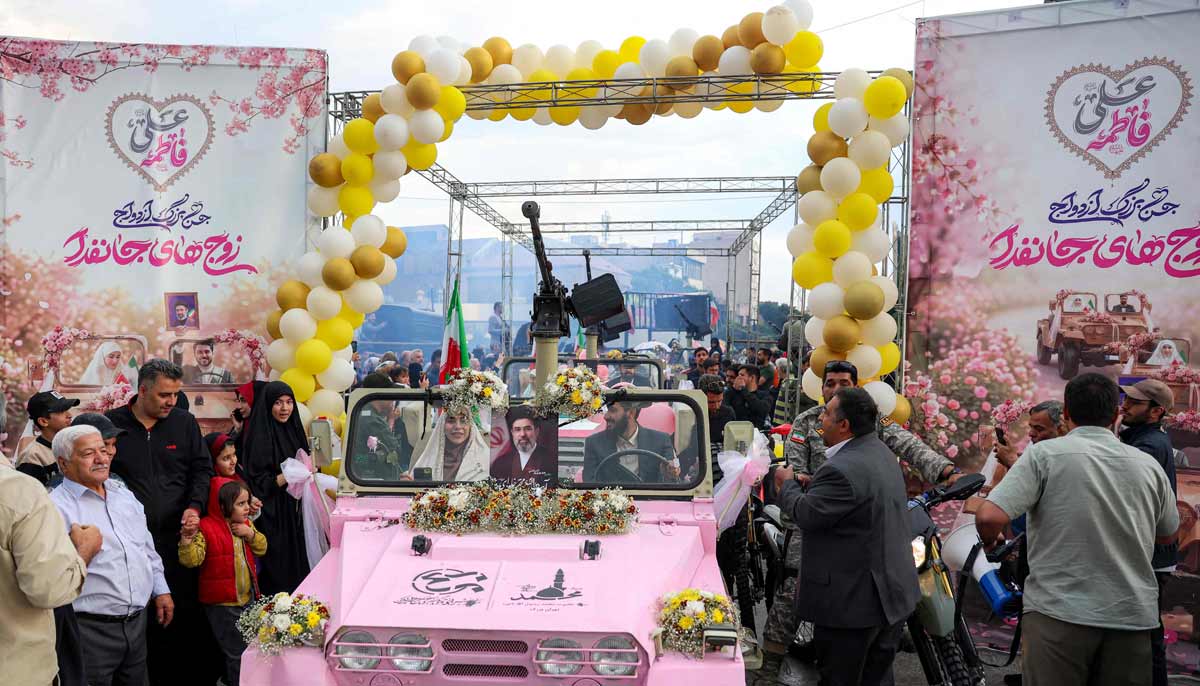
Iranian authorities say millions of people, including top figures such as speaker of parliament Mohammad Bagher Ghalibaf and President Masoud Pezeshkian, have put their names forward.
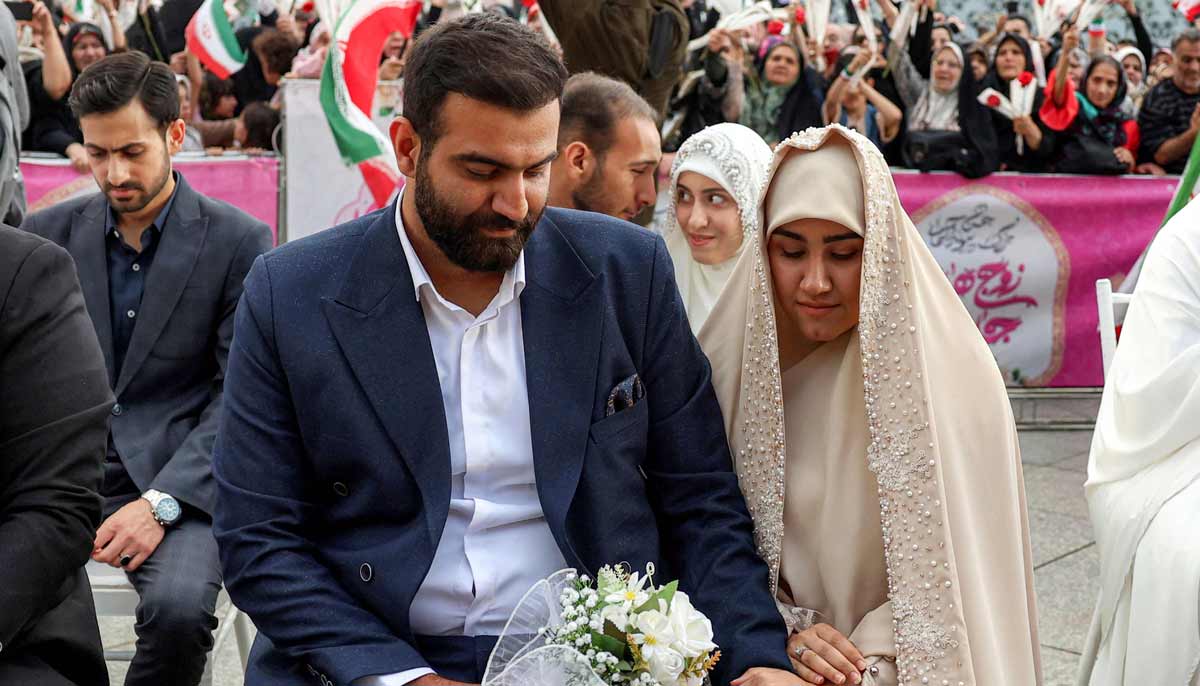
Couples arrived at the Imam Hossein square in military jeeps with mounted machine guns and were married on a stage in a ceremony presided over by a cleric, AFP images showed.
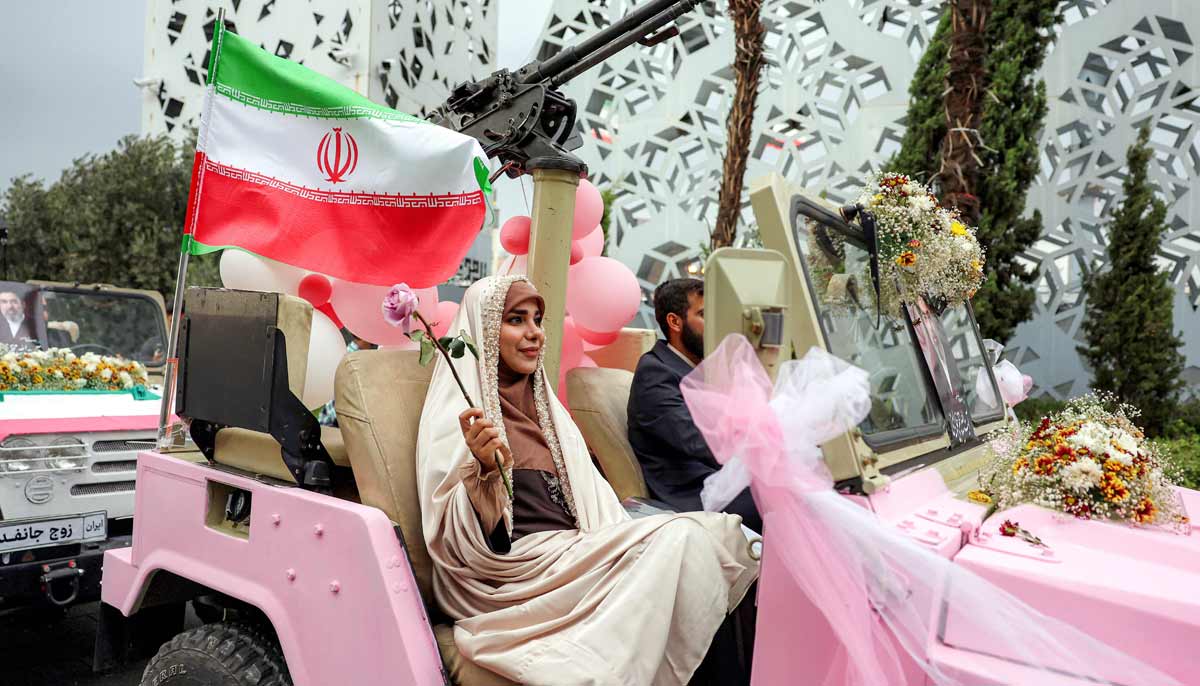
The stage was festooned with balloons and with a giant image of Supreme Leader Mojtaba Khamenei.
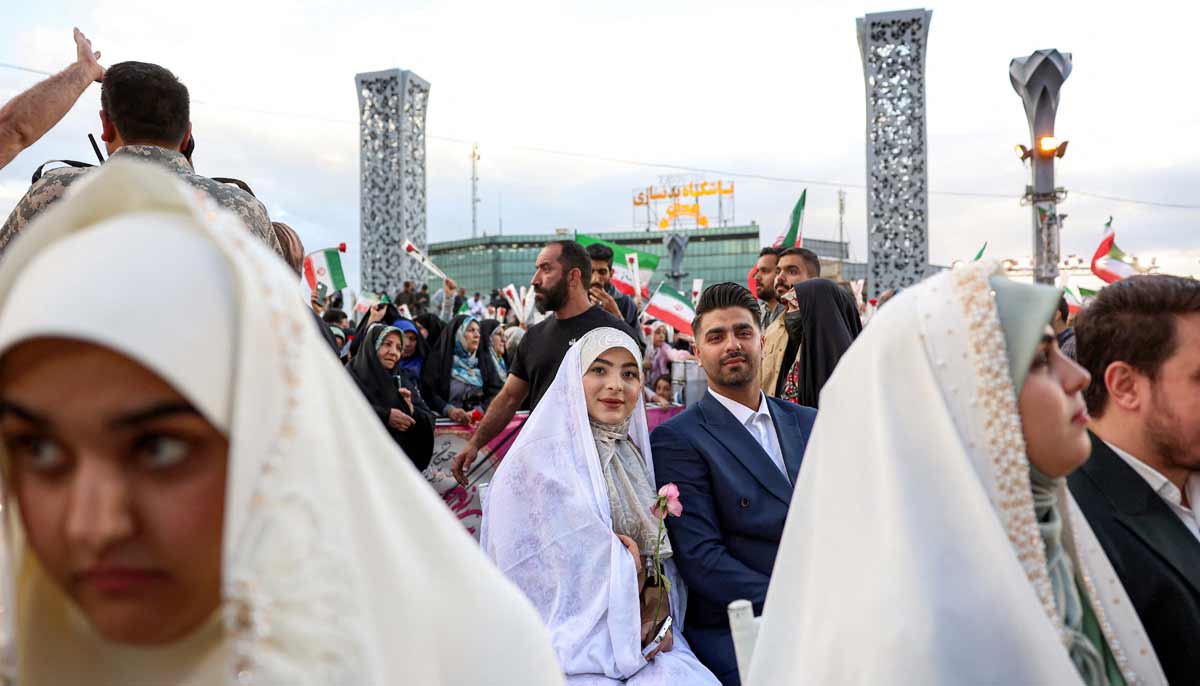
“Certainly, the country is at war, but young people also have the right to marry,” one young woman in a white Islamic bridal dress, who was not named, said beside her groom in footage published by the Mehr news agency.
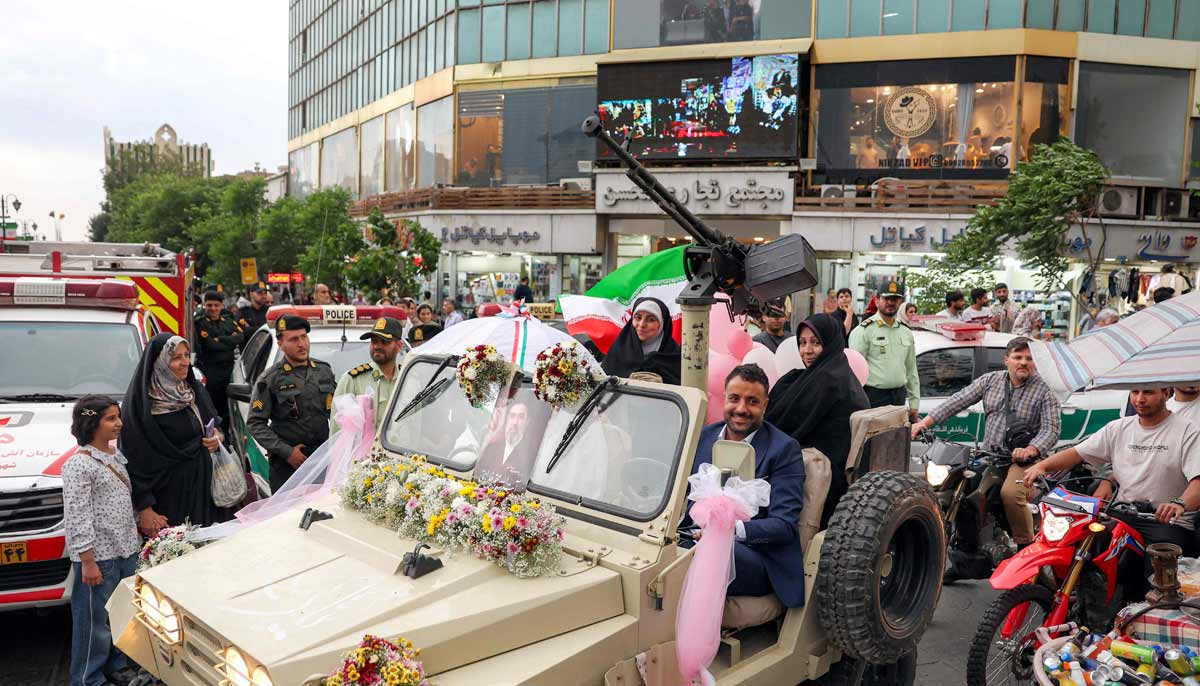
A man in a dark suit, beside his bride-to-be, said they were happy the occasion marked the anniversary of the marriage of Hazrat Ali (RA) to Hazrat Fatima, the daughter of the Prophet Muhammad (PBUH).
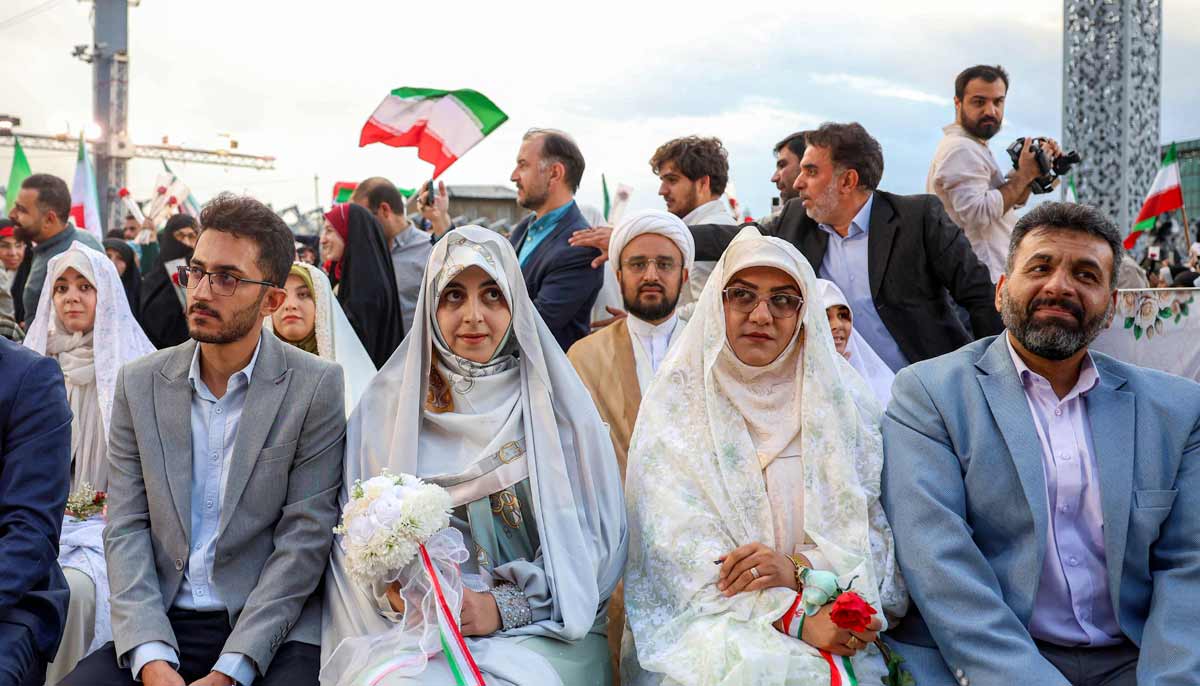
“We received their blessings. Furthermore, we came to offer our best wishes to the people in the streets,” he said.
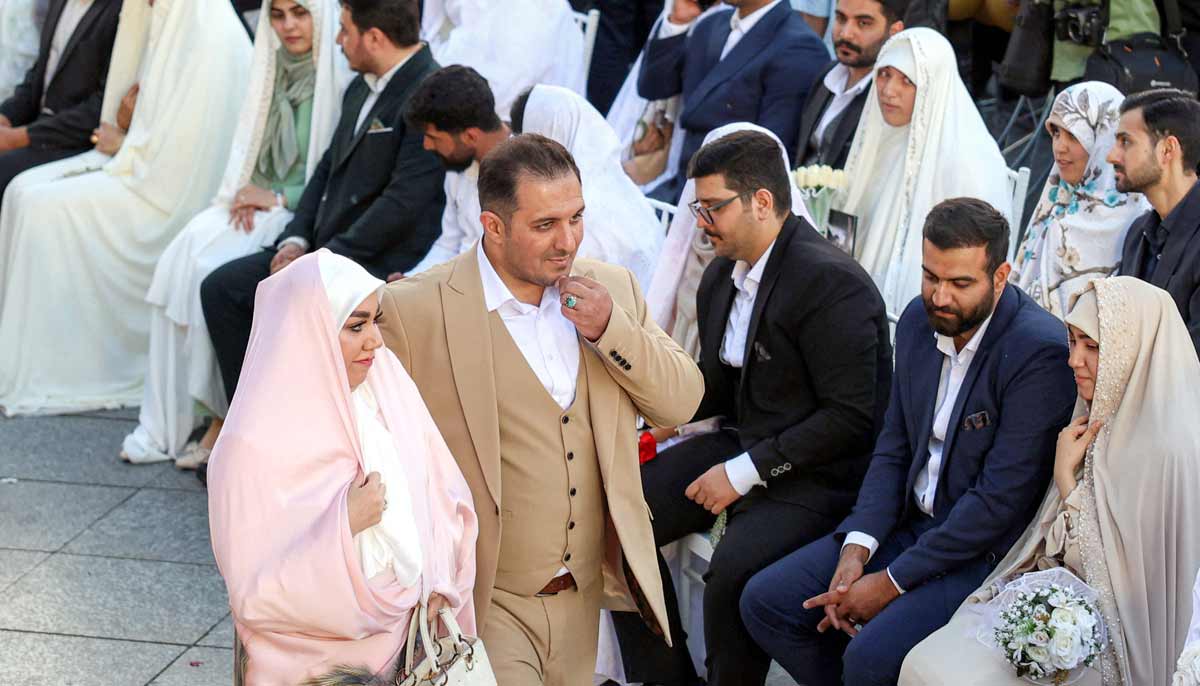
Mehr said 110 couples had taken part in the Imam Hossein square ceremony alone. The AFP images showed crowds of well-wishers clasping roses and watching on.
- Two-decade worship arrangement ended.
- Muslim side plans Supreme Court challenge.
- Critics warn of a grave threat.
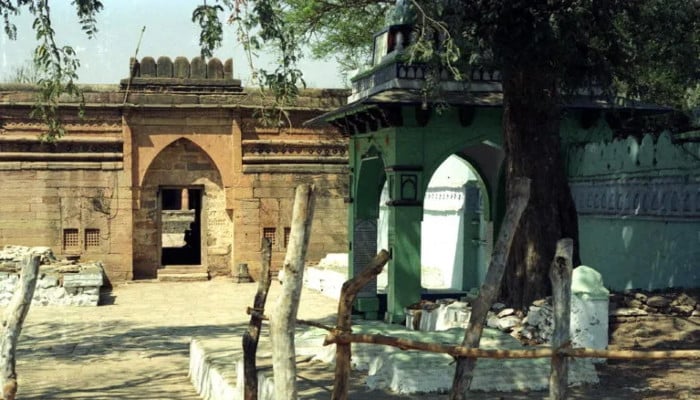
Muslims will no longer be able to offer Friday prayer at a disputed mosque-temple complex in India’s Madhya Pradesh after a court declared the site a Hindu temple and authorities allowed daily Hindu worship there.
An Indian court ruling has ended a two-decade worship arrangement at the Bhojshala-Kamal Maula mosque complex, with the Archaeological Survey of India (ASI) allowing daily Hindu prayers after the site was declared a temple.
The Indore bench of the Madhya Pradesh High Court ruled that the complex in Dhar district was a temple dedicated to goddess Vagdevi, also known as Saraswati, Indian media reported.
Following the ruling, the ASI issued a May 16 order allowing Hindu devotees unrestricted daily worship rights at the site. The order superseded previous directives, including a 2003 arrangement under which Hindus were allowed to worship on Tuesdays and Muslims were allowed to offer Friday prayer.
Advocate Vishnu Shankar Jain, who represented the Hindu petitioners, said Hindus could now visit and worship at the complex “without any restriction”.
The ASI said the site would remain a protected monument under the Ancient Monuments and Archaeological Sites and Remains Act, 1958, while worship timings would be determined by the superintending archaeologist in consultation with the district administration.
The court relied on a 2024 ASI report which said the Bhojshala-Kamal Maula mosque complex was constructed using remnants of earlier temples, with the mosque built centuries later, according to Indian media.
The court also said the Muslim side could approach the state government for land at an alternative site in Dhar district to build a mosque. Dhar city Qazi Waqar Sadiq indicated that the Muslim petitioners would approach the Supreme Court, adding that the Muslim community had no intention of accepting alternative land.
The protected monument has long been contested, with Hindu groups claiming it is a temple dedicated to Saraswati and Muslims maintaining that it is the Kamal Maula mosque.
According to Al Jazeera, the ruling has placed the mosque out of bounds for Muslims in Dhar, where it had been used for prayer for decades.
The decision has drawn criticism from Muslim-side lawyers, historians and politicians, who argue that it threatens protections for Muslim places of worship in India. Lawyer Ashhar Warsi, who argued from the Muslim side, called the verdict “an erroneous judgement” and “a clear violation of the established rule of law”.
Asaduddin Owaisi, a five-time member of parliament, told Al Jazeera that the ruling sent a message of “grave threat” to Muslim places of worship in India. He also said the Babri judgement had “opened the floodgates” for similar claims.
Al Jazeera also quoted historian Audrey Truschke as saying the current trend of targeting mosques in India was part of the “entrenched Islamophobia of Hindu nationalism”.
The dispute comes amid a wider Hindutva push targeting medieval mosques and Islamic-era monuments in India, with campaigners claiming that they were built over Hindu temples. Such claims have gained momentum since Prime Minister Narendra Modi came to power in 2014.
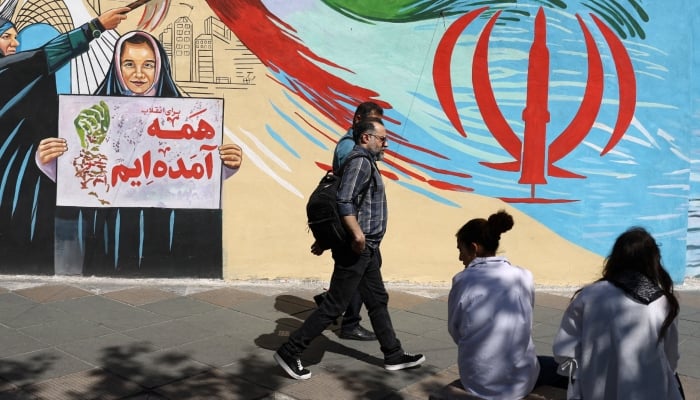
- US shows some flexibility on frozen funds, nuclear activity: sources.
- Adds Washington denies oil sanctions waiver for Iran.
- Fragile ceasefire holds after US-Israeli strikes against Iran.
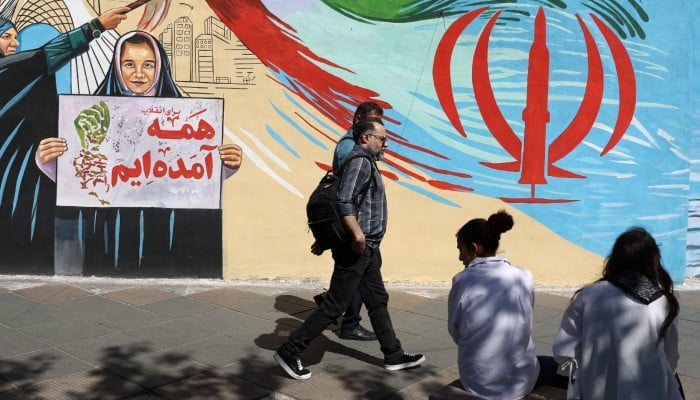
Tehran’s latest peace proposal to the United States involves ending hostilities on all fronts, including Lebanon, the exit of US forces from areas close to Iran, and reparations for destruction caused by the US-Israeli war, state media reported on Tuesday.
In Tehran’s first comments on the proposal, Deputy Foreign Minister Kazem Gharibabadi said Tehran also sought the lifting of sanctions, the release of frozen funds and an end to the US marine blockade on the country, according to IRNA news agency.
The terms as described in the Iranian reports appeared little changed from Iran’s previous offer, which US President Donald Trump rejected last week as “garbage”.
Trump said on Monday he had paused a planned resumption of attacks on Iran after Tehran sent a new peace proposal to Washington, and that there was now a “very good chance” of reaching a deal limiting Iran’s nuclear programme.
Reuters could not determine whether preparations had been made for strikes that would mark a renewal of the war Trump started in late February.
Under pressure to reach an accord that would reopen the Strait of Hormuz — a key supply route for global supplies of oil and other commodities — Trump has previously expressed hope that a deal was close on ending the conflict, and similarly threatened heavy strikes on Iran if Tehran did not reach a deal.
In a social media post, Trump said the leaders of Qatar, Saudi Arabia and the United Arab Emirates had requested that he hold off on the attack because “a Deal will be made, which will be very acceptable to the United States of America, as well as all Countries in the Middle East, and beyond.”
A Pakistani source confirmed that Islamabad, which has conveyed messages between the sides since hosting the only round of peace talks last month, had shared the Iranian proposal with Washington.
Although neither side has publicly disclosed any concessions in negotiations that have been stalled for a month, a senior Iranian official suggested on Monday that Washington may be softening some of its demands.
The source said the US had agreed to release a quarter of Iran’s frozen funds — totalling tens of billions of dollars — held in foreign banks. Iran wants all the assets released.
And the source said Washington had shown more flexibility in agreeing to let Iran continue some peaceful nuclear activity under the supervision of the International Atomic Energy Agency.


Beanie Feldstein feels “so lucky” to become a parent soon and reveals sex of her baby

Two-time winner Carlos Alcaraz will miss Wimbledon as he continues to recover from injury

Former OpenAI Staffers Warn That xAI’s Poor Safety Record Could Complicate SpaceX’s IPO

-

 Entertainment7 days ago
Conan O’Brien hat tricks as Oscar host
-

 Fashion6 days ago
Italy’s Zegna Group’s Q1 growth boosted by strong organic performance
-

 Entertainment1 week ago
Tom Brady gets back at Kevin Hart during Netflix roast
-

 Tech1 week ago
Papa Johns Is Getting Into Drone Delivery—but Not for Pizza
-

 Tech1 week ago
CUDA Proves Nvidia Is a Software Company
-

 Fashion1 week ago
EC clears €5-bn German state aid to back decarbonisation of industry
-
 Business1 week ago
Cyber-crime increasingly coming with threats of physical violence
-

 Tech1 week ago
Chevron Wants a School District Tax Break for a Data Center Power Plant in Texas