

Politics
Iran’s deterrence power strengthened after ballistic missile upgrades: Top general

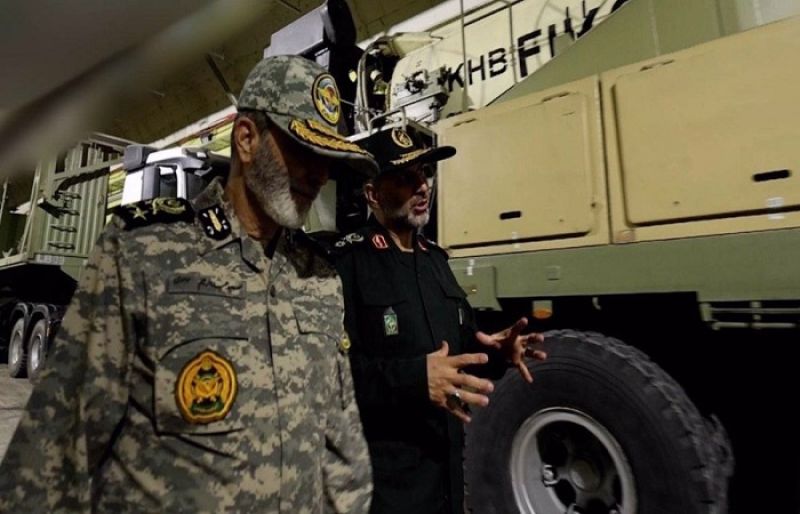

Iran’s top military official says the country has strengthened its deterrence by upgrading domestically manufactured ballistic missiles.
Chief of Staff of the Iranian Armed Forces Major General Abdolrahim Mousavi made the remarks on Wednesday during a visit to an Islamic Revolution Guards Corps (IRGC) missile town.
“By upgrading its ballistic missiles in all technical dimensions, Iran has been able to strengthen its deterrence power,” he said during the visit, accompanied by Brigadier General Majid Mousavi, commander of the IRGC Aerospace Force.
Mousavi also expressed Iran’s readiness to confront any act of aggression by its enemies.
“Following the 12-day war, we have changed our military doctrine from defensive to offensive by adopting the policy of asymmetric warfare and [boosting readiness for a] crushing response to the enemies,” the top general said.
He was referring to the illegal US-Israeli aggression against Iran that killed at least 1,064 people last June.
Israel launched the unprovoked war on June 13 while Iran was engaged in nuclear talks with the US, which also joined the aggression by striking Iranian nuclear sites.
In response, Iranian armed forces targeted strategic sites across the occupied territories and at Al-Udeid, the largest US military installation in West Asia.
Iran has since moved to enhance both its defensive and offensive capabilities.
The region is once again bracing for another potential military confrontation after the United States deployed air and naval forces to the region and threatened to attack the Islamic Republic.
Iranian officials have warned that any US attack would prompt an immediate response and could ignite a regional war.
Tensions have eased slightly as regional countries launched a flurry of diplomatic efforts to prevent war. Iranian and US diplomats are now set to meet in Oman on Friday for a new round of talks on Tehran’s nuclear program.
Earlier this week, General Mousavi warned that any miscalculation by the Islamic Republic’s enemies would trigger a “rapid” and “decisive” response.
Iranian Armed Forces are prepared to respond forcefully to threats, he added. “We think only of victory. We have no fear of the enemy’s superficial might, and we are fully ready for confrontation and to deliver a retaliatory slap.”
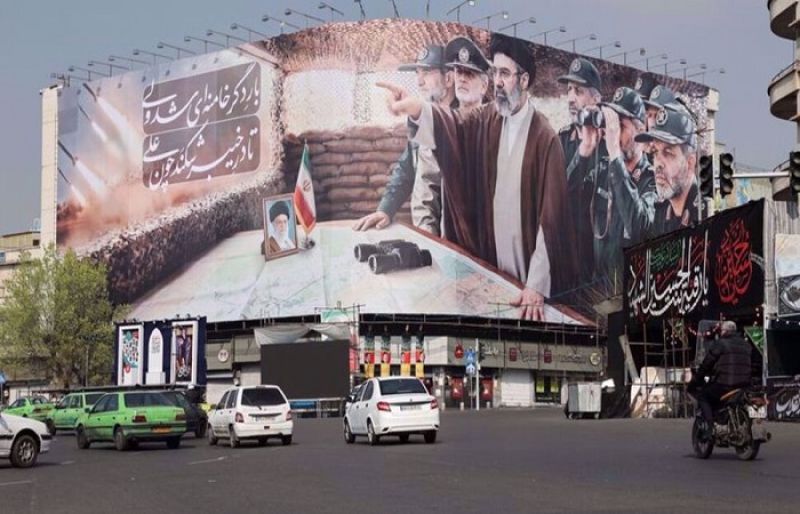
Iran has responded negatively to an American proposal aimed at ending the ongoing imposed war, insisting that it will only occur on Tehran’s own terms and timeline, a senior political-security official said.
The official with knowledge of the details of the proposal said Iran will not allow US President Donald Trump to dictate the timing of the war’s end.
“Iran will end the war when it decides to do so and when its own conditions are met,” the official said, emphasizing Tehran’s resolve to continue its defense and inflict “heavy blows” on the enemy until its demands are fulfilled.
According to the official, Washington has been pursuing negotiations through various diplomatic channels, putting forward proposals that Tehran views as “excessive” and disconnected from the reality of America’s failure on the battlefield.
The official drew parallels with two previous rounds of negotiations held in the spring and winter of 2025, characterising them as deceptive.
In both instances, the official stressed, the United States had no genuine intention to engage in meaningful dialogue and subsequently carried out military aggression against Iran.
Tehran has therefore categorized the latest overture, which was delivered via a friendly regional intermediary, as a ploy to heighten tensions and has responded negatively.
The official outlined five specific conditions under which Iran would agree to end the war. These include:
A complete halt to “aggression and assassinations” by the enemy.
The establishment of concrete mechanisms to ensure that the war is not reimposed on the Islamic Republic.
Guaranteed and clearly defined payment of war damages and reparations.
The conclusion of the war across all fronts and for all resistance groups involved throughout the region
Iran’s exercise of sovereignty over the Strait of Hormuz is and will remain Iran’s natural and legal right, and it constitutes a guarantee for the implementation of the other party’s commitments, and must be recognized.
The official further noted that these stipulations are in addition to demands previously presented by Tehran during the second round of negotiations in Geneva, which took place just days before the US and Israel carried out a fresh round of aggression on February 28.
Iran has communicated to all intermediaries acting in good faith that a ceasefire is contingent upon the acceptance of all of its conditions.
“No negotiations will be held prior to that,” the official stressed, reiterating that the continuation of Iran’s defensive operations will persist until the outlined conditions are met.
“The end of the war will occur when Iran decides it should end, not when Trump envisions its conclusion,” he hastened to add.
The unprovoked and illegal war was launched on February 28 – in the middle of indirect nuclear talks – with the assassination of the Leader of the Islamic Revolution, Ayatollah Seyyed Ali Khamenei, and some top-ranking military commanders and government officials.
In response, Iranian armed forces have so far carried out nearly 80 waves of retaliatory strikes targeting Israeli and American military assets across the region.
In recent days, the American side has courted some regional countries to persuade Iran to cease its retaliatory strikes that have decimated American and Israeli military infrastructure in the region as well as to allow American vessels to pass through the Strait of Hormuz.
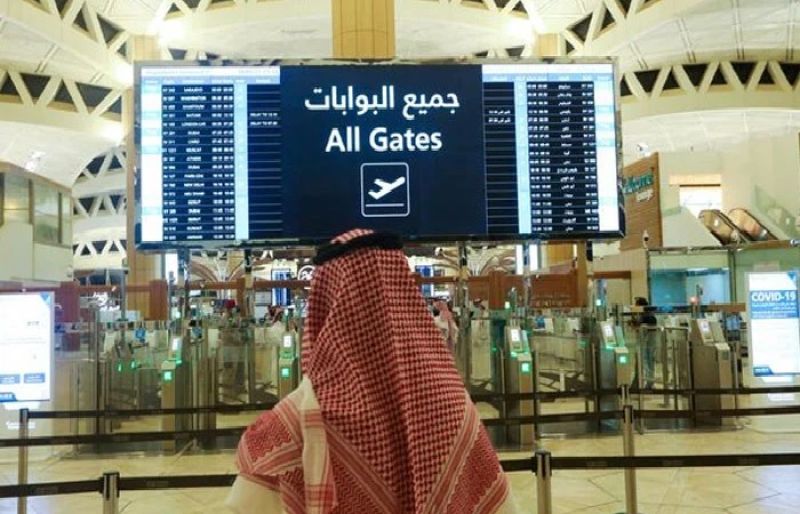
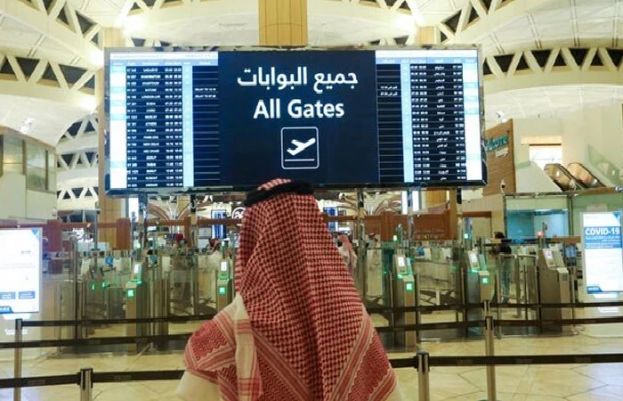
In a bid to facilitate stranded visitors who could not leave due to the current situation in the region, Saudi Arabia on Wednesday extended the validity of all types of visas until April 18, 2026.
In a statement, the Ministry of Interior said that those whose visas — including visit, Umrah, transit and final exit — expired as of February 25, 2026, and who were unable to depart the kingdom due to the current situation, can benefit from this offer.
The ministry asked holders of expired visas to go directly to departure ports, where their exit procedures will be completed smoothly without the need for prior measures.
“This service does not require the payment of any fees for beneficiaries who wish to depart directly,” it added.
A large number of foreigners were unable to depart the Kingdom due to the ongoing war between the United States, Israel and Iran, which disrupted air travel across the region.
Several countries closed their airspace and airlines suspended operations after Tehran launched retaliatory attacks across Gulf nations.
Politics
USS Abraham Lincoln under constant surveillance, will be hit if within range: Navy commander
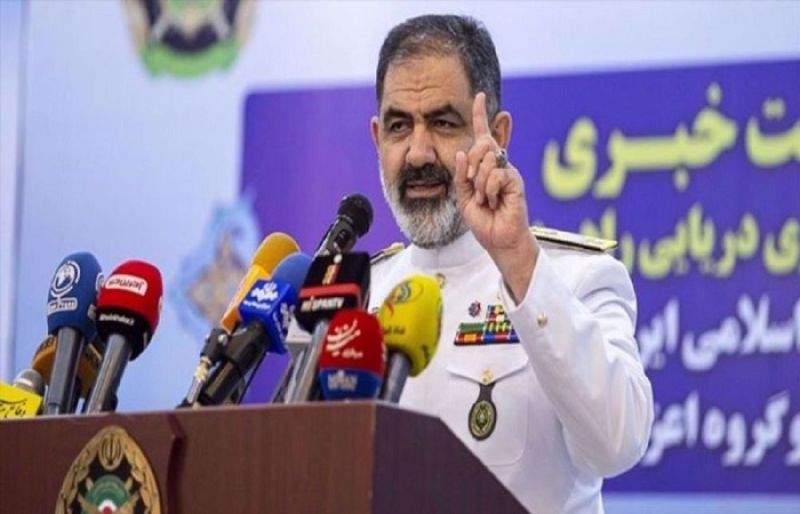
Iranian Army’s Navy has said that the movements of the USS Abraham Lincoln carrier group are being closely and constantly monitored and will be targeted if it comes within the range of Iranian missiles.
Rear Admiral Shahram Irani, the commander of the Iranian Navy, warned that should the hostile carrier group enter the range of Iranian missile systems, it would be targeted with crushing strikes.
“Like Mount Dena, we stand firm for the dignity and glory of Iran and Iranians, to be a hope for the oppressed and a thorn in the eyes of enemies,” he said in remarks on Wednesday.
USS Abraham Lincoln (CVN-72) is the fifth Nimitz-class aircraft carrier in the US Navy.
Rear Admiral Irani honored the memory of the martyrs of the destroyer Dena and outlined the Navy’s posture in the strategic waters of the Persian Gulf.
“The Navy of the Islamic Republic of Iran, with resolute will and the absolute maritime dominance of the Islamic Republic of Iran in the Persian Gulf, intelligent control of the Strait of Hormuz, and authoritative monitoring of the passage of military and hostile fleets north of the 10-degree line, will not relent until we avenge the blood of our dear martyrs,” he said.
The Iranian Navy announced that its Ghadir coastal cruise missiles successfully targeted the USS Abraham Lincoln carrier group, forcing the American fleet to change its position.
The Navy commander, the statement noted, has issued the order to fire at the Abraham Lincoln from the force’s operational command post.
The USS Abraham Lincoln had been operating in the waters near the Persian Gulf before the Israeli-American coalition launched the war of aggression against Iran on February 28.
In retaliatory operations, Iranian armed forces launched a few successful strikes at the US aircraft carrier, inflicting severe damage and forcing it to retreat.
The war entered its 26th day on Wednesday with Iran currently holding the upper hand, having destroyed US and Israeli military infrastructure across the region.


What small businesses need to know

My Favorite Air Fryer Is at Its Lowest Price Since Black Friday

US jury finds Meta and Google liable in social media addiction trial

-

 Fashion1 week ago
Sales at US apparel, clothing accessories stores up 4% YoY in Jan 2026
-

 Tech1 week ago
Justice Department Says Anthropic Can’t Be Trusted With Warfighting Systems
-
 Business1 week ago
Stocks and pound rise as US rate call approaches
-

 Entertainment1 week ago
Val Kilmer revived 1 year after death through AI
-

 Sports1 week ago
March Madness 2026 – How to watch in SA, start time, schedule, TV channel for NCAA championship basketball tournament
-
 Business1 week ago
Brits cashing in jewellery as gold price hits record high
-

 Politics1 week ago
Iran strikes Tel Aviv with cluster-warhead missiles in retaliation of Larijani’s martyrdom
-

 Sports1 week ago
WBC championship: USA-Venezuela preview, live updates, analysis