

Fashion
Is anybody fighting back in this trade war?

By
Bloomberg
Published
August 15, 2025
William Clayton, a businessman who served successive US presidents and became one of the chief architects of the Marshall Plan, was no fan of tariffs. He rated the barriers erected during the Great Depression as one of the great crimes of the century. It’s hard to imagine that Clayton, who believed that free trade was as important to prosperity as American aid and security guarantees, would remotely approve of Donald Trump‘s efforts to reshape commerce.
This White House-engineered upheaval, which pushed tariffs to levels unseen since the Smoot-Hawley law of 1930, will be costly — even if the full price isn’t immediately apparent. The global economy hasn’t suffered some of the direst consequences that were predicted in April. Demand for US assets has held up, despite the superficial allure of the “sell America” narrative. The International Monetary Fund doubts growth will suddenly crater, and inflation hasn’t taken off. Has a bullet been dodged or is shock delaying the pain?
It’s notable that countries aren’t exactly lining up to fire back. With the exception of China, which has escalated and retreated to match the White House rhythms, there’s been little by way of reprisals. “It’s not a war when only one side fights,” JPMorgan Chase & Co. economists said in a recent note. “The primary drag from the trade war will come from US tariff hikes, but we also looked for broad retaliation by US trading partners.” The counterattack “has not materialised; in fact, barriers to US exports have been lowered,” they wrote.
By no means does the firm anticipate zero harm. Business confidence is down but not collapsing. Capital spending will be constrained. And while chances of recession are still high, a better outcome remains very plausible.
This sort of guarded optimism — or qualified pessimism — is a break from the dark warnings. Christine Lagarde, head of the European Central Bank, told leaders to prepare for a worst-case scenario in which an antagonistic US drags the world into destructive economic conflict. The prime minister of Singapore, a city-state that thrived during the heyday of free trade, couldn’t hide his dismay: Tariffs aren’t the actions of friends, Lawrence Wong noted. His Canadian counterpart, Mark Carney, declared that relations with the US would be changed forever. Chinese President Xi Jinping has studiously matched American moves but also toned down his rhetoric and actions when appropriate. Washington and Beijing this week extended a pause on higher tariffs for 90 days, the latest in a series of suspensions.
India, which has been the subject of some bullish projections as China’s economy has slowed, is one of the few economies of significance that hasn’t cut a deal with Trump. But Prime Minister Narendra Modi also hasn’t gone measure for measure or shown a desire to get even with American businesses. Yes, there has been indignity and hurt feelings. The governor of the Reserve Bank of India dismissed Trump’s claim that commerce was dead there. He touted India’s contribution to global growth — about 18% compared to around 11% for the US — and insisted the local economy was doing well. This is in the ballpark, based on IMF projections. It also misses the point that in pure size, America dwarfs India.
Brazil, a comer that struggles to make good on its potential, is also refusing to bend. President Luiz Inacio Lula da Silva loathes dependence on the US and wants to be treated as an equal. But Trump doesn’t like a court case against Lula’s predecessor for allegedly plotting a coup. Brazil is trying to develop an alternative to the dollar and places great store in commercial ties to the BRICS group of emerging economies. Many of those nations, and aspiring members of the bloc, have cut deals with Trump, or are likely to do so. Brazil will come to some arrangement.
So has Trump got away with it? His aides reckoned that access to the American market is too lucrative to pass up, and they may have been right. It would also be naive to conclude there won’t be any cost. The global economy has slowed but hasn’t crashed, foreigners still purchase US Treasuries and it’s a safe bet that the greenback will be at the centre of the financial system for years.
But the nations humiliated won’t forget this experience. Asia’s economies will only get bigger and the siren call of greater integration with China will get louder. Trump’s efforts to destroy the existing order may yet prove an own goal. Just not this year.
Clayton, who became the top economic official at the State Department, believed that robust trade among the shattered nations of Western Europe was as important as physical rebuilding. The economic dislocation wrought by the conflagration had been underestimated; capitalism could revive the continent and prevent the political implosion of key countries. According to Benn Steil’s book The Marshall Plan: Dawn of the Cold War, Clayton insisted that the US “must run this show.”
Trump’s team brag about reconfiguring the system that grew from the ideals of the post-war era. The hubris may ultimately prove misplaced.











According to Australian Wool Innovation (AWI) commentary for week 38 (March 2026), the Eastern Market Indicator (EMI) fell by 32 Australian cents/kg, while the Western Market Indicator (WMI) dropped more sharply by 69 cents, signalling comparatively weaker conditions in Fremantle.
Australia’s wool market declined this week, ending a recent rally as weaker buyer sentiment and margin pressures weighed on prices.
The EMI fell 32 cents and WMI dropped 69 cents, led by losses in Merino wools.
Softer demand, higher supply, and a stronger Australian dollar pressured the market, though selective buying for quality lots persisted.
“Losses were led by medium Merino wools, which fell 70–75 cents in the eastern centres and 85–90 cents in the west. Finer Merino types also declined by 45–60 cents across all regions. Crossbred wool prices eased by 25–30 cents. In the carding segment, eastern markets remained steady to 5 cents higher, while Fremantle saw a sharper fall of around 45 cents,” the AWI Limited said in its Commentary.
The uniform decline across Merino fleece categories points to a broader pullback in buyer demand rather than isolated weakness. This follows several weeks of strong gains after the Chinese New Year period, with much of the earlier purchases still moving through processing and manufacturing stages.
Market sentiment this week reflected growing caution among exporters and processors facing tighter margins due to rising input costs. Increased wool offerings further reduced buyer urgency, while a firmer Australian dollar added pressure on export competitiveness, the AWI commentary noted.
Despite the overall softer trend, demand remained relatively firm for well-prepared, lower-risk lots, indicating that buyers are becoming more selective rather than exiting the market entirely.
Industry observers view the current downturn as a phase of consolidation, with the market testing resistance levels after recent gains, rather than signalling a fundamental shift in demand.
Looking ahead, all three auction centres will operate on a Tuesday-Wednesday schedule next week, with 40,909 bales expected to be offered.
Market direction will depend on the trade’s ability to absorb current supply levels and navigate prevailing cost pressures.
Fibre2Fashion News Desk (CG)

The most traded May 2026 contract settled at 68.70 cents per pound, down 0.07 cent. May contract has maintained a gain of 353 points despite slight fall. The contract had witnessed rally during the last five trading sessions.
ICE cotton futures paused after hitting an 8-month high, pressured by a stronger US dollar and profit booking.
The May 2026 contract settled at 68.70 cents per pound.
Rising crude oil capped losses by supporting cotton over polyester.
Lower volumes but higher open interest signalled fresh positions, while markets await the USDA report for direction.
Middle East tensions increased risks to energy supply, pushing Brent crude prices higher. Higher crude oil prices raised polyester production costs, making cotton relatively more competitive and providing indirect price support.
Market pressure was mainly due to a stronger US dollar, which recovered after the Federal Reserve kept interest rates unchanged, reversing prior weakness. The stronger dollar made US cotton more expensive for overseas buyers, weighing on demand sentiment.
Trading volume stood at 86,811 contracts, lowest in last 3 sessions, indicating lighter market participation. Open interest increased by 2,046 to 341,326 contracts, suggesting fresh positions and continued market involvement. Certified stocks unchanged at 116,789 bales as per ICE data on March 17, indicating no immediate supply pressure
Cotton rallied strongly over the past several sessions, driven largely by speculative short covering, pushing prices to multi-month highs. Current dip reflects mild profit booking and signs that short covering may be slowing or nearing completion.
Market analysts stated that the recent rally triggered significant short covering, but the future direction will depend on how speculative positions evolve next week. Mills were previously complacent with low inventories, but sudden price rise forced them to re-enter the market and cover demand.
Market participants are awaiting the next USDA export sales report for fresh direction.
This morning (Indian Standard Time), ICE cotton for May 2026 was traded at 68.13 cents per pound (down 0.57 cent), cash cotton at 67.95 cents (unchanged), the July 2026 contract at 69.95 cents (down 0.62 cent), the October 2026 contract at 71.99 cents (down 0.13 cent), the December 2026 at 72.12 cents (down 0.52 cent) and the March 2027 contract at 72.99 cents (down 0.48 cent)). A few contracts remained at their previous closing levels, with no trading recorded so far today.
Fibre2Fashion News Desk (KUL)
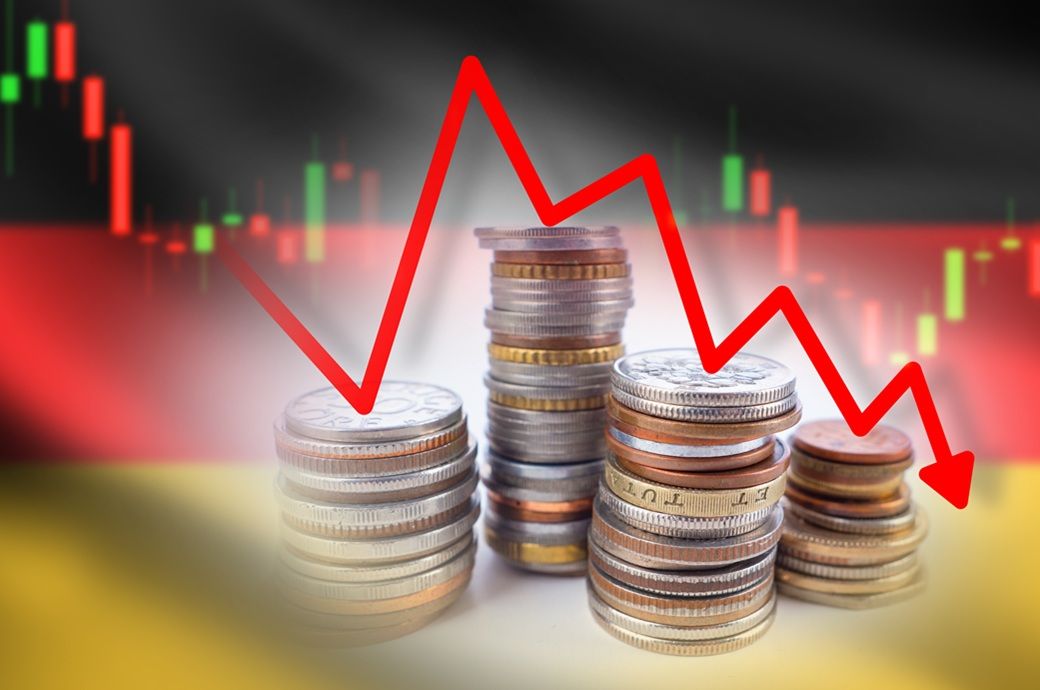
The sharp fall reflects growing concerns over rising energy prices and inflationary pressures linked to the ongoing conflict, ZEW said in a press release.
“The ZEW Indicator has collapsed,” said Achim Wambach, president of ZEW, noting that the escalation in the Middle East is fuelling energy costs and increasing risks to Germany’s fragile economic recovery. He added that financial market experts remain sceptical about a swift resolution to the conflict, raising uncertainty over the economic outlook.
Germany’s economic sentiment plunged in March 2026, with the ZEW index falling 58.8 points to -0.5 amid Middle East tensions driving energy and inflation concerns.
While the current situation improved slightly to -62.9, it remained weak.
Around 80 per cent expect rising inflation.
Eurozone sentiment also declined sharply, with expectations at -8.5 and conditions worsening to -29.9.
In contrast, the assessment of Germany’s current economic situation showed a modest improvement. The corresponding indicator rose by 3 points to -62.9, although it remains firmly in negative territory, signalling continued weakness in overall economic conditions.
Inflation concerns have intensified, with around 80 per cent of respondents anticipating increased price pressures in both Germany and the broader eurozone.
The negative sentiment extended across the eurozone, where the expectations index fell by 47.9 points to -8.5, slipping into negative territory. Meanwhile, the assessment of the current economic situation in the eurozone declined further to -29.9 points, down by 16.3 points from February.
Fibre2Fashion News Desk (SG)


TCU backs up its tough talk, bounces Buckeyes in 1st round

“The Bachelorette” season with Taylor Frankie Paul canceled after 2023 video surfaces, ABC says

‘Uncanny Valley’: Nvidia’s ‘Super Bowl of AI,’ Tesla Disappoints, and Meta’s VR Metaverse ‘Shutdown’

Stock market crash today (March 12, 2026): Nifty50 opens below 23,600; BSE Sensex down over 900 points on continuing US-Iran war – The Times of India

UK’s Topshop unveils Tolu Coker capsule collection
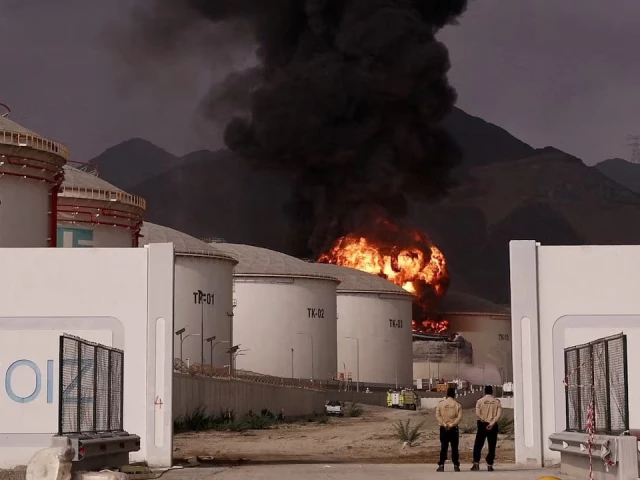
US ignites Iran war, but Gulf Arab states pay the price | The Express Tribune

-
Business1 week ago
Stock market crash today (March 12, 2026): Nifty50 opens below 23,600; BSE Sensex down over 900 points on continuing US-Iran war – The Times of India
-
 Fashion1 week ago
UK’s Topshop unveils Tolu Coker capsule collection
-
Business1 week ago
US ignites Iran war, but Gulf Arab states pay the price | The Express Tribune
-

 Fashion1 week ago
India’s textile recycling market may reach $3.5 bn by 2030: Report
-

 Tech1 week ago
Meta Developed 4 New Chips to Power Its AI and Recommendation Systems
-
 Business1 week ago
8th Pay Commission: How Much Will Central Govt Employees’ Salaries Rise? What We Know So Far
-

 Sports1 week ago
Bangladesh crush Pakistan in ODI series opener | The Express Tribune
-

 Entertainment1 week ago
Gas, food, household prices explained