

Fashion
Israel’s Delta Galil posts record Q1 sales on broad-based growth


Sales for the quarter ended March 31, 2026, rose 15 per cent year-on-year (YoY) to Q1 record of $573 million. In constant currency terms, sales increased 10 per cent.
Delta Galil Industries has reported record Q1 2026 sales of $573 million, up 15 per cent YoY, with gross profit rising 18 per cent to $238.8 million.
The gross margin improved to 41.7 per cent, supported by factory efficiency and favourable exchange rates.
EBIT also reached a Q1 record, while the company reaffirmed its full-year 2026 guidance.
“2026 is off to a strong start, reflecting the strength of Delta Galil’s global platform, the value of our brands, and our team’s ability to execute at a high level in a dynamic environment. We grew our sales across all segments, delivered record first quarter sales, gross profit, EBIT, EBITDA and operating cash flow,” said Isaac Dabah, CEO of Delta Galil.
Gross margin improves on factory efficiency
The gross profit expanded 18 per cent YoY to a first quarter (Q1) record of $238.8 million, compared with $202.6 million in Q1 2025. Gross margin improved by 110 basis points to 41.7 per cent from 40.6 per cent a year earlier, mainly due to improved factory efficiency and favourable exchange rates.
EBIT, excluding non-core items, reached a first-quarter record of $36.6 million, compared with $32.7 million in the prior-year quarter. Reported EBIT also rose to a first-quarter record of $35.1 million from $32.7 million. The increase was supported by higher sales and continued factory efficiency gains, partly offset by higher selling, general and administrative expenses (SG&A) expenses, logistics costs, exchange-rate effects, and investments in business expansion, Delta Galil said in a press release.
The net income excluding non-core items, net of tax, remained unchanged at $17.6 million. Reported net income declined to $16.4 million from $17.6 million in Q1 2025. Diluted earnings per share (EPS) excluding non-core items stood at $0.63, compared with $0.62 a year earlier, while reported diluted EPS was $0.59, down from $0.62.
The company also reported record first-quarter cash flow from operating activities, excluding IFRS 16, of $27.9 million, compared with $4 million in the same period last year.
“These results were driven by higher US sales to our established and growing customer base, expansion of our owned brands due to continued product innovation, and the benefits of our strategic investments in global sourcing, production, and distribution capabilities,” added Dabah.
He said the company was encouraged by the positive momentum across the business, particularly as investments in innovation, manufacturing flexibility and customer partnerships continued to deliver measurable results. He further said that the company remained focused on disciplined execution, supporting evolving customer and consumer needs, and leveraging its global platform to capture profitable growth opportunities in 2026 and beyond.
FY26 outlook remains strong
Delta Galil reaffirmed its full 2026 guidance, excluding non-core items. The company expects sales of $2.294 billion to $2.328 billion, compared with $2.1189 billion in 2025. EBIT is projected at $204 million to $212 million, while EBITDA is expected to range between $324 million and $332 million. Net income is forecast at $116 million to $123 million, with diluted EPS expected between $4 and $4.23.
Fibre2Fashion News Desk (SG)
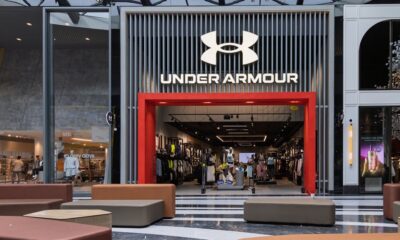








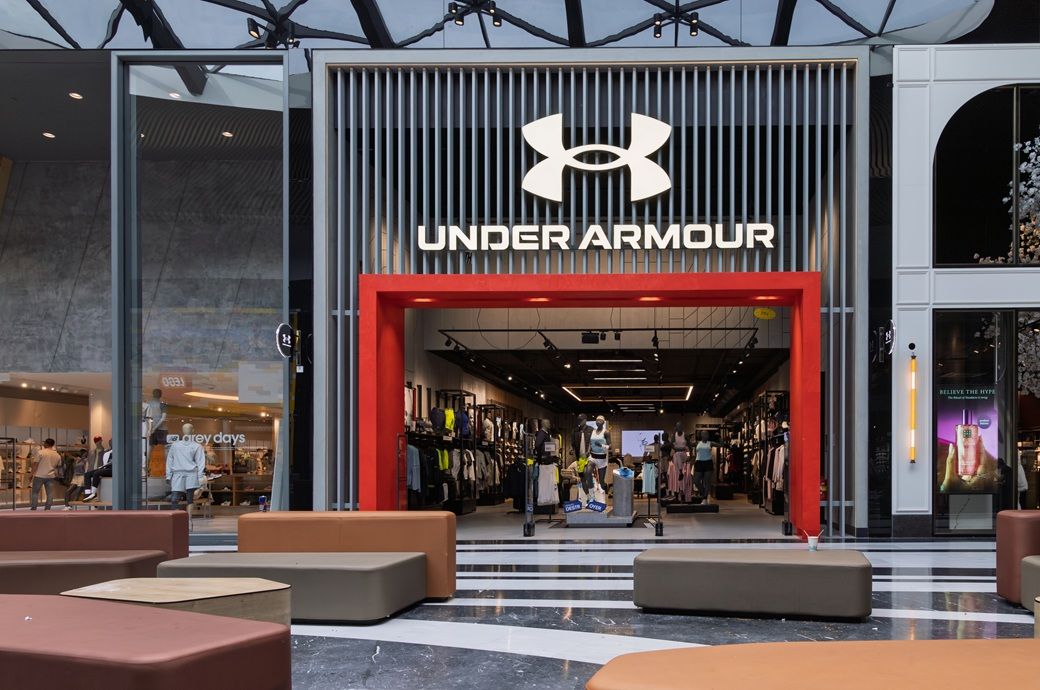
Meanwhile, for fiscal 2027 (FY27), the company is now expecting revenue to decline slightly year-on-year (YoY), with a low single-digit decrease in North America partly offset by low single-digit growth in Europe, the Middle East and Africa (EMEA) and Asia-Pacific. Gross margin is expected to improve by 220 to 270 basis points.
For FY27, Under Armour expects slight revenue decline and margin improvement.
The company’s FY26 revenue fell 4 per cent to $5 billion, led by weaker North America sales, lower wholesale revenue, and a sharp footwear decline.
Gross margin narrowed due to tariffs and cost pressures.
In Q4, revenue slipped 1 per cent as North America weakened, though international and DTC sales grew.
“As our topline stabilises in fiscal 2027, we are applying the same rigour that is strengthening our product engine to our storytelling capabilities,” said Kevin Plank, president and CEO of Under Armour.
The company expects operating income of $96 million to $116 million. Adjusted operating income is projected at $140 million to $160 million, including an estimated $70 million benefit from assumed refunds related to prior-year International Emergency Economic Powers Act (IEEPA) tariff expenses, around $35 million in headwinds from the Middle East conflict, and about $30 million in incremental marketing investment, Under Armour said in a press release.
Diluted loss per share is expected to range from breakeven to $0.04, while adjusted diluted earnings per share (EPS) are forecast between $0.08 and $0.12.
Revenue declines as North America weighs on FY26
In FY26 ended March 31, the company has reported a 4 per cent decline in revenue to $5 billion.
“Our fiscal 2026 performance reflects the ongoing intentional steps we’re taking to reset the business and restore the discipline required to operate as a best-in-class brand,” added Plank.
He said as the company’s topline stabilises in FY27, Under Armour is applying the same rigour that is strengthening its product engine to its storytelling capabilities.
“Building world-class, modern marketing excellence is now our highest priority that we believe will accelerate consumer demand and help reshape Under Armour’s profit profile,” he said.
Regionally, North America revenue decreased 8 per cent to $2.9 billion, while international revenue grew 4 per cent to $2.1 billion. Within the international business, EMEA revenue increased 9 per cent, Asia-Pacific revenue declined 5 per cent, and Latin America revenue rose 9 per cent.
Wholesale revenue fell 5 per cent to $2.8 billion, while direct-to-consumer (DTC) revenue declined 2 per cent to $2.1 billion. Revenue from owned-and-operated stores increased 1 per cent, while e-commerce revenue decreased 7 per cent and accounted for 33 per cent of total DTC revenue for the year.
By category, apparel revenue decreased 2 per cent to $3.4 billion, footwear revenue declined 11 per cent to $1.1 billion, and accessories revenue increased 1 per cent to $414 million.
Gross margin decreased 240 basis points to 45.5 per cent, primarily due to higher tariffs, along with pricing pressure, higher product costs, and unfavourable channel and regional mix. These headwinds were partly offset by positive foreign currency impacts and favourable product mix. Adjusted gross margin declined 220 basis points to 45.7 per cent.
Q4 revenue slips as North America weakens
In the fourth quarter (Q4), Under Armour’s revenue decreased 1 per cent to $1.2 billion, or 4 per cent on a constant currency basis. North America revenue declined 7 per cent to $641 million, while international revenue increased 10 per cent to $539 million. Within international markets, Europe, Middle East and Asia’s (EMEA) revenue rose 7 per cent, Asia-Pacific grew 13 per cent, and Latin America increased 22 per cent.
Wholesale revenue fell 3 per cent to $748 million, while DTC revenue rose 5 per cent to $406 million. Owned-and-operated store revenue increased 8 per cent, while e-commerce revenue remained flat and represented 35 per cent of total DTC revenue during the quarter.
Under its FY25 restructuring plan, the company recorded $36 million in restructuring and transformation-related costs during the fourth quarter. To date, it has incurred $261 million in total restructuring and transformation costs. Under Armour is extending the plan, bringing total expected programme costs to around $305 million, with substantial completion expected by December 31, 2026, added the release.
Fibre2Fashion News Desk (SG)

On the Transpacific trade route, rates surged this week due to the implementation of Emergency Fuel Surcharges (EFS) and Peak Season Surcharges (PSS) by carriers. Freight rates from Shanghai to New York increased 14 per cent to $4,252 per 40-foot container, and those from Shanghai to Los Angeles rose 10 per cent to $3,357 per 40-foot container.
Drewry’s World Container Index rose 11.67 per cent to $2,553 per FEU in the week ending May 14, driven by higher freight rates on Transpacific and Asia–Europe routes.
Emergency fuel and peak-season surcharges, capacity cuts, blank sailings, and geopolitical tensions in the Middle East supported the rally, with rates expected to rise further in the coming weeks.
According to Drewry’s Container Capacity Insight, seven blank sailings have been announced on the Transpacific trade route for the next week, as carriers continue to manage capacity. In addition, Yang Ming Line announced a GRI of $2,000 per 40-foot container effective 15 May. Drewry expects rates to increase further in the coming week.
On the Asia–Europe trade route, spot rates also increased this week due to FAK, along with capacity cuts announced by carriers in May. Rates from Shanghai to Genoa increased 20 per cent to $3,701 per 40-foot container, and those from Shanghai to Rotterdam jumped 11 per cent to $2,413 per 40-foot container. The Asia-Europe peak season is expected to start earlier than usual as higher cargo bookings, tight vessel space, and disruptions linked to the US/Israel-Iran conflict are prompting shippers to move cargo earlier. As demand is rebounding, Drewry expects rates to increase further in the coming week
Freight rates from New York to Rotterdam increased 1 per cent to $1,030 per FEU, while Rotterdam to New York decreased 3 per cent to $2,388 per FEU. Rotterdam-Shanghai rose 2 per cent to $644 per FEU, and Los Angeles–Shanghai steadied at $791 per 40-foot container.
Middle East tensions around the Strait of Hormuz and the Red Sea remain under close watch, with carriers staying cautious on routing and operations amid ongoing US/Israel-Iran conflict concerns. Meanwhile, higher bunker prices and tight vessel space continue to support freight rates. Carriers are also actively adjusting pricing through EFS, PSS, GRI and firmer FAK levels, alongside blank sailings, and flexible capacity management strategies, keeping the market firm despite relatively stable vessel movement.
Fibre2Fashion News Desk (KUL)

The Luzon Economic Corridor, announced in April 2024 as the first Partnership for Global Infrastructure and Investment (PGI) corridor in the Indo-Pacific, enhances connectivity between Subic Bay, Clark, Manila and Batangas.
Through coordinated investments in transport infrastructure, energy systems, digital connectivity and advanced manufacturing supply chains, the LEC will create thousands of high-quality jobs and transform Luzon into a more prosperous and interconnected region, a release from the US embassy in the Philippines said.
The US, the Philippines and Japan have announced the expansion of the Luzon Economic Corridor partnership to include Australia, Denmark, France, Italy, South Korea, Sweden and the UK.
Through coordinated investments in transport infrastructure, energy systems, digital connectivity and advanced manufacturing supply chains, the corridor will transform Luzon into a more prosperous and interconnected region.
“The expansion of the LEC partnership demonstrates the power of collaboration among likeminded nations committed to transparency and shared prosperity,” said Philippine secretary of finance Frederick D. Go, co-chair of the LEC steering committee.
“Together, we are building infrastructure that will improve daily life for millions of Filipinos and create new opportunities for businesses, industries, and communities in our partner countries and across the region,” he said.
LEC partners share a commitment to a free and open Indo-Pacific and pledge to promote fair and transparent economic development. Partners will contribute through technical assistance, financing, and facilitation of private sector investments, while actively participating in working groups focused on transport, energy and digital infrastructure.
Australia is mobilising investment in the LEC through Australia’s Manila Deal Team, reinforced by technical assistance under the Partnerships for Infrastructure programme and a new $32.6-million partnership with the Philippines on inclusive economic growth.
Denmark is contributing to the LEC by revitalising Philippine shipbuilding, advancing green maritime innovation and fostering investments, jobs and sustainable industrial development. Working with the government and the private sector, Denmark’s shipbuilding initiative aims at creating 10,000 jobs.
France is strengthening connectivity in the LEC by financing 100 bridges through official development assistance, and industrial capacity building through a foreign direct investment project in the aeronautics sector.
Italy is contributing to the development of quality, resilient and sustainable infrastructure by increasing its public financial support to facilitate private sector investment from Italian companies in the transport, semiconductors and manufacturing sectors.
South Korea is contributing to enhanced transport and digital connectivity, and sustained economic growth along the LEC, through official development assistance and public-private partnership initiatives, including a $25.6-million grant to establish the National Cyber Security Centre and the Ninoy Aquino International Airport modernisation PPP project.
Sweden is contributing to Luzon’s Subic-Clark-Manila-Batangas freight railway through a $1.2-million grant to fund a feasibility study on signalling systems and operational models.
The United Kingdom is deploying its full Growth and Investment Partnerships (GIP+) toolkit in the LEC, providing technical assistance, $6.8 billion in export finance and mobilising capital towards infrastructure and energy projects.
Fibre2Fashion News Desk (DS)


Chinese EVs are coming to Canada, and some dealers can’t wait to sell them

US’ Under Armour eyes gross margin improvement in FY27

Cole Sprouse reacts to brother Dylan, Barbara Palvin’s baby news

-

 Tech1 week ago
A new frontier: Identity stack evolves for agentic systems | Computer Weekly
-

 Tech7 days ago
‘Orbs,’ ‘Saucers,’ and ‘Flashes’ on the Moon: Pentagon Drops New UFO Files
-
 Fashion1 week ago
New orders in German manufacturing up 5% MoM in Mar 2026: Destatis
-

 Tech1 week ago
Nick Bostrom Has a Plan for Humanity’s ‘Big Retirement’
-

 Tech1 week ago
What Microsoft Executives Really Thought About OpenAI in 2018
-

 Fashion1 week ago
US’ Carter’s taps retail veteran Sharon Price John as new CEO
-

 Sports1 week ago
Shaheen Afridi achieves landmark feat during opening Test against Bangladesh
-

 Entertainment7 days ago
Rihanna embraces new tattoo given by children