

Business
Jaguar Land Rover staff to stay at home after cyber attack

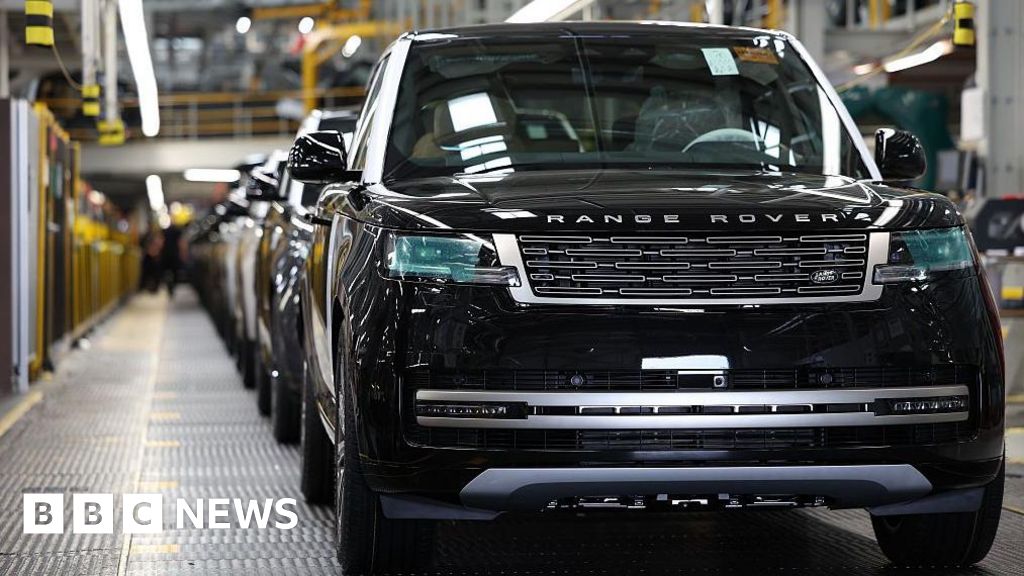
Jaguar Land Rover (JLR) has instructed factory staff to stay at home until at least Tuesday as the company continues to grapple with the fallout from a cyber attack.
The attack at the weekend forced the company to take vital IT systems offline, which has affected car sales and production.
Production remains halted at car factories in Halewood on Merseyside and Solihull in the West Midlands, as well as at its engine manufacturing centre in Wolverhampton.
The situation remains under review and output could remain suspended for longer.
Car sales have also been heavily disrupted, although the BBC understands some transactions have been able to take place.
JLR, which is owned by India’s Tata Motors, shut down its systems on Sunday in order to limit potential damage from the cyber attack.
It is now working to restore them in a controlled manner, but this is understood to be a highly complex process. It is also introducing work-arounds for systems that remain offline.
The attack occurred at what is traditionally a popular time for consumers to take delivery of a new vehicle. The latest batch of new registration plates became available on 1 September.
The disruption extends well beyond JLR’s own production lines, with its network of parts suppliers also forced to restrict their operations. Some have complained of a lack of transparency from the company.
Some repair garages have also warned that existing Jaguar or Land Rover owners may face delays if their cars need new parts.
James Wallis of Nyewood Express, an independent garage in West Sussex that repairs and services Land Rovers, told the BBC’s Today programme that he “can’t look up what I need to repair cars”.
“Essentially the parts list is a giant database of items that relates to every single car,” he said. “And if I can’t find the parts, I can’t buy them. I can’t fix the car.”
He added: “If you need parts which come from just one source and you can’t find them, you can’t order them. The job stops. You cannot repair the car. The car sits idle, and the poor old customer has to wait.”
On Wednesday a hacker group which was also responsible for a highly damaging attack on Marks and Spencer earlier in the year said it had infiltrated JLR’s systems.
The group of young English-speaking hackers – who are thought to be teens calling themselves “Scattered Lapsus$ Hunters” – told the BBC how they allegedly accessed the car maker but have not revealed if they successfully stole private data from JLR or installed malicious software onto the company’s network.
The group posted two images, which showed apparent internal instructions for troubleshooting a car charging issue and internal computer logs.
A security expert said those screenshots suggested the group had access to information they should not have.
JLR says it is investigating the hack, but there is no evidence at this stage any customer data has been stolen.
In 2023, as part of an effort to “accelerate digital transformation across its business”, JLR signed a five-year, £800m deal with corporate stablemate Tata Consultancy Services to provide cybersecurity and a range of other IT services.
The halt in production is a fresh blow to the firm which recently revealed a slump in profits attributed to an increase in costs caused by US tariffs.

Go Digit General Insurance on Saturday said it has received a demand notice of about Rs 170 crore for short payment of goods and services tax (GST) for nearly five years. The company has received an order copy from the Office of the Commissioner of GST & Central Excise, Chennai South Commissionerate on March 6, confirming GST demand of Rs 154.80 crore levying penalty of Rs 15.48 crore and Interest u/s 50 of CGST Act, 2017 for the period July 2017 to March 2022, the insurer said in a regulatory filing. The company is in the process of evaluating the legal advice on the implications and would file an appeal, it said.
Business
Iran war threatens $11.7 trillion global travel industry as passengers get caught in crossfire

Zoey Gong, a Chinese medicine food therapist, was days away from boarding an Emirates flight from Paris to Shanghai via Dubai, United Arab Emirates, when the U.S. and Israel attacked Iran last Saturday.
Gong, 30, had her flight plans derailed as a result, and she told CNBC that she had to pay $1,600 to get to Shanghai, more than double the price of her original ticket.
She’s one of millions of travelers swept up in war and other conflicts from Iran to Mexico this year, problems that are threatening the global tourism industry that’s worth an estimated $11.7 trillion to the world’s economy, according to industry group World Travel & Tourism Council. It’s showing that people who are far from falling missiles, drone attacks and other geopolitical flashpoints aren’t immune to ripple effects.
‘Aviation quagmire’
Stranded passengers wait with their luggage outside the Hazrat Shahjalal International Airport in Dhaka on March 3, 2026 after carriers cancelled flights amid the Middle East conflict.
Munir Uz Zaman | Afp | Getty Images
The U.S.-Israel attack on Iran set off massive aviation, travel, and safety crises.
More than a million people around the world were stranded because of airspace closures that have grounded over 20,000 flights since Saturday, according to aviation data firm Cirium. Some were also stuck on cruise ships. Inquiries for more expensive “cancel for any reason” travel insurance policies surged 18-fold this week, said Chrissy Valdez, senior director of operations for Squaremouth, an online insurance marketplace.
Since the Feb. 28 attacks on Iran, that country has launched retaliatory strikes on the United Arab Emirates — home to Dubai International Airport, the world’s busiest for international passenger traffic, according to Airports Council International — as well as Qatar, Jordan, Israel and Cyprus. The back-and-forth attacks have left airlines with little recourse to repatriate travelers.
Days after the attack, the U.S. State Department told citizens in a large part of the region to leave immediately, with few options at hand. The department said it is organizing charter flights for U.S. citizens who want to return from Saudi Arabia, Israel, UAE and Qatar.
“This has spiraled into an aviation quagmire,” said Henry Harteveldt, a former airline executive and founder of travel consulting firm Atmosphere Research Group.
Other sectors of the travel industry are also dealing with the war’s impact. Debris rained down near Accor‘s Fairmont The Palm Hotel in Dubai over the weekend. The company said four people were injured, but none were guests, visitors, or staff. Meanwhile, the iconic Burj Al Arab hotel had a fire earlier this week after it was hit by debris from an Iranian drone.
(L to R) The Malta-flagged cruise ships Aroya Manara and MSC Euribia are anchored at the port of Dubai on March 4, 2026.
Giuseppe Cacace | AFP | Getty Images
MSC Cruises’ more than 6,300-passenger MSC Euribia ship has been stranded in Dubai and the company is trying to get flights for affected guests, it said. “We are requesting priority for our guests from our partners,” the company said in a statement.
“In order to speed up the repatriation, we are working on other options such as chartering flights” from Dubai, Abu Dhabi, UAE, or Muscat, Oman, but the situation on board “remains calm,” the cruise company said.
Earlier this week, MSC said it would cancel its remaining sailings from Dubai for the winter. “We understand that this will be disappointing, but we are sure that guests impacted will understand this decision,” it said.
Putting aside the Covid-19 health crisis that ground most international travel to a halt, Harteveldt called this week “the most chaotic event we’ve seen frankly since 9/11 when the U.S. chose to close its airspace. We haven’t seen anything that has had such a long and geographically widespread impact on travel.”
Global conflicts
Flightradar24 still of flight traffic across the Middle East on March 4th, 2026.
Source: Flightradar24.com
The Iran war is the most severe military conflict this year, but it’s one of a series of obstacles that have threatened travel demand and profits for hotels, airlines and cruise companies, as well as local economies that depend heavily on travel, especially international tourists, who tend to spend more than local visitors.
Three days into 2026, the U.S. struck Venezuela and captured its president, Nicolás Maduro, and his wife, Cilia Flores. The attack prompted the U.S. to close airspace throughout the Caribbean, stranding travelers, many at pricey resorts and home rentals they had booked for the holidays.
Then in February, flights were grounded in parts of Mexico, including in the coastal resort city of Puerto Vallarta and in Guadalajara, after violence broke out following the Mexican army’s killing of a cartel leader.
Executives have already had to make costly changes: rerouting or cancelling sailings, issuing flexible booking and refund policies, grounding planes and changing flight plans altogether, or discounting hotel rooms.
The cost of these conflicts is still being tallied, including for fuel, one of the biggest expenses for cruise companies and airlines, along with labor, and is usually passed along to consumers, but signs are emerging on how customers will be affected.
First: Pricier tickets and stays are in the cards.
Higher airfare
United Airlines CEO Scott Kirby said on Thursday that jet-fuel prices, which have surged 60% since the U.S. and Israel’s first strikes on Iran last week, would hit first-quarter results, if not the second quarter as well. That will likely translate quickly to higher airfare, he added.
Despite the higher fuel, which accounted for 20% of United’s operating expenses last year, according to a securities filing, with few flights operating in the Middle East, bookings have jumped from regions like Australia for United flights because it offers different routes to the U.S., he said.
Speaking outside an event at Harvard University, Kirby said that demand overall has remained resilient since the conflict broke out.
Airlines around the world have been forced to take longer, more costly routes because of airspace closures.
Australian carrier Qantas, for example, told CNBC that its flight from Perth, Australia, to London will now take a route that requires it to refuel in Singapore, though that will also allow it to pick up another roughly 60 passengers.
Best year ever?
Passengers look at departure screens showing cancelled flights to Puerto Vallarta at Benito Juarez International Airport after authorities reinforced security following roadblocks and arson attacks carried out by organized crime in several states, after a military operation in which a government source said Mexican drug lord Nemesio Oseguera, known as “El Mencho,” was killed in Jalisco state, in Mexico City, Mexico, February 22, 2026.
Luis Cortes | Reuters
Travel executives started off 2026 as they often do: upbeat. Some airline executives, including those at the most profitable U.S. carriers, Delta Air Lines and United, forecast record earnings within reach this year.
The war and other incidents erupted as the travel industry has been leaning on premium options to woo wealthier customers, who make up a greater share of spending overall. Losing the base for more expensive trips could be extra disadvantageous to those companies and local economies.
In Mexico, for example, tourism makes up close to 9% of the economy and international tourist arrivals rose 13.6% last year to 98.2 million people, who spent close to $35 billion, according to the country’s Tourism Ministry.
Now, airlines are pulling back on traveling to Puerto Vallarta, at least from the United States in the near term. Delta cut routes from April 3 through the end of the month to the city, except for once-daily flights from Los Angeles and Atlanta, according to the Cranky Network Weekly newsletter, which covers the airline industry’s network changes. Alaska Airlines and Southwest Airlines also cut service in March.
“Perhaps people will forget about the PVR [Puerto Vallarta International Airport] concerns now that headlines will shift to the Middle East and bookings will rebound, but we will be watching capacity changes as leading indicators,” Brett Snyder and Courtney Miller, the newsletter’s authors, said in the March 1 edition.
Smoke billows amid a wave of violence, with torched vehicles and gunmen blocking highways in more than half a dozen states, following a military operation in which a government source said Mexican drug lord Nemesio Oseguera, known as “El Mencho,” was killed, in Puerto Vallarta, Jalisco, Mexico, February 22, 2026.
@morelifediares via Instagram | Reuters
The recent issues also come three months ahead of the FIFA World Cup, which is set to be hosted by cities in Canada, Mexico and the United States.
Some hotels in Mexico are starting to notice a change, too.
Victor Razo, manager at the Rivera del Rio hotel in Puerto Vallarta, told CNBC that bookings are down around 10% compared with last year.
“We’ve had some promotions given what had happened,” he said, adding it brought down rates between 10% and 20% ahead of the busy spring break and Holy Week period in the coming month.
He added that the hotel wasn’t near the problems, which included road blockades, and that bookings have since stabilized.
“It’s not like the beginning of the pandemic,” he said. “There is no comparison.”
Business
India–US trade ties: Piyush Goyal says India secured best deal among competing nations – The Times of India
Commerce and industry minister Piyush Goyal on Saturday said India has secured the best trade deal with the United States among competing nations, highlighting the strength of the economic and strategic partnership between the two countries, reported PTI.Speaking at the Raisina Dialogue 2026 in New Delhi, Goyal said India and the US share a “very powerful” relationship, adding that the world’s largest economy remains an important partner for New Delhi.
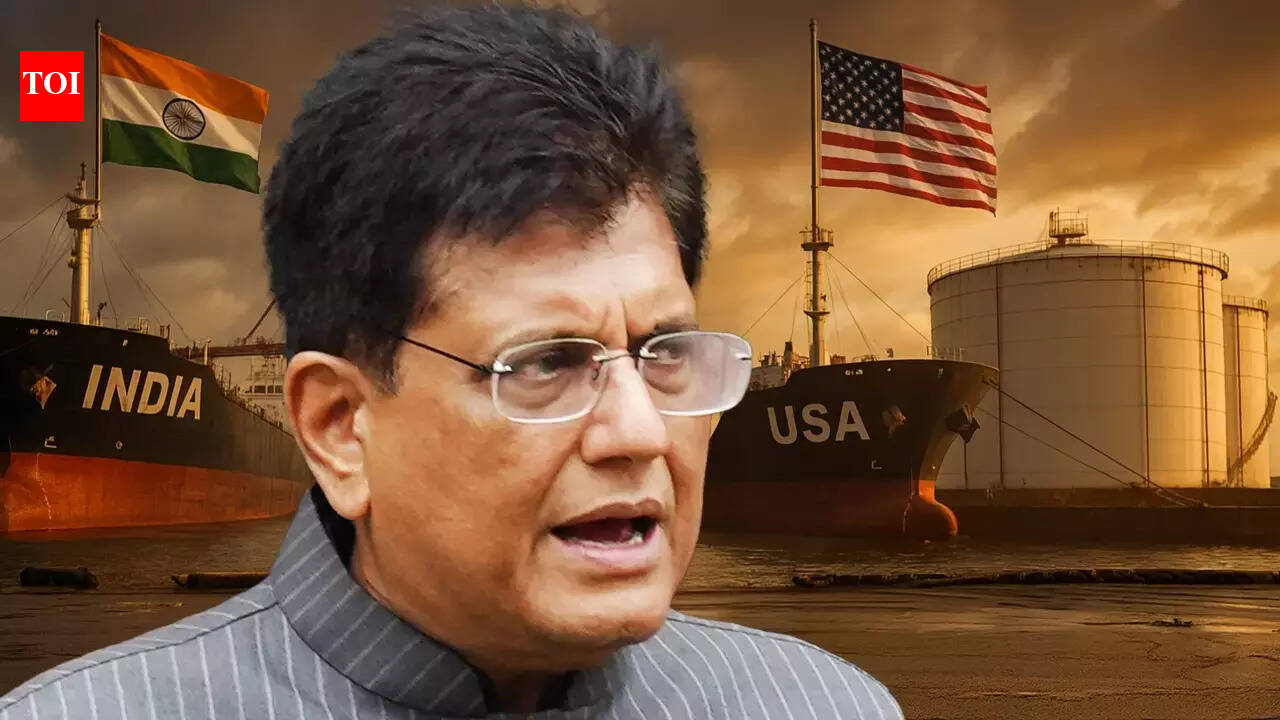
“It has been a fantastic journey. We have the best of relations. You would have observed that through the last year, President Donald Trump has always had the best things to say about India as a country, and about Prime Minister (Narendra) Modi. We have fantastic relations with our counterparts there.“Even within your family, sometimes you can have one or two misunderstandings. It’s a part of the course. I think it’s a very, very powerful relationship that the US and India share. And we got the best deal amongst all the nations with whom we compete,” Goyal said.He added that the two countries are strategic partners and the largest democracies in the world, noting that the US, with a $30 trillion economy, remains central to global trade.“We have a large responsibility cast on both our nations. They are the world’s largest economy, USD 30 trillion economy, nobody can wish them away,” he said.Explaining the significance of trade agreements, Goyal said such deals are meant to secure preferential access for a country’s goods and services compared to competitors.“What’s a trade deal? You are trying to get a preference or a preferential access for yourself, your goods, your services, compared to your competitor. And we got the best deal amongst all the competing nations. I mean whether it’s in our neighbourhood Pakistan or Bangladesh. If we look at the Asian region, we got the best deal amongst all of the competitors…” he said.The minister added that the India-US partnership extends beyond trade, encompassing technology cooperation, critical minerals, defence ties and investments.“There’s a huge technology overlay on it. There’s a huge critical minerals partnership, there’s a defense partnership, there’s a huge amount of investments that flow into India from the US. So it’s a partnership of two countries which is going to define the future,” he said.His remarks come as India and the US have finalised the framework for the first phase of a bilateral trade agreement, under which Washington had announced it would reduce reciprocal tariffs on India to 18 per cent.However, after the US Supreme Court struck down the tariffs, President Donald Trump imposed a 10 per cent tariff on all countries from February 24 for 150 days.A meeting between the chief negotiators of the two countries to finalise the legal text of the agreement has also been postponed.Under the proposed deal, India will eliminate or reduce tariffs on US industrial goods and a range of American agricultural products, including dried distillers’ grains (DDGs), red sorghum for animal feed, tree nuts, fresh and processed fruits, soybean oil, wine and spirits, among others.India has also indicated that it plans to purchase $500 billion worth of US energy products, aircraft and aircraft parts, precious metals, technology products and coking coal over the next five years.Goyal also referred to the nine free trade agreements finalised by the Modi government, saying they were negotiated while safeguarding domestic interests.“These nine free trade agreements, I can say on record with all the courage that I have on my command with all the responsibility that in not a single trade deal, has India compromised on any sensitivity of any of our stakeholders,” he said.Opposition parties, however, have alleged that the government has compromised the interests of farmers in the India-US trade pact.Goyal said opening the auto sector under certain FTAs would expand consumer choice and create employment opportunities.“Demand for this industry is growing at an average of 8 per cent. So you can imagine how much more scope we have to create jobs,” he said.He added that while companies from FTA partner countries may initially export cars to test the Indian market, they would eventually need to manufacture locally once demand is established.“Initially they can sell, say, 5,000 cars or 10,000 cars, to test the market, find the distraction — and then come and manufacture here,” he said.He added that the government’s broader objective is to build a global network of trade partnerships through multiple FTAs.


Cristiano Ronaldo injury ‘more serious’ than expected

Duchess Sophie impresses in lilac while tackling rare skin disorder

Ball State fires Michael Lewis after 3 straight losing seasons

LPGA legend shares her feelings about US women’s Olympic wins: ‘Gets me really emotional’
India Us Trade Deal: Fresh look at India-US trade deal? May be ‘rebalanced’ if circumstances change, says Piyush Goyal – The Times of India

Pakistan’s semi-final qualification scenario after England defeat New Zealand

-
 Sports1 week ago
LPGA legend shares her feelings about US women’s Olympic wins: ‘Gets me really emotional’
-
Business1 week ago
India Us Trade Deal: Fresh look at India-US trade deal? May be ‘rebalanced’ if circumstances change, says Piyush Goyal – The Times of India
-

 Fashion1 week ago
South Korea’s Misto Holdings completes planned leadership transition
-
 Entertainment1 week ago
Pakistan’s semi-final qualification scenario after England defeat New Zealand
-

 Entertainment1 week ago
Bobby J. Brown, “The Wire” and “Law & Order: SUV” actor, dies of smoke inhalation after reported fire
-
 Business1 week ago
CNBC To Merge TV And Digital News Operations, Nearly A Dozen Jobs To Be Cut: Report
-

 Fashion1 week ago
Texwin Spinning showcasing premium cotton yarn range at VIATT 2026
-

 Tech1 week ago
The Latest Repair Battlefield Is the Iowa Farmlands—Again