

Politics
Jamaica’s strongest-ever storm, Hurricane Melissa, turns to Cuba

- Storm leaves hundreds of thousands of Jamaicans without power.
- Parts of western Jamaica come ‘underwater,’ says minister.
- Hurricane Melissa comes after Beryl battered Jamaica last year.
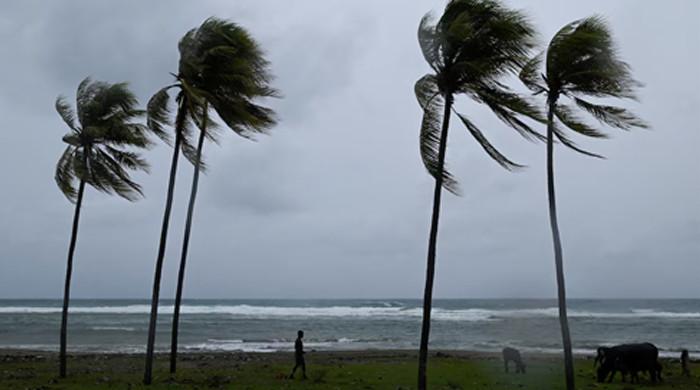
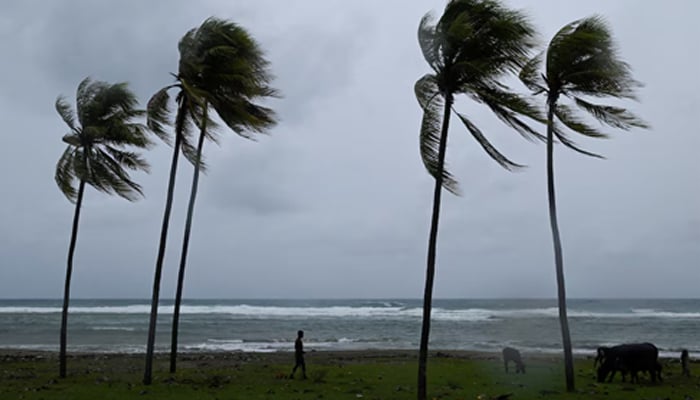
Hurricane Melissa churned toward Cuba’s second-largest city with the force of a powerful Category 4 storm on Tuesday, hours after making landfall in neighboring Jamaica as the strongest-ever cyclone on record to hit that Caribbean island nation.
Melissa roared ashore near Jamaica’s southwestern town of New Hope, packing sustained winds of up to 185 mph (295 kph), according to the US National Hurricane Center, well above the minimum 157 mph (252 kph) wind speed of a Category 5 storm, the highest level on the Saffir-Simpson wind scale.
In southwestern Jamaica, the parish of St Elizabeth was left “underwater,” an official said, with more than 500,000 residents without power.
“The reports that we have had so far would include damage to hospitals, significant damage to residential property, housing and commercial property as well, and damage to our road infrastructure,” Jamaica’s Prime Minister Andrew Holness said on CNN after the storm had passed.
Holness said the government had not received any confirmed storm-related fatalities, but given the strength of the hurricane and the extent of the damage, “we are expecting that there would be some loss of life.”
Melissa’s winds subsided to 145mph (233kph), the NHC said, as the storm drifted past the mountainous island, lashing highland communities vulnerable to landslides and flooding.
The hurricane was forecast to curve to the northeast on a trajectory toward Santiago de Cuba, Cuba’s second-most populous city.
“We should already be feeling its main influence this afternoon and evening,” Cuban President Miguel Diaz-Canel said in a message published in state newspaper Granma, calling on citizens to heed evacuation orders.
“There will be a lot of work to do. We know that this cyclone will cause significant damage.”
Cuban authorities said some 500,000 people were ordered to move to higher ground. In the Bahamas, next in Melissa’s path to the northeast, the government ordered evacuations of residents in southern portions of that archipelago.
Farther to the east, the island shared by Haiti and the Dominican Republic had faced days of torrential downpours leading to at least four deaths, authorities there said.
Local media reported at least three deaths in Jamaica during storm preparations, and a disaster coordinator suffered a stroke in the onset of the storm and was rushed to hospital. Late Tuesday, many areas remained cut off.
Jamaica’s ‘storm of the century’
No stranger to hurricanes, Jamaica had never before been known to take a direct hit from a Category 4 or 5 storm, and the government called for foreign aid even as it prepared for Melissa’s arrival.
Meteorologists at AccuWeather said Melissa ranked as the third most intense hurricane observed in the Caribbean after Wilma in 2005 and Gilbert in 1988 – the last major storm to make landfall in Jamaica.
“It’s a catastrophic situation,” the World Meteorological Organisation’s tropical cyclone specialist Anne-Claire Fontan told a press briefing, warning of storm surges up to 4 meters high. “For Jamaica, it will be the storm of the century for sure.”
Colin Bogle, an adviser to aid group Mercy Corps in Portmore, near Jamaica’s capital of Kingston, said he had heard a loud explosion in the morning before everything went dark. Sheltering with his grandmother, he heard relentless noise and saw trees violently tossed in the wind.
“People are scared. Memories of Hurricane Gilbert run deep, and there is frustration that Jamaica continues to face the worst consequences of a climate crisis we did not cause,” he said.
Scientists warn that storms are intensifying faster with greater frequency as a result of warming ocean waters. Many Caribbean leaders have called on wealthy, heavy-polluting nations to provide reparations in the form of aid or debt relief to tropical island countries.
Melissa’s size and strength ballooned as it churned over unusually tepid Caribbean waters, but forecasters warned that its slow movement could prove particularly destructive.
Food aid will be critical, Bogle said, as well as tools, vehicle parts and seeds for farmers. Like last year’s devastating Hurricane Beryl, Melissa crossed over some of Jamaica’s most productive agricultural zones.
On Monday, Holness said the government had an emergency budget of $33 million and insurance and credit provisions for damage a little greater than Beryl.
‘Like a roaring lion’
Melissa made landfall in southwestern Jamaica, near the parish border between Westmoreland and St Elizabeth, one of the areas hardest-hit by Beryl.
St Elizabeth was submerged by flooding, local government minister Desmond McKenzie told a press briefing. Its only public hospital lost power and reported severe damage to one of its buildings.
Several families were known to have been stranded in their homes, but rescue teams managed to reach one group that included four babies, McKenzie said.
In Portland Cottage, some 150 km (94 miles) away from where Melissa made landfall, Collin Henry McDonald, 64, a retiree, told Reuters as the storm advanced that his community was seeing strong rain and winds, but his concrete roof was holding steady.
“It’s like a roaring lion. It’s mad. Really mad,” he said.
Around 15,000 Jamaicans were in temporary shelters by late Tuesday, McKenzie said. The government had issued mandatory evacuation orders for 28,000 people, but many were reluctant to leave their homes.
The International Federation of the Red Cross said up to 1.5 million people in Jamaica were expected to be directly affected by the storm.
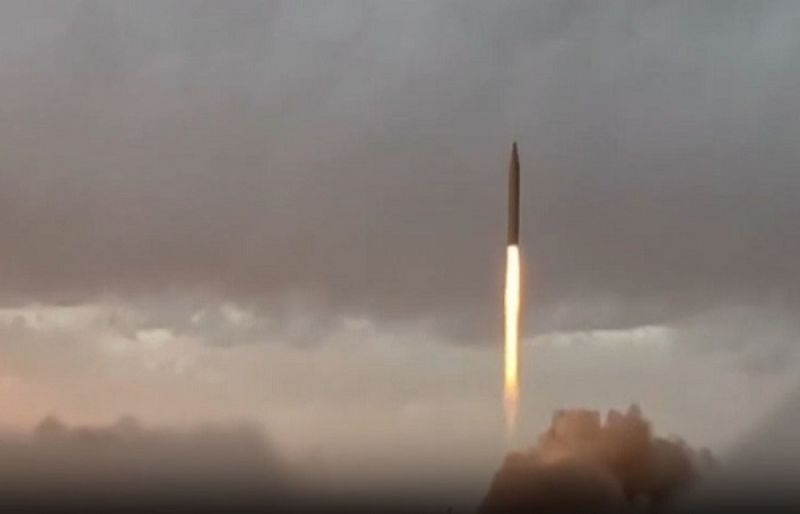
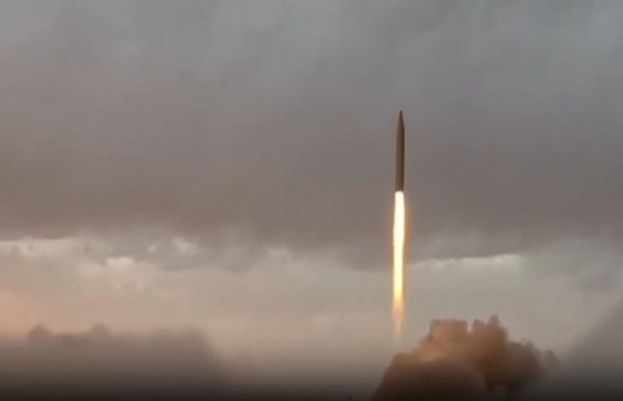
Iran has fully prepared for the possible resumption of war as the ceasefire deadline approaches, with new surprises ready for any new round of imposed war, the Tasnim News Agency reported on Tuesday, citing informed sources.
According to the report, the US naval blockade announcements and Washington’s excessive demands have prevented the formation of new negotiations as the agreed ceasefire period nears its end.
“Iran is fully prepared for the possibility of a new war and has prepared new surprises for a potential new round of combat,” the report said.
The sources told Tasnim that over the past two weeks, Iran has taken the possibility of renewed war seriously.
“Accordingly, some military movements and new target lists have been prepared for this purpose,” the report added.
Iran is ready to create “another hell” for Americans and Israelis from the very beginning of any potential new war, the sources said.
The United States and Israel launched their unprovoked, illegal war of aggression against Iran on February 28, assassinating the Leader of the Islamic Revolution, Ayatollah Seyyed Ali Khamenei, and striking nuclear facilities, schools, hospitals and bridges, along other civilian sites.
Iran’s armed forces responded with 100 waves of decisive retaliatory strikes under Operation True Promise 4, launching hundreds of ballistic and hypersonic missiles, as well as drones, against American military bases across West Asia and Israeli positions throughout the occupied territories.
A two-week ceasefire, brokered by Pakistan, took effect following the intense 40-day war. However, tensions have remained high.
The United States has declared plans for a naval blockade of Iranian ports, a move Tehran has condemned as provocative and a violation of the ceasefire.
Iranian officials have repeatedly warned that any US attempt to impose a blockade or conduct mine-sweeping operations in the Strait of Hormuz will be met with a decisive military response.
Iranian Foreign Minister Abbas Araghchi has previously accused Washington of bad faith, citing repeated US violations of the ceasefire, threats against Iranian shores and vessels, and continuous contradictions in American statements.
Tehran has made it clear that while it remains committed to diplomacy, it will not accept diktats or conditions imposed by the United States.
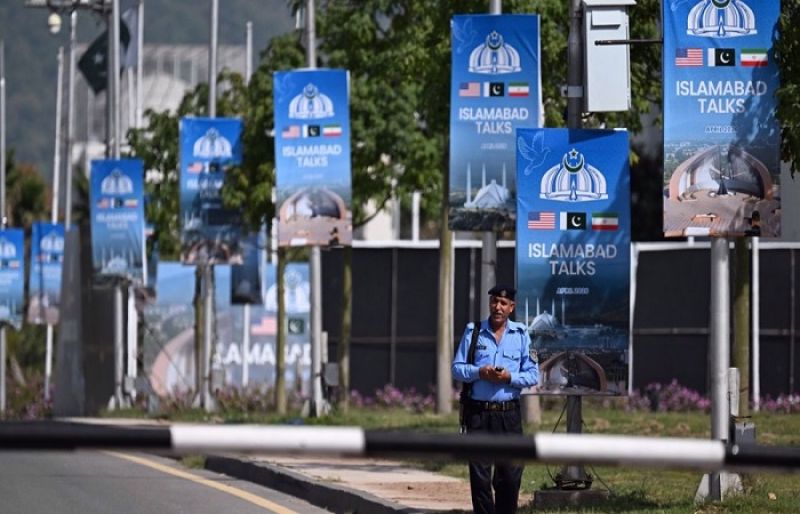
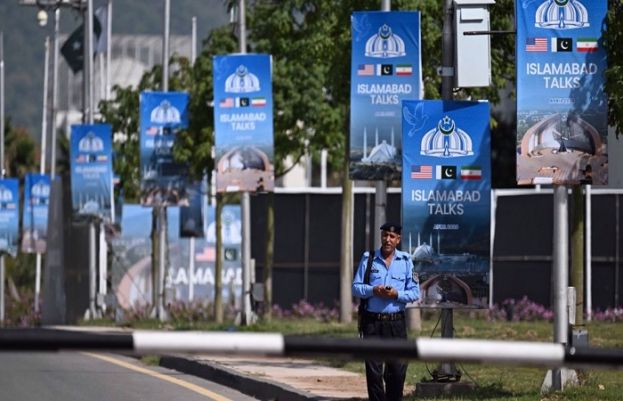
No Iranian delegation has arrived in Islamabad for talks with the United States, says a report, as senior Iranian officials declared they will not engage in talks “under the shadow of threats” following renewed American aggression at sea.
Contrary to numerous international and regional media reports suggesting an Iranian delegation was set to arrive for talks, IRIB News Agency reported on Tuesday that “to date, no delegation from Iran has gone to Islamabad, Pakistan; neither a main nor a subsidiary delegation; neither primary nor secondary.”
The report dismissed speculation about scheduled meetings, stating that news circulated since Saturday about the “departure” or “arrival” of an Iranian team, or even specific meeting times, was entirely without basis.
This firm stance follows blatant breaches of a two-week-old ceasefire by Washington. Iranian officials have maintained a consistent position since Sunday evening, asserting that the “continuation of talks depends on a change in American behavior and positions.”
Adding his voice to the resolute message, Iranian Parliament Speaker and lead negotiator Mohammad Baqer Qalibaf said on Monday that the US President was attempting to force Tehran into submission. “Trump, by imposing a blockade and violating the ceasefire, wants – in his own delusion – to turn the negotiating table into a table of surrender or to justify renewed warmongering,” he said in a post on X.
The speaker made Tehran’s position unequivocal. “We do not accept negotiations under the shadow of threats,” he said, warning, “Over the past two weeks, we have prepared ourselves to reveal new cards on the battlefield.”
The uncertainty shrouding the next round of talks escalated after the US Navy targeted an Iranian merchant vessel in the Sea of Oman on Sunday. Iran’s military condemned the incident as a “criminal operation” and “maritime piracy,” reiterating that its response posture remains active.
The backdrop to these renewed tensions is a 40-day US-Israeli war of aggression that began on February 28 with the assassination of high-level Iranian figures and civilians. After 40 days of criminal aggression, the US agreed to a ten-point proposal from Iran, leading to trilateral talks mediated by Pakistan.
While Iran subsequently opened the Strait of Hormuz to commercial traffic, it was forced to close the chokepoint again on Sunday after the US maintained its naval blockade in breach of the deal.
President Masoud Pezeshkian on Monday dismissed the American ultimatums as “pressure tactics,” insisting Iran will not submit to coercion.
This came as President Trump issued a direct threat on his social media pages, stating, “We’re offering a very fair and reasonable deal, and I hope they take it because, if they don’t, the United States is going to knock out every single power plant, and every single bridge, in Iran.”
The ongoing US blockade is also reportedly frustrating the mediation efforts. According to reports, Pakistani army chief Asim Munir conveyed to President Trump that the continued naval blockade of Iranian ports was hampering Islamabad’s ability to facilitate a permanent end to the war.
- Cause of fire being ascertained: police chief.
- Fire broke out during Hindu festival preparations.
- Indian PM offers condolences to victims’ families.
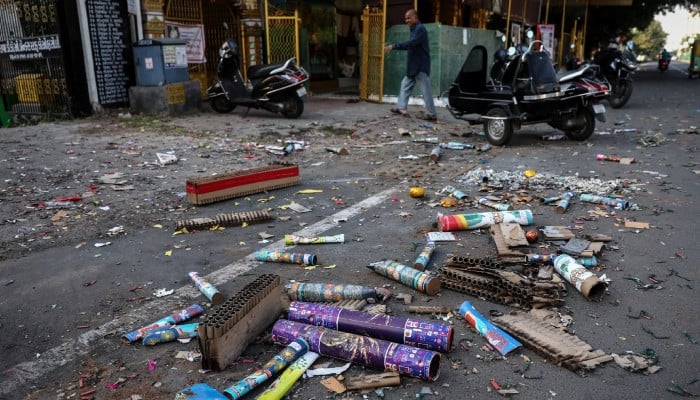
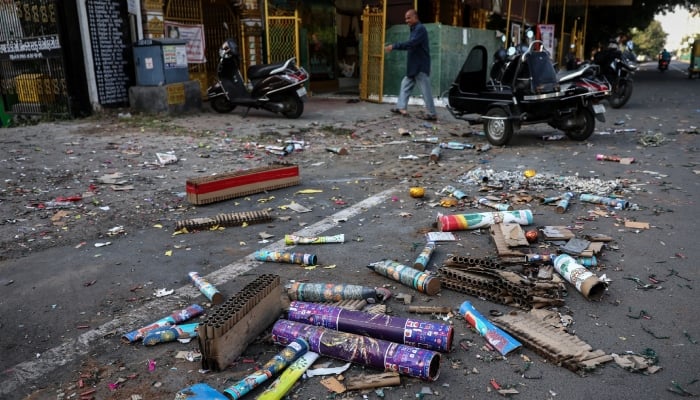
A firecracker storage facility in southern India caught fire on Tuesday, killing at least eight people, police said, the second such incident in three days.
Nakul Rajendra Deshmukh, police chief in Kerala state’s Thrissur district, told AFP that rescue operations were “over” after the deadly fire, which also left 15 people injured including two in critical condition.
The cause of the fire was being ascertained, he added.
Local media said it broke out during preparations for a Hindu festival.
Prime Minister Narendra Modi said in a social media post that he was “saddened” by the loss of lives and offered his “deepest condolences” to the families of the victims.
On Sunday, 20 people died in a similar blaze at a firecracker factory in the neighbouring state of Tamil Nadu.
Industrial accidents are common in India, often due to poor adherence to safety regulations and weak enforcement.
Last month, another fire at a fireworks factory in western India killed 17 people.


Ranking the Top 20 Players in the Men’s College Basketball Transfer Portal

NATO jets intercept Russian bombers over Baltic Sea

FIFA to put more World Cup tickets on sale for all games

-

 Fashion5 days ago
France’s LVMH Q1 revenue falls 6%, shows resilience amid Iran war
-

 Sports1 week ago
The case for Man United’s Fernandes as Premier League’s best
-

 Entertainment1 week ago
Palace left in shock as Prince William cancels grand ceremony
-
 Business1 week ago
UK could adopt EU single market rules under new legislation
-

 Entertainment6 days ago
Is Claude down? Here’s why users are seeing errors
-

 Fashion1 week ago
Energy emerges as biggest cost driver in textile margins
-
 Business1 week ago
Delta Air Lines unveils first new Delta One suite in premium cabin arms race
-

 Fashion1 week ago
Asia claims largest share of markets on Kearney FDI Confidence Index