

Business
Jeep reveals Wrangler-inspired Recon EV, starting at $65,000


LOS ANGELES — Jeep’s new Recon all-electric SUV will start at $65,000, the American SUV brand announced Tuesday when it officially revealed the vehicle.
The 2026 Jeep Recon has been years in the making, as the idea of an electric vehicle inspired by the brand’s iconic off-road Wrangler SUV was first revealed in 2021. It is expected to begin production early next year at a plant in Mexico.
The Recon, revealed Tuesday ahead of the Los Angeles Auto Show, includes familiar, boxy Jeep styling as well as removable doors, a spare tire on the rear and open-air roof — all synonymous with the brand’s Wrangler SUV.
“With the Jeep Recon, we’re proving that electrification isn’t just compatible with off-road excellence, it can elevate it, delivering instant torque, precision control and a quieter, more connected driving experience that’s uniquely Jeep,” Bob Broderdorf, CEO of Jeep, said in a release.
The Recon is part of Jeep’s ongoing turnaround plan, which comes after years of sales declines and after several Jeep SUVs were canceled for the U.S. in an attempt to boost profits.
The EV is the last of four new or updated products Jeep promised to reveal in four months. The first three were a new Jeep Cherokee hybrid and redesigned versions of the Jeep Grand Cherokee and Grand Wagoneer.
“We’re wrapping up the 4×4 – four cars in four months. Recon is the last car to do that. That will complete the storyline,” Broderdorf said during a media call about the brand’s plans to launch a slew of special-edition vehicles next year.
The Recon’s electric motors combine to produce 650 horsepower and 620 foot-pounds of torque — similar to some V-6 and V-8 sports cars. But that power comes at a cost, with the vehicle getting up to 250 miles of range on a charge, which is lower than many current, less expensive EVs.
The Recon’s price is a roughly $14,000 premium over an entry-level 2025 Wrangler plug-in hybrid electric vehicle and a nearly $27,000 premium over a base 2026 Wrangler four-door. Pricing is in line with the $65,200 Wagoneer S EV, with a range of 294 miles.
The Recon comes as Jeep’s Stellantis parent company is heavily reducing its investments in EVs following changing market conditions and CEO shake-up in the past year. In the broader market, sales of EVs have plummeted following the end of up to $7,500 in federal incentives in September to purchase a plug-in electric vehicle.
Broderdorf said the end of federal incentives is expected to impact sales across the industry, including with the Recon, but the new SUV functions as an EV “bookend” alongside the sportier Wagoneer S for the Jeep brand’s electric portfolio.
“I’m not going to just chase volume just to chase volume,” he said during the media call. “I want to sell cars in the right way. Everybody who wants a [battery-electric vehicle], Recon, I want to make sure that we’re there for them. After that, it doesn’t really matter to me.”
The Recon is being produced at Stellantis’ Toluca Assembly Plant in Mexico alongside the Wagoneer S, Jeep Compass and the new Jeep Cherokee, which is being offered exclusively as a hybrid vehicle.
Broderdorf, who started leading the brand in February, said the plant can easily adjust to produce the higher-volume Compass and Cherokee depending on demand for EVs. Both gas-powered vehicles also are expected to be manufactured in the U.S. in the coming years for additional flexibility.
“”We’re going to grow, grow and grow,” Broderdorf previously told CNBC. “That’s the mission. And do it in a healthy way.”
Jeep’s been dealing with a spiraling sales decline that started after the brand reached an all-time high of more than 973,000 SUVs sold in 2018. The brand’s sales have fallen 40% since then to less than 590,000 units last year in the U.S.
Jeep’s sales through the third quarter of this year were up less than 0.5% compared with a year earlier. Jeep’s U.S. market share has fallen from 5.4% in 2019 to 3.7% since 2024, according to Cox Automotive.




Shop price inflation eased in February but consumers are still paying 3.5% more for food than a year ago, figures show.
Overall shop inflation fell slightly to 1.1% from January’s 1.5%, in line with the three-month average of 1.1%, as fierce competition between retailers kept price rises in check and customers benefited from promotions across health, beauty and fashion, according to the British Retail Consortium (BRC) and NIQ.
Prices of products other than food were down 0.1% year on year, a significant drop from January’s growth of 0.3%.
Overall food inflation fell slightly to 3.5% from 3.9% in January, while fresh food prices remained 4.3% higher than last February, a slight drop from January’s 4.4% and above the three-month average of 4.2%.
However falling global costs pushed ambient food inflation down to 2.3% – its lowest level in four years and a significant fall from January’s 3.1%.
BRC chief executive Helen Dickinson said: “Households got some welcome relief in February as shop price inflation eased.
“While the direction of travel is promising, prices are still rising, and many consumers remain under pressure.”
Mike Watkins, head of retailer and business insight at NIQ, said: “Since the start of the year, we have seen some competitive pricing across both the food and non-food channels which is helping to bring down inflation.
“Whilst the inclement weather and weak sentiment is making consumer demand rather unpredictable for retailers, at least shoppers are now seeing some of their cost-of-living pressures start to ease.”
Business
West Asia conflict: Govt may ask companies to cut exports, increase auto fuel, LPG supplies – The Times of India
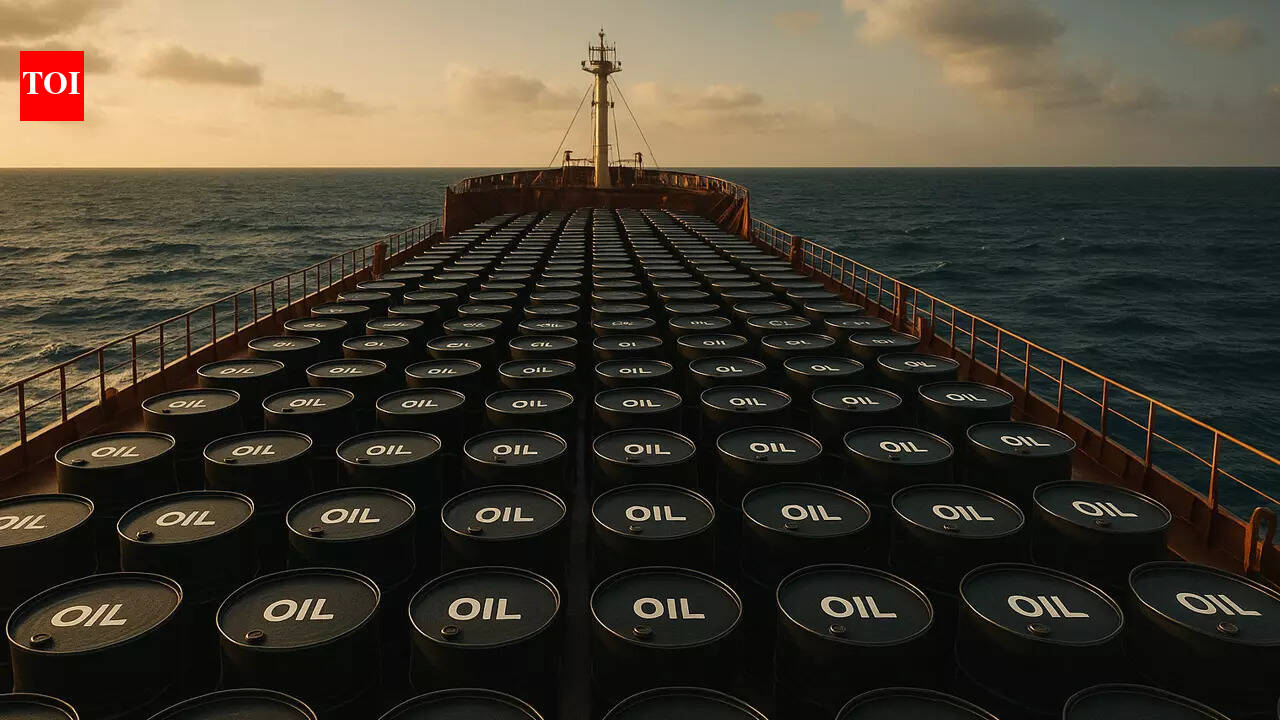
NEW DELHI: Amid fears of a shortage in crude supplies, govt is looking to nudge refiners to divert more auto fuel and LPG to the domestic market by cutting on exports and also increase cooking gas production so that there is no disruption in local supplies.While govt and oil companies insisted there’s no shortage, refiners are looking at alternate sources to partly compensate for crude coming from war-hit West Asia.
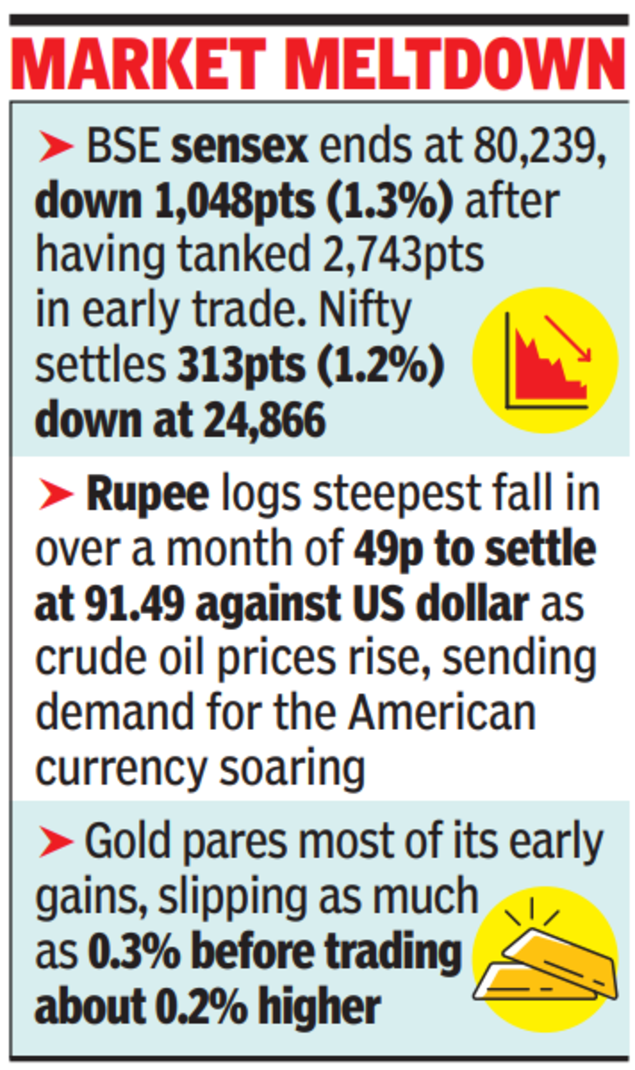
The tension has led to a spike in oil and gas prices, and given India’s dependence on imports, inflating the import bill and stoking inflationary pressures. Officials, however, said retail fuel prices may not rise immediately, as oil marketing companies follow a calibrated approach — absorbing losses when global prices are high and recouping them when prices soften. Retail petrol and diesel prices have remained unchanged since April 2022.Mantri meets oil cos to assess availability of crude and gasOn a day when Iranian drones damaged part of Saudi Aramco refinery and Qatar Energy’s facilities, the world’s largest LNG producer, announced an export pause, petroleum minister Hardeep Singh Puri and his team of officials met oil companies on Monday to assess the availability of crude and gas. “We are continuously monitoring the evolving situation, and all steps will be taken to ensure availability and affordability of major petroleum products in the country,” the oil ministry said in a post on X.India imports nearly 90% of its crude requirement. It also meets 60-65% of its LPG demand and about 60% of its LNG needs through imports, largely from West Asia, with shipments routed via Strait of Hormuz, which risks being choked due to the war.
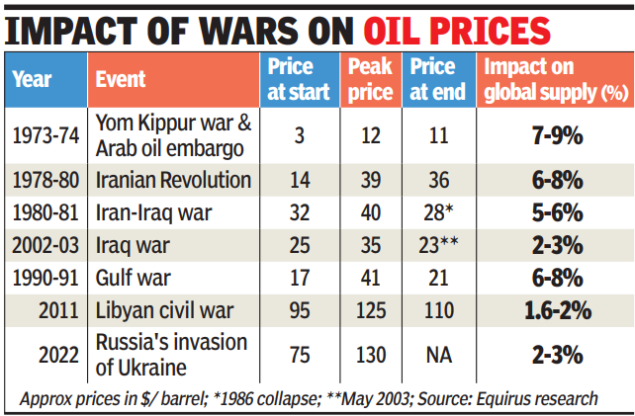
According to the International Energy Agency, in 2023, 5.9% of the country’s production was being exported. Between April and Dec 2025, India exported petroleum products worth nearly $330 billion, with the Netherlands, UAE, the US, Singapore, Australia and China being the main destinations. In 2024, it also exported petroleum gas worth $454 million, mostly to Nepal, China, and Myanmar. The Reliance refinery in Jamnagar is the largest exporter in the country.An oil company executive said refiners are already in contact with traders to tie up capacities amid fears of the blockade of Strait of Hormuz. By Monday, the global market had caught the jitters from Qatar’s decision to suspend gas shipments.An oil executive said while disruption could cause difficulties in the immediate term, Indian players had a wide portfolio that they can tap for LNG, including the US, with vessels being routed through the Suez Canal.“Even if there is a force majeure, we have other sources of supply, which we can tap. Besides, no one is going to stop supplies indefinitely,” the executive said. While oil and gas prices rose Monday, the focus is on ensuring that supply lines remain open.

A display board shows canceled flights to Dubai and Doha amid regional airspace closures at Noi Bai International Airport, amid the U.S.-Israel conflict with Iran, in Hanoi, Vietnam, March 2, 2026. Picture taken with a mobile phone.
Thinh Nguyen | Reuters
Airline and travel stocks slipped Monday after airspace closures throughout the Middle East forced carriers to cancel thousands of flights, disrupting trips as far as Brazil and the Philippines.
Cruise lines stocks also fell sharply, with Royal Caribbean Cruises dropping 3% and Carnival Corp. losing more than 7%.
Norwegian Cruise Line Holdings‘ stock fell 10% after its earnings call disappointed investors. Elliott Investment Management said last month that it had built a more than 10% stake in the company and that it’s seeking changes. New CEO John Chidsey told analysts that “our strategy is sound, our execution and coordination have not been, and a culture of accountability is essential and necessary going forward.”
Oil prices also rose, potentially driving up airlines’ biggest cost after labor. Flights through the Middle East were grounded, including to destinations like Tel Aviv and Dubai.
United Airlines, which has the most international exposure of the U.S. carriers, fell nearly 3%. Service to Tel Aviv, Israel, one of the airline’s most profitable routes, was halted, but airlines were also was forced to pause flights to Dubai, in the United Arab Emirates, one of the busiest airport hubs in the world. Dubai is also a home base for the airline Emirates.
Shares of American Airlines lost 4% while Delta Air Lines fell 2%.
More than 11,000 Middle East flights have been canceled since the U.S.-Israeli strikes this weekend, according to aviation-data firm Cirium.
International travel has been a bright spot in the travel sector. In January, international air travel demand jumped 5.9% from a year ago while domestic flight demand was nearly flat, the International Air Transport Association, an airline industry group, said in a report Monday.
— CNBC’s Contessa Brewer contributed to this report.


The ‘European’ Jolla Phone Is an Anti-Big-Tech Smartphone
Shop price inflation eases but food costs still 3.5% up on a year ago

UAE leadership hosts public iftar in Dubai, projects message of unity, resilience

-
 Business6 days ago
Households set for lower energy bills amid price cap shake-up
-

 Politics5 days ago
What are Iran’s ballistic missile capabilities?
-

 Entertainment1 week ago
Talking minerals and megawatts
-

 Sports1 week ago
Eileen Gu comments on Alysa Liu’s historic gold medal
-
 Business6 days ago
Lucid widely misses earnings expectations, forecasts continued EV growth in 2026
-

 Politics1 week ago
Supreme Court ruling angers Trump: Global tariffs to rise from 10% to 15%
-

 Sports1 week ago
South Africa thrash India by 76 runs in T20 World Cup Super 8 – SUCH TV
-
 Business1 week ago
Govt to return unclaimed EPFO deposits, expand scholarships for unorganised workers’ children – The Times of India