

Fashion
Jordan’s exports of leather, garments drop 2% YoY in Jan-Oct 2025

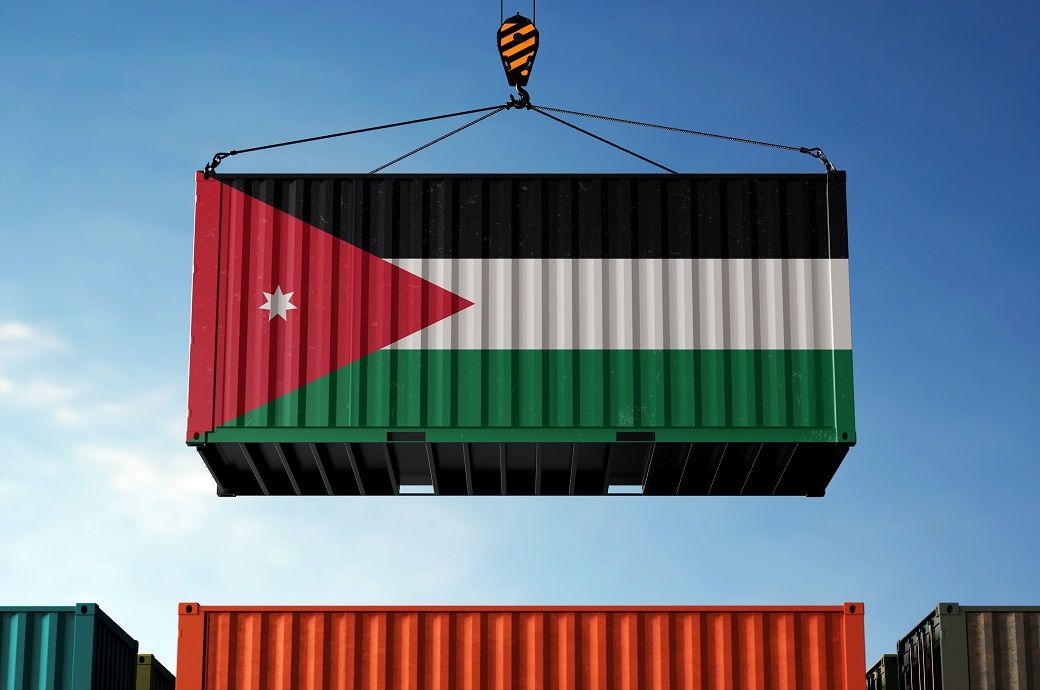
Garments and related accessories continued to top the list of exported products, supported by the sector’s expansion and growth in global markets over recent years, with exports reaching more than 82 countries worldwide.
Jordan’s exports of leather and garments fell by 2 per cent YoY in January-October 2025.
Exports of manufactured garments and accessories fell by 2 per cent YoY, while non-manufactured garment exports rose by 16 per cent.
Export of carpets and textile floor coverings rose by 15 per cent YoY.
Exports of footwear and parts fell by 28 per cent YoY; those of raw and tanned leather dropped by 41 per cent YoY.
Exports of manufactured garments and accessories declined by 2 per cent YoY during the ten months to JD 1.342 billion, while non-manufactured garment exports rose by 16 per cent YoY to JD39 million. Export of carpets and textile floor coverings rose by 15 per cent YoY to JD 35 million.
Exports of padding, felt, non-woven fabrics and special yarns surged by 172 per cent YoY during the period. Export of leather products, travel goods and handbags rose by 76 per cent YoY, while exports of natural and synthetic fur skins and their products increased by 52 per cent YoY,.
In contrast, exports of footwear and parts declined by 28 per cent YoY; those of raw and tanned leather dropped by 41 per cent YoY during the period.
The United States is the primary destination for Jordanian garments, accounting for more than four-fifths of total apparel exports, the chamber said.
Despite recent challenges linked to customs duties, exports to the US market saw a 1 per cent increase, alongside notable expansion into European markets, particularly the Netherlands, Belgium and Germany, according to a domestic news agency.
The imposition of a 15-per cent US customs duty at the beginning of August 2025 under the Emergency Act directly hit garment exports, the chamber noted.
The leather and garments sector was among the most value-added industrial sectors, with value added accounting for nearly 42 per cent of total output.
Fibre2Fashion News Desk (DS)













Total apparel shipments fell by 2.66 per cent year on year to $425.44 million in January 2026, compared with $437.07 million in the corresponding month of 2025. The performance underscored uneven global demand conditions that continue to influence sourcing patterns and order flows for Sri Lankan manufacturers.
Sri Lanka’s apparel exports declined 2.66 per cent YoY to $425.44 million in January 2026 amid weak global demand.
Shipments to the US and EU softened, while the UK remained stable with slight growth.
Other markets saw sharper contraction.
JAFF highlighted DCTS benefits and tariff changes while suggesting diversification and efficiency to sustain competitiveness.
Exports to the United States, the country’s largest market, decreased by 2.73 per cent to $165.11 million, while shipments to the European Union excluding the United Kingdom, declined by 1.93 per cent to $126.99 million. In contrast, exports to the UK remained broadly stable, rising marginally by 0.23 per cent to $61.71 million. Apparel shipments to other markets dropped more sharply by 6.07 per cent to $71.63 million.
JAAF noted that the UK’s steady performance offers a constructive signal for the sector, particularly as the revised Developing Countries Trading Scheme (DCTS), effective January 1, 2026, is expected to enhance sourcing flexibility and strengthen Sri Lanka’s competitive position in the British market.
The industry body also highlighted the introduction of a uniform 10 per cent temporary tariff in the US market as a relatively supportive development, reducing the impact of previously higher country-specific rates and providing greater short-term pricing predictability for exporters.
Commenting on the January outcome, JAAF said the moderate decline reflects ongoing volatility in global demand. The association emphasised that the industry remains committed to reinforcing resilience through market diversification, product innovation and operational efficiency, while collaborating with stakeholders to sustain Sri Lanka’s standing as a reliable apparel sourcing destination.
Fibre2Fashion News Desk (KUL)
Profitability remained robust despite a more challenging trading backdrop. Group EBIT stood at €913.4 million, broadly stable year on year (YoY), translating into a 29.2 per cent margin versus 29.5 per cent in FY24. Net profit reached €626.7 million compared with €639.6 million a year earlier, reflecting higher net financial expenses, while maintaining a 20 per cent margin.
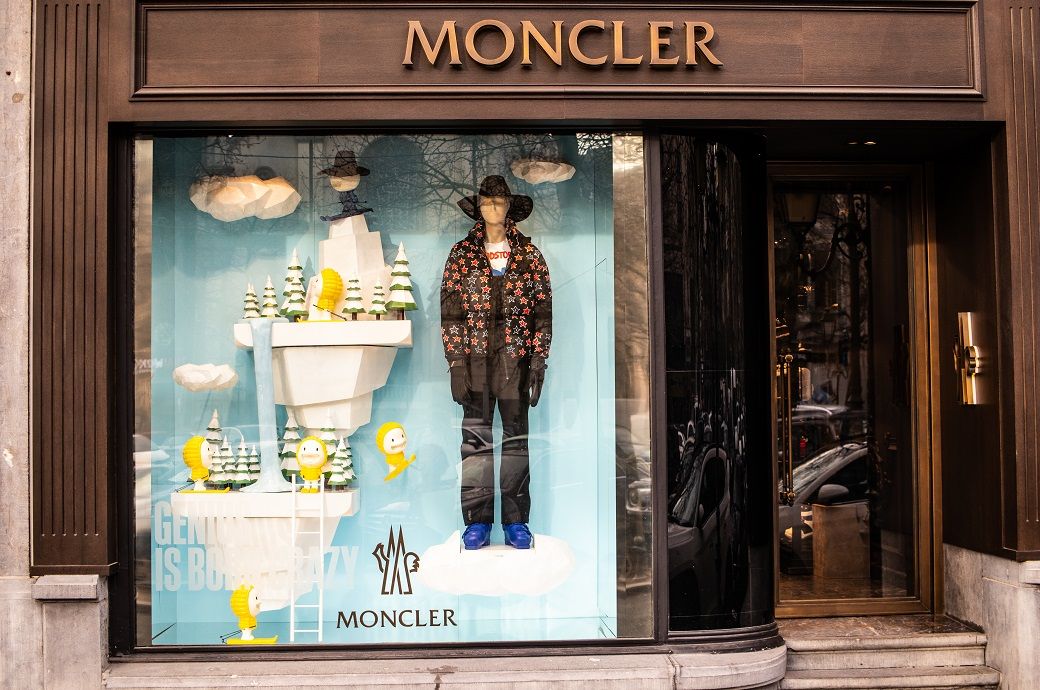
Moncler has reported revenues of €3.13 billion (~$3.69 billion) in FY25, up 3 per cent at constant exchange rates, with net profit of €626.7 million (~$739.5 million).
Asia led regional growth, while DTC channels strengthened across brands.
Q4 revenues rose 7 per cent, driven by robust Moncler and Stone Island performance, as the group prepares for continued investment and leadership transition.
Regionally, the group recorded strong momentum in Asia, where revenues rose 7 per cent at constant exchange rates to €1.42 billion, supported by demand in China and Korea and a recovery in tourist flows. The Americas increased 5 per cent to €391.1 million, whereas Europe, Middle East and Africa (EMEA) declined 3 per cent amid subdued tourism-related traffic, Moncler said in a press release.
Channel performance highlighted the continued shift towards direct engagement. Moncler’s direct-to-consumer (DTC) revenues rose 4 per cent to €2.36 billion, accounting for nearly 87 per cent of brand sales, while wholesale declined 4 per cent as the group continued to enhance distribution quality. Stone Island’s DTC channel expanded 11 per cent to €226.4 million, whereas wholesale decreased 4 per cent.
The group’s financial position strengthened further, with net cash reaching €1.46 billion at year-end after dividend payments of €353.2 million. The board proposed a dividend of €1.4 per share and approved the consolidated sustainability statement.
Remo Ruffini, chairman and CEO of Moncler, said: “Moncler and its board of directors wish to express their most sincere thanks to Gabriele Galateri di Genola for his dedication and the highly valuable contribution he has made throughout his more than ten-year term of office. His significant experience, the vision developed over many years in senior leadership positions at leading industrial and financial organisations, as well as his constant commitment to good governance, have represented a key point of reference for our work. With gratitude, we extend our best wishes to Gabriele Galateri di Genola for the future.”
In the fourth quarter (Q4), the group delivered accelerated momentum, with revenues rising 7 per cent at constant exchange rates to €1.29 billion (~$1.52 billion). Moncler brand revenues reached €1.17 billion, up 6 per cent, while Stone Island posted €123.1 million, surging 16 per cent with double-digit growth across all regions.
Moncler’s DTC channel advanced 7 per cent despite a demanding comparable base in the quarter, supported by Asia and the Americas, while wholesale returned to growth, rising 2 per cent. Stone Island recorded broad-based acceleration, with DTC revenues increasing 16 per cent and wholesale climbing 17 per cent, partly reflecting delivery timing shifts from the previous quarter.
Looking ahead, the group emphasised continued investment in brand development and organisational strengthening, including the appointment of Leo Rongone as group chief executive officer from April 2026, as it seeks to sustain long-term growth and value creation.
Fibre2Fashion News Desk (SG)


UAE makes history: Central Bank launches world’s first sovereign financial cloud with AI for secure digital finance – The Times of India

Duke of Kent marks 90 years of service with biography launch in London

USMNT’s Sargent joins Toronto after ‘unfortunate’ Norwich exit

-

 Tech1 week ago
A $10K Bounty Awaits Anyone Who Can Hack Ring Cameras to Stop Sharing Data With Amazon
-
 Business1 week ago
US Top Court Blocks Trump’s Tariff Orders: Does It Mean Zero Duties For Indian Goods?
-
 Fashion1 week ago
ICE cotton ticks higher on crude oil rally
-

 Tech1 week ago
Donald Trump Jr.’s Private DC Club Has Mysterious Ties to an Ex-Cop With a Controversial Past
-

 Entertainment1 week ago
The White Lotus” creator Mike White reflects on his time on “Survivor
-

 Politics6 days ago
Pakistan carries out precision strikes on seven militant hideouts in Afghanistan
-
 Business6 days ago
Eye-popping rise in one year: Betting on just gold and silver for long-term wealth creation? Think again! – The Times of India
-

 Sports1 week ago
Brett Favre blasts NFL for no longer appealing to ‘true’ fans: ‘There’s been a slight shift’