

Politics
Journalists in IIOJK asked by police to sign pledge vowing to keep peace

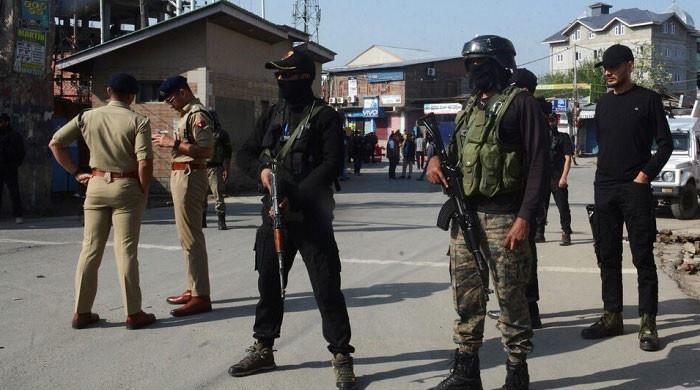
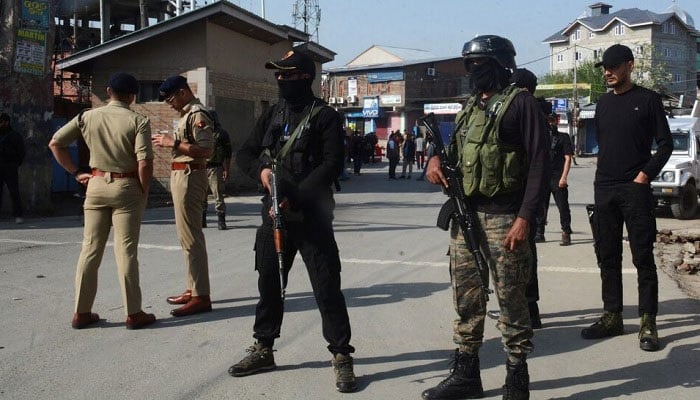
SRINAGAR: Police in Indian Illegally Occupied Jammu and Kashmir (IIOJK) have asked at least three journalists working in the disputed region to sign a pledge vowing not to “disturb peace” in the region, two of them told Reuters on Wednesday.
A third journalist, an assistant editor with the Indian Express newspaper, was summoned to a police station in Srinagar, but did not sign the pledge, the newspaper said in a report published on Wednesday.
India has imposed several restrictions in the disputed Himalayan region after revoking its constitutional autonomy in 2019, laying out rules for how the insurgency in the region is covered and reported.
A spokesperson for Srinagar police did not immediately respond to a request for comment from Reuters.
The Indian Express, one of India’s most respected dailies, said its journalist was summoned four times between January 15 and 19 and asked to sign the pledge on January 16.
“He has not signed the bond as asked by the police. The Indian Express is committed to doing what is necessary to uphold and protect the rights and dignity of its journalists,” the paper’s chief editor, Raj Kamal Jha, said in the report.
Two other journalists Reuters spoke to said they had also been summoned, but one of them was travelling, and the other did not go to the police station. They declined to be named because of the sensitive nature of the issue.
The journalists and the Indian Express said the summons were issued after they reported that police in the occupied valley were seeking information from mosques about their funding, management and budgets.
The Press Club of Kashmir, an association of journalists in the region, said in a statement dated Tuesday that several of its members had been either summoned or advised by police to stop covering stories on the profiling of religious institutions.
“Using police powers to summon journalists over their legitimate reporting is part of a pattern of intimidation against the media in Jammu and Kashmir,” Kunal Majumder, coordinator for the CPJ Asia-Pacific Programme, a non-profit that works for press freedom, said.
Politics
Police probe man for throwing ‘ignited’ devices near protest in front of Mayor Mamdani’s house
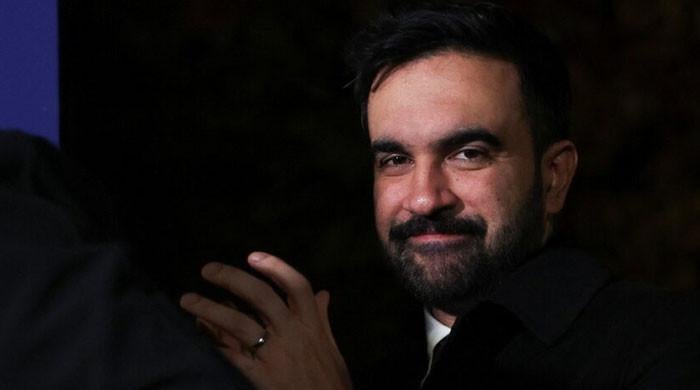
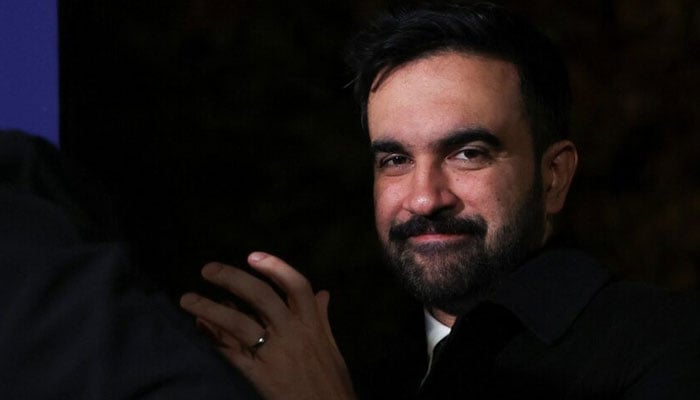
- Far-right influencer Jake Lang protests outside Gracie Mansion.
- Devices contained nuts, bolts and screws as well as a fuse.
- Suspect identified as 18-year-old Amir Balat, says NYPD chief.
NEW YORK: New York counterterror police said they were investigating on Saturday after a man threw “ignited devices” near far-right protesters demonstrating outside the mayor’s home.
NYPD Commissioner Jessica Tisch said the devices contained nuts, bolts and screws as well as a fuse — but it was not yet clear if they were functional improvised explosive devices, or hoax imitations.
The FBI New York said in an X post that its Joint Terrorism Task Force was “actively investigating”, along with New York City Police.
There was no indication the incident was related to the ongoing hostilities in Iran, Tisch added. Police arrested six people over unrest at the protest, she said, including two suspects in connection with the devices.
Far-right influencer Jake Lang was demonstrating against alleged “Islamification” and calling for an end to “public Muslim prayer” in New York in front of Gracie Mansion, the residence of Mayor Zohran Mamdani, who is Muslim.
His protest drew around 20 people, police said, while counterprotesters numbered about 125.
A man wearing a dark hooded sweatshirt and beige cargo pants was handed a device wrapped in tape and billowing smoke by a fellow activist. He dropped it near a line of police before vaulting a crash barrier.
The man also threw a similar device near Lang’s group of protesters.
“Witnesses reported seeing flames and smoke as it travelled through the air before it struck a barrier a few feet from police officers,” Tisch told a briefing, naming the suspect as Amir Balat, 18.
“Balat then… gets a second device from a man. Balat lights the device and starts running with it. He then drops the device.”
Moments later, he and the other man were detained by police, who were heavily deployed to the protest.
‘An idiot’
“The bomb squad responded and […] based on a preliminary examination and X-ray imaging, the devices which were a bit smaller than a football appeared to be a jar wrapped in black tape — importantly with nuts, bolts and screws along with a hobby fuse that could be lit,” Tisch added.
“We don’t yet know if they contained energetic [explosive] material.”
A demonstrator opposed to Lang, teacher Mia Kurzer, 23, told AFP she “showed up because we have to show that hate has no place in our city.”
“We democratically elected a mayor who is Muslim — and that’s New York. We have different cultures, and we have to celebrate those cultures.”
She added that “I think [Lang] is an idiot. I think he underestimates the power of the people.”
There were some scuffles, apparently between protesters and counterdemonstrators.
Police arrested six people, Tisch said, including a protester in Lang´s group who used pepper spray against counter-protesters, the two men who handled and threw devices and three others for disorderly conduct and obstructing traffic.
Tisch said she did not believe Mayor Mamdani was home.
Wally Khan, another protester opposed to Lang, told AFP “this is very in line with what he does from city to city. He tried to burn a Quran in […] Dearborn” Michigan.
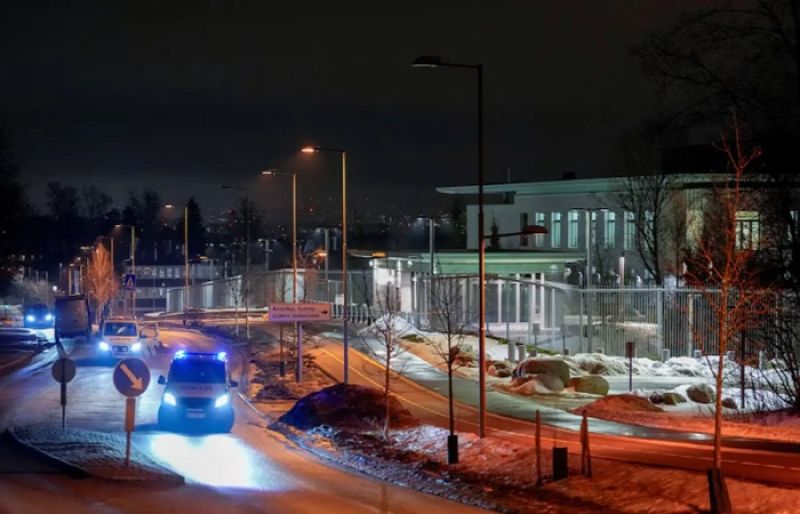

The US embassy in Oslo was hit by an explosion in the early hours of Sunday but no one was injured, police in the Norwegian capital said, adding the cause was not immediately known.
The blast occurred around 1am local time (0000 GMT) and caused only “minor material damage” to one of the building’s entrances, Oslo police said in a statement.
Investigators were examining the scene, while dogs, drones, and helicopters were involved in the search “for one or more potential perpetrators”, it said.
“Police view such incidents in public spaces as very serious, and are investigating the case with substantial resources and high priority.”
Police commander Michael Dellemyr told TV2 police would “not comment on anything related to the type of damage, what it is that has exploded and similar details, beyond the fact that there has been an explosion” because “it is very early in the investigation”.
He later told TV2 that police “have an idea of the cause”, adding: “It appears to us that this is an act carried out by someone.”
He said investigators were talking to witnesses, and TV2 reported that a bomb squad was at the scene.
Police said they were in contact with the embassy about the incident, and said several hours after the blast that the area around the building was considered “safe” for residents and passersby.
Police urged the public to report any tips or unusual observations from the area between midnight and 2am (2300 GMT and 0100 GMT).
Three ‘bangs’
US embassies have been placed on high alert in the Middle East over American military attacks in Iran and several have faced attacks as Tehran hits back at industrial and diplomatic targets.
But Dellemyr said there was no indication as yet that the incident at the embassy in Oslo was connected to the conflict.
“We’re not connecting it to the conflict. It’s far too early for that,” he told TV2.
Residents near the embassy described hearing the explosion.
A 16-year-old identified only as Edvard told TV2 that he was watching television when he heard the blast.
“My mother and I first thought it came from our house so we looked around a little, but then we saw the flashing lights outside the window and a ton of police,” he said.
“There were police dogs and drones and police with automatic weapons and helicopters in the air,” he said.
A group of three friends, meanwhile, told TV2 they were waiting for a taxi near the embassy when the explosion happened.
“We felt three ‘bangs’ that made the ground shake,” Kristian Wendelborg Einung said.
Once in their taxi, they drove past the scene and saw the street in front of the embassy covered in smoke.
“We arrived before the police. The blanket of smoke was very strange. It was like thick fog,” he said.
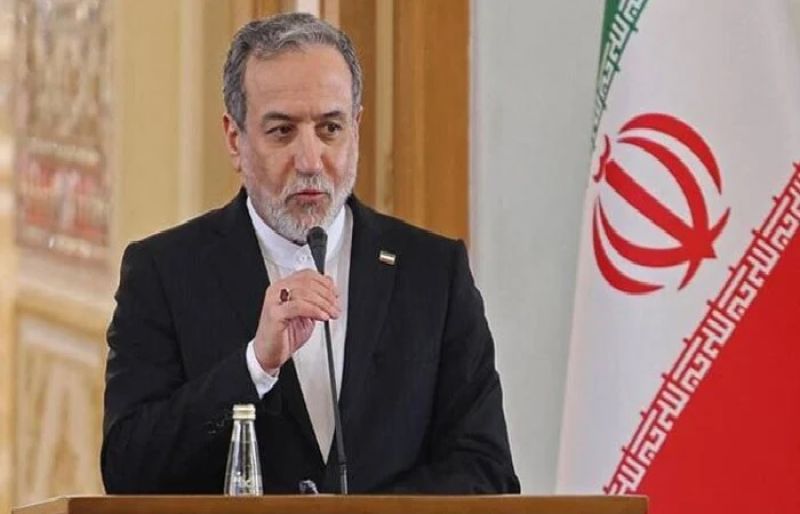

Iranian Foreign Minister Abbas Araghchi has blasted Washington’s reaction to President Masoud Pezeshkian’s extension of the hand of friendship to neighbors, saying that the gesture was almost immediately killed by US President Donald Trump.
“President Pezeshkian’s openness to de-escalation within our region — provided that our neighbors’ airspace, territory, and waters are not used to attack the Iranian People — was almost immediately killed by President Trump’s misinterpretation of our capabilities, determination and intent,” Araghchi wrote in a post published on his X account on Sunday.
He added that “If Mr. Trump seeks escalation, this is precisely what our Powerful Armed Forces have long been prepared for, and what he will get.”
Araghchi noted that responsibility for any intensification of Iran’s exercise of self-defense will lie squarely with the US administration.
The top Iranian diplomat highlighted that Trump’s week-long misadventure has already cost the US military $100 billion, in addition to the lives of young soldiers.
“When markets reopen, that cost will balloon, and directly be transferred to ordinary Americans at pumping stations,” he said.
Araghchi emphasized that Trump’s own National Intelligence Council, representing input from the 18 intelligence agencies of the US, determined that war on Iran is destined to fail.
The Iranian foreign minister went on to state that he had warned Trump’s envoys that war won’t improve Washington’s bargaining position, wondering whether such warnings were conveyed.
“The American People voted to end involvement in costly quagmires in the Middle East. Instead, they have ended up with an Administration that Netanyahu, after decades of failed attempts, finally managed to dupe into fighting Israel’s wars,” he said.
Araghchi finally described the ongoing US-Israeli aggression against Iran as “a war of choice pursued by a small cabal of ‘Israel Fighters,’ and ‘Israel First’ always means ‘America Last’.

Will John Lewis pay staff an annual bonus for first time in four years?

Police probe man for throwing ‘ignited’ devices near protest in front of Mayor Mamdani’s house

Left-Handed People Are More Competitive, Says Science

-

 Sports1 week ago
LPGA legend shares her feelings about US women’s Olympic wins: ‘Gets me really emotional’
-
 Entertainment1 week ago
Pakistan’s semi-final qualification scenario after England defeat New Zealand
-

 Fashion1 week ago
South Korea’s Misto Holdings completes planned leadership transition
-
 Business1 week ago
Greggs to reveal trading amid pressure from cost of living and weight loss drugs
-

 Entertainment1 week ago
Bobby J. Brown, “The Wire” and “Law & Order: SUV” actor, dies of smoke inhalation after reported fire
-
 Business1 week ago
CNBC To Merge TV And Digital News Operations, Nearly A Dozen Jobs To Be Cut: Report
-
 Entertainment1 week ago
What’s new in Pokémon? Every game, update, surprise from 30th anniversary event
-

 Politics1 week ago
Iran launches retaliation against Israel, launches ballistic missiles