

Business
JPMorgan Chase tops estimates as trading revenue hits a record of nearly $9 billion


JPMorgan Chase on Tuesday topped analysts’ estimates for the third quarter as trading and investment banking generated about $700 million more revenue than expected.
Here’s what the company reported:
- Earnings per share: $5.07 vs. expected $4.84, according to LSEG
- Revenue: $47.12 billion vs. expected $45.4 billion, according to LSEG
The bank said in a release that profit jumped 12% to $14.39 billion, or $5.07 per share, from a year earlier. Revenue rose 9% to $47.12 billion.
So far this year, the biggest American banks have benefited under the administration of President Donald Trump.
They’ve reaped higher trading revenue as upheaval from his policies has roiled markets around the world, forcing investors to reposition themselves. JPMorgan’s trading haul of $8.9 billion was a record for a third quarter, CEO Jamie Dimon said in the release.
Investment bankers are busier thanks to a more relaxed stance toward mergers, and Trump’s bank regulators have proposed ways to ease capital requirements and stress tests. Stock market indexes that are at or near record levels have helped the wealth management divisions of banks including JPMorgan.
Fixed income trading at JPMorgan jumped 21% in the quarter to $5.6 billion, about $300 million more than the StreetAccount estimate.
Equity trading surged 33% to $3.3 billion, also roughly $300 million more than expected.
Investment banking fees jumped 16% to $2.6 billion, edging out the $2.5 billion StreetAccount estimate.
Dimon said that while each of his major business lines performed well against a good economic backdrop, he was preparing the firm for possible turbulence ahead.
“While there have been some signs of a softening, particularly in job growth, the U.S. economy generally remained resilient,” Dimon said.
“However, there continues to be a heightened degree of uncertainty stemming from complex geopolitical conditions, tariffs and trade uncertainty, elevated asset prices and the risk of sticky inflation,” Dimon said. “As always, we hope for the best, but these complex forces reinforce why we prepare the firm for a wide range of scenarios.”
JPMorgan’s provision for credit losses rose 9% to $3.4 billion, exceeding the $3.08 billion estimate, indicating that the firm is preparing for higher loan defaults down the road.
Big banks have outperformed regional lenders so far this year; the KBW Bank Index has climbed nearly 15%, while the KBW Regional Banking Index has dropped roughly 1%.
Goldman Sachs, Citigroup and Wells Fargo also reported earnings Tuesday, with Bank of America and Morgan Stanley releasing results Wednesday.
This story is developing. Please check back for updates.





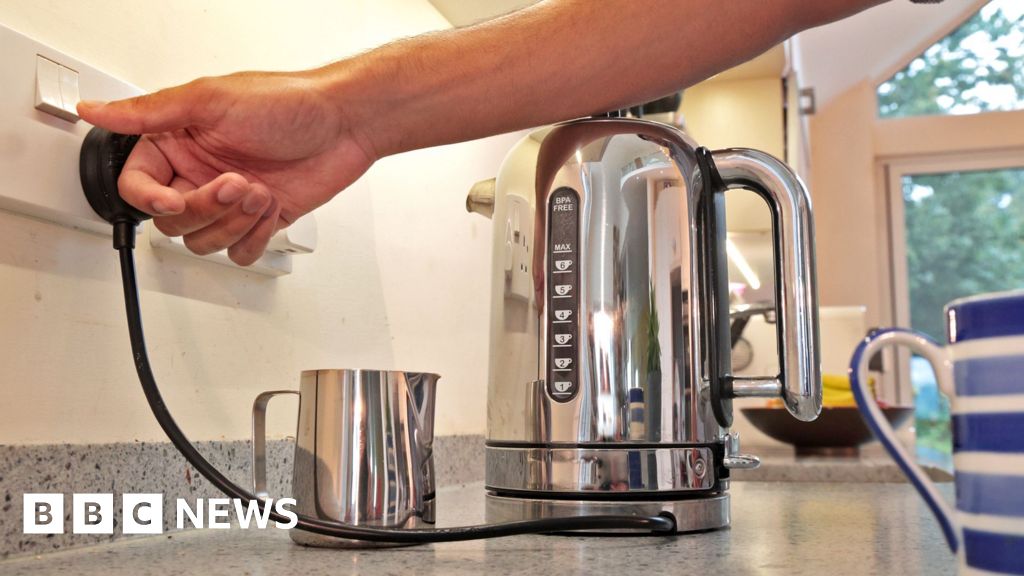
The war in the Middle East has brought renewed attention to Britain’s vulnerability to energy price shocks.
Source link
Business
Gadkari urges shift to 100% ethanol blending, flags energy security and import risks – The Times of India
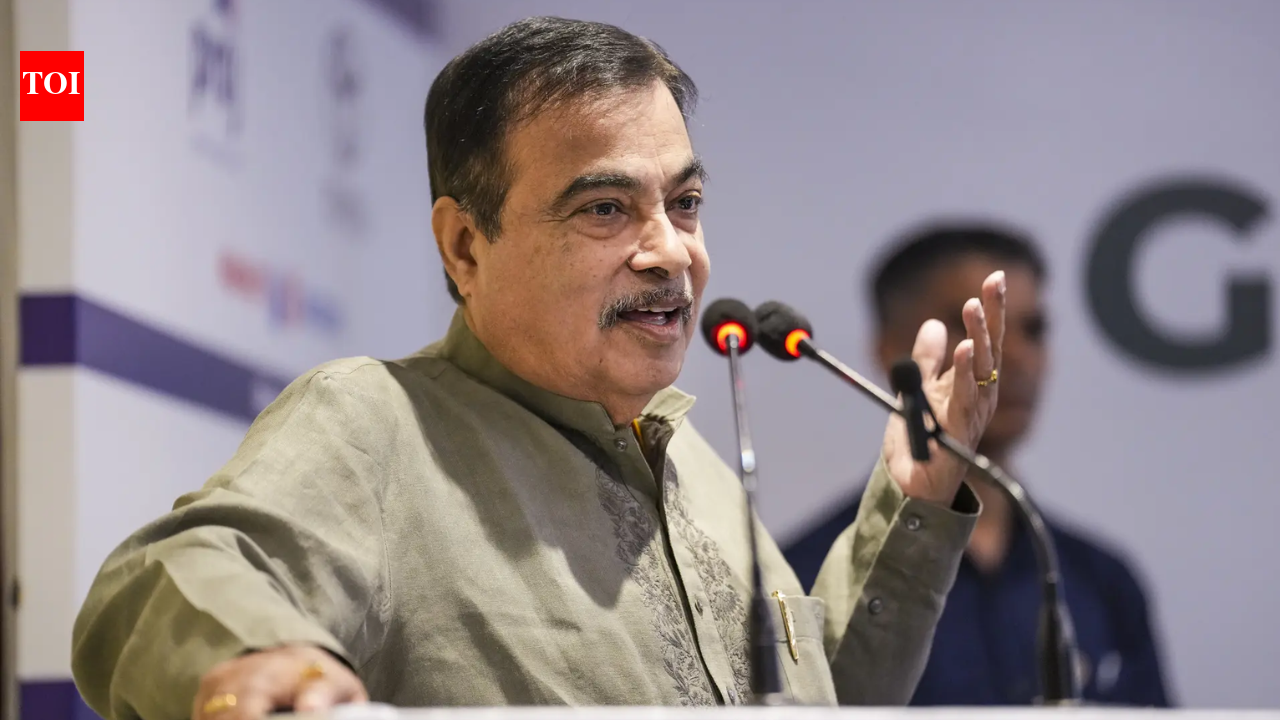
India should aim for 100 per cent ethanol blending in the near future to strengthen energy self-reliance, road transport and highways minister Nitin Gadkari said on Tuesday. He said that vulnerabilities in oil supplies due to the ongoing crisis in West Asia have made it essential for the country to reduce dependence on imports.Speaking at the Indian Federation of Green Energy’s Green Transport Conclave, Gadkari said, “In the near future, India should aspire to achieve 100 per cent ethanol blending… Today, we are facing an energy crisis due to the war in West Asia, so it is necessary for us to become self-reliant in the energy sector,” as quoted by PTI.India currently allows vehicles to run on E20 petrol, which contains 20 per cent ethanol, with minor engine modifications to avoid corrosion and related issues. In 2023, PM Modi launched petrol blended with 20 per cent ethanol. Countries such as Brazil have already achieved 100 per cent ethanol blending.Gadkari noted that India imports 87 per cent of its oil requirements, adding, “We import fossil fuels worth Rs 22 lakh crore, which is also causing pollution… so we need to work on increasing production of alternative fuel and bio-fuel.”On future energy solutions, he stressed the importance of green hydrogen but pointed out challenges in cost and transport. “Transport of hydrogen fuel is a problem. Also, we need to produce 1 kg of hydrogen at $1 dollar, to make India an exporter of energy,” he said, adding that hydrogen production from waste should be explored.The minister also emphasised the role of a circular economy in generating employment opportunities. While calling for reduced reliance on petrol and diesel vehicles, he clarified, “But we can not force people to stop buying petrol and diesel vehicles.”Addressing concerns about E20 fuel, Gadkari said the petroleum sector is lobbying against the move. He also urged automobile manufacturers to prioritise quality over cost to expand into new markets.Last year, Gadkari dismissed criticism against E20 (ethanol-blended petrol), saying a “paid” social media campaign is being run to “target me politically.” He said Society of Indian Automobile Manufacturers and Automotive Research Association of India have shared their findings on ethanol blending in petrol. He added that India’s ethanol programme has benefited farmers, noting that ethanol made from maize has helped them get better prices and led to gains of Rs 45,000 crore.

One petrol retailer says he is experiencing about five drive-offs a week at each forecourt, costing him thousands.
Source link

Electricity bills targeted in planned shakeup to energy pricing

Here’s what Jamaican legend told teen phenom?

I’ve Tested Gaming Laptops for Over a Decade. This Is What I Think You Should Buy

-

 Fashion5 days ago
France’s LVMH Q1 revenue falls 6%, shows resilience amid Iran war
-

 Sports1 week ago
The case for Man United’s Fernandes as Premier League’s best
-

 Entertainment1 week ago
Palace left in shock as Prince William cancels grand ceremony
-
 Business1 week ago
UK could adopt EU single market rules under new legislation
-

 Entertainment6 days ago
Is Claude down? Here’s why users are seeing errors
-

 Fashion1 week ago
Energy emerges as biggest cost driver in textile margins
-
 Business1 week ago
Delta Air Lines unveils first new Delta One suite in premium cabin arms race
-

 Tech6 days ago
The Deepfake Nudes Crisis in Schools Is Much Worse Than You Thought