Connect with us

Fashion

Kering confirms breach after hackers steal Gucci, Balenciaga and McQueen data

Published

on

Kering confirms breach after hackers steal Gucci, Balenciaga and McQueen data


By

Reuters

Published


September 15, 2025

Hackers have stolen the private details of potentially millions of customers from luxury fashion brands Gucci, Balenciaga and Alexander McQueen, according to a report by the BBC. The cyberattack targeted the labels’ French parent company, Kering.

Shiny Hunters claim cyberattack on Kering’s Gucci, McQueen and Balenciaga – DR

Kering confirmed the breach in a statement without naming the affected brands. It said that in June, “an unauthorized third party gained temporary access to our systems and accessed limited customer data from some of our Houses.”

The attack appears to be part of a broader wave of cyber incidents affecting global luxury brands and retailers this year.

Breaches have also occurred at Richemont’s Cartier and several labels owned by luxury group LVMH. In July, Hong Kong’s privacy watchdog announced an investigation into a data leak involving about 419,000 customers at LVMH’s Louis Vuitton.

According to the BBC report, the stolen client data includes names, email addresses, phone numbers, home addresses and the total amounts spent in-store.

Kering said no financial information—such as credit card or bank account numbers—was compromised.

The hackers, who identified themselves to the BBC as “Shiny Hunters,” claimed to have data linked to 7.4 million unique email addresses.

Kering stated that its brands immediately reported the breach to the appropriate authorities and notified customers in accordance with local regulations. The company declined to specify which countries were affected when asked by Reuters. 

© Thomson Reuters 2025 All rights reserved.


Source link

Continue Reading
Click to comment

Leave a Reply

Your email address will not be published. Required fields are marked *

Fashion

India Budget signals manufacturing depth & cluster-led textile growth

Published

on

India Budget signals manufacturing depth & cluster-led textile growth


India’s textile, apparel and MSME ecosystem has interpreted the India Budget 2026–27 as a signal of intent rather than headline-driven announcements, with industry leaders pointing to a clear policy shift towards manufacturing depth, cluster-based growth and long-term competitiveness.

From a global sourcing and export perspective, Sanjay Jain, Group CEO of PDS Ltd, welcomed the integrated vision outlined in the Budget. “As a sector that provides direct employment to over 45 million people and supports nearly 100 million livelihoods indirectly, these measures are both timely and impactful,” he said. Jain highlighted the thrust on public capital expenditure, champion MSMEs, Samarth 2.0 and Tex-Eco, adding that PM MITRA parks and cluster modernisation will help reduce import dependence and strengthen MMF apparel and technical textiles. “This Budget reinforces confidence in India’s journey towards becoming a globally integrated, high-quality manufacturing hub,” he said.

Highlighting supply-chain realignments, Priyavrata Mafatlal, vice-chairman of Arvind Mafatlal Group and MD of Mafatlal Industries, said the Budget improves planning visibility for manufacturers. “The thrust on fibre supply, scale and value addition will help stabilise input costs, improve margins and enable positive investment decisions,” he said. Mafatlal also welcomed the focus on skilling aligned with automation, digitalisation and AI, calling it essential to bridge the industry’s employability gap.

India’s textile and apparel industry views the Budget 2026–27 as a strategic signal focused on manufacturing depth, MSME-led growth and long-term competitiveness rather than headline announcements.
Industry leaders highlighted cluster revival, MSME financing, skilling and sustainability as key positives, while flagging unresolved concerns around power costs and fibre competitiveness.

Gautam Ganeriwal, executive director of Sitaram Spinners Pvt Ltd, said the Budget reflects learning from ground realities. “Every Budget needs to be read not for announcements, but for intent. From a textile industry lens, today’s Budget carries a clear signal: India wants manufacturing depth, not just manufacturing headlines,” he said. Ganeriwal highlighted the Integrated Programme for Textiles, revival of 200 legacy clusters, strengthened MSME finance through TReDS, and professional support via Corporate Mitras as meaningful interventions. However, he noted that cost competitiveness remains unresolved, citing power tariffs, cross-subsidies and fibre cost distortions, while calling for the removal of import duty on cotton and MMF raw materials.

From a policy and advisory lens, Kanishk Maheshwari, co-founder and MD of Primus Partners, said textiles have emerged as a spotlight sector. “The focus on modernised infrastructure and skill upgradation will provide a significant boost to foreign investments and link indigenous textile units to global value chains,” he said.

MSME-focused reforms were another major theme. Rohit Mahajan, founder and managing partner of Plutos ONE, said the ₹10,000 crore MSME Growth Fund marks a decisive shift from subsidies to scale-led competitiveness. “The integration of GeM with TReDS and the move to make receivables tradable as asset-backed securities directly address working capital challenges and lower the cost of capital for MSMEs,” he said, adding that such reforms will support tariff-resilient, export-ready enterprises.

Echoing long-term optimism, Nitin Jain, founder of Ivyn, said the revival of 2,000 clusters, creation of the MSME growth fund and establishment of mega textile parks signal sustained commitment. “These measures will modernise the textile and garment ecosystem, enabling scale, innovation and global competitiveness,” he said.

Industry stakeholders said that while the Budget sets a strong structural direction for textiles, garments and MSMEs, effective implementation, power-sector reforms and fibre cost competitiveness will be critical to translating intent into sustained growth.

New-age D2C fashion brands have welcomed the Budget, saying its export-oriented measures, cluster modernisation and sustainability focus create a stronger foundation for Indian brands looking to scale globally while building value-added manufacturing at home. Siddharth Dungarwal, founder of Snitch, said the Budget takes a decisive step towards positioning India as a global textile and apparel powerhouse. “The focus on export enablement, duty rationalisation for leather and synthetic goods, and the removal of the courier export value cap will significantly benefit brands and manufacturers looking to scale internationally,” he said.

Dungarwal added that the integrated policy approach covering fibres, skilling, cluster modernisation, sustainability and technical textiles reflects a long-term vision for the sector. “For new-age D2C brands and exporters, this Budget creates the right foundation to compete globally while building value-added manufacturing capabilities in India,” he said.

From the perspective of women-led D2C businesses, Tejasvi Madan, founder of Beyond Bound, said the Budget could go further in addressing the specific needs of emerging fashion exporters. She called for a dedicated export-readiness programme for D2C fashion brands, faster GST refunds and duty drawback timelines, and simplified cross-border payment and forex compliance.

Madan also highlighted the need for special credit lines and incubation support for women-founded apparel start-ups, along with plug-and-play shared manufacturing facilities and capital subsidies for flexible, small-batch production. “Incentives for sustainable and circular fashion, R&D support for next-generation fabrics, modern skilling for athleisure and technical apparel, and a ‘Made in India Activewear’ global branding mission would significantly accelerate responsible growth,” she said.

Industry observers said the Budget’s export facilitation measures and manufacturing-led focus provide momentum for India’s fast-growing D2C fashion ecosystem, while targeted policy refinements could further help home-grown brands compete in global markets.

Fibre2Fashion News Desk (KUL)


Source link

Continue Reading

Fashion

Intertextile Shanghai 2026 to debut pet boutique zone

Published

on

Intertextile Shanghai 2026 to debut pet boutique zone


China’s pet economy is booming, especially amongst younger generations, and pet apparel – from designer outfits to functional garments – was a RMB 3.5 billion (over USD 500 million) market in 2024, growing more than 20% annually.To help exhibitors harness this trend, Intertextile Shanghai Apparel Fabrics – Spring Edition 2026 will launch the Pet Boutique, presenting a range of innovative, sustainable materials that prioritise both functionality and comfort for pets. The display area will be adjacent to a larger, restructured Functional Lab, with both that zone and Econogy Hub showcasing textiles that tie ‘eco’ with technical performance, a strong focus in the global market. This spring, over 3,000 exhibitors will unveil the season’s innovations across 190,000 sqm at the National Exhibition and Convention Center in Shanghai.

Intertextile Shanghai Apparel Fabrics – Spring 2026 will introduce a Pet Boutique zone tapping China’s fast-growing pet apparel market, alongside an expanded Functional Lab and larger Econogy Hub highlighting sustainable, performance textiles.
Over 3,000 exhibitors will showcase innovations from March 11–13 at Shanghai’s National Exhibition and Convention Center.

In China, pet ownership is on the rise, as is annual spending per pet, with both factors leading to astronomical growth and a pet market that could be worth RMB 1.15 trillion (over USD 164 billion) by 2028. As such, Intertextile Apparel is set to launch the Pet Boutique display area at its upcoming edition from 11 – 13 March, allowing textile suppliers to feature a range of pet-ready fabrics, accessories and apparel for buyers to explore. Exhibitors with samples on show include Lenzing, showing how renewable wood-based fibres can be used for pet products; Idole, using SOLOTEX to create textiles that blend fashion and function; as well as SilkIPEK Tekstil; Heng Li String and Braid; G.K Infinite; and more.

Younger generations born in the 1990s and 2000s are influencing market trends towards premium pet products, while functional garments, such as those with odour control and cold and wet weather protection, make up more than 60% of China’s pet apparel market – hence the display area’s focus on superior, performance-related exhibitors and its positioning beside Functional Lab.

Functional Lab reimagined in 2026

The product zone will expand in scale by over 30% compared to the previous Spring Edition, reflecting Chinese consumers’ increasing participation in outdoor activities ranging from dog walking to trail running. Within the zone, THE CUBE will feature a new product presentation and display area – mirroring the integrated layout that has proven so effective at Econogy Hub. Key exhibitors who have confirmed their participation at the new-look Functional Lab include:

  • 3M China: 3M will draw special attention to its Thinsulate Insulation, encompassing extremely fine microfibres with a high warmth-to-thickness ratio that enables garment design with less bulk and enhanced freedom of movement.
  • Hyosung: among other offerings, the world’s largest manufacturer of spandex will feature various CREORA materials, with diverse applications spanning warming, cooling, weight and colour.

Other highlighted exhibitors within the zone include knitted fabric specialists such as Regen-tech Fashion (eco-functional), Henglun Textile (denim), and HiLite Textile (fashion and casualwear).

Innovation front and centre at Econogy Hub

Ideal for humans and their furry companions, sustainable textiles are increasingly being integrated with functional properties like UV resistance, insulation and antibacterial performance. At the fair, Econogy Hub – which has also grown in scale – will give a vital platform to industry players showcasing eco-friendly textiles covering both fashion and function, as well as certification and traceability solutions. Featured exhibitors include:

  • Ecocert (Pavilion): the certifier strives to enable production processes that respect the environment, quality and safety, and the Ecocert Pavilion will gather its downstream textile partners showcasing knitted fabrics, cashmere, and more.
  • PEELSPHERE: the company converts non-food agricultural waste into 100% bio-based plant fibre leather that combines performance with fashionable aesthetics, as well as providing sustainable fashion service solutions.
  • TextileGenesis, a Lectra company: provides a one stop traceability and market compliance solution for the apparel ecosystem, custom-built for premium and sustainable textiles such as wood-based fibres, premium cotton, specialty filaments, silk, wool and cashmere.

Buyers with ‘green’ sourcing requirements can filter eco-focused exhibitors through the Econogy Finder, a directory that draws attention to companies across the fairground whose sustainability has been further verified through the independent Econogy Check. In the apparel textile industry, numerous suppliers are treating sustainable materials as a non-negotiable element. Several will feature as prominent exhibitors at the upcoming fair and on its Econogy Finder, including notable cellulosic fibre producers Asahi Kasei, Eastman, and Grasim Industries, as well as eco-denim suppliers Burlington and Diamond Fabrics, both of which will be showcasing in Econogy Hub for the first time.

For fashion brands and other industry players, the ability to verify sustainability is crucial. When exhibiting at the previous Spring Edition, Ms Sun Rui, Sales Account Manager of Beijing Ecocert Certification Center Co Ltd, said: “Ecocert played a pivotal role at Econogy Hub, where we have gathered our partners to showcase their collections, presented our own certification solutions, and shared our vision for sustainability at Econogy Talks. This has enabled more buyers to recognise that a French certification body is actively advancing sustainability initiatives in China. We connected with apparel brands, garment manufacturers, yarn and fabric suppliers, and others. The zone’s focused display and seminar format provided an exceptional platform for industry exchange, helping both us and our clients better understand policies and development trends.”

The fair is co-organised by Messe Frankfurt (HK) Ltd; the Sub-Council of Textile Industry, CCPIT; and the China Textile Information Centre. It will take place alongside Yarn Expo Spring, Intertextile Shanghai Home Textiles – Spring Edition, CHIC and PH Value at the National Exhibition and Convention Center (Shanghai).

Intertextile Shanghai Apparel Fabrics – Spring Edition will be held from 11 – 13 March 2026.

Other upcoming shows:

Vietnam International Trade Fair for Apparel, Textiles and Textile Technologies

26 – 28 February 2026, Ho Chi Minh City

Intertextile Shenzhen Apparel Fabrics / Yarn Expo Shenzhen

9 – 11 June 2026, Shenzhen (Futian)

Intertextile Shanghai Apparel Fabrics – Autumn Edition / Yarn Expo Autumn

25 – 27 August 2026, Shanghai

Note: The headline, insights, and image of this press release may have been refined by the Fibre2Fashion staff; the rest of the content remains unchanged.

Fibre2Fashion News Desk (HU)


Source link

Continue Reading

Fashion

Indian textile players hail Budget’s ESG & circularity thrust

Published

on

Indian textile players hail Budget’s ESG & circularity thrust


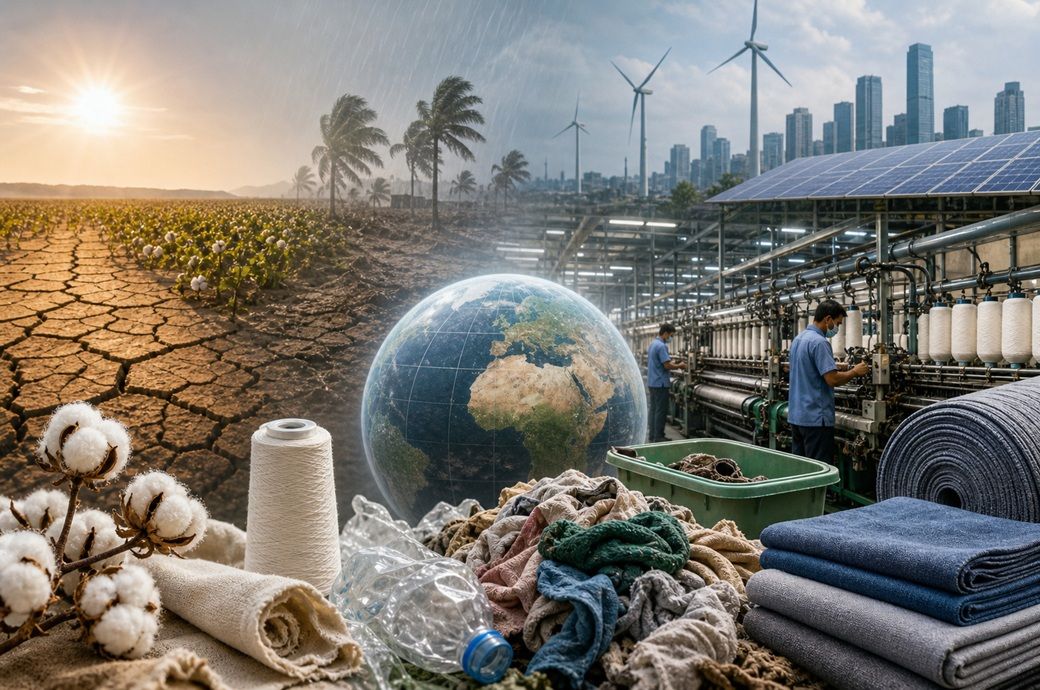
India’s textile and fashion industry has welcomed the Union Budget 2026–27’s strong emphasis on sustainability, circularity and responsible manufacturing, calling it a timely shift as global markets tighten environmental expectations and ESG-linked sourcing becomes a key determinant of competitiveness.

Industry stakeholders said the Budget signals a transition away from volume-driven growth towards a value-led, low-carbon and traceable textile ecosystem, supported by initiatives such as the Text-ECO initiative, the National Fibre Scheme, Samarth 2.0, and sustainability-linked capacity building.

Indian textile industry has welcomed the Budget for its strong focus on sustainability, circularity and responsible manufacturing.
Industry leaders said the measures signal a shift towards value-led, low-carbon and traceable growth.
Initiatives such as Text-ECO, Samarth 2.0 and the National Fibre Scheme are seen as strengthening competitiveness, skills and sustainable sourcing across the value chain.

Shruti Singh, Country Director–India at Canopy Planet, said, “This Budget creates enabling conditions for India to lead in manufacturing of low carbon textile fibres and paper packaging. Investing in circular material ecosystems can meet business ESG goals, create domestic fibre security and global export competitiveness,” she said. Singh added that as demand grows across textiles, packaging and paper-based applications, the real test will lie in responsible sourcing. “For companies linked to forest-based supply chains, this is a moment to strengthen traceability, reduce deforestation risk, and move sustainability from intent to execution,” she noted.

From a fashion brand perspective, Amar Nagaram, co-founder of Virgio, said the Budget clearly links sustainability with innovation and design-led growth. “India’s next phase of growth will be driven by the convergence of design, technology and sustainability. The emphasis on sustainable textiles, MSME scale-up, AI-led innovation and design education reflects a long-term vision to move Indian manufacturing up the global value chain,” he said. Nagaram added that the policy direction supports responsible production, data-driven decision-making, and positions India as a credible global hub for future-ready fashion and lifestyle businesses.

At the manufacturing end, Sabhari Girish, chief sustainability officer at Sulochana Cotton Spinning Mills, Tiruppur, said that sustainability and circularity receiving prominence in the Budget is encouraging for the sector. “Circularity and sustainability taking a prominent spot in the Budget speech is a positive signal. The announcement of Text-ECON will help Indian textile companies showcase their environmentally friendly contributions to the world,” he said. Girish noted that upcoming FTAs with the UK and EU are expected to sharpen the focus on sustainability, adding that Samarth 2.0 will play a critical role in skilling the workforce with updated technologies across the value chain, from fibre to garments.

He also pointed out that the National Fibre Scheme could enhance the quality and global competitiveness of Indian-made fibres, though capital-intensive modernisation will require a clear funding roadmap. “Adopting best practices needs more support, and a proper roadmap will help indigenous fibres take centre stage,” Girish said, while welcoming the proposal to upgrade sports goods manufacturing as a boost for R&D and technical textiles.

Industry experts said the Budget’s sustainability-led approach aligns closely with stricter environmental regulations in markets such as the EU and UK, and could strengthen India’s positioning as a responsible, compliant and future-ready sourcing destination.

Fibre2Fashion News Desk (KUL)


Source link

Continue Reading

Trending