

Business
Kimberly-Clark agrees to buy Tylenol owner Kenvue in $48.7 billion deal, creating consumer staples giant


Huggies, manufactured by Kimberly-Clark and Band-Aid, manufactured by Kenvue.
Getty Images
Kimberly-Clark announced Monday it’s struck an agreement to buy Kenvue in a deal valued at $48.7 billion that would create a consumer staples giant.
The deal is a combination of cash and stock and totals about $40 billion on an equity basis, excluding the impact of debt. Shares of Kenvue surged 15% Monday, while Kimberly-Clark stock fell 13%.
The combined company would bring together brands like Huggies and Kleenex with the likes of Band-Aid and Tylenol. It would include 10 billion-dollar brands, the companies said in a news release. The acquisition would be one of the largest on Wall Street this year.
The transaction is expected to close in the second half of 2026.
Kimberly-Clark Chairman and CEO Mike Hsu said in a statement that the companies share a “commitment to developing science and technology to provide extraordinary care.”
“Over the last several years, Kimberly-Clark has undertaken a significant transformation to pivot our portfolio to higher-growth, higher-margin businesses while rewiring our organization to work smarter and faster,” Hsu said. “We have built the foundation and this transaction is a powerful next step in our journey.”
Kenvue, a portfolio of consumer health brands, spun out of Johnson & Johnson in May 2023, marking the biggest shake-up in J&J’s nearly 140-year history. Since then, Kenvue shares have fallen almost 35% from their initial public offering price. As of Friday’s close, Kenvue traded at about $14 per share for a market cap of roughly $27 billion.
J&J has sold all of its remaining stake in the consumer goods giant.
The deal comes just weeks after President Donald Trump made unfounded claims linking the use of acetaminophen — the active ingredient in Tylenol — during pregnancy to an increased risk of autism, sending Kenvue’s stock sharply lower. The company has staunchly pushed back against his administration’s accusation, and many medical experts say Tylenol is often the safest and only option for pain and fever relief in pregnant women.
Acetaminophen is used by upward of 100 million Americans annually.
Kenvue Chair Larry Merlo said in a statement that following a comprehensive strategic review, the board is “confident this combination represents the best path forward for our shareholders and all other stakeholders.”
Three Kenvue board members will join the Kimberly-Clark board upon the deal’s closing. Hsu will continue to serve as chairman and CEO.
The combined company would generate estimated 2025 annual net revenue of roughly $32 billion and adjusted earnings before interest, taxes, depreciation and amortization of approximately $7 billion, according to the release.
Kimberly-Clark and Kenvue expect about $1.9 billion in cost synergies from the transaction to be realized in the first three years following the deal’s close.
The acquisition comes as Kimberly-Clark and the broader consumer packaged goods industry try to address shifting demand and shopping behavior, often through deal-making and divestitures.
Tariffs imposed by Trump’s administration have challenged the industry and its profits as key commodities like pulp, which is used to make tissues and diapers, grow more expensive.
At the beginning of 2025, Kimberly-Clark stopped making private-label diapers for Costco to focus on more premium brands that command higher margins.
In June, the company sold a majority stake in its international tissue business to Brazilian pulp maker Suzano. The resulting joint venture is intended to shield Kimberly-Clark from volatile input costs and help stabilize its margins.
Once the deal closes, Kimberly-Clark will own health-care brands like Sudafed and Pepcid, once again pitting the company against rival Procter & Gamble, which has a health-care division that includes Pepto-Bismol and Vicks.
But even with Kimberly-Clark’s blockbuster acquisition, P&G still dwarfs its rival in both enterprise value and annual revenue. P&G has a market cap of about $350 billion.
Similar to Kenvue, other spinoffs have also recently proven to be popular acquisition targets. Last year, candy maker Mars announced plans to buy Kellanova, a snacking-centric spinoff of Kellogg, while Ferrero bought W.K. Kellogg, the cereal stand-alone, this year.





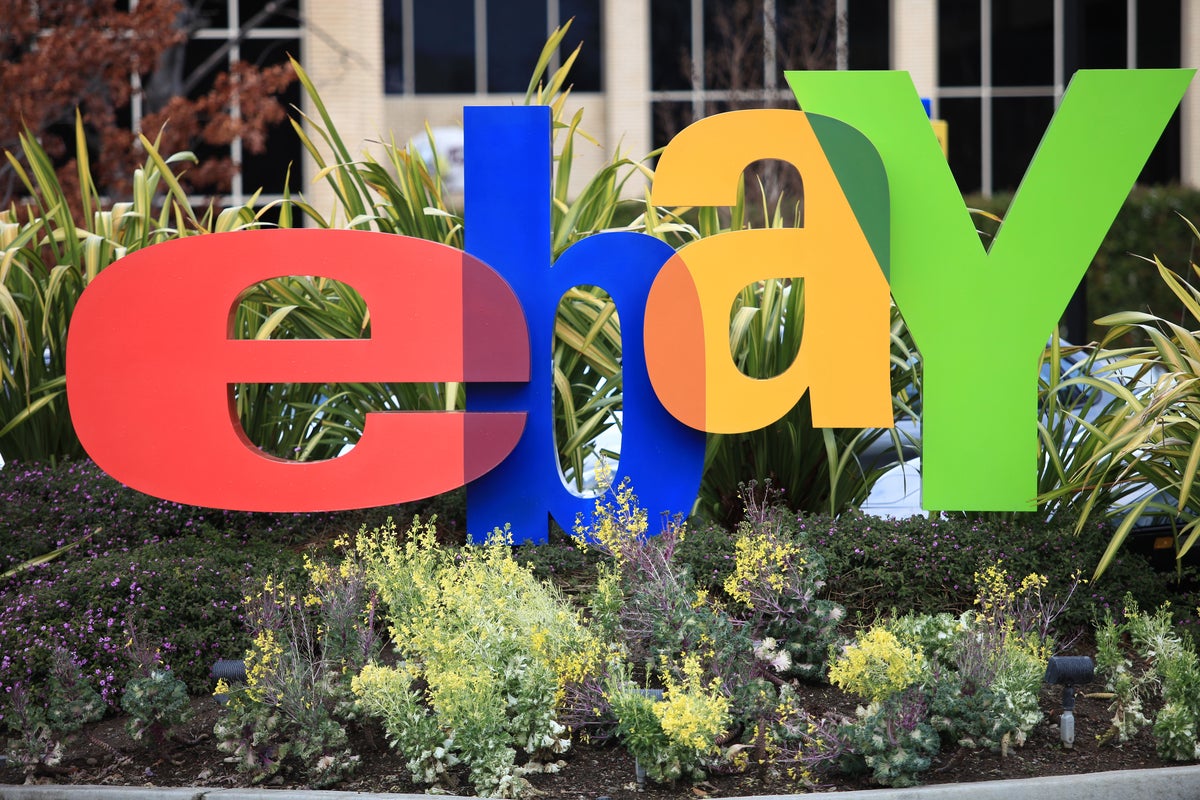
EBay has turned down a 56 billion US dollar (£41.4 billion) takeover move from GameStop, labelling the proposal as “neither credible or attractive”.
GameStop boss Ryan Cohen launched an unsolicited offer of 125 dollars (£92.40) per share – half in cash and half in GameStop stock – to eBay shareholders last week.
However, the online marketplace’s board confirmed on Tuesday that it had now rejected the move.
In a letter, eBay chairman Paul Pressler said it reviewed the offer but believes that eBay is a “strong, resilient business”.
He added: “We have sharpened our strategic focus, strengthened execution, enhanced our marketplace and seller experience, and consistently returned capital to shareholders.
“With its differentiated global marketplace and a clear strategy, eBay’s board is confident that the company, under its current management team, is well-positioned to continue to drive sustainable growth, execute with discipline, and deliver long-term value for our shareholders.”
GameStop, which runs around 1,600 shops around the US, said it started accumulating eBay shares earlier this year and currently has a 5% stake.
Mr Cohen had previously indicated he would take his proposal directly to eBay shareholders if the company’s board rejected the deal.
Business
India’s retail inflation jumps to over one-year high at 3.48 per cent in April – The Times of India

India’s retail inflation rose to a more than one-year high of 3.48 per cent in April from 3.40 per cent in March, driven mainly by higher food prices, according to data released by ministry of statistics & programme implementation on Monday. Food inflation, measured by the Consumer Food Price Index (CFPI), also accelerated to 4.20 per cent in April from 3.87 per cent last month, indicating broader price pressures across household essentials. Meanwhile, inflation in rural areas stood at 3.74 per cent, higher than the 3.16 per cent recorded in urban India.Among key items, silver jewellery recorded the sharpest inflation at 144.34 per cent in April, though slightly lower than 148.42 per cent in March. Gold, diamond and platinum jewellery inflation also remained elevated at 40.72 per cent. Among key food items, tomato prices surged 35.28 per cent year-on-year in April, while potato and onion prices remained in deflation at minus 23.69 per cent and minus 17.67 per cent, respectively. The personal care and miscellaneous goods category recorded the sharpest inflation at 17.66 per cent, while transport inflation remained largely flat at minus 0.01 per cent. India’s retail inflation has now risen for the second consecutive month, inching closer to the Reserve Bank of India’s 4 per cent medium-term target. The RBI last month projected CPI inflation for 2026-27 at 4.6 per cent and warned that elevated global energy prices due to the Middle East conflict, along with possible El Niño conditions affecting the monsoon, could pose upside risks to inflation.
Business
From buying less gold to cashing in old reserves: How bullion industry plans to cut India’s import bill – The Times of India
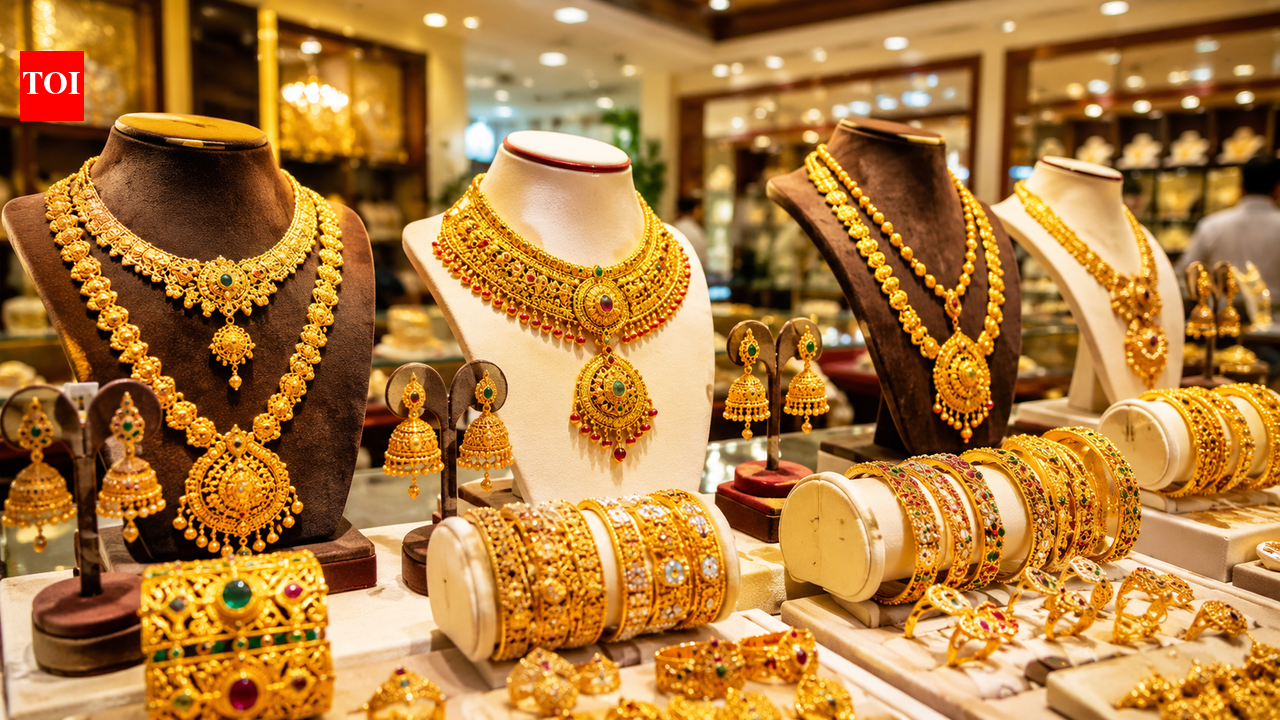
As rupee continues to breach multiple record lows, pressure on India’s balance of payments is growing. To protect foreign exchange reserves and help stabilise trade balance, Prime Minister Narendra Modi has urged people to cut down on gold purchases.But if not buying new gold, could household gold be turned into working capital instead?PM Modi’s call has brought fresh attention to an old issue, with major bullion and jewellery bodies once again suggesting steps to the government and the Reserve Bank of India (RBI) to reduce gold imports, use more household gold, and better manage how imported gold is used.Their proposals include limiting imported gold mainly for jewellery exports, bringing jewellers into gold monetisation schemes, making gold metal loans (GML) work more like bank cash credit, and reducing tax on interest earned from gold deposits, ET reported.Meanwhile, India’s gold imports jumped 24% to a record $71.9 billion in 2025-26, with more than 721 tonnes imported during the financial year.What are the proposals:Under the system proposed by the Precious Metals Refineries Forum (PMRF), imported gold would be channelled as one-year gold metal loans (GML) for jewellery exporters, while gold collected from household deposits, once refined locally, would be used to meet domestic demand through jewellers and retailers.The model suggests that depositors could earn 2-2.5%, with GML interest rates set at around 3-4%.Industry players cited by ET have pointed out that some tax changes will be needed to make this work, especially when physical gold is converted into electronic gold receipts (EGR).“The 3% notional loss of GST amount on conversion puts off customers. The government can always recover the tax when EGR is converted back into physical gold for selling. Concessions on capital gains when deposit is encashed on maturity along with income tax relief on accrued interest could be considered,” James Jose, president of PMRF told the financial daily.Why past gold schemes failed Many in the industry believe earlier gold monetisation schemes did not succeed because jewellers were not properly included and because gold deposits and loans did not work together like a banking system. Without that, institutions accepting gold deposits face major risks from price swings and currency changes.This is why trade bodies are calling for a more complete system with bank support, secure vaults in multiple locations, renewable GMLs like working capital, and proper collateral safeguards.Indian households are estimated to hold over 30,000 tonnes of gold, but despite repeated discussions during times of trade deficit and capital outflows, there is still no strong institutional system to bring this gold into the formal economy.Commenting on why earlier schemes did not work, Rajesh Rokde, chairman of All India Gem and Jewellery Domestic Council (GJC) said, “I feel the schemes did not take off because jewellers were not part of them. About 10-20% of the gold with families would be in bullion form. Most don’t sell, expecting prices to rise. If some gold can be tapped, if necessary purified and converted into digital gold in a system where jewellers are involved, imports would dip significantly,” According to one representation, collection and purity testing centres (Cptcs) and related agencies have said that collected gold can be processed within 48 hours before being moved by logistics firms to secure bank-approved vaults.Sources said members of the Indian Bullion and Jewellers Association (IBJA) held discussions with central bank officials last week on exports and monetisation, though the IBJA spokesman declined to share details.


Stars of "Dutton Ranch" on reprising their "Yellowstone" roles for the spinoff

2025-26 NBA Title Odds: Thunder, Spurs Favored; Knicks Rising

Vietnam, Sri Lanka to boost logistics, textiles cooperation

-

 Politics1 week ago
Iran weighs US reply delivered via Pakistan as Trump signals opposition to deal terms
-

 Tech1 week ago
DHS Demanded Google Surrender Data on Canadian’s Activity, Location Over Anti-ICE Posts
-
 Business1 week ago
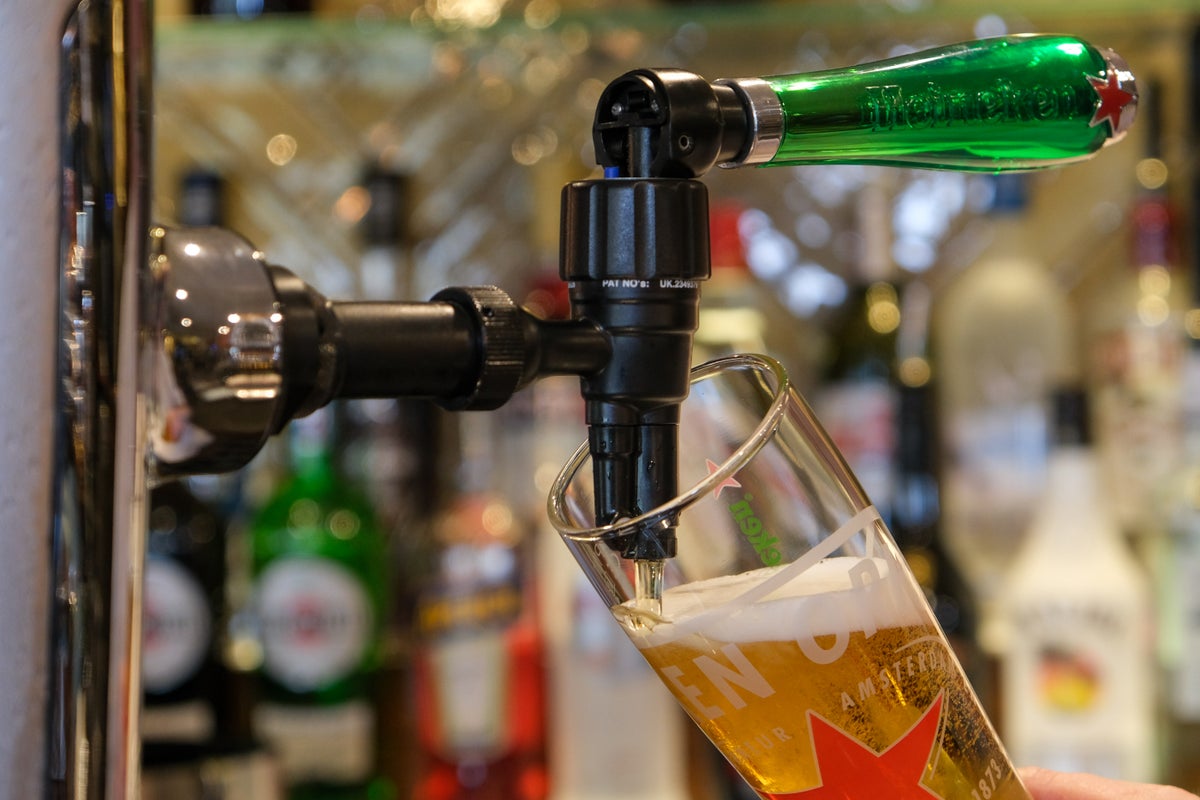
Heineken to invest £44.5m in hundreds of pubs creating 850 jobs
-

 Entertainment1 week ago
Jelly Roll reacts to daughter Bailee Ann’s major life milestone
-
 Business1 week ago
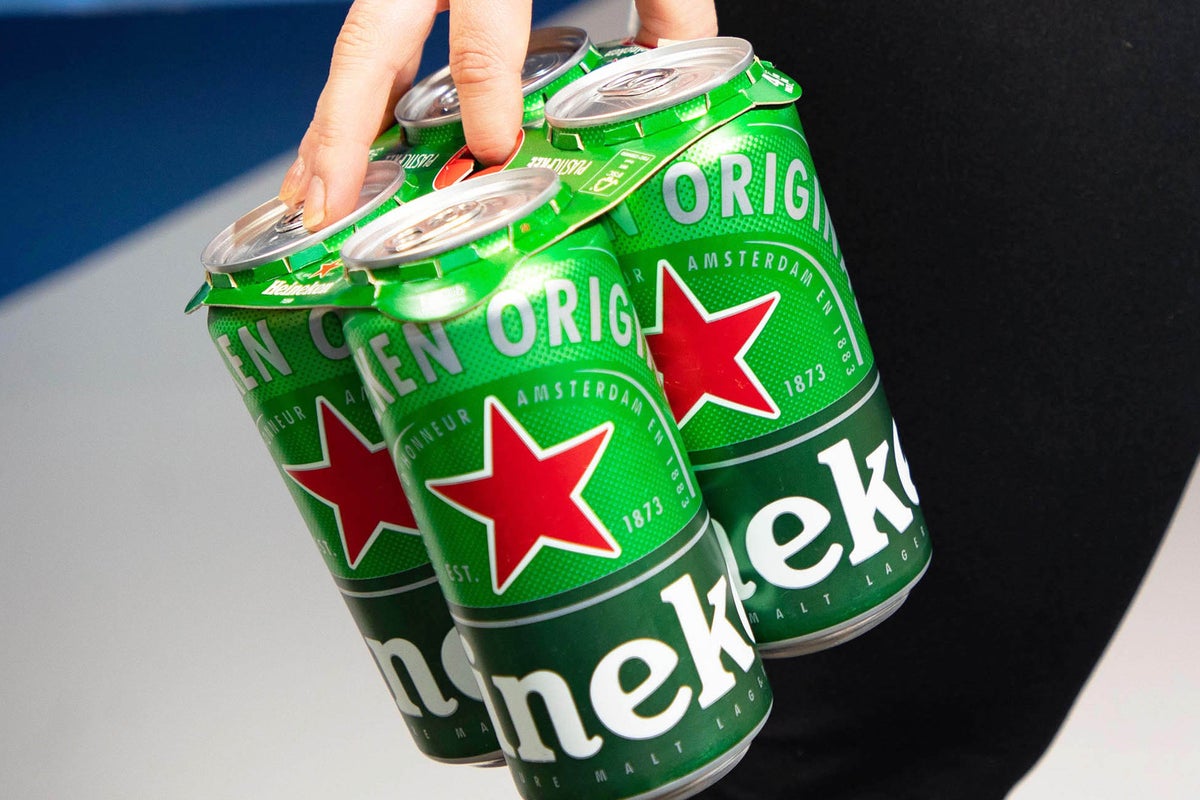
Heineken plans huge investment in hundreds of UK pubs ahead of World Cup
-

 Tech4 days ago
A new frontier: Identity stack evolves for agentic systems | Computer Weekly
-

 Tech4 days ago
‘Orbs,’ ‘Saucers,’ and ‘Flashes’ on the Moon: Pentagon Drops New UFO Files
-

 Tech5 days ago
What Microsoft Executives Really Thought About OpenAI in 2018