

Business
Kohl’s shares jump 24% after big earnings beat


Kohl’s shares climbed 24% on Wednesday after the retailer topped Wall Street’s fiscal second-quarter earnings and revenue expectations, even as its sales declined and it looks for a new CEO.
The Wisconsin-based department store narrowed its full-year sales guidance to reflect the higher part of its previous range. It said it now expects net sales to decline by between 5% and 6%. It had previously anticipated sales would fall 5% to 7%.
It also revised its full-year earnings per share guidance. Kohl’s said it expects earnings to be in the range of 50 cents to 80 cents per share adjusted. It was unclear how that compared with a previous outlook of 10 cents to 60 cents per share, which was not adjusted.
On Kohl’s earnings call, interim CEO Michael Bender attributed the department store’s slower sales to the economy. He said lower- and middle-income customers are trading down to less-expensive brands.
Yet he also said Kohl’s is working to fix its mistakes. For example, he said, it is reintroducing the petite section, which it had phased out. It has added jewelry back to stores — a category it took away to make room for Sephora shops — and focused on carrying exclusive brands, especially ones that have lower price points. And the retailer is overhauling its discount strategy, so customers can use coupons for more of its brands.
Yet Bender stopped short of saying when Kohl’s will report sales growth again. He said all of its initiatives seek to win back customers who have stopped visiting Kohl’s or bought less there recently.
“We know that our route to long-term success for this business is to get back to growth,” he said. “And everything that we’ve talked about and everything you’ve heard from us certainly is directed at that intention.”
Shares closed on Wednesday at $16.17, up 24%. As of Wednesday’s close, shares are up about 14% so far this year, outpacing the approximately 10% gains of the S&P 500 during the same period.
Here’s how the retailer did for the three-month period that ended Aug. 2 compared with what Wall Street was expecting, based on a survey of analysts by LSEG:
- Earnings per share: 56 cents adjusted vs. 29 cents expected
- Revenue: $3.35 billion vs. $3.32 billion expected
Kohl’s fiscal second-quarter net income was $153 million, or $1.35 per share, compared with $66 million, or 59 cents per share, in the year-ago period. Adjusting for one-time items, including the costs of store closures and gains from a legal settlement, earnings per share were 56 cents.
Net sales dropped from $3.53 billion in the year-ago quarter.
Kohl’s shares and sales have both been slumping — and the company’s leadership turmoil has tripped up its turnaround. Annual revenue has declined three years in a row. Its market value, which was just under $7 billion at the end of 2021, has fallen to roughly $1.5 billion. And the retailer has had three chief executives in as many years.
The company’s leadership changes began in late 2022 when Kohl’s CEO Michelle Gass left to become president and eventual CEO of Levi Strauss. Tom Kingsbury, a member of Kohl’s board and the former CEO of Burlington Stores, succeeded Gass. In November, Kohl’s said Kingsbury would step down after two years in the role and named Ashley Buchanan, the then-CEO of Michaels and a veteran of Walmart and Sam’s Club, as his successor.
Less than four months after he started as CEO, Kohl’s fired Buchanan after an investigation found he pushed for deals with a vendor owned by his girlfriend.
Kohl’s named Bender, a member of Kohl’s board since 2019, as its interim CEO.
There have been signs of potential financial concerns, too. Kohl’s recently changed its payment terms with vendors, a move that retailers typically make to delay payments for longer periods and conserve cash.
In a statement, Kohl’s did not specify the changes, but said the company “regularly reviews our work to ensure we are operating as effectively and efficiently as possible.” It said it notified some of its vendors about the updated payment terms in March.
Kohl’s continued to post sales declines in the second quarter. Comparable sales decreased 4.2% compared with the year-ago quarter. The industry metric takes out one-time factors like store openings and closures.
Yet Bender said the fiscal second quarter’s results reflect the company’s progress. He said the retailer reduced its inventory, lowered expenses and gained better traction with customers.
Inventory at the end of the quarter was $3 billion, a 5% drop from the previous year.
Sales trends improved throughout the quarter, he said on the company’s earnings call. It posted its weakest performance in May, improved in June and had its strongest month of the three-month period in July. He said July’s comparable sales were in line with the year-ago period.
Men’s and kid’s categories were the weakest of the quarter, as customers bought fewer spring clothing items like T-shirts and shorts. On the other hand, Kohl’s sales were stronger for dresses, kids’ footwear, home decor and its lower-priced exclusive brands.
Kohl’s is trying to find a better balance between selling national brands that customers recognize and offering merchandise that shoppers can only find at Kohl’s, Bender said. It debuted three exclusive home brands and will expand its FLX brand, an activewear line, to the kids’ category this fall at 300 stores and online. Its own brands tend to cost less, which appeals to value-driven shoppers, he said.
In the spring, Kohl’s completed the final rollout of Sephora shops to all of its stores. Bender said the beauty shops have delivered “exactly as intended” and drawn new and younger customers to Kohl’s stores.
Kohl’s has tapped two new executives to lead e-commerce, which is one of its struggling businesses, this summer. Arianne Parisi, former chief digital officer for JD Sports, is Kohl’s new chief digital officer.
It also hired Steven Dee as its new chief technology officer. Dee previously worked in technology operations for Rodan + Fields, Nike, Hayneedle and J.Crew. They will replace Siobhán McFeeney, who left the company in the spring.
Digital sales were stronger than store sales during the quarter, which Kohl’s attributed in part to adding back brands to coupon eligibility.
— CNBC’s Courtney Reagan contributed to this report.


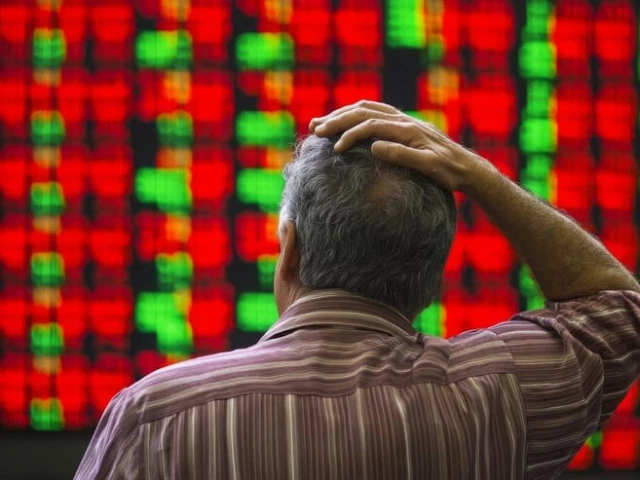


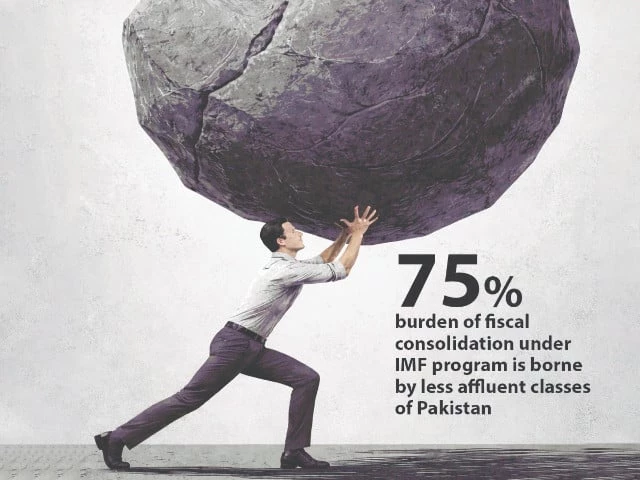

Pakistan’s inflation rose to 7% in February 2026, marking the highest level since October 2024, as electricity price hikes and rising global uncertainty pushed consumer costs upward.
According to the Pakistan Bureau of Statistics, the Consumer Price Index (CPI) increased 6.98% year-on-year, compared to 5.8% in January and 1.5% in February last year.
Electricity Tariffs Drive Surge
The biggest impact came from higher electricity prices after subsidy cuts and revised tariff structures.
Housing, water, electricity, gas & fuels index rose 9.65% annually
Electricity prices alone increased 10.03% month-on-month
These adjustments significantly burdened households already coping with high living costs.
Core Inflation & Interest Rates
Core inflation showed slight easing:
Urban core inflation: 7.1% (down from 7.2%)
Rural core inflation: Stable at 8.3%
The rise in CPI reduced real interest rates by around 120 basis points. The State Bank of Pakistan kept its policy rate unchanged at 10.5% last month.
Food Prices Mixed
Food inflation rose to 5.8%, up from 3.9% in January.
Major increases:
Tomatoes: +82%
Wheat: +42.6%
Wheat flour: +25.9%
Meat: +11.3%
Milk powder: +9.4%
Price declines:
Potatoes: -40%
Chicken: -21.8%
Gram pulse: -21.7%
Onions: -17%
Wholesale Pressure Rising
The Wholesale Price Index (WPI) increased to 1.0%, signaling growing producer-level cost pressures that could pass on to consumers in coming months.
External Risks Loom
Analysts warn that escalating Middle East tensions could:
Raise global oil prices
Increase Pakistan’s import bill
Pressure the rupee
Worsen inflation further
With millions of Pakistanis working in Gulf countries, any prolonged instability could also affect remittances — a key pillar of the economy.

Last Updated:
Gold and silver prices in India eased after a rally driven by Middle East conflict. 24-carat gold is Rs 1,70,020 per 10gm, silver below Rs 3,00,000.




Amid escalating tensions in the Middle East, gold and silver prices have witnessed a sharp surge, with market experts warning of further increases if the conflict intensifies.
Gold and silver prices: Gold and silver prices across India eased slightly after rallying as investors rushed towards safe havens due to the conflict in the Middle East. The price of 24-carat gold stood at Rs 1,70,020 per 10 grams, while 22k gold was available at Rs 1,55,850 per 10 grams. These rates do not include GST and making charges.
Silver also fell by Rs 20,000 to come down below Rs 3,00,000.
On MCX, gold futures, whose expiry is on April 02, 2026, was traded at Rs 1,66,199 per 10 gram, with a rise of 2.53 per cent. While silver futures expiring on March 05, 2026, were trading at Rs 2,80,090 per kg, with a fall of 0.90 per cent.
What Is The Price Of 22kt, 24kt Gold Rates Today In India Across Key Cities On March 03?
| City | 22K Gold (per 10gm) | 24K Gold (per 10gm) |
|---|---|---|
| Delhi | Rs 1,56,000 | Rs 1,70,170 |
| Jaipur | Rs 1,56,000 | Rs 1,70,170 |
| Ahmedabad | Rs 1,55,900 | Rs 1,70,070 |
| Pune | Rs 1,55,900 | Rs 1,70,070 |
| Mumbai | Rs 1,55,850 | Rs 1,70,020 |
| Hyderabad | Rs 1,55,850 | Rs 1,70,020 |
| Chennai | Rs 1,55,850 | Rs 1,70,020 |
| Bengaluru | Rs 1,55,850 | Rs 1,70,020 |
| Kolkata | Rs 1,55,850 | Rs 1,70,020 |
What Factors Affect Gold Prices In India?
International market rates, import duties, taxes, and fluctuations in exchange rates primarily influence gold prices in India. Together, these factors determine the daily gold rates across the country.
In India, gold is deeply cultural and financial. It is a preferred investment option and is key to celebrations, particularly weddings and festivals.
With constantly changing market conditions, investors and traders monitor fluctuations closely. Staying updated is crucial for effectively navigating dynamic trends.
 Click here to add News18 as your preferred news source on Google.
Follow News18 on Google. Join the fun, play games on News18. Stay updated with all the latest business news, including market trends, stock updates, tax, IPO, banking finance, real estate, savings and investments. To Get in-depth analysis, expert opinions, and real-time updates. Also Download the News18 App to stay updated.
March 03, 2026, 09:52 IST
Read More

Shop price inflation eased in February but consumers are still paying 3.5% more for food than a year ago, figures show.
Overall shop inflation fell slightly to 1.1% from January’s 1.5%, in line with the three-month average of 1.1%, as fierce competition between retailers kept price rises in check and customers benefited from promotions across health, beauty and fashion, according to the British Retail Consortium (BRC) and NIQ.
Prices of products other than food were down 0.1% year on year, a significant drop from January’s growth of 0.3%.
Overall food inflation fell slightly to 3.5% from 3.9% in January, while fresh food prices remained 4.3% higher than last February, a slight drop from January’s 4.4% and above the three-month average of 4.2%.
However falling global costs pushed ambient food inflation down to 2.3% – its lowest level in four years and a significant fall from January’s 3.1%.
BRC chief executive Helen Dickinson said: “Households got some welcome relief in February as shop price inflation eased.
“While the direction of travel is promising, prices are still rising, and many consumers remain under pressure.”
Mike Watkins, head of retailer and business insight at NIQ, said: “Since the start of the year, we have seen some competitive pricing across both the food and non-food channels which is helping to bring down inflation.
“Whilst the inclement weather and weak sentiment is making consumer demand rather unpredictable for retailers, at least shoppers are now seeing some of their cost-of-living pressures start to ease.”


Retech to showcase precision godet technology at Techtextil 2026

Football is life! ‘Dani Rojas’ from Ted Lasso is on trial at a USL club
Inflation Climbs to 16-Month High at 7% in February – SUCH TV

-

 Politics5 days ago
What are Iran’s ballistic missile capabilities?
-
 Business6 days ago
Households set for lower energy bills amid price cap shake-up
-

 Sports5 days ago
Sri Lanka’s Shanaka says constant criticism has affected players’ mental health
-
 Business6 days ago
Lucid widely misses earnings expectations, forecasts continued EV growth in 2026
-

 Fashion4 days ago
Policy easing drives Argentina’s garment import surge in 2025
-

 Sports1 week ago
South Africa thrash India by 76 runs in T20 World Cup Super 8 – SUCH TV
-
 Business1 week ago
Govt to return unclaimed EPFO deposits, expand scholarships for unorganised workers’ children – The Times of India
-
 Business1 week ago
Haryana Govt bars IDFC First Bank, AU Small Finance Bank over alleged Rs 590 crore fraud