

Business
Solar against fossil fuel-led energy generation dilemma | The Express Tribune

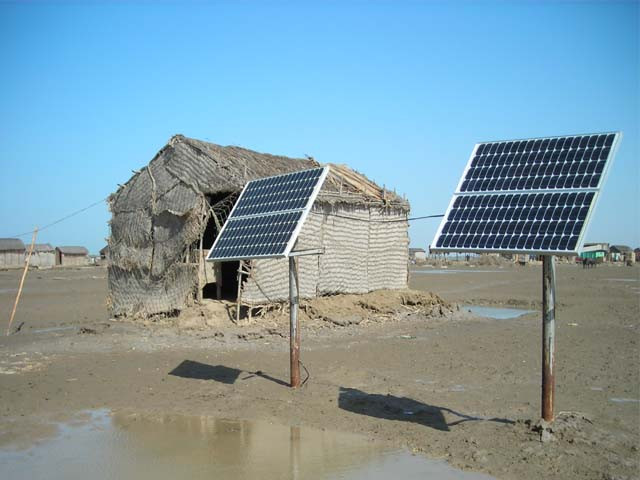
Country has agreed to achieve 60% renewable energy share but is discouraging it under influence of IPPs
ISLAMABAD:
Pakistan possesses a solar power potential of 40 gigawatts as reported by the World Bank. This may help to push the share of solar to 60% in energy mix by 2030.
Historically, Pakistan depends on fossil fuels, especially oil and gas, for power generation; however, due to advances in solar technology and its increased supply low prices have shifted the energy mix paradigm more to renewable sources in recent years. Therefore, the government has developed the net metering policy, also referred to as net energy metering (NEM), which in fact is an electricity billing method that enables consumers generate their own power to sell it to the power generating company. It involves customers with solar panels transferring the excess electricity they produce to the grid and receiving credits from the utility company on their electric bill. When solar panels generate more electricity than its consumption, the surplus power flows back to the grid.
The government has endorsed the Alternative and Renewable Energy Policy 2019, offering incentives and support for renewable energy ventures. However, challenges persist in executing the National Electricity Policy 2021, which was ratified by the Council of Common Interests in February 2021.
Reports indicate that the government plans to slash the price for solar power exported to the national grid from Rs21 per unit to Rs11 per unit, sparking widespread criticism. This is in sharp contrast to the tariff of Rs60 per unit for power generated from fossil fuel.
The installed capacity of solar net metering has surged to 3,000 megawatts. Pakistan Bureau of Statistics (PBS) data show that in 2020, fossil fuels constituted roughly 63% of total power generation, followed by hydropower at 29%, nuclear energy at 5% and renewable energy at approximately 3%. The proposed solar rate reduction is believed to be influenced by the independent power producers (IPPs), who fear loss of revenue with the rapid increase in solar power installations, potentially at the expense of consumers. Notably, regulatory bodies like the National Electric Power Regulatory Authority (Nepra) are perceived to favour IPPs over consumers and solar net metering users.
The surge in demand for solar panels has disrupted the government’s capacity payment plan amid fears that IPPs will lose business. While the government contends that the current rate enables consumers to recoup their solar panel installation costs within 18 months, the IPPs are pushing for an extension in this payback period to 10 years. Globally, the Sustainable Energy for All (SE4All) initiative aims to achieve universal access to modern energy by 2030 and double the share of renewable energy and energy efficiency gains. Consequently, there’s a rapid transition towards renewable and alternative energy sources for power generation.
The EU’s revised Renewable Energy Directive elevates its binding renewable target for 2030 to a minimum of 42.5%, up from the previous 32%, with an ambition to reach 45% of total energy from renewable sources, nearly doubling the existing share. Similarly, other advanced countries are also committed to increasing the proportion of renewable energy in their energy mix by 2030.
The Sustainable Development Goal 7 (SDG-7) advocates for “affordable, reliable, sustainable, and modern energy for all” by 2030, with three core targets forming the foundation of this endeavour to ensure universal access to affordable, reliable, and modern energy services. Pakistan has ratified the United Nations Framework Convention on Climate Change (UNFCCC) and adopted SDG-7 to align with global efforts to combat climate change and transition away from traditional fossil fuels and other carbon-intensive energy sources. To meet its Nationally Determined Contributions (NDC) target, Pakistan aims to transition to 60% renewable energy and achieve 30% penetration of electric vehicles by 2030. Additionally, Pakistan plans to ban coal imports and expand nature-based solutions.
Solar net metering stands out as a rapidly growing sector, offering consumers the opportunity to leverage their own resources for energy generation. Through such initiatives, Pakistan can fulfil its commitments under the Paris Agreement, UNFCCC, and SDG-7.
Keeping in view the above national and global commitments, leveraging net metering facilities can significantly aid in fulfilling Pakistan’s obligations under the UNFCCC and Paris Agreement. Therefore, reducing the per-unit price of solar energy from Rs21 to Rs11 could undermine the transition to renewable energy. The irony is that Pakistan has committed to achieving a 60% renewable energy share, but is discouraging it under the influence of IPPs. The world is moving fast to renewable sources of energy as Australia is offering three hours a day of free solar energy to citizens, and the EU has already achieved renewable energy targets well ahead of the committed deadline of 2030.
The government should work with the public in promoting solar energy rather than obstructing it. Renewable sources of energy like solar, wind, biomass and biogas are highly sustainable and may help reduce the import bill of oil and gas meant for power production.
A comprehensive review, involving the input from market experts and the Ministry of Climate Change, as well as consultation with solar consumers, is imperative. It’s crucial to assess broader national and global dynamics before making any unilateral decisions.
This approach will help to uphold Pakistan’s international obligations and safeguard the interests of citizens.
The writer is a climate change, forestry, and environment expert







Savers across the UK are being offered a record number of accounts and products and with interest rates still well above 4 per cent on the most competitive options, should make sure their cash is working hard.
Data from Moneyfacts shows the number of savings accounts has risen to 2,486, including ISAs, the highest number on record. Cash ISAs alone, meanwhile, also saw the largest monthly rise since May 2024 and, with 712 offers in total, is the most since Moneyfacts started recording.
Both numbers come as the final tax year gets underway in which all savers are able to deposit a full £20,000 annual allowance into a cash ISA.
Starting from April 2027, under-65s will only be able to save a maximum of £12,000 into the tax-free savings wrappers, with the additional £8,000 reserved for investment purposes, such as a stocks and shares ISA.
That’s as part of a wider push from the government to encourage more people to invest, to build future wealth.
High interest rates are important not only to earn a good return on cash, but to ensure money doesn’t lose its value, or buying power, when measured against rising prices; in other words, inflation, which currently sits at around 3 per cent and is set to rise.
That means consumers should whenever possible look to be beating that rate as a minimum when it comes to their saving accounts, and plenty of places are still offering 4.5 per cent and even higher right now.
“This year the competition around ISA season was particularly strong, fuelled by the fact that for savers under 65 it’s the final year for them to utilise their full £20,000 allowance. Providers have been enticing new deposits with attractive deals,” said Caitlyn Eastell, personal finance analyst at Moneyfacts.

Get a free fractional share worth up to £100.
Capital at risk.
Terms and conditions apply.
ADVERTISEMENT
Get a free fractional share worth up to £100.
Capital at risk.
Terms and conditions apply.
ADVERTISEMENT
“Savers should be taking advantage of this all-time high, and it may be especially timely as the new tax-year is the perfect window to review their current deal and switch to ensure they can maximise their returns before thresholds tighten.
“The number of savings deals paying above the Bank of England base rate has surged to its highest level since December 2021. While this could largely be driven by base rate remaining unchanged several months, providers have also been proactively adjusting rates in response to shifting interest rate expectations.
“Fixed rates reflect this change, with the average one-year ISA rising to over 4 per cent, reaching its highest point since May 2025, while its non-ISA counterpart saw its biggest increase since September 2023. Savers may enjoy more competitive returns in this environment; however, it can be a tricky balancing act because sharp spikes to household bills and inflation could quickly catch up, meaning savers may be left out of pocket.”
Meanwhile, thisbank has pointed to growing evidence showing that many households have multiple money accounts, but no clear overview of their true financial position.
Reviewing accounts – including joint and old current accounts – can turn up unexpected cash reserves, help families realise which subscriptions they are paying for but are no longer using and aid better budgeting, the bank says, giving a better understanding of where income and expenses match up.
“For many households, financial stress is exacerbated by complexity. By taking a simple, step-by-step approach, people can implement structure and clarity in their everyday financial management,” said Chris Waring, CEO of thisbank, while recommending each savings account has a particular role, such as everyday spending, long-term emergency buffer or fixed-term saver accounts with strong rates for predictable returns.
Underlining the need to be aware of where consumers are choosing to put their cash, analysis by savings app Spring shows that a huge majority of premium, paid-for accounts come with poorer returns, tiered interest rates or withdrawal restrictions.
Under a quarter (23 per cent) of easy access savings accounts on premium current accounts on the market are free of additional restrictions, their research showed, which included lower returns after £4,000 in an account with one, a paltry 1.35 per cent on balances under £100,000 elsewhere and nearly a third (30 per cent) having withdrawal limits.

New European border rules have caused delays at airports across the continent, affecting flights.
Source link

A view shows a second-generation R1S at electric auto maker Rivian’s manufacturing facility in Normal, Illinois, on June 21, 2024.
Joel Angel Juarez | Reuters
A tornado damaged part of Rivian Automotive‘s factory in central Illinois over the weekend, according to a message sent to employees Sunday night by CEO RJ Scaringe that was viewed by CNBC.
The tornado touched down on the plant, Scarigne said. That area was being used for parts storage and logistics for Rivian’s upcoming R2, which is a crucial product for the company that’s expected to be on sale this spring.
Scaringe said operations in the damaged area are expected to resume this week, while other major portions of the plant, such as its assembly lines, are operating as planned. No injuries have been reported as a result of the incident, according to a company spokeswoman.
“While Building 2 has sustained damage and is closed for the time being as we complete our assessments, I am incredibly relieved to share that there were no injuries at our plant,” Scaringe said in his message to employees.
Scaringe said the company would “share more information as it becomes available, but for now, our priority is ensuring our Normal [Illinois] team is safe and supported.”
Apparent photos posted online of the aftermath, which was first reported by TechCrunch, showed damage to the roof and at least one wall of the recently constructed building.
The National Weather Service reports the factory was hit amid a “significant tornado outbreak” that occurred Friday across the upper Midwest. Confirmed tornadoes near the factory Friday night were classified as EF1, with estimated peak winds of 100 mph, according to NWS.


‘It’s his superpower’: Inside Fernando Mendoza’s extraordinary rise to No. 1
Consumers have record savings options in final year of £20,000 cash ISA allowance

King Charles’ wardrobe reveals obsession with bespoke suits

-

 Fashion4 days ago
France’s LVMH Q1 revenue falls 6%, shows resilience amid Iran war
-

 Sports1 week ago
The case for Man United’s Fernandes as Premier League’s best
-

 Entertainment1 week ago
Palace left in shock as Prince William cancels grand ceremony
-
 Business1 week ago
UK could adopt EU single market rules under new legislation
-

 Entertainment5 days ago
Is Claude down? Here’s why users are seeing errors
-

 Fashion1 week ago
Energy emerges as biggest cost driver in textile margins
-

 Tech1 week ago
A Lot of Shops Won’t Fix Electric Bikes. Here’s Why
-
 Business1 week ago
Delta Air Lines unveils first new Delta One suite in premium cabin arms race