

Business
Kyle seeks to reassure business over workers’ rights concerns


Business Secretary Peter Kyle has hinted at concessions over the Government’s workers’ rights package to ensure it makes it through Parliament and does not damage firms.
Mr Kyle said there would be extensive consultations about the measures in the Employment Rights Bill, insisting it was not a “zero sum” game where either workers or bosses lost out.
Confederation of British Industry (CBI) boss Rain Newton-Smith warned the legislation would take the country “backwards” in its current form.
The legislation is caught in a stand-off between peers and MPs over measures to ban “exploitative” zero-hours contracts and give workers protection against unfair dismissal from their first day in a job.
Asked if the Government would be prepared to accept amendments to end the stand-off, Mr Kyle said: “I’ll do what it takes to get it through, because I need to get on with the real business, which is implementing it.”
Seeking to reassure businesses who have concerns about the legislation, he told reporters at the CBI conference: “Our manifesto committed us to consult, to listen, and that’s what I’ll do.
“The primary legislation that is going through Parliament now commits me to consult in 26 different areas, the law is going to require me to.
“So it has been, yes, a frustration of mine that some of the area that will be filled in by the result of a consultation that meaningfully engages all sides and all voices, has been filled by people projecting onto what their worst fears are of it. But that is not the reality that I will be driving towards.”
Insisting “the voice of people who work in business will be heard” alongside the trade unions, he said “I’m not putting anyone over anyone else”.
The Government would “listen to both sides and all sides in this and to make sure it is not zero sum”.
“I will not pit employer against employee or employee against employer,” he said.
“In the world we’re living in now, the workplace is fundamentally different than it was 10 and 20 years ago. The law has to keep up, regulation has to keep up, and the ability of government to inspire and provide the foundations for growth within individual businesses and higher productivity is what we are set upon.
“And all of the conjecture that you’ve heard about what the Bill will and won’t deliver is based in areas for which the consultation on implementation has not even started.”
Ms Newton-Smith called on the Government to change course on the legislation, claiming businesses had not been listened to.
She said: “Lasting reform takes partnership – not a closed door.”
She told the PA news agency: “If the burden of regulation means that when businesses are trying to implement it, it’s unworkable, then it’s not a lasting solution.”
She suggested there could be a “landing zone” where a six or nine-month probation period could be put in place for workers to address concerns about the unfair dismissal changes.
“I think there’s a really workable solution to many of the areas where the Employment Rights Bill is trying to raise living standards. But how it’s drafted at the moment, it’s going to move us backwards and not create the jobs and opportunities we need to see for our young people, for everyone in the workforce.”
Tory leader Kemi Badenoch condemned the legislation in her CBI speech, saying it “destroys growth” and called for Rachel Reeves to use her Budget to kill it off.
Mrs Badenoch said of the legislation: “If 26 consultations are what you need to fix it then you have a really, really big problem.”
She added: “It is a pure political project. Killing it would be a signal to the world that Britain still understands what makes an economy grow.
“If the Chancellor had any sense, and any regard for business, she would use the Budget to say ‘we got this one wrong’ and drop it.
“It would be the cheapest pro-growth measure in the Red Book.”
She said the right to claim unfair dismissal from the first day of employment means a new hire could lodge a claim with an employment tribunal “before they’ve even worked out where the toilets are”.
The ban on exploitative zero hours contracts that gives workers a right to a contract which reflects their regular hours amounts to a “de facto ban” on seasonal and flexible work, such as over the Christmas period.
The Conservative leader told reporters that pushing ahead with the legislation could see bosses opt for artificial intelligence rather than workers.
She said: “There is no business out there that thinks 26 consultations is a serious response to a bad piece of legislation that should not be starting.
“This is not a growth measure. Businesses are closing down. We have unemployment going up every single month.
“They should just not be doing this at a time when people are worried about AI taking over jobs, people are just going to go to AI. Why would they bother with this?”

Visa Inc. signage on the floor of the New York Stock Exchange (NYSE) in New York, US, on Wednesday, Jan. 28, 2026.
Michael Nagle | Bloomberg | Getty Images
Visa is launching six new tools using artificial intelligence to modernize the process of disputing credit card charges, the company told CNBC exclusively.
The digital payments company said the tools are designed to reduce the costs and frustration of “outdated” dispute processes for multiple entities involved in the payments process: merchants, issuers and acquirers.
“Some of the challenges are these back-office systems are still largely manual,” Andrew Torre, Visa’s president of value-added services, told CNBC. “We really had to think differently about how we approach this at scale.”
In 2025, Torre said, Visa processed more than 103 million charge disputes globally, marking a 35% increase since 2019.
“Our goal is to streamline this as much as possible,” Torre said. “We’d love to be able to see that growth rate come down.”
Visa’s new tools are part of a larger push by major banks and financial institutions to incorporate AI into their businesses — both internally and in consumer-facing applications. JPMorgan Chase and Goldman Sachs have both said they’re already using AI to hire fewer people. BNY spent $3.8 billion on technology in 2025, or about 19% of its revenue.
Visa said three of its six new tools focus on merchants, allowing them to address potential disputes before they escalate, managing disputes with generative AI responses and providing a deeper level of detail on order insights to manage confusion over unfamiliar charges.
For example, Torre said, many disputes are borne out of cardholders not recognizing a specific charge on their statements. With the new tool, Visa will be able to provide further details to financial institutions to show cardholders that data at a deeper level, according to the company.
The other three tools are built for issuers and acquirers, using predictive AI models to aid in case-by-case analysis, analyzing documents for summaries and auto fill and establishing an AI-powered dispute platform to manage the entire process in one location, Visa said.
“We’ll be able to get them insights and data so they can move from being reactive to proactive,” Torre said.
Torre said Visa’s new AI tools are part of a broader host of solutions for consumers, including a subscription manager announced last week that allows cardholders to cancel unnecessary subscriptions directly on the manager.
The automation will save time, money and unnecessary confusion for both parties, he added. Most of the tools will be generally available later this year, the company said.
“We really believe that disputes in this solution makes it much easier to manage and resolve,” Torre said. “We think it has better outcomes for everyone.”
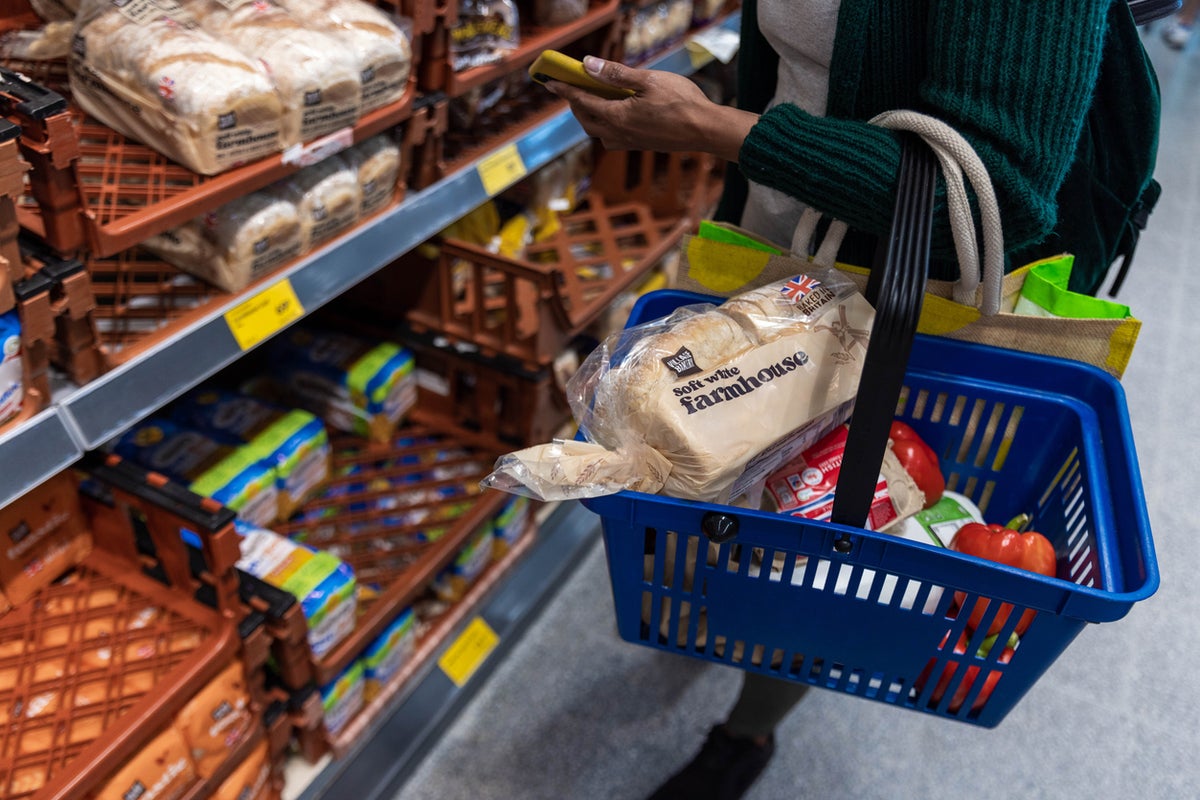
Food bills are set to soar as much as 10 per cent this year as a direct consequence of the Iran war, a key industry body has warned.
The Food and Drink Federation (FDF), which represents 12,000 food and drink manufacturers, has hiked its inflation forecast for the year from 3.2 per cent to between nine and 10 per cent.
During the 2022 cost of living crisis, food inflation rose at a rate of 10.9 per cent, figures from the Food and Drink Federation (FDF) show, while the following year was even worse at 14.6 per cent.
Since then, it had dropped back to 2.7 per cent (2024) and 4.2 per cent (2025), but while this year had originally been forecast to deliver food inflation of 3.2 per cent, the latest assessment is that it will instead see a huge rise in the second half of 2026.
The FDF said the current situation is “unprecedented and hard to predict”, but it’s “clear that food inflation is going to rise in the months ahead”.
How much that adds to the average bill depends on the size and frequency of a consumer’s usual grocery habits, but on average, bills could rise by around £588, according to some estimates.
Consumer rights and review site Which? frequently assesses UK supermarkets for cost, and at the start of 2026, an average basket of 89 shopping products cost £161.56 at Aldi and up to £217.02 at Waitrose.
Assuming food inflation lands at the mid-point of the FDF forecast, 9.5 per cent, and that all products and supermarkets applied that uplift equally, that would move the costs of those shops up to £176.91 and £237.64 respectively.
Research from confused.com suggested the average UK household spent £119 each week on food shopping, which is £6,188 each year; a 9.5 per cent uplift to that equates to an extra £588 annually, or a total of just over £130 per week and £6,775 annually.
Chancellor Rachel Reeves is due to meet with some supermarket chiefs on Wednesday, including Sainsbury’s and Tesco, over discussions to assess the upcoming impact of price rises on the cost of living. The Treasury has described it as a “fact-finding” conversation.
Last month, Asda boss Allan Leighton called on Labour to do more to help businesses after creating “a lot of constraints” for them.
For food manufacturers, there is both a concern now and another yet to come in terms of energy cost rises.
Diesel – used in farm machinery – is up by 80 per cent since the start of the war, while fertiliser costs could increase further, as well as supply being constrained. The FDF also points to lost sales due to cancelled shipments to the Middle East, with UK firms regularly exporting cheese, cereals, chocolate and more to the region.
Dr Liliana Danila, chief economist at The Food and Drink Federation, said: “The food and drink sector is already feeling the force of this geopolitical shock. As one of the UK’s energy-intensive industries, manufacturers are facing mounting energy bills, rising transport and packaging costs and disruption across key supply chains.
“These pressures are hitting simultaneously and are a significant challenge for businesses to absorb.
“The current situation is unprecedented and hard to predict; however, given the scale and speed of these cost increases, and despite companies’ best efforts not to pass price increases on, it’s clear that food inflation is going to rise in the months ahead.”
The FDF says its upgraded inflation figures were based on “assumptions that the Strait of Hormuz opens to cargo traffic within the next two to three weeks”, as has been suggested by Donald Trump this week, and that most commodities, including oil, gas and fertiliser production, return to normal within a year.
In the past few months, the FDF has repeatedly called for the government to offer support to businesses in the sector from rising energy bills in the same way as it does to those in some other manufacturing areas.

GST collections: India’s net Goods and Services Tax (GST) collections increased to Rs 1.78 lakh crore in March 2026, marking a rise of 8.2% compared to the previous month, according to official figures released on Wednesday.Gross GST revenue for March stood at Rs 2 lakh crore, which is an 8.8% increase over the same month last year.Abhishek Jain, Indirect Tax Head & Partner, KPMG says, “GST collections continue to show steady 9% annual growth, supported by strong import activity this month and consistent compliance. While export refunds have eased this month but remain healthy overall for the year”Refunds during the month totalled Rs 0.22 lakh crore, up 13.8% on a year-on-year basis, which resulted in net GST collections of Rs 1.78 lakh crore.Domestic GST revenue reached Rs 1.46 lakh crore, registering a growth of 5.9%, while revenue from imports was recorded at Rs 0.54 lakh crore, rising sharply by 17.8% during the period.Post-settlement GST figures across states presented a varied trend. While industrially advanced states recorded strong growth, several others reported a decline.Maharashtra contributed the highest amount to the overall collections at Rs 0.13 lakh crore on a pre-settlement basis, followed by Karnataka and Gujarat.Among states showing an increase in post-settlement SGST collections were Himachal Pradesh, Punjab, Uttarakhand, Haryana, Rajasthan, Uttar Pradesh, Bihar, Gujarat, Maharashtra, Karnataka, Kerala, Tamil Nadu, Telangana and Andhra Pradesh, among others.On the other hand, states such as Jammu and Kashmir, Chandigarh, Delhi, Arunachal Pradesh, Meghalaya, Assam, West Bengal, Jharkhand, Odisha, Chhattisgarh and Madhya Pradesh, among others, registered a decline in post-settlement SGST revenues.


Apparel retailer Uniqlo signs landmark deal with Los Angeles Dodgers
Visa launches new AI tools to manage the charge dispute process

New Zealand’s apparel imports down 11% to $216 mn in Jan-Feb

-

 Politics1 week ago
Afghanistan announces release of detained US citizen
-

 Sports1 week ago
Broadcast industry CEO says consolidation is ‘essential’ to compete for NFL soaring media rights prices
-

 Tech1 week ago
Can a Home Appliance Fix the Problem of Soft-Plastic Waste?
-
 Business1 week ago
Property Play: Home flippers see smallest profits since the Great Recession, real estate data firm says
-

 Entertainment1 week ago
UN warns migratory freshwater fish numbers are spiralling
-
 Business1 week ago
Gold prices soar in Pakistan – SUCH TV
-

 Fashion1 week ago
ICE cotton slips on weaker crude, profit booking
-
 Business1 week ago
More women are entering wealth management, but few are in advisory roles, study finds