

Fashion
Lab-grown diamonds robbing southern Africa of riches


By
AFP
Published
September 14, 2025
Botswana and southern African peers that built much of their prosperity on diamonds are scrambling for alternatives as cheaper, lab-grown stones threaten their economies.
Diamond-dependent Botswana is leading the way and launched a sovereign wealth fund this week to lay the “foundation for a more resilient, sustainable and diversified future beyond diamonds”.
It is exploring other avenues too, like boosting luxury wildlife tourism, launching into the medicinal cannabis market and exploiting its abundant sunshine for solar power.
President Duma Boko has even mooted taking a majority stake in industry giant De Beers and selling Botswana’s diamonds independently.
“Countries such as Angola, Namibia and South Africa are all exposed but not to the same degree as Botswana,” economist Brendon Verster at the Oxford Economics Africa think tank told AFP.
The stones are the country’s main source of income and account for about 30 percent of its gross domestic product (GDP) and 80 percent of its exports, according to the International Monetary Fund.
But, as consumers turn to cheaper diamonds created in China and India, the average price of a one-carat natural diamond is falling.
The price dropped from a peak of $6,819 in May 2022 to $4,997 by December 2024, according to the World Diamond Council.
Botswana, which is 70 percent desert, was lifted from poverty by the discovery of diamonds in the 1960s. It is already feeling the effects of the lab-grown competition.
– ‘Risks of economic collapse’ –
As its foreign reserves deplete, the government has turned to debt to fill the public coffers.
Government funds ran so low that the health system teetered on the verge of collapse in August, leading Boko to declare a state of emergency.
“If left unaddressed, there is a real risk of the situation becoming not just an economic challenge but a social time bomb,” he said in July.
Highlighting the fears, global ratings agency S&P on Friday dropped its long-term ratings on Botswana one notch to “BBB” and declared a negative outlook, citing the rapid expansion of the lab-diamond market.
Synthetic stones had captured “approximately 20 percent of the global market by value and up to 50 percent by volume in the US engagement ring segment in 2025,” it said in a statement.
Diversification is “essentially now or never”, Verster said.
“We don’t really see anything that would cause a monumental shift back in favour of natural diamonds to curb the rising popularity of synthetic diamonds.”
Also suffering is tiny Lesotho, where diamonds contribute up to 10 percent of its $2 billion GDP and the larger, vital textile market has been hit by US tariffs.
This month its biggest diamond mine, Letseng, said it would lay off a fifth of its workforce, citing “sustained pricing pressure” and “softer demand in key markets”.
The mine closures “could heighten risks of economic collapse”, independent economic analyst Thabo Qhesi told AFP, stressing an urgent need to explore other options, such as rare-earth resources.
In a bid to keep the sparkle alive, Angola, Botswana, Namibia, South Africa and the Democratic Republic of Congo pledged in June to allocate one percent of their annual diamond revenues to marketing natural diamonds.
The campaign would need to reframe their value as a coveted “luxury product”, former Bank of Botswana deputy governor Keith Jefferis told AFP.
“We see a significant opportunity to engage consumers in the story of responsibly sourced diamonds from Botswana,” De Beers, also taking part, told AFP.
The South Africa-British firm is meanwhile exploring the potential of synthetic diamonds in high-tech fields like quantum networks and semiconductors, as prices fall below $100 per carat.
For Botswanan ministry of minerals official Jacob Thamage, natural and lab-made diamonds “offer different value propositions to different consumers and therefore can and will coexist”.
In an upscale Johannesburg mall, behind fortified steel gates, a natural yellow diamond priced at over $50,000 stood as a symbol of exclusivity.
Just steps away, a lab-grown diamond valued at $115 was unguarded.
“We each have our target,” one jeweller said. “So long as everyone is happy.”
Copyright © 2025 AFP. All rights reserved. All information displayed in this section (dispatches, photographs, logos) are protected by intellectual property rights owned by Agence France-Presse. As a consequence you may not copy, reproduce, modify, transmit, publish, display or in any way commercially exploit any of the contents of this section without the prior written consent of Agence France-Presses.










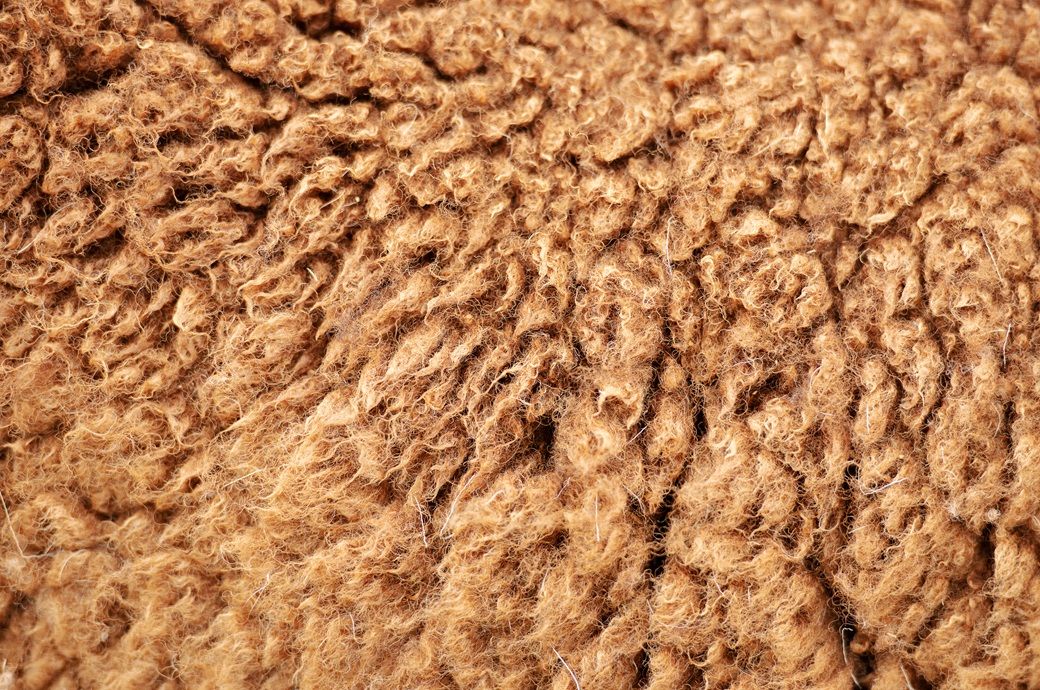
According to Australian Wool Innovation (AWI) commentary for week 38 (March 2026), the Eastern Market Indicator (EMI) fell by 32 Australian cents/kg, while the Western Market Indicator (WMI) dropped more sharply by 69 cents, signalling comparatively weaker conditions in Fremantle.
Australia’s wool market declined this week, ending a recent rally as weaker buyer sentiment and margin pressures weighed on prices.
The EMI fell 32 cents and WMI dropped 69 cents, led by losses in Merino wools.
Softer demand, higher supply, and a stronger Australian dollar pressured the market, though selective buying for quality lots persisted.
“Losses were led by medium Merino wools, which fell 70–75 cents in the eastern centres and 85–90 cents in the west. Finer Merino types also declined by 45–60 cents across all regions. Crossbred wool prices eased by 25–30 cents. In the carding segment, eastern markets remained steady to 5 cents higher, while Fremantle saw a sharper fall of around 45 cents,” the AWI Limited said in its Commentary.
The uniform decline across Merino fleece categories points to a broader pullback in buyer demand rather than isolated weakness. This follows several weeks of strong gains after the Chinese New Year period, with much of the earlier purchases still moving through processing and manufacturing stages.
Market sentiment this week reflected growing caution among exporters and processors facing tighter margins due to rising input costs. Increased wool offerings further reduced buyer urgency, while a firmer Australian dollar added pressure on export competitiveness, the AWI commentary noted.
Despite the overall softer trend, demand remained relatively firm for well-prepared, lower-risk lots, indicating that buyers are becoming more selective rather than exiting the market entirely.
Industry observers view the current downturn as a phase of consolidation, with the market testing resistance levels after recent gains, rather than signalling a fundamental shift in demand.
Looking ahead, all three auction centres will operate on a Tuesday-Wednesday schedule next week, with 40,909 bales expected to be offered.
Market direction will depend on the trade’s ability to absorb current supply levels and navigate prevailing cost pressures.
Fibre2Fashion News Desk (CG)
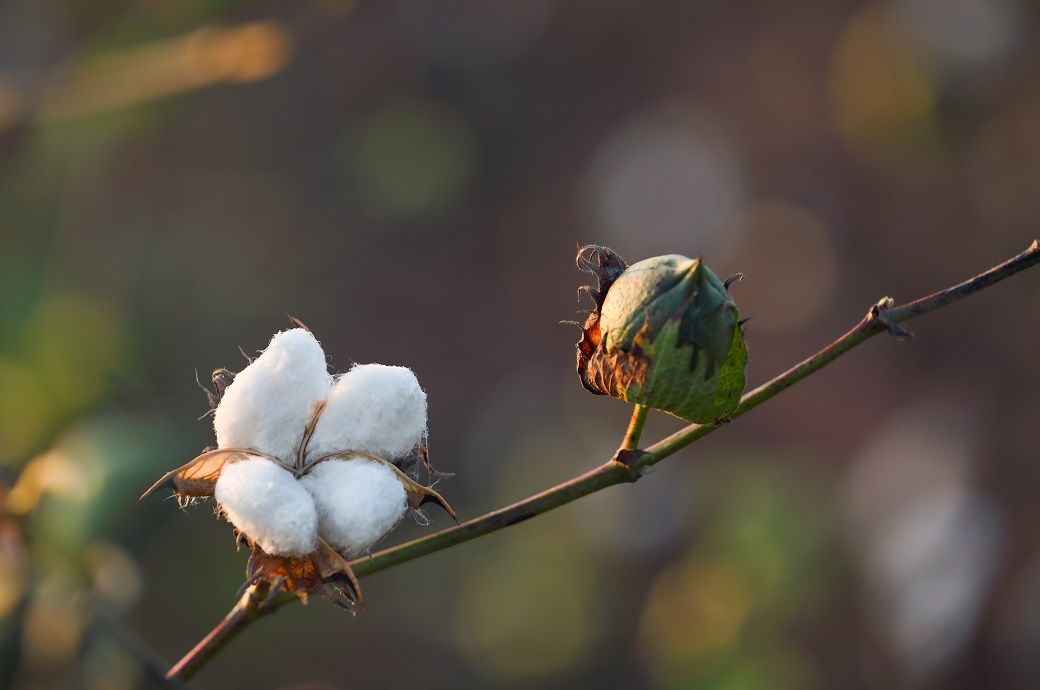
The most traded May 2026 contract settled at 68.70 cents per pound, down 0.07 cent. May contract has maintained a gain of 353 points despite slight fall. The contract had witnessed rally during the last five trading sessions.
ICE cotton futures paused after hitting an 8-month high, pressured by a stronger US dollar and profit booking.
The May 2026 contract settled at 68.70 cents per pound.
Rising crude oil capped losses by supporting cotton over polyester.
Lower volumes but higher open interest signalled fresh positions, while markets await the USDA report for direction.
Middle East tensions increased risks to energy supply, pushing Brent crude prices higher. Higher crude oil prices raised polyester production costs, making cotton relatively more competitive and providing indirect price support.
Market pressure was mainly due to a stronger US dollar, which recovered after the Federal Reserve kept interest rates unchanged, reversing prior weakness. The stronger dollar made US cotton more expensive for overseas buyers, weighing on demand sentiment.
Trading volume stood at 86,811 contracts, lowest in last 3 sessions, indicating lighter market participation. Open interest increased by 2,046 to 341,326 contracts, suggesting fresh positions and continued market involvement. Certified stocks unchanged at 116,789 bales as per ICE data on March 17, indicating no immediate supply pressure
Cotton rallied strongly over the past several sessions, driven largely by speculative short covering, pushing prices to multi-month highs. Current dip reflects mild profit booking and signs that short covering may be slowing or nearing completion.
Market analysts stated that the recent rally triggered significant short covering, but the future direction will depend on how speculative positions evolve next week. Mills were previously complacent with low inventories, but sudden price rise forced them to re-enter the market and cover demand.
Market participants are awaiting the next USDA export sales report for fresh direction.
This morning (Indian Standard Time), ICE cotton for May 2026 was traded at 68.13 cents per pound (down 0.57 cent), cash cotton at 67.95 cents (unchanged), the July 2026 contract at 69.95 cents (down 0.62 cent), the October 2026 contract at 71.99 cents (down 0.13 cent), the December 2026 at 72.12 cents (down 0.52 cent) and the March 2027 contract at 72.99 cents (down 0.48 cent)). A few contracts remained at their previous closing levels, with no trading recorded so far today.
Fibre2Fashion News Desk (KUL)
The sharp fall reflects growing concerns over rising energy prices and inflationary pressures linked to the ongoing conflict, ZEW said in a press release.
“The ZEW Indicator has collapsed,” said Achim Wambach, president of ZEW, noting that the escalation in the Middle East is fuelling energy costs and increasing risks to Germany’s fragile economic recovery. He added that financial market experts remain sceptical about a swift resolution to the conflict, raising uncertainty over the economic outlook.
Germany’s economic sentiment plunged in March 2026, with the ZEW index falling 58.8 points to -0.5 amid Middle East tensions driving energy and inflation concerns.
While the current situation improved slightly to -62.9, it remained weak.
Around 80 per cent expect rising inflation.
Eurozone sentiment also declined sharply, with expectations at -8.5 and conditions worsening to -29.9.
In contrast, the assessment of Germany’s current economic situation showed a modest improvement. The corresponding indicator rose by 3 points to -62.9, although it remains firmly in negative territory, signalling continued weakness in overall economic conditions.
Inflation concerns have intensified, with around 80 per cent of respondents anticipating increased price pressures in both Germany and the broader eurozone.
The negative sentiment extended across the eurozone, where the expectations index fell by 47.9 points to -8.5, slipping into negative territory. Meanwhile, the assessment of the current economic situation in the eurozone declined further to -29.9 points, down by 16.3 points from February.
Fibre2Fashion News Desk (SG)


FIFA clears Israeli settlement clubs but fines IFA over breaches

US Takes Down Botnets Used in Record-Breaking Cyberattacks

TCU backs up its tough talk, bounces Buckeyes in 1st round

Stock market crash today (March 12, 2026): Nifty50 opens below 23,600; BSE Sensex down over 900 points on continuing US-Iran war – The Times of India

UK’s Topshop unveils Tolu Coker capsule collection

US ignites Iran war, but Gulf Arab states pay the price | The Express Tribune

-
Business1 week ago
Stock market crash today (March 12, 2026): Nifty50 opens below 23,600; BSE Sensex down over 900 points on continuing US-Iran war – The Times of India
-
 Fashion1 week ago
UK’s Topshop unveils Tolu Coker capsule collection
-
Business1 week ago
US ignites Iran war, but Gulf Arab states pay the price | The Express Tribune
-

 Fashion1 week ago
India’s textile recycling market may reach $3.5 bn by 2030: Report
-

 Tech1 week ago
Meta Developed 4 New Chips to Power Its AI and Recommendation Systems
-

 Sports1 week ago
Bangladesh crush Pakistan in ODI series opener | The Express Tribune
-
 Business1 week ago
8th Pay Commission: How Much Will Central Govt Employees’ Salaries Rise? What We Know So Far
-

 Entertainment1 week ago
Ed Sheeran makes surprising Benny Blanco confession after hygiene uproar