

Fashion
India, EU review progress in FTA negotiations


Both sides reaffirmed their shared commitment to conclude the India-EU FTA by the end of 2025, following the clear direction from Prime Minister Narendra Modi and President of the European Commission Ursula von der Leyen during the College of Commissioners’ visit to New Delhi in February 2025. The engagement focused on achieving a mutually beneficial, balanced and equitable trade agreement, reflecting the depth of political trust and the strategic ties between India and the European Union, and at the same time respecting each other’s sensitivities and priorities.
Union Minister Piyush Goyal visited Brussels to advance India-EU FTA negotiations, holding productive talks with EU Commissioner Maros Sefcovic on outstanding issues.
Both sides reaffirmed their aim to conclude a balanced, mutually beneficial FTA by end-2025, addressing tariff, non-tariff, and regulatory concerns.
An EU technical team will visit India next week to build on the progress achieved.
India recognises the importance of ensuring that the FTA remains balanced in addressing both tariff and non-tariff barriers and creating transparent and predictable regulatory frameworks that accelerate trade for both partners in the coming years, the Ministry of Commerce and Industry said in a press release.
There was intensive engagement to explore possible landing zones on the outstanding issues. There was also a good discussion on India’s concerns on non-tariff measures and the new EU regulations. During the negotiations, Goyal emphasised the need for preferential treatment for India’s key asks, particularly those with respect to labour-intensive sectors. Both sides agreed to work closely to finalise the non-sensitive industrial tariff lines. They also agreed that issues related to steel, auto, CBAM, and other EU regulations still require further discussion, as these issues have higher sensitivities.
India looks forward to working closely with the European Union to transform this vision into reality through shared innovation, balanced, equitable, and meaningful trade, and a collective commitment to peace and prosperity. To advance the ongoing discussions, the EU technical team led by the director general for trade will visit India next week with the objective of achieving a constructive conclusion based on the potential solutions identified over the past two days, the release added.
Fibre2Fashion News Desk (RR)








The extension follows a brief lapse in the programme in September 2025, which had caused uncertainty for African exporters dependent on US market access.
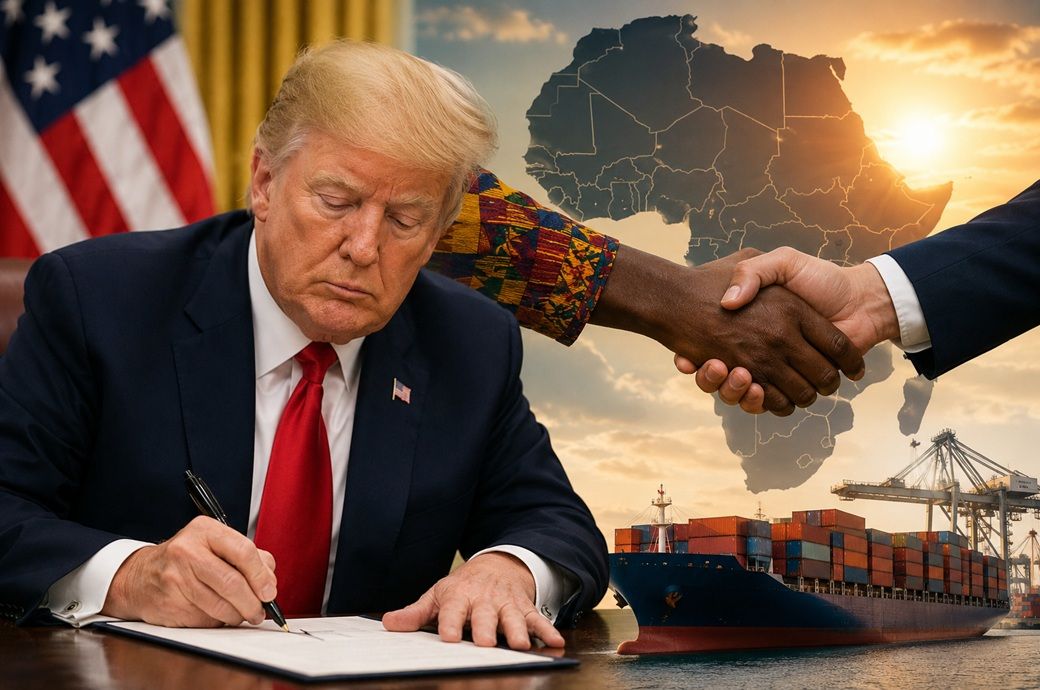
Exporters in many African nations have regained duty-free access to the US after the African Growth and Opportunity Act (AGOA) was extended till 2026 end by a US presidential proclamation.
The extension follows a lapse in the programme in late 2025, which had caused uncertainty for African exporters dependent on US market access.
Gabon was reinstated as an AGOA beneficiary, reversing its 2023 removal.
It was restored in February 2026 when Trump signed the Consolidated Appropriations Act, extending AGOA retroactively to the end of 2026.
The latest presidential proclamation on May 19 formally implemented the extension and updated US tariff schedules. Gabon has been reinstated as a beneficiary of AGOA after making sufficient progress on governance and eligibility, reversing its 2023 removal.
The announcement is a big relief for African economies that depend heavily on AGOA-linked trade, particularly in labour-intensive sectors like garments, where duty-free access significantly improves competitiveness in the US market.
But the limited extension continues uncertainty over the long-term future of the programme.
Fibre2Fashion News Desk (DS)
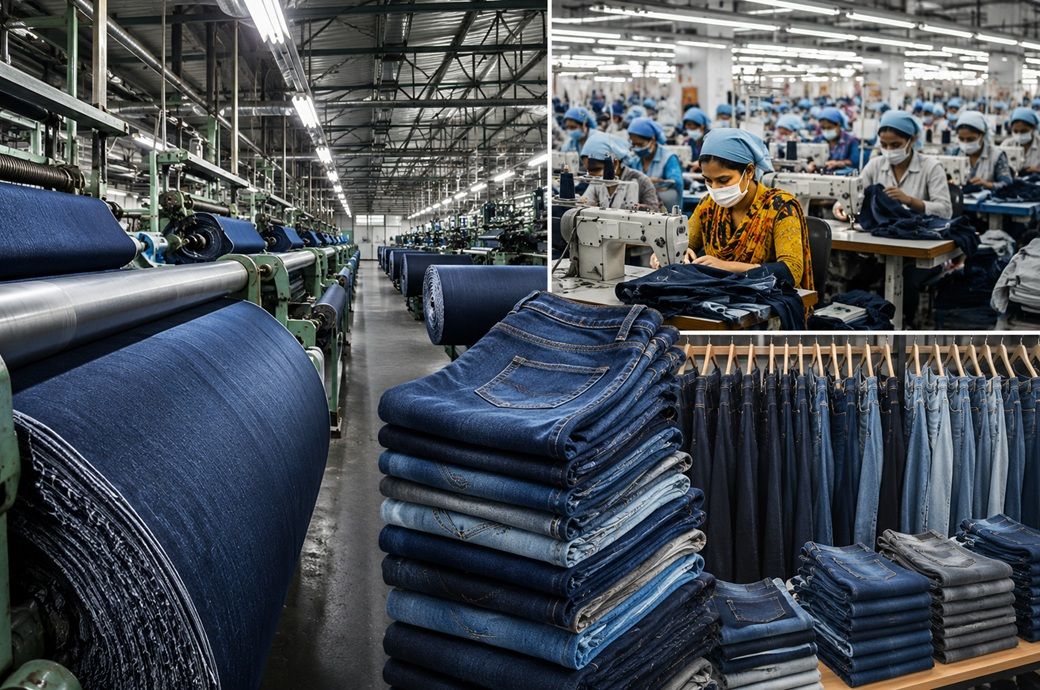
Bangladesh now ranks as the largest exporter of denim apparel to both the European Union and the United States, according to reports. This achievement reflects decades of strategic expansion, capacity-building, and a strong focus on denim as a product category.
One look at the infrastructure, and the scale of this transformation becomes clear! A little over a decade ago, Bangladesh reportedly had only about 10 to 12 denim fabric mills. That figure has since grown to nearly 50, reflecting sustained investment and long-term industry commitment.
Bangladesh’s denim journey began decades ago with a modest shipment and has evolved into a remarkable success story, establishing the country as the leading denim exporter to the EU and the USA.
The ascent has been driven by strategic expansion, robust local fabric supply base, cost-competitive workforce, and access to affordable resources.
Thanks to such efforts, the domestic mills now meet approximately 60 per cent of the country’s denim fabric requirement, and the remaining through imports. This has enabled denim apparel manufacturers to achieve a strategic balance that keeps them agile enough to serve diverse international buyers without compromising either on speed or quality.
Several structural advantages have also played a significant role in the country’s rise as a denim powerhouse. To start with, Bangladesh offers a large, cost-competitive workforce that continues to attract global sourcing decisions, and equally important is its growing reputation as a sustainability leader. Today, the country hosts the highest number of green-certified garment factories in the world, a credential that carries increasing weight as international brands tighten their environmental commitments.
Access to relatively affordable energy and water resources added another layer of competitive advantage.
Global sourcing shifts have further accelerated Bangladesh’s momentum. According to industry insiders, geopolitical uncertainty and supply chain diversification have encouraged brands to reduce reliance on China, with Bangladesh emerging as a beneficiary of this trend.
Denim’s year-round demand consistency, combined with ongoing investments in new fabric mills and advanced washing facilities, has further strengthened the sector, driving steady growth.
As per some estimates, Bangladesh shipped denim garments worth $2.6 billion to the EU and US markets last year, marking a sharp 25 per cent increase from $2.07 billion the year prior.
The United States alone accounted for $960 million of that figure, as per some estimates, a robust 34 per cent year-on-year growth, giving Bangladesh an estimated 26 per cent market share and the top position in American denim imports.
The European Union has been equally strong, with exports reaching $1.64 billion, up 21 per cent, as per some estimates, thereby cementing Bangladesh’s lead over key regional competitors, including Pakistan.
Looking ahead, the fundamentals remain firmly in Bangladesh’s favour. Denim’s enduring appeal, rooted in its comfort, durability, and versatility across casual fashion, shows no signs of fading among global consumers. And with expanding production capacity, a maturing manufacturing ecosystem, and a sustainability profile that increasingly aligns with buyer expectations, Bangladesh is well-positioned not just to defend its leadership in denim but extend it further in the days to come.
Fibre2Fashion News Desk (DR)

Tiruppur’s MMF and performancewear pivot remains strategically necessary, but 2026 cost shocks are testing its economics.
TexPro data shows knitted exports down 8.6 per cent in January-February 2026, while crude-linked polyester, dyeing, LPG and packaging costs have surged.
The cluster’s next advantage will depend on scale, backward linkages, contracts and cost pass-through discipline.
Source link


US govt formally implements extension of AGOA till 2026 end

Stock market today: Which are top gainers and losers on NSE & BSE on May 25? Check list

These Privacy-Conscious Gay Dating Apps Want to Dethrone Grindr

-

 Entertainment1 week ago
Where Pete Davidson, Elsie Hewitt stand after breakup: Details revealed
-

 Politics1 week ago
Rising diesel costs from Iran war strain US school budgets
-

 Tech1 week ago
Why Is Your Grill So Dumb? The Best Grills Set Temp Like an Oven
-

 Tech1 week ago
This Solar-Powered Smart Sprinkler Keeps My Lawn Watered Without Any Power Cables
-

 Fashion5 days ago
US cotton planting advances to 41%, concerns persist in Texas
-

 Fashion7 days ago
Turkiye’s current account deficit expected to widen in 2026: Minister
-
 Fashion4 days ago
ICE cotton sees mixed trend as rain forecasts weaken sentiment
-
 Fashion6 days ago
Nigeria Kwara Garment Factory, KWS Garment Production Village ink pact