

Fashion
NYFW: Khaite, Todd Snyder, Area, and Altuzarra


Published
September 14, 2025
Despite all the gloom mongering one can read about New York Fashion Week, the past 24 hours in Manhattan threw up a quartet of impressive collections, led by an outstanding show by Khaite.
Khaite: Naivety amid the dark underbelly of America
The set inside The Shed, a giant looming show-space in Hudson Yards, captured the mood even before the first clothes had appeared.
A series of diagonal catwalks across an all-black pond and what suggested broken up glaciers covered in mist. The floor even seemed deliberately loose underneath when you walked to take your seat.
A cinematic experience that recalled David Lynch. “The dark underbelly of America has always fascinated me,” confessed founder designer, Catherine Holstein.
A show that opened with jackets cut up the side and then slightly twisted to imply a sense of insecurity and imperfection. They were then paired with jeans, some with 12-inch turn-ups, or anchored by docksiders finished with kitten heels.
The heart of the matter were the strict leather elongated fisherman jackets or urban double-breasted blazers. Everything cut a tiny bit off-kilter.
Holstein has just had a second child, a daughter, and a sense of innocence was apparent in the chiffon blouses embroidered with certain imperfections in hand sewn fabric petals.

“I really wanted the idea of naivety. We kept coming back to that idea,” she expounded.
Nonetheless, the clothes had a fierce quality, jackets hanging at odd angles; beige cotton cocktails twisted to look faintly unfinished; bra tops shaped like nuns’ habits; stiff felt tops cut half way down the torso, but with elongated sleeves.
“I find confidence in insecurity. Throughout my life I have always felt a bit different from everybody even if I didn’t look that different. I never felt part of any group in school,” she said.
In effect, every look pretty much reeked Khaite, the style DNA is so strong, helping to make the brand the defining look of contemporary New York, a great uniform for stylish busy women in the urban jungle.
Todd Snyder: Havana hipsters rule
Where was Ernest Hemingway when you needed him: since the writer would have enjoyed penning a few bon mots to the hipster Havana collection presented Saturday by Todd Snyder.

“Havana playboy-meets-faded vintage with a little dose of Miami ’80s,” commented Snyder, in the backstage of his show, held inside a new office building that soared up on 28th street.
Riffing on the elegant legacy of old Havana with a great array of striped linen suits. Todd is an accomplished tailor – offering a whole series of dry linen jackets made with broad but unstructured shoulders or finished with shawl collars. Or seen in Norfolk jackets or belted safaris, cinched with belts. Pants had high waists and reverse pleats and were all forgiving.
Composed in a tropical palette of faded red coral, playful purple or papaya cream, the clothes cried out for a vintage convertible – the sort Cubans still lovingly maintain.

Snyder seems very much a designer on a roll. He has just taken a floor in the same building as his new HQ. While his collaborations with brands in this show – from Moscot eyewear to Il Bisonte bags and fantastic woven Guanabana weekenders – all looked great.
Next season, Todd will celebrate his 15th anniversary. This smart show was a reminder that his cool and classy take on menswear is the key to his longevity.
Area: Aburn debuts with panache
One of the most interesting new voices in New York fashion is Nicholas Aburn, the new creative director at Area.

Aburn succeeded Piotrek Panszczyk, who co-founded the experimental label with Beckett Fogg a decade ago. He joins Area with an excellent pedigree, after stints with Tom Ford, Alexander Wang and most recently, Balenciaga couture.
Which is what much this collection was, avant-garde couture: whether silk rope and pearly skirts and cocktails; or sequinned football jerseys cut sexy side-slit party dresses.
Though Aburn opened with downtown street chic – black jerkins, elephantine jeans and a series of kicky mini-skirts. Composed by turning trousers into minis and using the legs as wild knotted belts.
Nicholas could use with a little self-editing, and some of his psychedelic sequinned gowns and metal chain frocks did recall Germanier in Paris. But this still felt like the launch of a designer that will have real influence.
Altuzarra: Poised at the Woolworth
No designer in New York today is quite as refined as Joseph Altuzarra, even if his refinement can come with absurdist twists.

Like in this morning show, staged before a few score of editors, buyers and young beauties, high up inside the Woolworth Building near Wall Street. It debuted with floral prints inspired by the opening sequence of “American Beauty”, while surreal birds flew across silk blouses and liquid silk dresses.
When it comes to the subtle skill of draping a bias-cut cocktail, or cutting harem pants, or hanging two-pocket hunting jackets few people anywhere in fashion have Altuzarra’s panache.
Hence, it remains something of a mystery that Altuzarra is not a greater fashion star. Perhaps because his talent is too rich, too capable of making a complete wardrobe, and not so good at dreaming up a defining piece of apparel which one instantly knows is an Altuzarra.
That said, this was a spring/summer 2026 collection of great elegance, and a triumphant reminder that New York Fashion Week is very much alive and kicking.
Copyright © 2025 FashionNetwork.com All rights reserved.
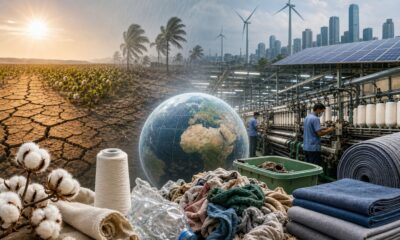







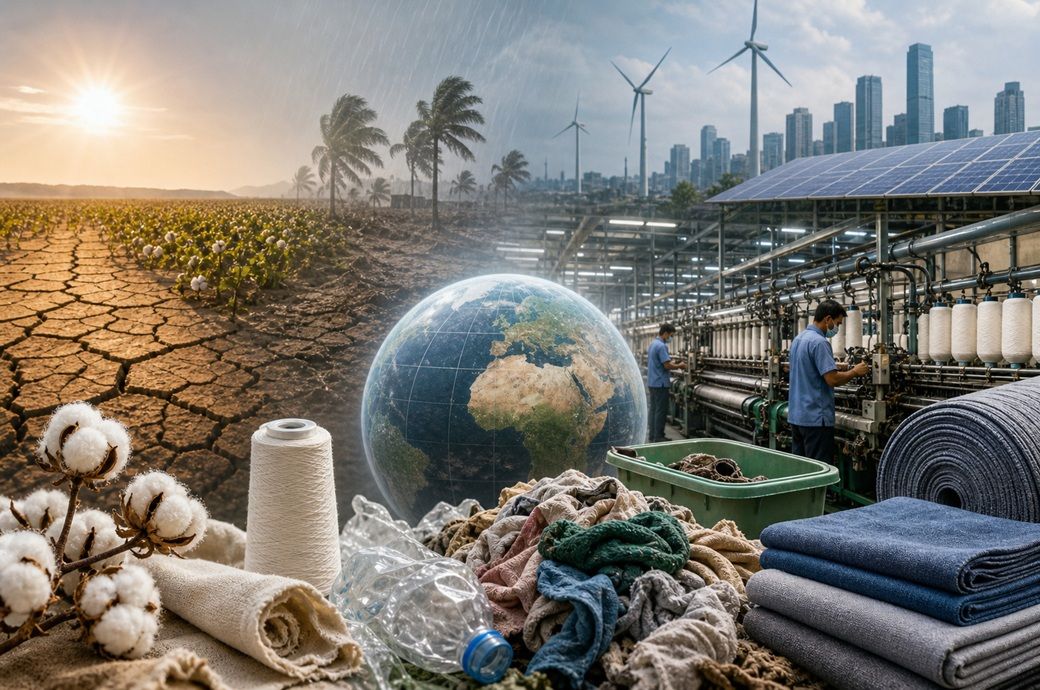
The apparel climate story has moved out of the ESG report and into the cost sheet. In ****–****, climate risk is showing up as cotton quality loss, import dependence, energy volatility, cooling capex, carbon-price exposure and mandatory textile-waste fees. For brands and suppliers, the question is no longer whether climate action is ‘responsible’. It is whether delay will make product margins uncompetitive.
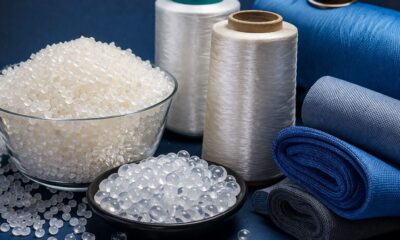
The latest data makes the shift visible. Textile Exchange says global fibre production reached *** million tonnes in **** and could hit *** million tonnes by **** if business continues as usual. Polyester alone now makes up ** per cent of global fibre output, with ** per cent still fossil-based. That scale gives apparel a low-cost material engine, but it also ties the sector to fossil energy, petrochemical volatility and future carbon accounting.
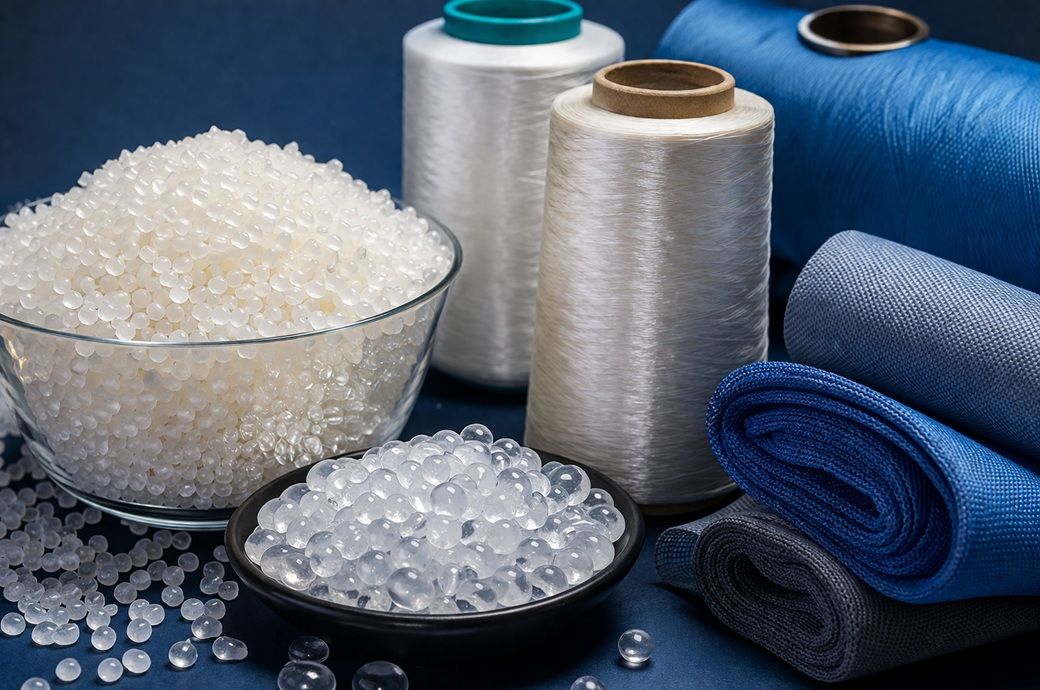
Caprolactam (CPL) prices initially held near $*.**–*.**/kg with minimal movement, while nylon chips saw uptick to ~$*.***/kg (+*.* per cent WoW) driven by short-term restocking. Nylon filament yarn (DTY **D/**F) prices remained stable at ~$*.**–*.**/kg, supported by existing inventory and steady downstream textile operations.
By the second week (April * to April **), benzene stabilised, but caprolactam began to weaken to ~$*.**–*.**/kg (−*.* per cent WoW), signalling the start of broader chain pressure. Nylon chips responded with a mild correction to ~$*.***/kg (−* per cent WoW), while filament yarn prices continued to hold steady due to inventory buffers and ongoing execution of prior textile orders. In the third week (Apr **–**), caprolactam stable to ~$*.*/kg, and chips followed to ~$*.***/kg (Stable WoW).
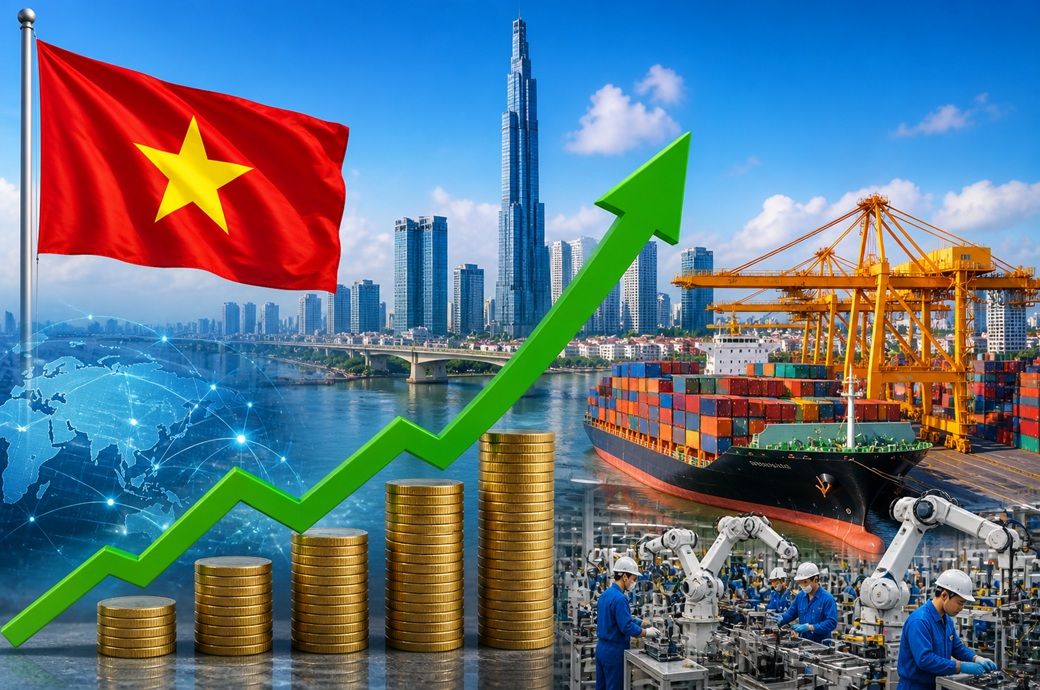
Total registered FDI, including newly registered and adjusted capital, along with foreign investors’ contributions and share purchases, reached $18.24 billion as of April 27, up 32 per cent year on year (YoY), according to the Ministry of Finance’s National Statistics Office (NSO).
Vietnam attracted $18.24 billion in FDI in January–April 2026, up 32 per cent, driven by manufacturing and processing.
Realised FDI hit a five-year high, signalling continued capacity expansion.
Trade surged to $344.17 billion, supported by strong US demand and rising imports from Asia, highlighting deeper global supply chain integration and export momentum.
A total of 1,249 new projects were licensed with combined registered capital of $12.15 billion, reflecting a 3.7 per cent annual increase in project numbers and a 2.2-fold rise in value. Manufacturing and processing dominated, attracting $8.12 billion, or 66.8 per cent of total newly registered capital.
Realised FDI in the January–April period was estimated at $7.40 billion, up 9.8 per cent YoY and marking the highest level for the period in the past five years. Of this, the manufacturing and processing sector disbursed $6.12 billion, accounting for 82.7 per cent. Meanwhile, 316 existing projects registered additional capital of $3.13 billion, representing a sharp 51 per cent decline compared to the same period last year. Combining newly registered and adjusted capital, total FDI into manufacturing and processing reached $10.49 billion, or 68.6 per cent of the total.
Foreign investors carried out 976 capital contribution and share purchase transactions worth $2.96 billion, up 61.9 per cent YoY. Among these, 325 deals increased enterprises’ charter capital by $445.13 million, while 651 share acquisitions without capital increases totalled $2.51 billion. Wholesale and retail trade led these investments, capturing $1.89 billion, or 63.9 per cent.
Among 53 countries and territories with newly licensed projects, Singapore was the largest investor with $6.05 billion, accounting for 49.8 per cent of the total. It was followed by the Republic of Korea with $4.08 billion (33.6 per cent), China with $524.1 million (4.3 per cent), Japan with $462 million (3.8 per cent), Hong Kong (China) with $329.2 million (2.7 per cent), and the Netherlands with $318.5 million (2.6 per cent).
On the trade front, Vietnam’s total trade with the rest of the world was estimated at $344.17 billion in the first four months of 2026, a significant increase from $277.21 billion in the same period last year, the NSO said. In April alone, trade volume reached an estimated $94.32 billion, rising 8 per cent from March and 26.7 per cent YoY.
The United States remained the largest importer of Vietnamese goods, with imports valued at $53.9 billion, while China continued as the top supplier with $69 billion. Imports from traditional markets also surged, with South Korea and ASEAN recording growth rates of 57.8 per cent and 44.3 per cent, respectively.
Fibre2Fashion News Desk (MS)


Telehealth Abortion Is Still Possible Without Mifepristone

FDA withdrew studies finding Covid, shingles vaccines were safe

Longtime entertainment publicist was 82

-

 Tech1 week ago
A Brain Implant for Depression Is About to Be Tested in Humans
-

 Sports1 week ago
Pro wrestling star Steph De Lander reveals how colleague’s advice helped lead her to title triumph at ACW
-

 Tech1 week ago
Almost 90% of women leave tech industry within 10 years | Computer Weekly
-
 Business1 week ago
‘I had £20,000 stolen and had to fight a 13-month fraud reporting rule to get it back’
-

 Entertainment1 week ago
Norway joins Type 26 Frigate Programme to boost NATO naval power
-

 Entertainment1 week ago
Melania Trump says ABC should ‘take a stand’ on late-night host Kimmel
-
 Business6 days ago
PSX plunges over 4,800 points | The Express Tribune
-

 Tech1 week ago
This Ambitious Laptop Doesn’t Leave Much Room for Your Hands