

Politics
Landslide flattens Sudan village, kills more than 1,000

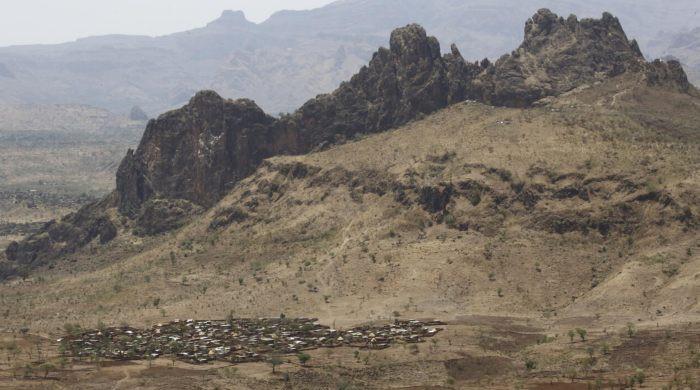
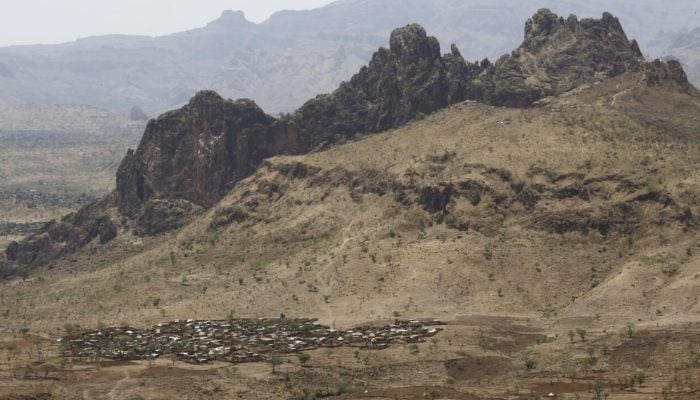
- Entire village buried in Jebel Marra.
- Only one survivor pulled from disaster.
- SLM appeals for urgent UN assistance.
KHARTOUM: A massive landslide in Sudan’s western Darfur region has flattened an entire mountain village and killed more than 1,000 people, a rebel group said, leaving only one survivor.
The disaster struck Sunday after days of heavy rain, devastating the village of Tarasin in the Jebel Marra area, the Sudan Liberation Movement/Army (SLM), led by Abdulwahid al-Nur, said in a statement.
“Initial information indicates the death of all village residents, estimated at more than 1,000 individuals, with only one survivor,” the group said, calling the landslide “massive and devastating”.
The group appealed to the United Nations and other aid organisations for help recovering the dead still buried under mud and debris.
Images the SLM published on social media appeared to show huge sections of the mountainside collapsed, burying the village under thick mud, uprooted trees and shattered beams.
Sudan is embroiled in a bloody war between the army and paramilitary Rapid Support Forces (RSF), which has plunged the country into one of the world’s worst humanitarian crises.
The SLM controls parts of the Jebel Marra range and has mostly stayed out of the conflict, but hundreds of thousands of people have fled into SLM-held territory to escape the violence.
Jebel Marra is a rugged volcanic range stretching about 160 kilometres (100 miles) southwest of North Darfur’s besieged capital of El-Fasher, which the RSF is pushing to capture after besieging it for more than a year.
The area is prone to landslides, particularly during the rainy season which peaks in August. A 2018 landslide in nearby Toukoli killed at least 20 people.
‘Tragedy’
Darfur’s army-aligned governor, Minni Minnawi, called the landslide a “humanitarian tragedy that goes beyond the borders of the region”.
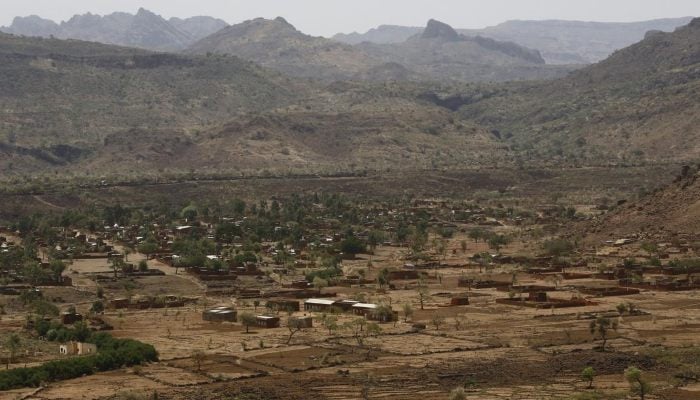
“We appeal to international humanitarian organisations to urgently intervene and provide support and assistance at this critical moment, for the tragedy is greater than what our people can bear alone,” he said in a statement.
Much of Darfur — including the area where the landslide occurred — remains largely inaccessible to international aid organisations due to the ongoing fighting, severely limiting the delivery of urgent humanitarian assistance.
The disaster also comes during Sudan’s rainy season, which often renders mountain roads and remote areas impassable.
The relentless rainfall further complicates efforts by humanitarian organisations to access those in need, particularly in conflict-affected regions like Darfur where infrastructure is already fragile or non-existent.
Since April 2023, Sudan has been ravaged by a war that erupted with a power struggle between army chief Abdel Fattah al-Burhan and his former deputy, RSF commander Mohamed Hamdan Daglo.
In a series of offensives, Burhan’s forces regained central Sudan this year, leaving the RSF with control over most of Darfur — where it has conquered all but one state capital, El-Fasher — and parts of southern Kordofan.
The fighting has killed tens of thousands and displaced millions, including about four million from the capital alone.
The war has decimated the northeast African country’s infrastructure and created what the UN describes as the world’s largest displacement and hunger crises.
About 10 million people are currently displaced within Sudan, while an additional four million have fled to neighbouring countries, according to the UN.

- Indian envoy summoned to express “grave concern”, says ministry.
- India dismissed reports of vandalism as “misleading propaganda”.
- Bangladesh-India ties deteriorate since ex-PM Hasina fled New Delhi.
DHAKA: Bangladesh on Tuesday summoned the top Indian envoy as fresh protests erupted outside its high commission in New Delhi over the mob lynching of a Hindu worker in Dhaka.
The garment worker was accused of blasphemy and lynched on December 18 as anti-India sentiment rises in the neighbouring majority Muslim nation. Seven suspects have been arrested over the killing.
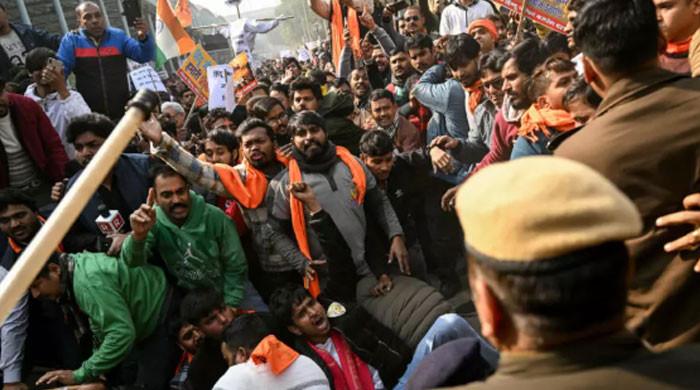
On Tuesday, hundreds of demonstrators converged near Bangladesh’s High Commission in New Delhi waving saffron flags and banners, including one that read: “Stop Killing Hindus in Bangladesh”.
“Hindus are warning Bangladesh that it is taking the wrong approach,” said Puneet Gautam, 37, a protester and member of the right-wing Vishva Hindu Parishad (VHP) organisation.
VHP members and security personnel clashed outside Dhaka’s outpost as the crowd shoved its way through yellow metal barricades around 300 metres from the building.
Earlier on Tuesday, Bangladesh’s foreign ministry had summoned Indian High Commissioner Pranay Verma to express “grave concern” over previous protests outside its visa centres.
In its statement, the ministry cited “regrettable incidents” and vandalism outside its visa centres in New Delhi and Siliguri last week. India has dismissed reports of vandalism as “misleading propaganda”.
Ties between the neighbours have deteriorated since ousted prime minister Sheikh Hasina fled the pro-democracy uprising last year and sought refuge in India.
India says it is still considering Dhaka’s requests to extradite Hasina, who was sentenced to death in absentia for orchestrating a deadly crackdown on the uprising.
Bangladesh has been in political turmoil since the end of Hasina’s rule, with violence marring the campaigning ahead of next year’s election.
This month, parliamentary hopeful and vocal India critic Sharif Osman Hadi was shot by masked assailants in Dhaka, with unconfirmed reports suggesting his attackers might have fled to India.
The killing set off protests in Dhaka with arsonists torching several buildings, including two major newspapers deemed to favour India as well as a prominent cultural institution.
Mobs also pelted stones at the Indian High Commission in the port city of Chattogram, where India has since suspended visa services.
On Monday, Dhaka temporarily suspended visa services in Delhi.
Russia has urged Delhi and Dhaka to mend fences.
“The sooner this happens, the better,” Russian Ambassador to Bangladesh, Alexander G Khozin, was quoted as saying in the Dhaka Tribune.


An investigative reporter best known for exposing fraud at Silicon Valley blood-testing startup Theranos sued Elon Musk’s xAI, Anthropic, Google, OpenAI, Meta Platforms and Perplexity on Monday for using copyrighted books without permission to train their artificial intelligence systems.
New York Times reporter and “Bad Blood” author John Carreyrou filed the lawsuit in California federal court with five other writers, accusing the AI companies of pirating their books and feeding them into the large language models (LLMs) that power the companies’ chatbots.
The lawsuit is one of several copyright cases brought by authors and other copyright owners against tech companies over the use of their work in AI training. The case is the first to name xAI as a defendant.
Spokespeople for the defendants did not immediately respond to requests for comment on the lawsuit.
Unlike other pending cases, the writers are not seeking to band together in a larger class action – a type of lawsuit they said favours defendants by allowing them to negotiate a single settlement with many plaintiffs.
“LLM companies should not be able to so easily extinguish thousands upon thousands of high-value claims at bargain-basement rates,” the complaint said.
Anthropic reached the first major settlement in an AI-training copyright dispute in August, agreeing to pay $1.5 billion to a class of authors who said the company pirated millions of books.
The new lawsuit said class members in that case will receive “a tiny fraction (just 2%) of the Copyright Act’s statutory ceiling of $150,000” per infringed work.
Monday’s complaint was filed by attorneys at law firm Freedman Normand Friedland, including Kyle Roche, whom Carreyrou profiled in a 2023 New York Times article.
During a November hearing in the Anthropic class action, US District Judge William Alsup criticised a separate law firm Roche co-founded for gathering authors to opt out of the settlement in search of “a sweeter deal.” Roche declined to comment on Monday.
Carreyrou told the judge at a later hearing that stealing books to build its AI was Anthropic’s “original sin” and that the settlement did not go far enough.
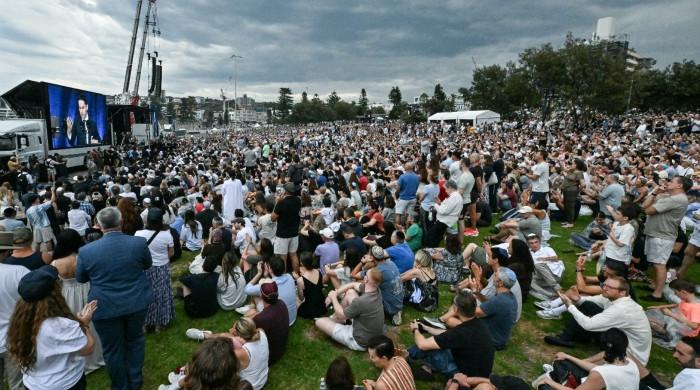

- Bill limits most gun owners to four firearms, 10 for farmers.
- Main opposition Liberal party backs amendments.
- Three-quarters of Australians want tougher gun laws, shows poll.
Australia’s most populous state is set to pass tougher gun laws, ban the display of terrorist symbols and curb protests after the state parliament’s lower house cleared a bill late on Monday in an emergency sitting following the Bondi mass shooting.
The terrorism and other legislation amendment bill won support from the opposition Liberal Party in New South Wales state, and is expected to clear the upper house on Tuesday.
The ruling centre-left Labour government has proposed capping most individual gun licences at four firearms and allowing up to 10 for farmers.
Fifteen people were killed and dozens were injured in the mass shooting at a Jewish Hanukkah celebration at Bondi on December 14, a shock attack that has prompted calls for tougher gun laws and stronger action against antisemitism.
Police said one alleged gunman, Sajid Akram, 50, who was shot dead by officers, owned six firearms. His 24-year-old son Naveed, faces 59 charges, including murder and terrorism.
Although Australia tightened gun laws after a 1996 shooting that killed 35 people, a police firearms registry showed more than 70 people in New South Wales, which includes Sydney, each own over 100 guns. One licence holder has 298 guns.
A Sydney Morning Herald poll on Tuesday found three-quarters of Australians want tougher gun laws. The rural-focused National Party opposed the gun reforms in New South Wales, saying the amendments would disadvantage farmers.
The federal government has also pledged reforms, including tighter gun controls and a gun buyback plan but has resisted calls to set up a royal commission, the most powerful type of government inquiry, into the attack.
Instead, Prime Minister Anthony Albanese, who is facing mounting criticism from opponents who argue his government has not done enough to curb a rise in antisemitism, has announced an independent review of intelligence and law enforcement agencies.
“We need to get to these answers quickly, and we cannot be waiting around for years, which is what a royal commission would take,” Defence Minister Richard Marles told ABC News on Tuesday.

Tariff jitters: US consumer confidence slips in December; inflation and jobs worries deepen – The Times of India
Kiyan Anthony is stepping out of his dad’s shadow — and into his own spotlight

US economy grows at fastest pace in two years

-
 Business1 week ago
Studying Abroad Is Costly, But Not Impossible: Experts On Smarter Financial Planning
-

 Fashion5 days ago
Indonesia’s thrift surge fuels waste and textile industry woes
-
 Business1 week ago
KSE-100 index gains 876 points amid cut in policy rate | The Express Tribune
-

 Sports1 week ago
Jets defensive lineman rips NFL officials after ejection vs Jaguars
-
 Business5 days ago
BP names new boss as current CEO leaves after less than two years
-

 Tech5 days ago
T-Mobile Business Internet and Phone Deals
-

 Entertainment1 week ago
Prince Harry, Meghan Markle’s 2025 Christmas card: A shift in strategy
-

 Sports5 days ago
PKF summons meeting after Pakistani player represents India in kabaddi tournament