

Fashion
Levi’s launches LEAP to cut emissions in India supply chain

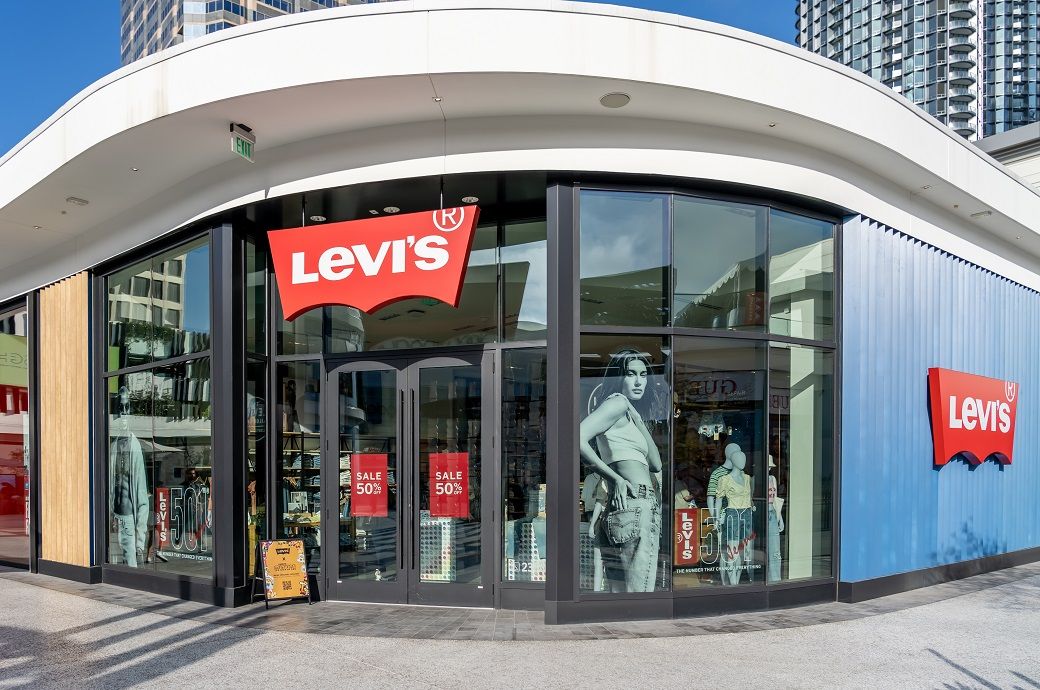
LEAP will offer suppliers the best available pricing, terms, and return on investment to enable renewable energy procurement. This comes at a time when there is a significant opportunity to increase awareness and technical capacity with Indian suppliers as they navigate the diverse and evolving renewable electricity landscape. The program will be shared with the company’s textile and apparel manufacturing suppliers in India, including in-depth training modules, financial analysis, and access to Schneider Electric’s advisory services.
“We are committed to incentivising renewable energy in our supply chain and know our path to our near-term supply chain emissions reduction target is through proven, scalable solutions that fit each supplier,” said Jeffrey Hogue, chief sustainability officer at LS&Co. “Between Schneider Electric’s expertise and the robust network of renewable electricity opportunities available in India, we’re now in a position to better support our suppliers in their own sustainability strategies – and to deliver on ours.”
Levi Strauss & Co and Schneider Electric launched the LS&Co Energy Accelerator Program (LEAP) in India to expand renewable electricity in the supply chain.
The initiative supports LS&Co’s 42 per cent emissions reduction target by 2030.
LEAP provides suppliers with training, financial analysis, and access to advisory services to adopt scalable clean energy solutions.
For the first stage of LEAP, LS&Co. will support textile and apparel manufacturing suppliers in India to transition to renewable electricity, with a goal of later expanding the program to other business partners and geographies. Suppliers that join LEAP will also have the opportunity to explore individual purchase opportunities, such as on-site solar or certificate purchasing, or join a multi-buyer cohort for a power purchase agreement (PPA).
“I am happy to learn that Levi Strauss & Co. has taken steps to increase access to renewable electricity for their supply chain,” said Shri Santosh Kumar Sarangi, Secretary, Ministry of New and Renewable Energy, Government of India. “I welcome this initiative, and this shows that businesses can benefit from clearer and more accessible renewable energy opportunities.”
Schneider Electric has advised companies, including LS&Co., on more than 1.3 TWh of aggregated renewable electricity procurement across supply chain programs managed on behalf of clients in multiple markets. LS&Co. was a participant alongside four other companies in the first multi-buyer power purchase agreement (PPA) cohort for Walmart’s Gigaton PPA program in the US, managed by Schneider Electric, which will serve as a model for any group PPAs developed through LEAP.
“At Schneider Electric, we believe that accelerating the transition to renewable energy across global supply chains is essential to achieving meaningful climate impact. We’re proud to partner with Levi Strauss & Co. on the LEAP initiative, which exemplifies how companies can lead with purpose and scale proven solutions to empower their suppliers,” said Steve Wilhite, President, Schneider Electric Sustainability Business. “By combining our deep expertise in renewable energy advisory with LS&Co.’s bold sustainability vision, we’re helping unlock new opportunities for cleaner energy in India and beyond.”
“As India embarks on an ambitious journey towards a greener, more resilient future, it’s inspiring to see global brands like Levi Strauss & Co. embracing this shift and empowering their supply chains to adopt renewable energy. At Schneider Electric, we are proud to support this transition through Levi Strauss & Co. Energy Accelerator Program (LEAP), combining our expertise with a shared purpose to accelerate decarbonisation, foster industrial innovation, and build a sustainable India for generations to come.” – Deepak Sharma, Zone President – Greater India & MD & CEO, Schneider Electric India
Note: The headline, insights, and image of this press release may have been refined by the Fibre2Fashion staff; the rest of the content remains unchanged.
Fibre2Fashion News Desk (MS)







The increase was driven primarily by higher reinvested earnings and intra-company loans, indicating continued engagement by existing investors with Bangladesh.
Reinvested earnings rose by 318.25 per cent, from $103.79 million in 2024 to $434.10 million in 2025, while intra-company loans increased by 25.68 per cent, from $621.96 million to $781.68 million.
Bangladesh’s net FDI inflows increased by 39.36 per cent last year to $1,770.42 million compared with $1,270.39 million in 2024, the Bangladesh Bank said.
The increase was driven primarily by higher reinvested earnings and intra-company loans.
Reinvested earnings rose by 318.25 per cent, from $103.79 million in 2024 to $434.10 million in 2025, while intra-company loans rose by 25.68 per cent.
Equity capital remained broadly stable, rising by 1.84 per cent, from $544.64 million to $554.64 million in 2025, a release from Bangladesh Investment Development Authority said.
Greenfield project announcements declined by 16 per cent in 2025.
Fibre2Fashion News Desk (DS)
The company’s adjusted EBITDA, excluding Employee Stock Option Plan (ESOP) expenses, rose around 14 per cent YoY to ₹468 crore, while EBITDA margin improved by 20 basis points to around 9.3 per cent. Excluding the reciprocal tariff impact of around ₹36 crore and incremental losses of around ₹13 crore in Bihar and Guatemala, adjusted EBITDA margin stood at around 10.3 per cent.
Pallab Banerjee, managing director, Pearl Global Industries, said: “FY26 marked the company’s second consecutive year of double-digit growth and improved profitability. This performance further solidifies the position of Pearl Global’s diversified operating model and disciplined execution across geographies.”
Pearl Global Industries has reported its highest-ever FY26 revenue of ₹5,025 crore (~$523.93 million), up 11.5 per cent YoY, driven by volume growth and value-added products.
PAT rose 17 per cent to ₹270 crore (~$28.15 million), while Q4 revenue hit ₹1,314 crore (~$137 million).
The company shipped 78.1 million pieces.
Its net worth stands at ₹1,438 crore (~$149.93 million).
He said that geopolitical shifts and Gulf conflicts could lead to energy cost escalation, affecting raw material and logistics costs. However, the company remains prepared to manage these headwinds, supported by its diversified manufacturing base, strong order book, and broad market presence.
The profit after tax (PAT) increased 17 per cent YoY to ₹270 crore (~$28.15 million), the company said in a press release.
On a standalone basis, FY26 revenue stood at ₹1,081 crore, while adjusted EBITDA was ₹67 crore, with EBITDA margin improving by 60 basis points to 6.2 per cent, mainly due to cost restructuring. Standalone PAT rose to ₹69 crore from ₹55 crore in the previous year.
The company’s net worth stood at ₹1,438 crore (~$149.93 million) as of March 31, 2026, compared with ₹1,146 crore a year earlier.
“In FY26, Group delivered another year of resilient performance against a complex geopolitical backdrop. Group achieved, among others, two major milestones this year: revenue crossed INR 5,000 crore mark and installed capacity surpassed 100 million pieces per annum,” said Pulkit Seth, vice-chairman and non-executive director, PGIL.
Seth added that the global apparel industry faced tariff-related disruptions during FY26, with the company’s India operations impacted by tariffs and penal duties imposed by the US. However, he added that Pearl Global leveraged its diversified, multi-country manufacturing presence to mitigate these challenges and deliver double-digit growth.
For the fourth quarter (Q4) of FY26, PGIL posted its highest-ever quarterly revenue of ₹1,314 crore (~$137 million), up 6.9 per cent YoY. Adjusted EBITDA rose 13.7 per cent to ₹135 crore, with margin at 10.3 per cent, the highest EBITDA margin recorded by the company in any quarter. PAT for the quarter stood at ₹81 crore, up 24.6 per cent YoY, PGIL said in a press release.
Standalone revenue during the quarter stood at ₹304 crore, adjusted EBITDA at ₹24 crore, and PAT at ₹14 crore.
PGIL shipped its highest-ever volumes in Q4 FY26 and FY26, at 22 million pieces and 78.1 million pieces respectively. Its annual installed capacity crossed 100 million pieces, reaching around 101 million pieces.
The ongoing capex in Bangladesh is expected to be completed by the first half of FY27 and will add around 6-7 million pieces of capacity during the year.
Fibre2Fashion News Desk (SG)

PTA prices recorded notable declines across key Asian benchmarks, tracking crude oil weakness rooted in evolving geopolitical signals. The correction was broad-based, spanning China, Southeast Asia, and South Korea, while India**;s CIF price held steady reflecting the lag in import contract structures and limited spot availability in the domestic market on the day.
The *** per cent Polyester Yarn market witnessed a slightly negative trend during the assessed period, with mild price corrections observed across both yarn grades in the Asia Free on Board (FOB) China market. Prices for **s (*** per cent polyester yarn) declined from around $*.***/kg to nearly $*.***/kg, registering a decrease of approximately *.** per cent.


Gartner: How AI will transform managed network services | Computer Weekly

Trump issues dire warning to Iran to accept peace deal
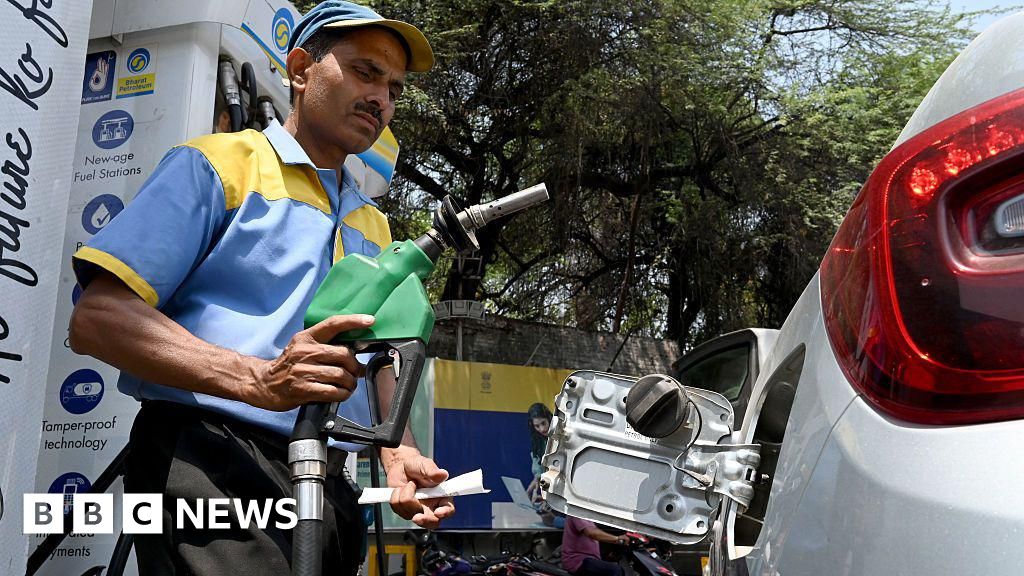
Oil prices rise after Trump warns Iran over stalled peace talks

-

 Entertainment5 days ago
Conan O’Brien hat tricks as Oscar host
-

 Tech1 week ago
Could Contact-Tracing Apps Help With the Hantavirus? Not Really
-

 Tech1 week ago
I Tried the Best Captioning Smart Glasses, and Only One Leads the Pack
-

 Fashion5 days ago
Italy’s Zegna Group’s Q1 growth boosted by strong organic performance
-

 Sports1 week ago
Bobby Cox, legendary Atlanta Braves manager who led 1995 World Series champions, dead at 84
-

 Entertainment1 week ago
Martin Short: Facing tragedy with joy
-

 Entertainment1 week ago
Tom Brady gets back at Kevin Hart during Netflix roast
-

 Entertainment1 week ago
Martha Stewart: How to make an omelet