

Business
#LIVE: President Trump, Russia's Vladimir Putin hold press conference following bilateral meeting













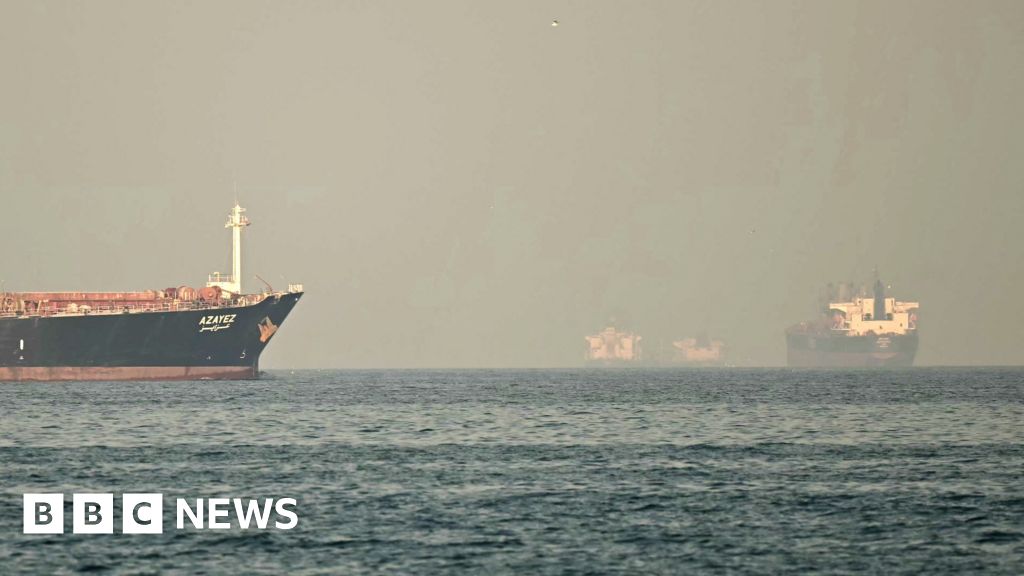
International shipping is said to have come to a standstill at the strait’s entrance, with fears of disruption already pushing up global oil prices.
Source link
Business
Khamenei dead, Middle East on edge: What will be the implications of Trump’s ‘Epic fury’ on stock markets, gold & oil? – The Times of India

The global markets are in for a phase of enhanced turmoil and uncertainty! The ongoing tensions in the Middle East after US and Israel’s strikes on Iran and Ali Khamenei’s death may have investors running for cover – looking for an asset class that is safer.During the night of February 27–28, the United States and Israel carried out joint aerial strikes on Iran as part of “Operation Epic Fury.” Statements by President Trump openly referring to regime change suggest that the confrontation could evolve into a prolonged campaign rather than remain a limited exchange, say market analysts at Franklin Templeton Institute.What does the situation mean for stock markets, energy markets (oil), gold and other asset classes? Here’s what Franklin Templeton Institute analysts have to say:From a market perspective, the key uncertainty is whether the conflict remains confined to direct military engagement or expands into disruptions affecting energy supplies and logistics networks, which would sustain a higher and more persistent risk premium.At the centre of the ongoing uncertainty from a global market and trade perspective is the Strait of Hormuz. While a complete blockade would carry severe consequences for Iran itself, the country has the capability to disrupt maritime traffic through tactics such as vessel harassment, seizures, drone activity, cyber operations, or the use of proxy forces.
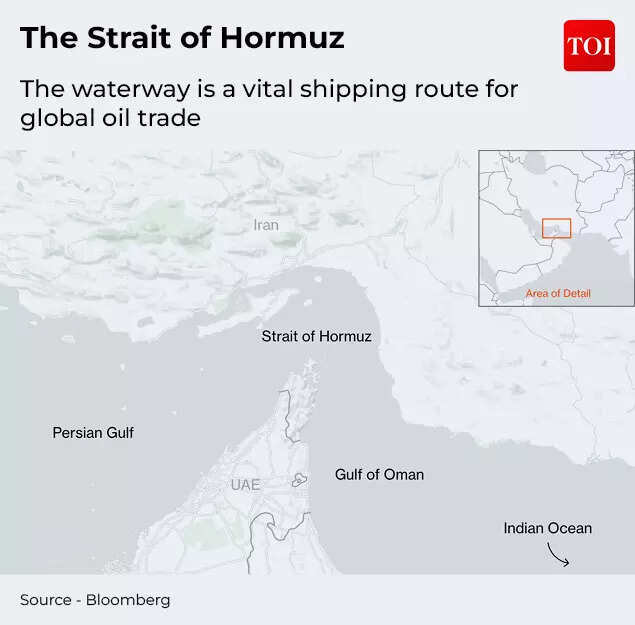
Strait of Hormuz
The most immediate economic impact is expected in energy markets, where crude oil and natural gas prices are likely to move higher, they say. Such actions, feel analysts, will keep geopolitical risk premiums at high levels. In 2024, approximately 20 million barrels per day moved through the Strait of Hormuz, which is around one-fifth of global petroleum liquids consumption. Even a limited interference – which can be caused by delays, rerouting, or isolated seizure – can push prices higher through increased risk perception well before any actual shortages emerge.Liquefied natural gas should not be overlooked in this context. Qatar has the world’s third-largest LNG export capacity, and roughly one-fifth of global LNG shipments pass through the Strait of Hormuz, largely consisting of Qatari exports. As a result, shipping risks in the region affect gas markets as significantly as oil markets.Also Read | US-Israel strikes on Iran: How will India be hit by Strait of Hormuz closure? ExplainedShipping expenses have already begun to rise, with insurance costs acting as a major driver. Insurers have started issuing cancellation notices and revising war-risk premiums for voyages in the Gulf region. Some routes have reportedly seen premium increases of up to about 50%, while earlier periods of tension recorded rises exceeding 60% on important trade corridors. These developments effectively tighten supply conditions even when production levels remain unchanged.The possibility of the conflict spreading across the region is increasing. Franklin Templeton Institute analysts are of the view that across global financial markets, the immediate response to such shocks is usually driven by adjustments in risk perception rather than by underlying economic changes. “The initial market reaction for this type of event would typically see Treasury yields move lower and equities lower—mostly a risk-premium repricing. Impacts on activity/earnings may be delayed and uneven. The US dollar reaction is not guaranteed; gold tends to benefit while bitcoin has been trading like a risk asset (i.e., down with equities), reinforcing that it’s not typically a reliable hedge/diversifier in geopolitical drawdowns,” say Franklin Templeton Institute analysts.However, they note that experience shows markets often come to view geopolitical disruptions as temporary. Initial spikes in risk premiums are frequently followed by the realization that the overall effect on corporate profitability is limited. The duration of the conflict, developments in shipping and insurance costs, and the eventual resolution will be more important than the initial headlines.“We would not yet label this a clean buy-the-dip setup—duration, shipping/insurance mechanics, and the endgame matter more than the first headline,” they say.From an investment perspective, the near-term outlook favours sectors linked to energy markets, as well as companies benefiting from higher shipping and insurance costs, along with defence-related industries, the analysts say. At the same time, caution is warranted toward emerging markets that depend heavily on energy imports and toward cyclical sectors sensitive to fuel and logistics costs, including airlines and certain industrial segments.“For protection, we prefer oil upside/volatility structures and selective gold exposure over broad equity shorts—the path will be driven more by shipping/insurance reality than by the new cycle,” they conclude.
Business
US-Israel-Iran War: Strait Of Hormuz, A Global Oil Transit Chokepoint, Hit? Will It Impact India?
Last Updated:
US-Israel-Iran War And Strait Of Hormuz: How has the conflict impacted the traffic in the global oil shipping lane? What does it mean for India and the world? News18 explains




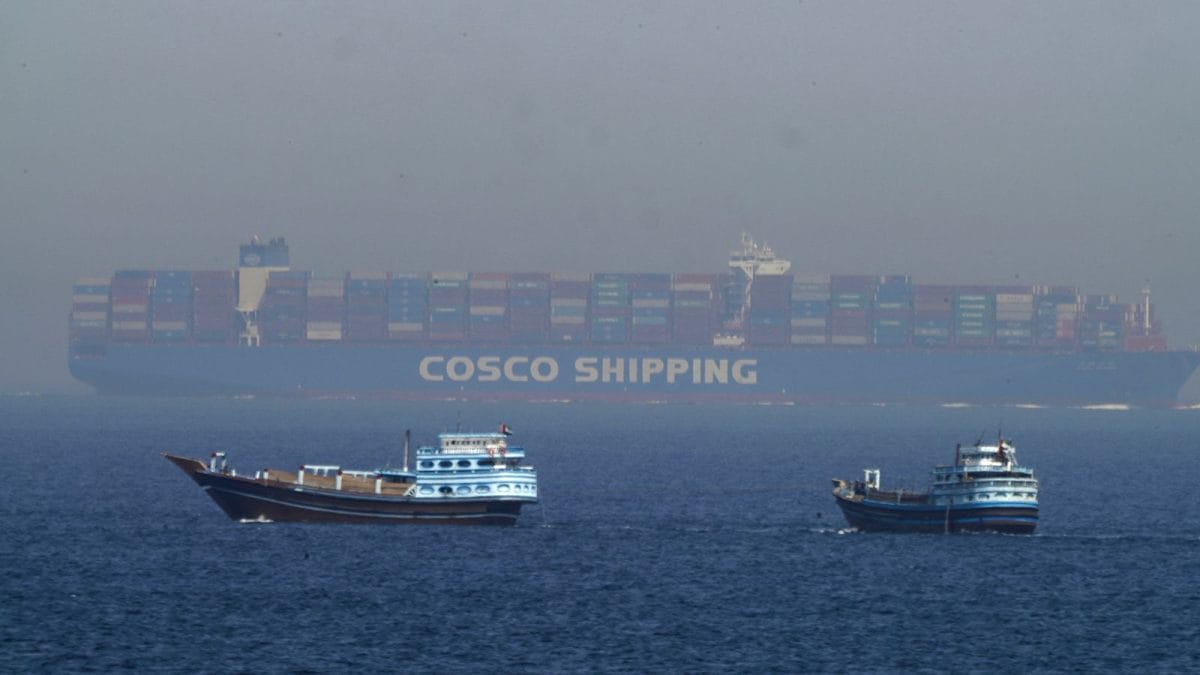
Two traditional dhows sail by a large container ship in the Strait of Hormuz. (AP)
The Strait of Hormuz is currently the focus of a severe global crisis. Following joint Israeli-United States strikes on Iran on February 28, the Islamic Revolutionary Guard Corps (IRGC) has reportedly closed the waterway to all maritime traffic.
Where is it? How was the conflict impacted the traffic? What does it mean for India and the world? News18 explains
Where is the Strait of Hormuz?
It is a narrow, strategically vital waterway in the Middle East that serves as the only sea passage from the Persian Gulf to the open ocean.
It links the Persian Gulf (to the west) with the Gulf of Oman and the Arabian Sea (to the southeast).
Bordering Countries
North Coast: Iran
South Coast: The Musandam Peninsula (an exclave of Oman) and the United Arab Emirates
It is about 21 to 33 miles (33–54 km) wide at its narrowest point. Due to the narrowness, ships must use two-mile-wide lanes (one inbound, one outbound) separated by a two-mile buffer zone to prevent collisions.
Major islands within or near the strait include Qeshm, Hormuz, Larak, and Hengam, most of which are controlled by Iran.
Key Oil Shipping Lane: Why the Strait of Hormuz matters
The Strait of Hormuz is the world’s most critical oil chokepoint. It connects the Persian Gulf with the Gulf of Oman and the Arabian Sea. It is approximately 21 miles (33 km) wide at its narrowest point.
It handles approximately 20% of global oil consumption (around 20 million barrels per day) and 20-25% of the world’s liquefied natural gas (LNG), primarily from Qatar. Over 80% of the oil passing through the strait is destined for Asia, with China, India, Japan, and South Korea being the primary importers.
Alternative routes are limited and cannot fully compensate for a total closure of the strait.
Saudi Arabia can divert up to 5 million barrels per day via its East-West Pipeline to the Red Sea. The UAE operates the Habshan-Fujairah pipeline, which can carry roughly 1.5 million barrels per day directly to the Gulf of Oman. Iraq has a pipeline through Turkey, but it primarily handles crude from northern fields.
How has the US-Israel-Iran conflict hit the Strait Of Hormuz?
While Iran has not issued a formal legal confirmation of a total blockade, vessels in the region are receiving VHF radio transmissions from the IRGC stating that “no ship is allowed to pass”.
The U.S. has surged naval assets to the region, including the USS Gerald R. Ford and the USS Abraham Lincoln, in what is described as the largest deployment since 2003.
The impact
Forecasts for Brent crude have already been hiked toward $100 per barrel due to supply chain risks.
At least three Pakistani ships operated by the Pakistan National Shipping Corporation were reportedly stopped by Iran on March 1.
Ship traffic has plummeted, with many tankers staying in port or turning back, though some continue to transit at their own risk.
BREAKING:Iran has attacked the Palau-flagged oil tanker Skylight as it was passinf through the Strait of Hormuz right off the coast of Oman.
4 sailors wounded in the attack. The entire crew has been evacuated. pic.twitter.com/wDX5X2czq6
— Visegrád 24 (@visegrad24) March 1, 2026
Attack reported
A Palau-flagged oil tanker, Skylight, was reportedly attacked while transiting through the Strait of Hormuz near the coast of Oman, amid escalating tensions in the region. According to reports circulating on social media, the vessel was struck while passing through the strategic waterway, triggering a fire onboard. Visuals shared online show thick plumes of black smoke rising from the tanker, with flames visible near the deck. Initial reports claim that four sailors were injured in the attack. The entire crew has since been evacuated from the vessel. The extent of the damage to the tanker remains unclear
What does it mean for India?
India is facing a high-stakes energy and economic crisis due to the reported closure of the Strait of Hormuz by Iran. India is the world’s third-largest oil consumer and is uniquely vulnerable because its dependence on this specific route has actually increased in early 2026, say experts.
Approximately 50% of India’s total crude oil imports (around 2.6 million barrels per day) pass through the Strait. This volume primarily comes from Iraq, Saudi Arabia, the UAE, and Kuwait.
India is even more vulnerable in terms of LPG (Cooking Gas), as it imports almost 100% of its LPG through this chokepoint. A sustained closure would immediately threaten the Pradhan Mantri Ujjwala Yojana and domestic household energy.
About 60% of India’s Liquefied Natural Gas imports, mainly from Qatar and the UAE, transit the Strait. Every $1 increase in the price of oil adds roughly $2 billion to India’s annual import bill.
Rising fuel costs are expected to spike domestic inflation, potentially forcing the Reserve Bank of India (RBI) to keep interest rates high. The increased demand for dollars to pay for costlier oil is also putting downward pressure on the Indian Rupee (INR), according to analysts.
Beyond energy, over 13% of India’s non-oil exports (worth $47.6 billion) to Gulf nations are at risk due to shipping disruptions.
India has enough crude oil in its Strategic Petroleum Reserves (SPR) and commercial stocks to last about 10–15 days, plus another 7–10 days of finished fuel inventories. While India had recently reduced its intake of Russian oil, officials have indicated they may pivot back to Moscow if Middle Eastern supplies remain blocked, though transit from Russia takes nearly 30 days compared to 5 days from the Gulf, according to reports.
The Ministry of External Affairs has activated contingency plans for the possible evacuation of the 9–10 million Indians living in the Gulf region through Operation Sindhu-II.
External Affairs Minister S. Jaishankar is currently engaging in “shuttle diplomacy,” calling for restraint from both Iran and Israel while emphasizing the respect of sovereignty and territorial integrity.
With Agency Inputs
March 01, 2026, 18:10 IST
Read More


Man United up to third as Sesko’s hot streak of crucial goals continues

When We Were Young Festival announces 2026 hiatus: ‘See you in 2027’

The 5 Big ‘Known Unknowns’ of Donald Trump’s New War With Iran

Pakistan carries out precision strikes on seven militant hideouts in Afghanistan

Eye-popping rise in one year: Betting on just gold and silver for long-term wealth creation? Think again! – The Times of India

Kansas’ Darryn Peterson misses most of 2nd half with cramping

-
Business1 week ago
Eye-popping rise in one year: Betting on just gold and silver for long-term wealth creation? Think again! – The Times of India
-
 Politics1 week ago
Pakistan carries out precision strikes on seven militant hideouts in Afghanistan
-
 Sports1 week ago
Kansas’ Darryn Peterson misses most of 2nd half with cramping
-

 Tech1 week ago
These Cheap Noise-Cancelling Sony Headphones Are Even Cheaper Right Now
-

 Entertainment1 week ago
Saturday Sessions: Say She She performs "Under the Sun"
-
 Business1 week ago
Equinox chairman says ‘health is the new luxury’ as wellness spending soars
-

 Sports1 week ago
How James Milner broke Premier League’s appearances record
-

 Entertainment1 week ago
Viral monkey Punch makes IKEA toy global sensation: Here’s what it costs