

Business
Macao is becoming more than a gambling destination. Casinos are winning big anyway


MACAO — If you blindfolded an American tourist and plopped them on the Cotai Strip in Macao, they might take one look at the Venetian hotel and the replica Eiffel Tower and assume they were in Las Vegas.
Like Las Vegas, Macao — a special administrative region of China — is transforming itself with fresh entertainment, waterparks, spas, fine dining and sports.
This week Las Vegas Sands is hosting two NBA games in Macao, a return for the basketball league after a six-year absence from China. The company’s president and chief operating officer, Patrick Dumont, owns the NBA’s Dallas Mavericks and was pivotal in engineering the league’s return.
“I think it’s great for Macao, because it highlights really how great an entertainment city Macao truly is,” Dumont told CNBC in an interview. He highlighted the tens of billions of dollars invested to create a world-class destination for hospitality.
“We’ve been operating here for 21 years, and we’ve invested $17 billion, so the amount of entertainment capacity here is really tremendous,” Dumont said. “For us, the NBA just highlights that.”

The NBA games — between the Brooklyn Nets and Phoenix Suns, on Friday and Sunday — will be played at the Venetian Arena in Macao. Fans packed the same arena last month for an immersive K-pop concert by the group Twice.
Big-name events draw the biggest spenders at the gaming tables, according to analysts at Citigroup, which last month raised its projection for 2025 gross gaming revenue in Macao to $33.3 billion. Those projections represent growth of 10% year over year, an acceleration in gaming revenue gains.
For comparison, the state of Nevada booked a record $15.6 billion in gaming revenue in 2024, according to the American Gaming Association, citing Nevada Gaming Control Board.
But the government of Macao is intent on diversifying its economy and moving beyond its reputation as the gambling capital of the world.
When the six primary concessionaires, the companies that run licensed casino resorts in Macao, applied in 2022 to have those concessions renewed, the government extracted from them a commitment to invest nearly $15 billion over 10 years, with about 90% dedicated to non-gaming amenities.
Wynn Resorts CEO Craig Billings said in an email to CNBC that the company’s concession-related investments are “focused on entertainment and, as we have seen in many markets including Macau, entertainment is a clear driver of visitation. And that visitation is from both gaming customers and non-gaming customers.”
View of Macao, Macao.
Contessa Brewer | CNBC
At Wynn Palace in Cotai, customers might snap selfies in front of an incredible collection of F1 race cars, ride a gondola over a Bellagio-esque fountain show, or dine at SW Steakhouse while catching a different theatrical show every 30 minutes. Wynn’s investment in food-court style dining belies the renowned cuisine represented from across China and around the world.
Gaming executives across multiple companies say the demographics of visitors have changed since borders reopened after the pandemic. Younger gamblers, high-rollers and their spouses or children are enjoying increasingly inventive and diverse amusements.
New amenities
MGM Macau’s Tria spa, the result of a $7 million investment, surprises guests with a room devoted to real snowfall. And its immersive experience pool puts the guest in the middle of a virtual ocean as a violent thunderstorm approaches, with massive rain shower heads overhead sending water cascading down.
MGM China President Kenneth Feng proudly showed off top-tier suites built to reward the best and most valuable players. He told CNBC his entire team is committed to offering modern uplifting design and superb service for an evolving Chinese visitor.
“These people are young and sophisticated, and many of them come to Macao so often,” Feng said. “We need to refresh our offerings so they are excited to come to Macao and happy to visit our properties.”
This week, families with children (and grandparents and “helpers” as the nannies are often called here) skipped through Melco’s Studio City, climbing atop Toy Story characters, racing toward the indoor/outdoor waterpark, and boarding the only figure-8 Ferris wheel in the world.
At Melco’s sister resort down the strip, City of Dreams, patrons young and old filled the theater for a destination show, “House of Dancing Water.”
View of Macao.
Contessa Brewer | CNBC
At every resort, the restaurants, shops, pools and clubs connect with corridors outside casino floors that are carefully cloistered behind screens to block the gaming tables and slot machines from view.
Getting back to gambling revenue
Visitation increased nearly 20% in the first half of 2025 to 19.2 million people, according to official government statistics. Golden Week alone, an eight-day holiday period ending October 8, was expected to bring in an estimated 1.2 million visitors.
And despite the strides in general entertainment, more visitors to Macao still means more gambling.
A JPMorgan analyst note published earlier this week said this year’s Golden Week was likely to be Macao’s best in five years, with the casinos projected to bring in $686 million in gaming revenue in just the first five days of the holiday.
CNBC was not allowed to photograph or record the casino floor, as its prohibited by law in Macao. The special administrative region takes great pains to avoid provoking the Chinese government, which staunchly opposes any promotion of gambling on the mainland.
View of Macao.
Contessa Brewer | CNBC
But it is gambling that fuels the profits and the tax revenue. Macao’s government collected $5.6 billion in gaming taxes in the first half of 2025, about 1% growth over 2024. The data from the first half of 2025 shows non-gaming spending per capita dropped by nearly 13%.
Las Vegas, too, has invested billions of dollars in entertainment, fine dining, spas, shopping and sports. Roughly two-thirds of revenue now comes from non-gaming sources, according to the Nevada Gaming Control Board.
Of course, that’s revenue; not profits. All those arenas, spas, pools and fancy theaters come with major construction and maintenance costs. And it takes a lot of high-priced concert tickets to pay off the investment.
Alan Woinski, publisher of The Gaming Industry Daily Report, blamed the slump in Las Vegas on declining tourist demand.
“It is pretty easy to understand that leisure is where the LV Strip is seeing business plummet. Could we get back the billions wasted on non-gaming amenities to attract the non-gambling leisure customer?” Woinski wrote on Wednesday.
Woinski says Macao is a different story: Here, the special events are driving the gambling.
“This month will be a good test because usually after a Golden Week, the rest of the month is weak,” Woinski told CNBC.
He said key metrics to watch are gross gaming revenue and whether the packed special events calendar for the rest of October helps deliver gaming revenue that finally returns to pre-pandemic levels.
One top casino executive, who asked to remain unnamed for fear of retribution, said there was “no way” Macao would ever be majority non-gaming revenue. The amenities, then, may just icing on the Baccarat cake.
— CNBC’s Jessica Golden contributed to this report.








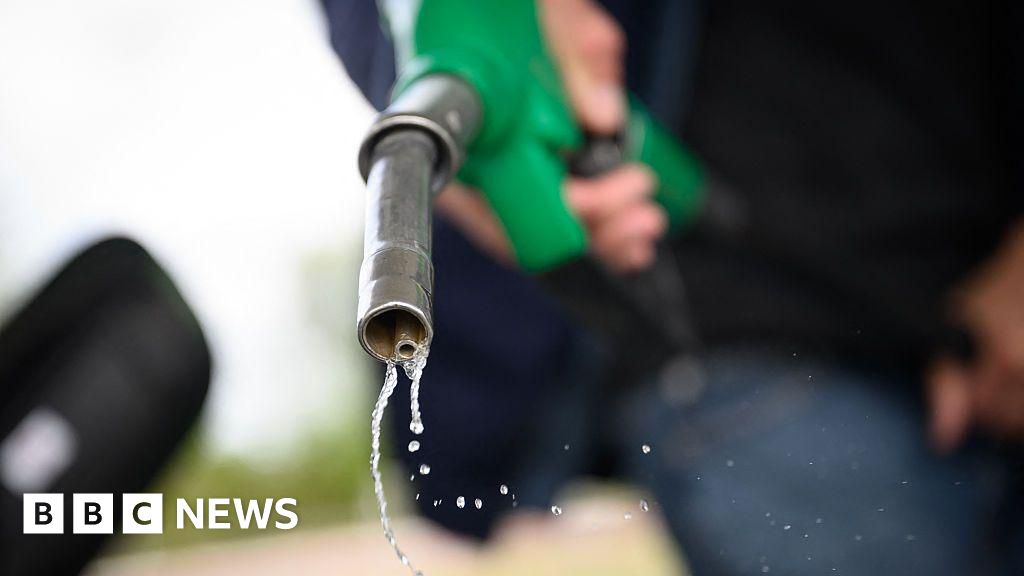
Energy markets have seen wild swings since the US and Israel attacked Iran on 28 February.
Source link
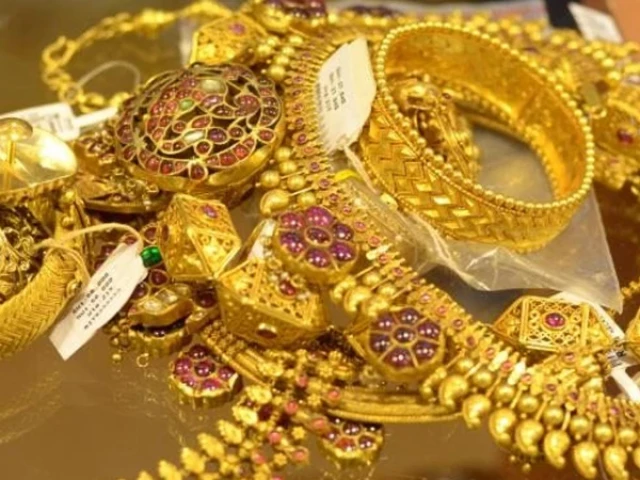
Gold and silver prices declined in both international and domestic markets, reflecting a broader downward trend in precious metals.
In the international bullion market, the price of gold fell by $49 per ounce, settling at $4,788.
According to the All-Pakistan Gems and Jewellers Sarafa Association (APGJSA), in the local market, gold prices also recorded a significant drop. The price per tola decreased by Rs4,900 to reach Rs501,162. Similarly, the price of 10 grams of gold declined by Rs4,201, settling at Rs429,665.
Silver prices also followed a downward trajectory. The price per tola of silver fell by Rs145 to Rs8,417 while the price of 10 grams of silver dropped by Rs124, reaching Rs7,216.
Read More: Gold, silver prices rise again in local and international markets
Gold and silver prices recorded an increase on Saturday in both international and local markets after declining on Friday, following a three-day upward trend in global and domestic markets.
According to the All Pakistan Sarafa Gems and Jewellers Association (APSGJA), in the international bullion market, the price of gold rose by $45 per ounce to reach $4,837. In the local market, the price of gold per tola increased by Rs4,500 to Rs506,062, while the rate for 10 grams rose by Rs3,858 to Rs433,866.
Silver prices also moved higher, with the per tola rate increasing by Rs118 to Rs8,562. Similarly, the price of silver per 10 grams rose by Rs101 to Rs7,340.
Business
Stocks to buy: What’s the outlook for Nifty for April 20-April 24 week? Check list of top stock recommendations – The Times of India

Stock market recommendations: APL Apollo Tubes, and HDFC Asset Management Company are Sudeep Shah, Head – Technical Research and Derivatives, SBI Securities’ top stock picks for this week. Below are his stock picks and also views on Nifty.Nifty ViewThe benchmark index Nifty continues to inch higher; however, this phase of the rally is notably different, as the spotlight has shifted away from the headline index. While Nifty has extended its pullback rally for the second consecutive week and closed in the green, the real strength is emerging beneath the surface. The broader markets have taken the lead, with Nifty Midcap 100 and Nifty Smallcap 100 delivering a robust rally and clearly outperforming the frontline index. Both indices have decisively moved above their key moving averages, signalling trend strength, whereas Nifty is still trading below its 100day and 200day EMA. Most importantly, Nifty Midcap 100 is now just a short distance away from its alltime high, suggesting that the next leg of opportunity may be unfolding beyond the conventional largecap space.Focusing back on Nifty, the index has been sustaining above its 50day EMA for the last three trading sessions, while the 20day and 50day EMA have started to edge higher, reflecting improvement in the shortterm trend. Meanwhile, the downward momentum in the 100day and 200day EMA has slowed considerably, indicating a stabilisation in the mediumterm structure. Momentum indicators further support the constructive bias, with the daily RSI trading above the 57 mark and moving higher, and the daily MACD histogram signalling strong bullish momentum.Collectively, these technical factors suggest that the pullback rally is likely to continue in the short term. On the upside, the 24650–24700 zone is expected to act as a crucial hurdle for the index. A sustainable breakout above 24700 could lead to an extension of the pullback rally towards 25000, followed by 25200 in the near term. On the downside, the 24050–24000 zone will serve as immediate support, and as long as the index remains above the 24000 mark, the ongoing pullback rally is likely to stay intact.Bank Nifty ViewThe banking benchmark Bank Nifty also ended the week on a positive note, indicating the continuation of its ongoing pullback rally. However, over the last three trading sessions, the index has struggled to decisively cross its 200day EMA, suggesting a phase of consolidation near a key long-term resistance zone. This price behaviour reflects hesitation at higher levels and points towards a pause in momentum after the recent recovery.This consolidation largely indicates a degree of caution among market participants, as investors appear to be awaiting clarity on the Q4 earnings outcome of major banking heavyweights, namely ICICI Bank and HDFC Bank. With both results scheduled over the weekend, the index is likely to witness a directional move post the earnings announcements, depending on earnings performance and management commentary.From a technical perspective, the index continues to maintain a constructive short-term setup, as it is trading above its 20day and 50day EMA, reflecting underlying strength. Momentum indicators remain supportive, with the daily RSI placed above the 55 level and trending higher, suggesting improving buying momentum and positive shortterm bias.Looking ahead, the 57000–57100 zone is expected to act as a crucial resistance area, as it coincides with both the prior swing high and the 100day EMA, making it an important supply zone. A sustainable move above 57100 could lead to a further extension of the pullback rally towards 57800, followed by 58500 in the short term. On the downside, the 55800–55700 zone is placed as an important support band, and any dip towards this region is likely to attract buying interest as long as the structure remains intact.Stock recommendations:APL Apollo TubesAPL Apollo Tubes has shown strong bullish intent after a 14.5% pullback from its early April lows near the 200-day EMA, indicating solid support at lower levels. The recent consolidation between 2072–1961 acted as a base, with the stock now delivering a decisive breakout on strong footing. A positive DI crossover on ADX signals clear buyer dominance, while the MACD nearing a move above the zero line with rising histogram bars points to strengthening momentum.The overall setup suggests the stock is well-positioned to extend its uptrend in the near term. Hence, we recommend to accumulate the stock in the zone of 2110-2090 with a stoploss of 2020. On the upside, it is likely to test the level of 2255 in the short term.HDFC Asset Management CompanyHDFC Asset Management Company has exhibited strong bullish momentum, closing Friday’s session with an impressive 4.89% gain. The stock has surged nearly 26% from its March lows, indicating robust buying interest. Momentum indicators remain firmly supportive, with RSI sustaining above 60, reflecting strength. Additionally, a positive DI crossover on ADX highlights clear buyer dominance, while rising MACD histogram bars with the MACD line above the zero mark further reinforce the ongoing uptrend. The overall structure suggests the stock is well-positioned to extend its upward trajectory. Hence, we recommend to accumulate the stock in the zone of 2800-2770 with a stoploss of 2690. On the upside, it is likely to test the level of 2990 in the short term.(Disclaimer: Recommendations and views on the stock market, other asset classes or personal finance management tips given by experts are their own. These opinions do not represent the views of The Times of India)


Germany’s BOSS secures landmark Australian Open partnership

Prego Has a Dinner-Conversation-Recording Device, Capisce?

Long energy disruptions to raise pressures on SEA nations: S&P Global

-

 Fashion4 days ago
France’s LVMH Q1 revenue falls 6%, shows resilience amid Iran war
-

 Sports1 week ago
The case for Man United’s Fernandes as Premier League’s best
-

 Entertainment1 week ago
Palace left in shock as Prince William cancels grand ceremony
-
 Business1 week ago
UK could adopt EU single market rules under new legislation
-

 Entertainment5 days ago
Is Claude down? Here’s why users are seeing errors
-

 Fashion1 week ago
Energy emerges as biggest cost driver in textile margins
-

 Sports1 week ago
Lamar Jackson hits back at critics with faithful message on social media
-
 Business1 week ago
Delta Air Lines unveils first new Delta One suite in premium cabin arms race