

Politics
Maduro case to test US narcoterrorism law with limited trial success

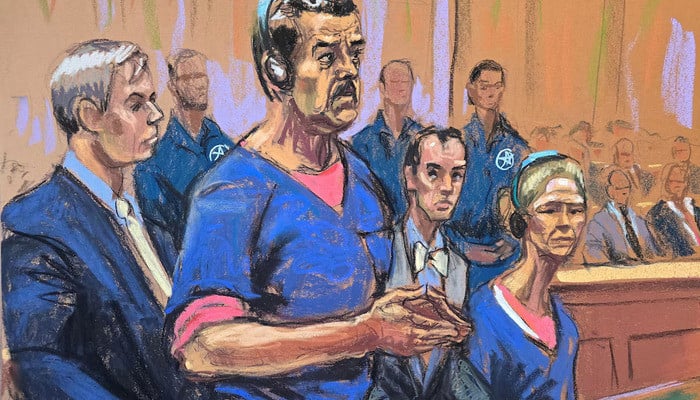
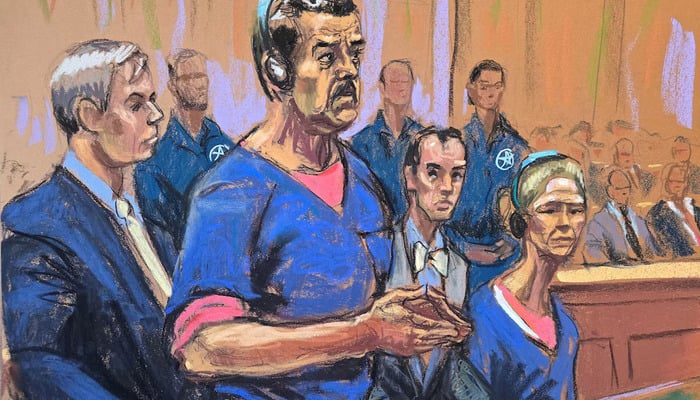
- Witness credibility looms large in the case.
- Two of three trial convictions have been overturned.
- Cocaine importation conspiracy among Maduro’s charges.
Ousted Venezuelan President Nicolás Maduro returns to a US court on Thursday on criminal charges including narcoterrorism, a statute that has rarely been tested at trial and has a limited record of success.
Maduro, 63, led Venezuela from 2013 through his capture in Caracas by US special forces on January 3. He pleaded not guilty on January 5 to all US charges against him.
The 2006 statute at issue, enacted to target drug trafficking tied to activities the United States considers terrorism, has produced just four trial convictions, a Reuters review of federal court records shows — and two were later overturned over issues stemming from witness credibility.
The mixed record highlights what could be a central challenge for prosecutors in the Maduro case: persuading jurors that evidence from cooperating insiders credibly establishes a knowing link between alleged drug crimes and terrorism.
“The lesson of these two cases is not that the narcoterrorism statute is unworkable,” said Alamdar Hamdani, a partner at law firm Bracewell and former US Attorney in Houston.
“It is that the statute’s most demanding element — proving the defendant’s knowledge of the terrorism nexus — requires a quality of evidence and a standard of prosecutorial diligence that leaves no room for institutional gaps, name-spelling errors, or uncritical acceptance of what your witnesses tell you,” he said.
Prosecutors have yet to disclose who will testify against Maduro. But one former Venezuelan general indicted alongside Maduro has told Reuters he is willing to cooperate.
Maduro accused of helping Colombian rebels
Congress created the narcoterrorism statute 20 years ago to target drug traffickers who finance activities the United States considers terrorism. Since then, 83 people, including Maduro, have been charged with violating it. Thirty-one pleaded guilty to narcoterrorism or lesser charges, eight are awaiting trial, and dozens are not in US custody, according to the review.
The conviction reversals do not affect Maduro’s case, and defendants in those cases faced additional charges that were not overturned. Maduro also faces three other counts, including cocaine importation conspiracy.
Maduro, a socialist, is accused of leading a conspiracy in which officials in his government helped move cocaine through Venezuela in collaboration with traffickers including the Revolutionary Armed Forces of Colombia (FARC), which the US labeled a terrorist organisation from 1997 to 2021. Maduro and his fellow indicted officials have always denied wrongdoing, saying the US charges are part of an imperialist conspiracy to harm Venezuela.
His lawyer, Barry Pollack, did not respond to requests for comment about the narcoterrorism law’s trial record or possible witnesses against Maduro.
A spokesman for the Manhattan US Attorney’s office declined to comment on the same subjects.
Law defines terrorism broadly
Narcoterrorism carries a 20-year mandatory minimum sentence, twice the minimum penalty for ordinary drug trafficking. Both can result in life imprisonment.
The narcoterrorism law defines terrorism as premeditated, politically motivated violence against non-combatants.
“If you take the legal definition of terrorism and terrorist activity, you can paint a pretty broad brush with the kind of activity we’re talking about,” said Shane Stansbury, a professor at Duke University School of Law and former federal prosecutor.
To convict Maduro, prosecutors must show that he knew the drug trafficking he allegedly facilitated resulted in a financial benefit for a group that engaged in activities the United States considered terrorism, even if he had other aims.
“It doesn’t have to be the motivation,” said Artie McConnell, a former federal prosecutor and current partner at law firm BakerHostetler.
In the first narcoterrorism trial in 2008, an Afghan man with alleged ties to the Taliban was convicted of helping a Drug Enforcement Administration informant buy opium and heroin. But in 2021, a judge threw out the narcoterrorism count after an appeals court ruled his lawyer failed to adequately challenge the only witness tying him to the Taliban.
In another case, a jury deadlocked in the 2011 trial of an accused Afghan trafficker. He was convicted at a second trial in 2012, but the narcoterrorism count was thrown out in 2015 after prosecutors acknowledged that a US government agency considered the cooperating witness who linked him to the Taliban a “fabricator.”
The 2015 narcoterrorism trial conviction of a Colombian man for trying to ship cocaine for the FARC and attempting to buy weapons for the group has been upheld.
A fourth narcoterrorism trial resulted in a guilty verdict earlier this week.
Case could rely on cooperating witnesses
Legal experts say the government’s case against Maduro could include testimony from two former Venezuelan generals indicted alongside him in 2020: Cliver Alcalá and Hugo Carvajal. Both have pleaded guilty to charges linked to their dealings with the FARC, but neither agreed to cooperate at the time of their pleas.
In a telephone interview from federal prison in Cumberland, Maryland, Alcalá said he was willing to cooperate. But he said prosecutors had previously insisted that he admit to involvement in drug trafficking, which he denies, as a condition for cooperation.
“I cannot, in order to reduce my sentence, declare myself to be a drug trafficker when I am not,” he said.
Alcalá retired from Venezuela’s military shortly after Maduro took office in 2013. He later became an outspoken critic of Maduro’s government.
Asked whether the charges against Maduro were true, Alcalá said he thought there was “some basis” and said he believed Maduro had ties to a drug trafficker jailed in Caracas. He did not offer specifics.
Alcalá, 64, is serving a nearly 22-year prison sentence after pleading guilty in 2023 to providing material support to the FARC. In court, he admitted supplying the group with weapons — which he says he did under orders from former Venezuelan President Hugo Chavez — but denied helping traffickers move cocaine.
Carvajal’s sentencing is scheduled for April 16. His lawyer declined to comment on whether he would cooperate with prosecutors.
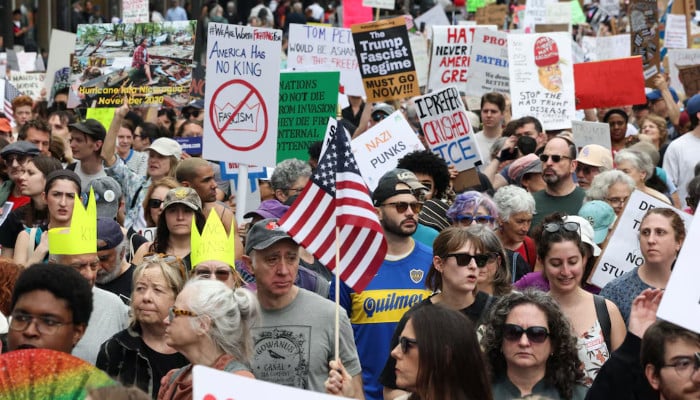
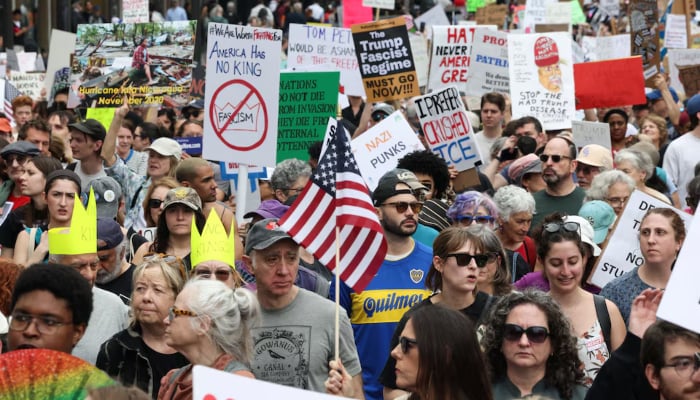
MINNEAPOLIS: Massive nationwide protests against US President Donald Trump are expected Saturday as millions of people vent fury over what they see as his authoritarian bent and other forms of cruel, law-trampling governance.
It is the third time in less than a year that Americans will take to the streets as part of a grassroots movement called “No Kings,” the most vocal and visual conduit for opposition to Trump since he began his second term in January 2025.
And now they have something new to fume over — the war in Iran that Trump launched alongside Israel, with ever-shifting goals and timelines for completion.
The first such nationwide protest day came in June on Trump’s 79th birthday and coincided with a military parade in Washington that he insisted on holding.
Several million people turned out, from New York to San Francisco and many places in between.
The second “No Kings” day in October drew an estimated seven million protesters, according to organisers.
The goal now is to bring out even more people on Saturday, as Trump’s approval rating is low at around 40% and midterm elections loom in November, when Trump’s Republicans could lose control of both chambers.
Just as Trump is worshipped by many in his “Make America Great Again” movement, on the other side of America’s wide political chasm, he is disliked or even loathed with equal passion.
Trump foes bemoan his penchant for ruling by executive decree, his use of the Justice Department to prosecute opponents, his embrace of fossil fuels and climate change denial even as the planet warms, his fight against racial and gender diversity programs, and his newfound taste for flexing US military power after campaigning as a man of peace.
“Since the last time we marched, this administration has dragged us deeper into war,” said Naveed Shah of Common Defence, a veterans association that belongs to the “No Kings” movement.
“At home, we’ve watched citizens killed in the streets by militarised forces. We’ve seen families torn apart and immigrant communities targeted. All of it done in the name of one man trying to rule like a king,” Shah said.
Springsteen in Minneapolis
Organisers say more than 3,000 rallies are planned, an increase from the last protest day, in major cities coast to coast and in suburbs and rural areas — even in the Alaskan town of Kotzebue, above the Arctic circle.
Minnesota will be a key focal point, returning to the limelight months after becoming ground zero for the national debate over Trump’s violent immigration crackdown.
Legendary rocker Bruce Springsteen, a fierce critic of the president, is scheduled to perform in St Paul, the capital of the northern state, his song “Streets of Minneapolis.”
It is a ballad he wrote and recorded in the space of 24 hours in memory of Renee Good and Alex Pretti, Americans shot and killed by federal agents during protests in frigid January weather against Trump´s immigration offensive.
“Masked secret police terrorising our communities. An illegal, catastrophic war putting us in danger and driving up our costs. Attacks on our freedom of speech, our civil rights, our freedom to vote. Costs pushing families to the brink. Trump wants to rule over us as a tyrant,” the “No Kings” movement said.
It said what began in 2025 as a simple day of defiance has mushroomed into a powerful movement of national resistance to the Trump administration.
Organisers say two-thirds of those who plan to rally Saturday do not live in big cities, which in America are often Democratic strongholds — a data point that is up sharply since the last protest.
“America is at an inflection point,” said Randi Weingarten, president of the American Federation of Teachers.
“People are afraid, and they can’t afford basic necessities. It’s time the administration listened and helped them build a better life rather than stoking hate and fear.”
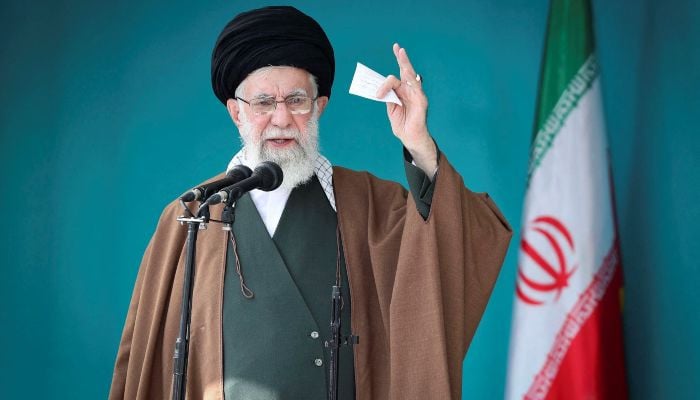
US-Israeli strikes on Iran have martyred several senior political and military figures, hitting the Islamic Republic’s core leadership as the regional war disrupts energy markets and global shipping.
Below are some of the most prominent figures killed:
Supreme Leader
Ayatollah Ali Khamenei, who as Supreme Leader since 1989 built an iron grip over Iran while entrenching hostility towards the US and Israel, was martyred aged 86 in a US-Israeli air strike on his compound on February 28.
His more than three-decade rule was marked by consolidation of power through the security apparatus, and expansion of Iran’s regional influence, even as tensions over its nuclear programme repeatedly brought it into confrontation with the West.
Senior officials
Ali Larijani, secretary of the Supreme National Security Council and a veteran powerbroker, was assassinated at 67 in a US-Israeli air strike in the Pardis area on March 17, along with his son and one of his deputies, Iranian media reported.
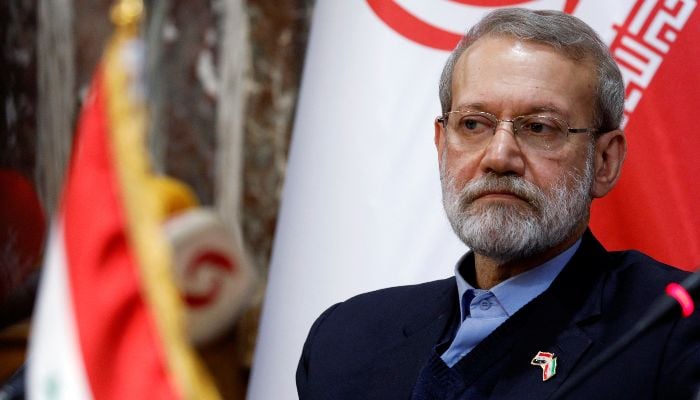
A former Revolutionary Guards commander and nuclear negotiator, he was a close adviser to the slain Supreme Leader and played an important role in shaping Iran’s security and foreign policy.
Esmail Khatib, Iran’s intelligence minister, was eliminated in an Israeli strike on March 18. A hardliner cleric and politician, he worked in Ayatollah Ali Khamenei’s office and was mentored by him, before heading the civilian intelligence apparatus in August 2021.
Ali Shamkhani, a close adviser to Khamenei and a key figure in Iran’s security and nuclear policymaking, was cut down in US-Israeli strikes on Tehran on February 28.
He had earlier survived an attack on his home during the 12-day June war between Israel and Iran.
Top military commanders
Mohammad Pakpour, commander-in-chief of the IRGC, Iran’s most powerful military force, was assassinated in the February 28 strikes in Tehran, Iranian state media said.
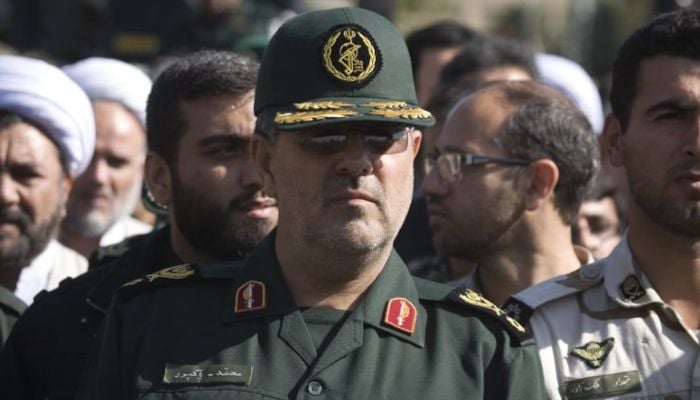
He rose through the ranks to lead the Revolutionary Guards after his predecessor Hossein Salami was eliminated in the 12-day war in June.
Aziz Nasirzadeh, Iran’s defence minister and a career air force officer, was martyred in the same wave of strikes targeting senior leadership in Tehran on February 28, according to sources. He played a key role in military planning and defence policy.
Abdolrahim Mousavi, chief of staff of Iran’s armed forces, was assassinated in the February 28 strikes during what Iranian media said was a meeting of senior leadership in Tehran. He was responsible for coordinating Iran’s military branches and overseeing conventional forces.
Gholamreza Soleimani, commander of Iran’s Basij paramilitary force, was eliminated in US-Israeli strikes on March 17, according to Iranian state media. A senior Revolutionary Guards officer, he led the force central to internal security and the enforcement of state authority.
Behnam Rezaei, the Revolutionary Guards’ navy intelligence chief, was martyred in an Israeli strike in the port city of Bandar Abbas on March 26, according to the Israeli military, which said he was responsible for collecting information on regional countries.
- Trump reiterates claims Tehran ready to make deal.
- Talks ongoing to negotiate end to month-long war: Trump.
- “Tehran’s leadership, nuclear programme suffered damage.”
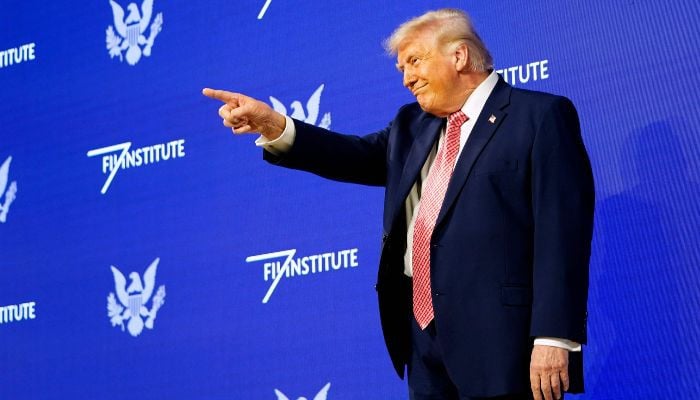
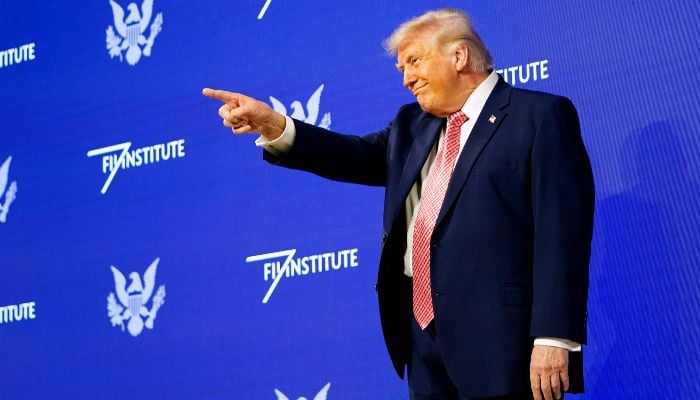
WASHINGTON: US President Donald Trump on Friday insisted Iran must open up the Strait of Hormuz to oil traffic to make a peace deal — and dubbed the crucial waterway the “Strait of Trump.”
Trump, who has renamed several buildings in Washington after himself during his second term, said his comment was a “mistake” but then added that “there’s no accidents with me.”
Repeating his claims that Tehran is ready to make a deal despite its denials, the 79-year-old US leader said that talks were underway to negotiate an end to the month-long conflict.
Trump added that Iran was “on the run” and reiterated assertions that Tehran’s leadership, navy, air force and nuclear programme had all suffered significant damage.
“We’re negotiating now, and it would be great if we could do something, but they have to open it up,” Trump told a Saudi-backed FII Priority investment forum in Miami.
“They have to open up the Strait of Trump — I mean Hormuz. Excuse me, I’m so sorry. Such a terrible mistake.”
Trump said the media would pounce upon the comment, but then added “there’s no accidents with me, not too many.”
He also talked about how he had ordered the renaming of the Gulf of Mexico as the “Gulf of America” shortly after returning to power.
During a cabinet meeting on Thursday, Trump said it was “an option” to take control of Iran’s oil as the United States has effectively done with Venezuela — despite the fact that the war is still raging.
Republican Trump, who rose to fame as a property tycoon with his name plastered across his own skyscrapers, made similar teasing comments before renaming Washington’s Kennedy Centre the “Trump-Kennedy Centre.”
A peace institute in Washington was also renamed after Trump last year.
The Strait of Hormuz was open to international shipping before the conflict, but the narrow waterway has since ground to a standstill, leading to a surge in global energy prices.
Earlier Friday, US Secretary of State Marco Rubio voiced alarm that Iran would seek to establish a permanent “tolling system” for vessels in the strait, through which one-fifth of global oil normally transits.


Zayn Malik shares personal video message on ‘Mind of Mine’ 10th anniversary

EU Parliament, Council reach deal on major reform of Customs Code
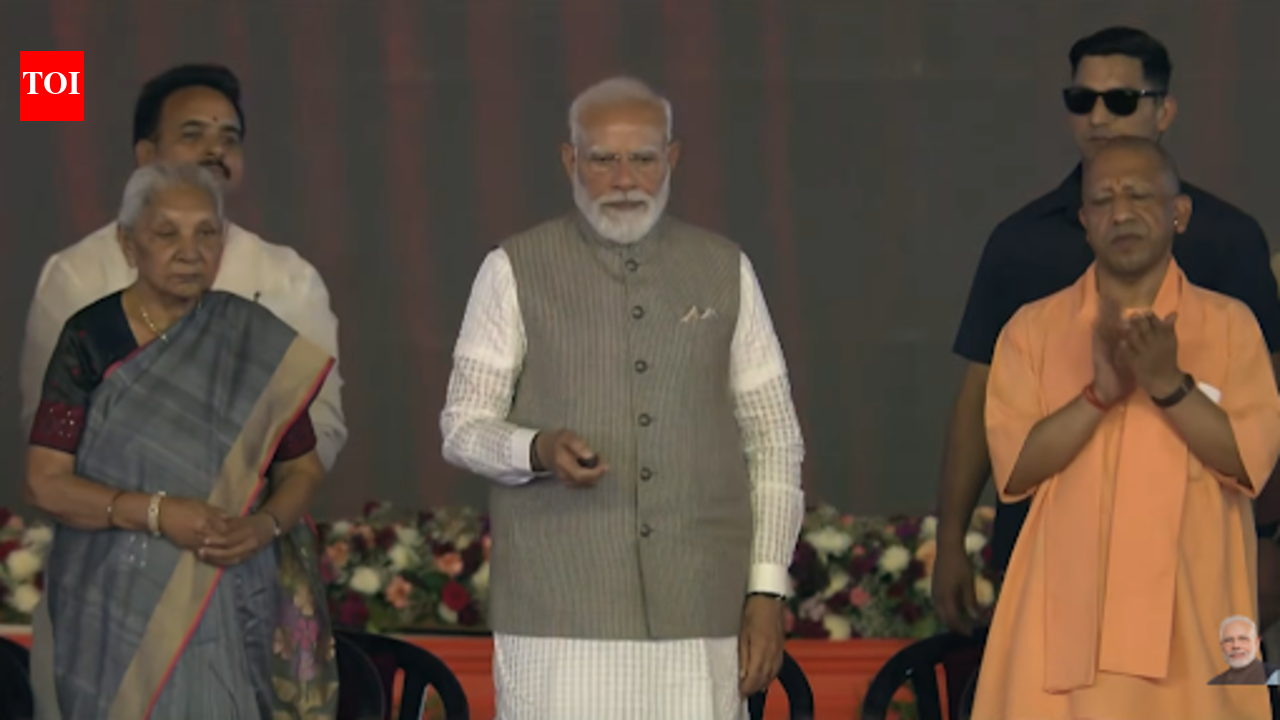
Noida International Airport inauguration: Delhi-NCR gets new airport – all you need to know – The Times of India

-
 Business1 week ago
Flipkart group CFO to leave co amid IPO plans – The Times of India
-
 Business1 week ago
Video: The Effects of High Oil Prices
-

 Fashion1 week ago
China’s textile & apparel exports surge 17% to $50 bn in Jan-Feb 2026
-

 Sports1 week ago
Rating Adidas’ 2026 World Cup away shirts: Argentina, Spain, Mexico and more
-

 Fashion1 week ago
The hidden $1.62 war tax now embedded in every garment you source
-

 Sports1 week ago
American Conference Commissioner Tim Pernetti thanks Trump for Army-Navy game executive order
-
Tech1 week ago
The Corsair 4000D RS PC Case Keeps Your System Cool
-
 Tech1 week ago
‘Uncanny Valley’: Nvidia’s ‘Super Bowl of AI,’ Tesla Disappoints, and Meta’s VR Metaverse ‘Shutdown’