

Tech
Magnetic tunnel junctions mimic synapse behavior for energy-efficient neuromorphic computing

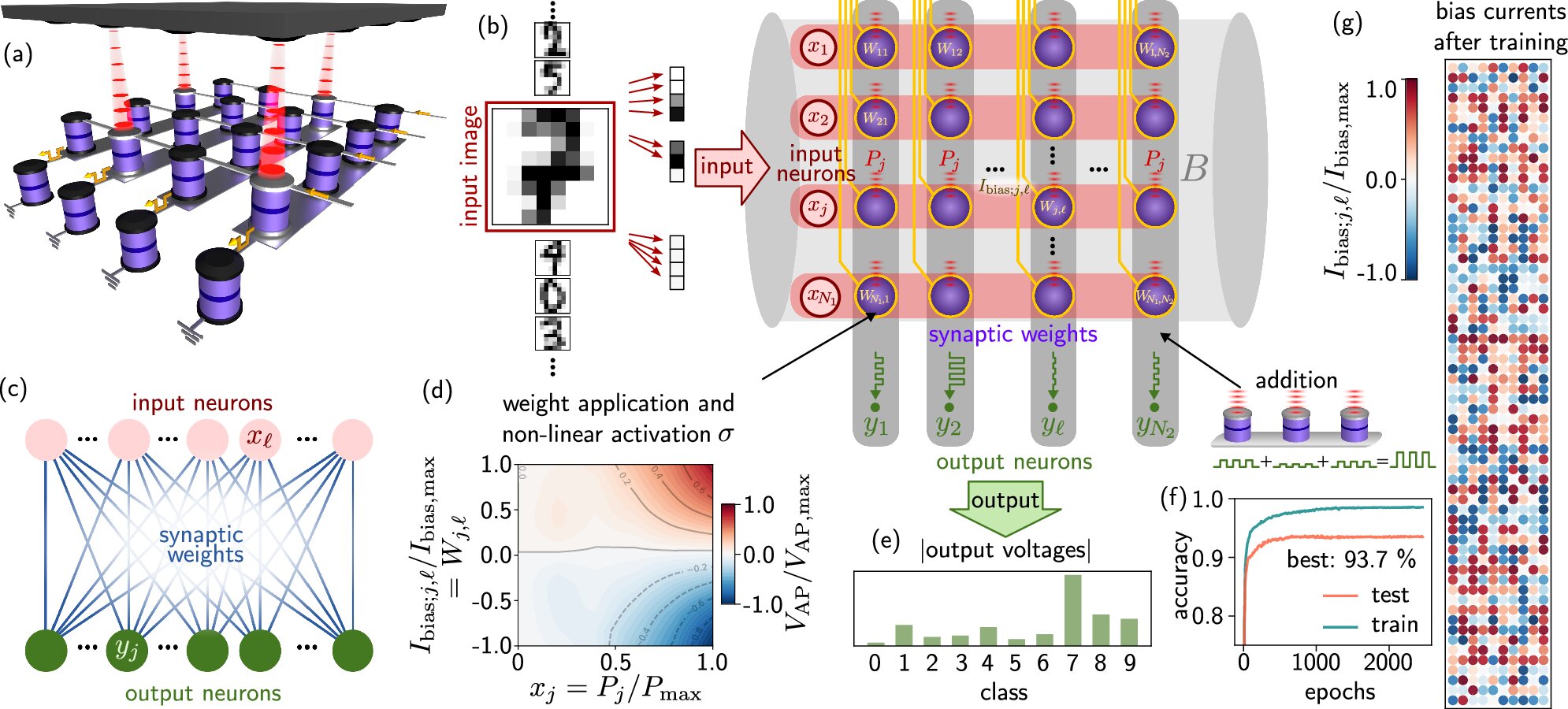
The rapid development of artificial intelligence (AI) poses challenges to today’s computer technology. Conventional silicon processors are reaching their limits: they consume large amounts of energy, the storage and processing units are not interconnected and data transmission slows down complex applications.
As the size of AI models is constantly increasing and they are having to process huge amounts of data, the need for new computing architectures is rising. In addition to quantum computers, focus is shifting, in particular, to neuromorphic concepts. These systems are based on the way the human brain works.
This is where the research of a team led by Dr. Tahereh Sadat Parvini and Prof. Dr. Markus Münzenberg from the University of Greifswald and colleagues from Portugal, Denmark and Germany began. They have found an innovative way to make computers of tomorrow significantly more energy-efficient. Their research centers around so-called magnetic tunnel junctions (MTJs), tiny components on the nanometer scale.
“These components not only store information, they can even process it, just like nerve cells. This makes them ideal for novel computing concepts that are based on the way the brain works, what we call ‘neuromorphic computing,'” explains Dr. Tahereh Sadat Parvini, postdoc at the University of Greifswald and co-author of the paper that was recently published in Communications Physics.
The research team developed a hybrid opto-electrical excitation scheme that combines electrical currents with short laser pulses. This made it possible to generate particularly high thermoelectric voltages in the MTJs—an important prerequisite for the targeted simulation of synapse behavior.
The physicists were able to identify three particularly remarkable properties: First, the generated voltage can be adjusted flexibly depending on the electrical current, similar to the weight of a synapse in the brain. Second, spontaneous “spike” signals occurred, which are similar to the way information is exchanged between nerve cells. Third, in computer simulations, a simple neuromorphic network based on this technology already achieved a recognition accuracy of 93.7% for digits that had been written by hand.
“Our results show that MTJs with optical-electrical control represent a compact and energy-saving platform for the next generation of computing,” summarizes Prof. Dr. Markus Münzenberg. “As the technology is compatible with today’s semiconductor technology, we believe that in the future, it could be used in everyday devices as well as high-performance computers.”
More information:
Felix Oberbauer et al, Magnetic tunnel junctions driven by hybrid optical-electrical signals as a flexible neuromorphic computing platform, Communications Physics (2025). DOI: 10.1038/s42005-025-02257-0
Citation:
Magnetic tunnel junctions mimic synapse behavior for energy-efficient neuromorphic computing (2025, September 18)
retrieved 18 September 2025
from https://techxplore.com/news/2025-09-magnetic-tunnel-junctions-mimic-synapse.html
This document is subject to copyright. Apart from any fair dealing for the purpose of private study or research, no
part may be reproduced without the written permission. The content is provided for information purposes only.











The base of the lamp has two slider buttons. One toggle adjusts the warmth, from cold white light all the way to red. One adjusts the intensity, from ultra-bright down to a glareless glow. Hard taps on each button skip ahead, while holding the toggle down on one side or another adjusts the light settings quite slowly—slowly enough I at first sometimes question whether it’s happening.
The maximum brightness is 1,000 lumens—the approximate intensity of a 75-watt incandescent bulb. At this brightness, the battery lasts about five hours. At a lower intensity, this can extend to as long as a dozen hours.
Red Shift
Photograph: Matthew Korfhage
There’s an added feature I have come to appreciate at night, which is the red-light mode. There’s little evidence that blue light from your little smartphone is keeping you awake at night. But numerous studies do show that blue light wavelengths can affect melatonin levels and thus your body’s circadian rhythm, while red light doesn’t do this.
Red light therapy is, of course, the province of TikTok as much as science—a field where wild exaggerations live alongside legitimate uses and benefits. For every sleep study showing that red light is superior to blue light when it comes to melatonin levels, there’s another showing that red light is associated with “negative emotions” before bed.
So I can only offer my own experience, which is that Edge Light Go’s red reading light offers me a pleasant liminal space between awake time and sleepy time, one not offered by a basic nightstand lamp. It allows me to sort of bask in a darkroom space that still lets me see and read, and drift off a little easier.
If I fall asleep, the light has an automatic 25-minute shut-off, which means I won’t do what I far too often do, which is drift off while reading and then wake up, alarmed, to a room filled with bright light in the middle of the night.
Caveats and Quirks

Photograph: Matthew Korfhage
This said, for all the virtues of portability, the Edge Light Go does not boast a base that’s heavy enough to stop the lamp from tipping over if I bend it forward from its lowest hinge. This can be an annoyance when trying to use the lamp as a reading light from a bedside table or the arm of a couch.

For airlines to run critical operations on networks that are set up and run for them, removing the complexity and cost of managing connectivity themselves, air industry tech firm SITA has launched a new network solution designed to support the demands of complex airport and transport environments.
With around 2,500 customers, SITA technology supports more than 1,000 airports and more than 19,600 aircraft worldwide. The company said that it also helps more than 70 governments “strike the balance between secure borders and seamless journeys” and connects 45-50% of the industry’s data exchange to enable complex global networks to operate smoothly and reliably.
As part of the latter aim, the SITA Campus Network, powered by HPE Aruba Networking, aims to offer a managed network service covering more than 150 countries wherein SITA takes care of the design, procurement, shipping, installation, configuration and support for all devices involved. Boasting a low total cost of ownership (TCO), SITA is proposing “one of the most competitive” fully managed local area network/wireless local area network (LAN/WLAN) available in the industry.
Explaining the rationale for the launch, SITA noted that managing networks across multiple locations, devices and suppliers is complex and costly. Furthermore, it said that when networks are fragmented, performance suffers and disruptions can spread quickly.
SITA Campus Network is attributed with being able to remove this burden by delivering a fully managed network across wired and wireless environments. The campus network is claimed to combine “robust” connectivity with centralised, cloud-based management to ensure consistent, reliable performance across airport campuses and other large transport hubs.
Designed for high-density environments such as terminals, hangars and airline operations centres, the solution is said to support large volumes of users and devices without compromising performance, even during peak demand. By integrating HPE technology into its managed service, SITA’s customers get a network that is centrally operated by SITA while retaining the flexibility to use different technologies and vendors.
Available in more than 145 countries, with 24/7 operational support, SITA assured that by reducing the need for costly hardware and simplifying operations the network lowers both upfront investment and ongoing costs. Its pay-as-you-go model allows customers to scale usage up or down based on demand, with rapid deployment across locations.
This is said to reduce the need for on-site support, spare equipment and recurring training, freeing up IT teams to focus on higher-value activities. Where needed, the campus network connects to SITA’s global wide-area network services. This connectivity links more than 600 airports worldwide.
As is the norm with other leading networking solutions, the SITA Campus Network uses AI to improve visibility across the network, detect issues earlier and automate troubleshooting, helping reduce downtime. It also provides centralised management, allowing infrastructure and devices to be monitored and controlled across both on-site systems and remote environments.
Martin Smillie SITA senior vice-president of communications and data exchange, said integrating diverse systems and devices across airport environments is becoming more complex as operations become more connected: “At the same time, expectations on performance, resilience and security continue to rise. With SITA Campus Network powered by Aruba, we take on that complexity. We deliver a network that is set up, run and continuously optimised, so our customers can focus on keeping operations moving while maintaining control across increasingly demanding environments.”
Sujai Hajela, executive vice-president and general manager for enterprise campus and branch at HPE, added: “Airports and airlines have to support thousands of staff, passengers and mission critical systems across terminals, gates and airside areas – and any network issue shows up immediately as delays and frustration.
“SITA Campus Network powered by HPE Aruba Networking is built on our secure, AI-native technology to deliver a self-driving network that spots and fixes problems in real time, often before anyone notices, so operations keep moving and passengers stay connected.”
Tech
Chinese hackers using compromised networks to spy on Western companies, says Five Eyes | Computer Weekly

China-linked hackers are using networks of vulnerable internet-connected devices, including home routers, printers and smart devices, as cover to mount espionage and hacking operations.
The technique is now used by the majority of China-linked hackers as a way to obscure hacking and espionage attacks launched against organisations in the West.
The UK’s National Cyber Security Centre (NCSC) and national agencies in nine other countries have warned today that Chinese-linked groups are now leveraging networks of infected devices “at scale” to target critical sectors globally and steal sensitive data.
According to an advisory issued by the Five Eyes intelligence-sharing alliance – comprising the UK, the US, Canada, Australia and New Zealand – and 10 other countries, Chinese groups are exploiting security vulnerabilities in unpatched internet devices to create networks to use as a staging post to launch further attacks.
“We know that China’s intelligence and military agencies now display an eye-watering level of sophistication in their cyber operations,” said NCSC chief Richard Horne in a speech at its CyberUK conference in Glasgow.
Covert networks hide ‘indicators of compromise’
The agencies warn that the Chinese tactics are making it difficult for organisations to detect and attribute malicious attacks on their computer networks using traditional “indicators of compromise”.
Chinese groups, for example, could use a UK-based infected device as a staging post to hack into a UK-based company, meaning that blocking non-UK IP addresses no longer provides a defence for overseas attacks.
They advise companies to adopt “adaptive, intelligence-driven measures” to better mitigate the risks, including monitoring traffic from internet-connected devices, virtual private networks (VPNs) and remote access devices to identify suspicious traffic.
Chinese-linked groups are able to evade detection by exploiting low-cost networks of infected devices that can rapidly be reconfigured so that traditional static IP block lists are no longer effective.
The networks are used for each phase of a cyber attack, from reconnaissance and malware delivery, to command and control and data exfiltration against targets of espionage and offensive cyber operations, according to the advisory.
Covert networks behind major hacking operations
Covert networks of compromised devices have been used by the Chinese state-sponsored group Volt Typhoon to pre-position for future attacks on critical national infrastructure (CNI).
The group has targeted communications, energy, transport and water services in the US, and has been able to maintain covert access to critical IT systems for five years or more.
It used a network of vulnerable Cisco and NetGear routers, which were no longer supported by the manufacturers and were no longer receiving updates of security patches.
Another Chinese group, Flax Typhoon, has used a covert network of 260,000 compromised devices, including routers, firewalls, webcams and CCTV cameras, to conduct cyber espionage against targets in multiple countries.
Hacking as a service
Chinese hacking groups have a choice of covert networks, each with potentially hundreds of thousands of endpoints, which frequently change, making it more difficult for companies targeted to block attacks, according to the advisory.
Chinese information security companies have maintained networks of infected devices, available as a service for Chinese-linked hacking groups.
Chinese company Integrity Technology Group controlled a network known as Raptor Train, which infected more than 200,000 devices worldwide in 2024.
Companies advised to take countermeasures
The NCSC advises companies to map internet-connected devices in their organisation and corporate VPNs, so they can understand which traffic is legitimate.
They should also introduce multifactor authentication (MFA) when employees use remote connections to dial into business networks.
Larger organisations can profile incoming connections based on operating systems, time zones, and the organisation’s systems configurations to identify legitimate traffic.
The Five Eyes and the NCSC advise the most at-risk organisations to actively track Chinese advanced persistent threats (APTs), using threat reports supplied by the NCSC to create dynamic block lists and rules to detect incoming threats.
“In recent years, we have seen a deliberate shift in cyber groups based in China utilising these networks to hide their malicious activity in an attempt to avoid accountability,” said Paul Chichester, NCSC director of operations. “We call on organisations to act now to better defend their critical assets.”


France’s Kering acquires ICCF’s minority stake to expand ICICLE

Hackers steal $2.5m from Sri Lanka finance ministry

This Is the Only Office Lamp That Does Double Duty on My Nightstand

-

 Fashion1 week ago
France’s LVMH Q1 revenue falls 6%, shows resilience amid Iran war
-

 Entertainment1 week ago
Is Claude down? Here’s why users are seeing errors
-

 Sports1 week ago
PSL 11: Peshawar Zalmi win toss, opt to field first against Quetta Gladiators
-

 Tech1 week ago
The Deepfake Nudes Crisis in Schools Is Much Worse Than You Thought
-

 Politics1 week ago
Iran in continuous message exchange with mediator Pakistan after US talks: Report
-
 Business1 week ago
Standard Life buys rival in £2b deal to create savings giant
-

 Tech1 week ago
CYBERUK ’26: UK lagging on legal protections for cyber pros | Computer Weekly
-

 Sports1 week ago
World Cup kit ranking: Which teams will look best in 2026?