

Tech
Many Australians secretly use AI at work, a new report shows. Clearer rules could reduce ‘shadow AI’


Australian workers are secretly using generative artificial intelligence (Gen AI) tools—without knowledge or approval from their boss, a new report shows.
The “Our Gen AI Transition: Implications for Work and Skills” report from the federal government’s Jobs and Skills Australia points to several studies, showing between 21% to 27% of workers (particularly in white collar industries) use AI behind their manager’s back.
Why do some people still hide it? The report says people commonly said they:
- “feel that using AI is cheating”
- have a “fear of being seen as lazy”
- and a “fear of being seen as less competent.”
What’s most striking is this rise in unapproved “shadow use” of AI is happening even as the federal treasurer and Productivity Commission urge Australians to make the most of AI.
The new report results highlight gaps in how we govern AI use at work, leaving workers and employers in the dark about the right thing to do.
As I’ve seen in my work—both as a legal researcher looking at AI governance and as a practicing lawyer—there are some jobs where the rules for using AI at work change as soon as you cross a state border within Australia.
Risks and benefits of AI ‘shadow use’
The 124-page Jobs and Skills Australia report covers many issues, including early and uneven adoption of AI, how AI could help in future work and how it could affect job availability.
Among its most interesting findings concerned workers using AI in secret—which is not always a bad thing. The report found those using AI in the shadows are sometimes hidden leaders, “driving bottom-up innovation in some sectors.”
However, it also comes with serious risks.
“Worker-led ‘shadow use’ is an important part of adoption to date. A significant portion of employees are using Gen AI tools independently, often without employer oversight, indicating grassroots enthusiasm but also raising governance and risk concerns.”
The report recommends harnessing this early adoption and experimentation, but warns:
“In the absence of clear governance, shadow use may proliferate. This informal experimentation, while a source of innovation, can also fragment practices that are hard to scale or integrate later. It also increases risks around data security, accountability and compliance, and inconsistent outcomes.”
Real-world risks from AI failures
The report calls for national stewardship of Australia’s Gen AI transition through a coordinated national framework, centralized capability, and a whole-of-population boost in digital and AI skills.
This mirrors my own research, showing Australia’s AI legal framework has blind spots, and our systems of knowledge, from law to legal reporting, need a fundamental rethink.
Even in some professions where clearer rules have emerged, too often it’s come after serious failures.
In Victoria, a child protection worker entered sensitive details into ChatGPT about a court case concerning sexual offenses against a young child. The Victorian information commissioner has banned the state’s child protection staff from using AI tools until November 2026.
Lawyers have also been found to misuse AI, from the United States and United Kingdom to Australia.
Yet another example—involving misleading information created by AI for a Melbourne murder case—was reported just yesterday.
But even for lawyers, the rules are patchy and differ from state to state. (The Federal Court is among those still developing its rules.)
For example, a lawyer in New South Wales is now clearly not allowed to use AI to generate the content of an affidavit, including “altering, embellishing, strengthening, diluting or rephrasing a deponent’s evidence.”
However, no other state or territory has adopted this position as clearly.
Clearer rules at work and as a nation
Right now, using AI at work lies in a governance gray zone. Most organizations are running without clear policies, risk assessments or legal safeguards. Even if everyone’s doing it, the first one caught out will face the consequences.
In my view, national uniform legislation for AI would be preferable. After all, the AI technology we’re using is the same, whether you’re in New South Wales or the Northern Territory—and AI knows no physical borders. But that’s not looking likely yet.
If employers don’t want workers using AI in secret, what can they do? If there are obvious risks, start by giving workers clearer policies and training.
One example is what the legal profession is doing now (in some states) to give clear, written guidance. While it’s not perfect, it’s a step in the right direction.
But it’s still arguably not good enough, especially because the rules aren’t the same nationally.
We need more proactive national AI governance—with clearer policies, training, ethical guidelines, a risk-based approach and compliance monitoring—to clarify the position for both workers and employers.
Without a national AI governance policy, employers are being left to navigate a fragmented and inconsistent regulatory minefield, courting breaches at every turn.
Meanwhile, the very workers who could be at the forefront of our AI transformation may be driven to use AI in secret, fearing they will be judged as lazy cheats.
This article is republished from The Conversation under a Creative Commons license. Read the original article.
Citation:
Many Australians secretly use AI at work, a new report shows. Clearer rules could reduce ‘shadow AI’ (2025, August 16)
retrieved 16 August 2025
from https://techxplore.com/news/2025-08-australians-secretly-ai-clearer-shadow.html
This document is subject to copyright. Apart from any fair dealing for the purpose of private study or research, no
part may be reproduced without the written permission. The content is provided for information purposes only.








Other Good USB Hubs to Consider
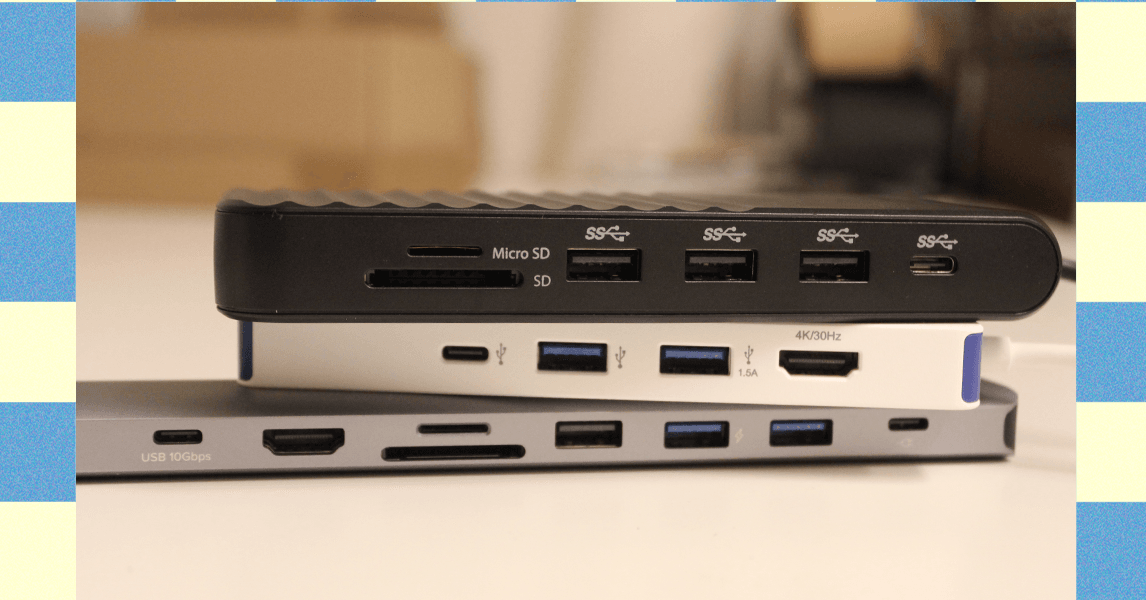
Ugreen Revodok Pro 211 Docking Station for $64: Most laptop docking stations are bulky gadgets that often require a power source, but this one from Ugreen straddles the line between dock and hub. It has a small, braided cable running to a relatively large aluminum block. It’s a bit hefty but still compact, and it packs a lot of extra power. It has three USB ports (one USB-C and two USB-A) that each reached up to 900 MB/s of data-transfer speeds in my testing. That was enough to move large amounts of 4K video footage in minutes. The only problem is that using dual monitors on a Mac is limited to only mirroring.
Photograph: Luke Larsen
Hyper HyperDrive Next Dual 4K Video Dock for $150: This one also straddles the line between dock and USB hub. Many mobile docks lack proper Mac support, only allowing for mirroring instead of full extension. The HyperDrive Next Dual 4K fixes that problem, though, making it a great option for MacBooks (though it won’t magically give an old MacBook Air dual-monitor support). Unfortunately, you’ll be paying handsomely for that capability, as this one is more expensive than the other options. The other problem is that although this dock has two HDMI ports that can support 4K, though only one will be at 60 Hz and the other will be stuck at 30 Hz. So, if you plan to use it with multiple displays, you’ll need to drop the resolution 1440p or 1080p on one of them. I also tested this Targus model, which is made by the same company, which gets you two 4K displays at 60 Hz but not on Mac.
.png)
Anker USB-C Hub 5-in-1 for $20: This Anker USB hub is the one I carry in my camera bag everywhere. It plugs into the USB-C port on your laptop and provides every connection you’d need to offload photos or videos from camera gear. In our testing, the USB 3.0 ports reached transfer speeds over 400 MB/s, which isn’t quite as fast as some USB hubs on this list, but it’s solid for a sub-$50 device. Similarly, the SD card reader reached speeds of 80 MB/s for reading and writing, which isn’t the fastest SD cards can get, but adequate for moving files back and forth.—Eric Ravenscraft
Kensington Triple Video Mobile Dock for $83: Another mobile dock meant to provide additional external support, this one from Kensington can technically power up to three 1080p displays at 60 Hz using the two HDMI ports and one DisplayPort. It’s a lot of ports in a relatively small package, though the basic plastic case isn’t exactly inspiring.
Power up with unlimited access to WIRED. Get best-in-class reporting and exclusive subscriber content that’s too important to ignore. Subscribe Today.

Global oil and gas prices have skyrocketed following the US attack on Iran last weekend. But another key global supply chain is also at risk, one that may directly impact American farmers who have already been squeezed for months by tariff wars. The conflict in the Middle East is choking global supplies of fertilizer right before the crucial spring planting season.
“This literally could not be happening at a worse time,” says Josh Linville, the vice president of fertilizer at financial services company StoneX.
The global fertilizer market focuses on three main macronutrients: phosphates, nitrogen, and potash. All of them are produced in different ways, with different countries leading in exports. Farmers consider a variety of factors, including crop type and soil conditions, when deciding which of these types of fertilizer to apply to their fields.
Potash and phosphates are both mined from different kinds of natural deposits; nitrogen fertilizers, by contrast, are produced with natural gas. QatarLNG, a subsidiary of Qatar Energy, a state-run oil and gas company, said on Monday that it would halt production following drone strikes on some of its facilities. This effectively took nearly a fifth of the world’s natural gas supply offline, causing gas prices in Europe to spike.
That shutdown puts supplies of urea, a popular type of nitrogen fertilizer, particularly at risk. On Tuesday, Qatar Energy said that it would also stop production of downstream products, including urea. Qatar was the second-largest exporter of urea in 2024. (Iran was the third-largest; it’s also a key exporter of ammonia, another type of nitrogen fertilizer.) Prices on urea sold in the US out of New Orleans, a key commodity port, were up nearly 15 percent on Monday compared to prices last week, according to data provided by Linville to WIRED. The blockage of the Strait of Hormuz is also preventing other countries in the region from exporting nitrogen products.
“When we look at ammonia, we’re looking at almost 30 percent of global production being either involved or at risk in this conflict,” says Veronica Nigh, a senior economist at the Fertilizer Institute, a US-based industry advocacy organization. “It gets worse when we think about urea. Urea is almost 50 percent.”
Other types of fertilizer are also at risk. Saudi Arabia, Nigh says, supplies about 40 percent of all US phosphate imports; taking them out of the equation for more than a few days could create “a really challenging situation” for the US. Other countries in the region, including Jordan, Egypt, and Israel, also play a big role in these markets.
“We are already hearing reports that some of those Persian Gulf manufacturers are shutting down production, because they’re saying, ‘I have a finite amount of storage for my supply,’” Linville says. “‘Once I reach the top of it, I can’t do anything else. So I’m going to shut down my production in order to make sure I don’t go over above that.’”
Conflict in the strait has intensified in the early part of this week, as the Islamic Revolutionary Guard Corps have reportedly threatened any ship passing through the strait. Traffic has slowed to a crawl. The Trump administration announced initiatives on Tuesday meant to protect oil tankers traveling through the strait, including providing a naval escort. Even if those initiatives succeed—which the shipping industry has expressed doubt about—much of the initial energy will probably go toward shepherding oil and gas assets out of the region.
“Fertilizer is not going to be the most valuable thing that’s gonna transit the strait,” says Nigh.
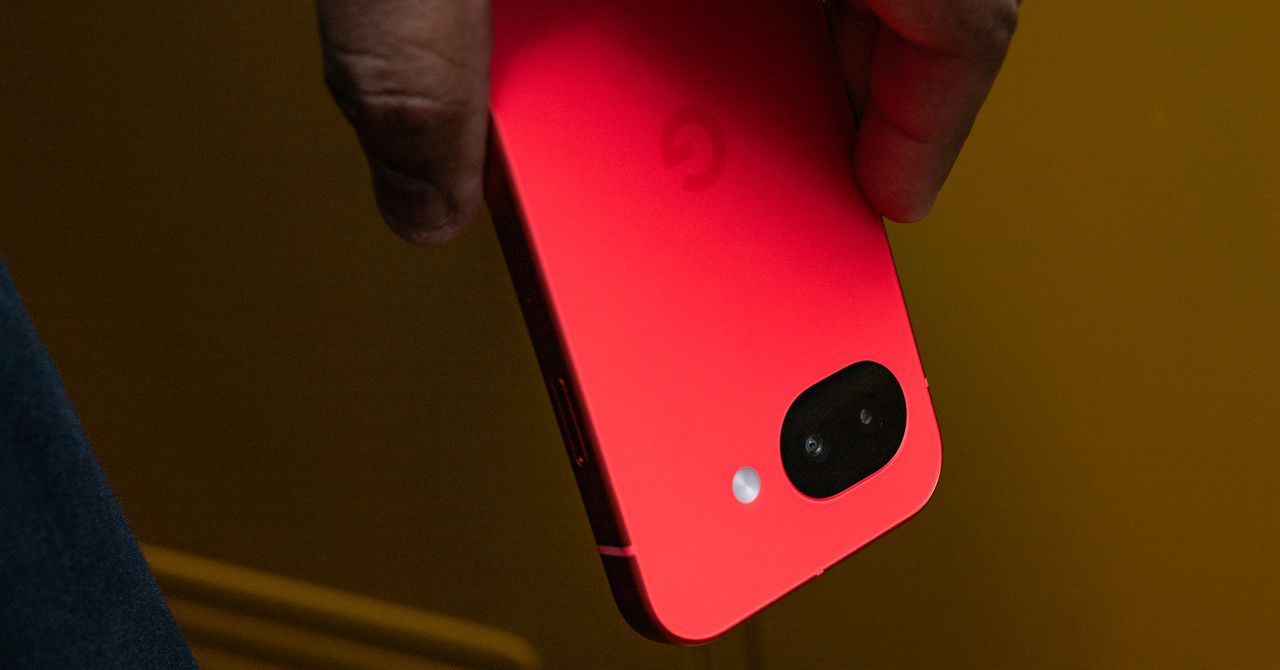
The screen is brighter now, reaching a peak brightness of 3,000 nits, and I haven’t had any trouble reading it in sunny conditions (though it hasn’t been as sunny as I’d like it to be these past few weeks). I appreciate the glass upgrade from Gorilla Glass 3 to Gorilla Glass 7i. It should be more protective, and anecdotally, I don’t see a single scratch on the Pixel 10a’s screen after two weeks of use. (I’d still snag a screen protector to be safe.)
Photograph: Julian Chokkattu
Another notable upgrade is in charging speeds—30-watt wired charging and 10-watt wireless charging. I’ll admit I haven’t noticed the benefits of this yet, since I’m often recharging the phone overnight. You can get up to 50 percent in 30 minutes of charging with a compatible adapter, and that has lined up with my testing.
My biggest gripe? Google should have taken this opportunity to add its Pixelsnap wireless charging magnets to the back of this phone. That would help align the Pixel 10a even more with the Pixel 10 series and bring Qi2 wireless charging into a more affordable realm—actually raising the bar, which wouldn’t be a first for the A-series. After all, Apple did exactly that with the new iPhone 17e, adding MagSafe to the table. Or heck, at least make the Pixel 10a Qi2 Ready like Samsung’s smartphones, so people who use a magnetic case can take advantage of faster wireless charging speeds.
Battery life has been OK. With average use, the Pixel 10a comfortably lasts me a full day, but it still requires daily charging. With heavier use, like when I’m traveling, I’ve had to charge the phone in the afternoon a few times to make sure it didn’t die before I got into bed. This is a fairly big battery for its size, but I think there’s more Google could do to extend juice, akin to Motorola’s Moto G Power 2026.


Sydney Leroux teases comeback after missing 2025 NWSL season

Document reveals Pentagon sought 13 critical minerals day before Iran strike

Legendary football coach, commentator Lou Holtz dies at 89

India Us Trade Deal: Fresh look at India-US trade deal? May be ‘rebalanced’ if circumstances change, says Piyush Goyal – The Times of India

Households set for lower energy bills amid price cap shake-up

What are Iran’s ballistic missile capabilities?

-
Business6 days ago
India Us Trade Deal: Fresh look at India-US trade deal? May be ‘rebalanced’ if circumstances change, says Piyush Goyal – The Times of India
-
Business1 week ago
Households set for lower energy bills amid price cap shake-up
-
 Politics7 days ago
What are Iran’s ballistic missile capabilities?
-

 Politics7 days ago
US arrests ex-Air Force pilot for ‘training’ Chinese military
-

 Fashion6 days ago
Policy easing drives Argentina’s garment import surge in 2025
-

 Sports1 week ago
Top 50 USMNT players of 2026, ranked by club form: USMNT Player Performance Index returns
-
 Business6 days ago
Attock Cement’s acquisition approved | The Express Tribune
-
 Fashion1 week ago
OECD GDP growth slows to 0.3% in Q4 amid mixed trends