

Tech
Meta announces completion of core 2Africa cable | Computer Weekly


Meta has announced the completion of core 2Africa infrastructure, the world’s longest open access subsea cable system.
At 45,000km and first launched in May 2022, 2Africa is one of the world’s largest subsea cable projects. It was built through a consortium comprising global partners led by Meta, with the likes of Bayobab, Center3, CMI, Orange, Telecom Egypt, Vodafone Group and WIOCC. Meta regards 2Africa as a landmark subsea cable system that sets a new standard for global connectivity at unprecedented scale.
The consortium said its shared goal was to develop an open, inclusive network that fosters competition, supports innovation and unlocks new opportunities for millions. Moreover, having an open-access model is intended to ensure that multiple service providers can leverage the infrastructure, accelerating digital transformation and artificial intelligence (AI) adoption across the region.
Recent partners including Bharti Airtel and MainOne (an Equinix Company) collaborated on datacentre integration, further expanding the cable’s impact and reach.
The deployment spanned 50 jurisdictions and nearly six years of work, relying on the active engagement of regulators and policymakers to navigate requirements and keep progress on track.
The network is the first cable to connect East and West Africa in a continuous system and link Africa to the Middle East, South Asia and Europe. With a current reach of 33 countries and still counting, the network is designed to enable connectivity for three billion people across Africa, Europe and Asia – more than 30% of the world’s population.
With a design capacity of up to 180Tbps on key parts of the system, and in addition to supplementing capacity demand in the Middle East, it is also designed to underpin the further growth of 4G, 5G and fixed broadband access, interconnecting Europe, eastward via Egypt, the Middle East via Saudi Arabia, and make 21 landings in 16 countries in Africa.
2Africa is attributed with delivering a step change in international bandwidth for Africa, with technical capacity that far exceeds previous systems. On the West segment, stretching from England to South Africa, and landing in countries such as Senegal, Ghana, Cote d’Ivoire, Nigeria, Gabon, the Republic of Congo, DRC and Angola, the cable supports 21 terabits per second (Tbps) per fibre pair, with eight fibre pairs on the trunk.
To gain the required throughput, the cable deployed advanced spatial division multiplexing (SDM) technology, supporting up to 16 fibre pairs per cable. This, says Meta, was double the capacity of older systems and represented the first 16-fibre-pair subsea cable to fully connect Africa. The link incorporated undersea optical wavelength switching, enabling flexible bandwidth management and supporting evolving demands for AI, cloud and high-bandwidth applications.
The cable system also features two independent trunk powering architectures across its West, East, and Mediterranean segments, in order to optimise capacity and providing additional resiliency against electrical faults. Meta added that its Our branching unit switching capability allowed it to optimise for trunk capacity and reliability by utilising routes much further offshore from hazards such as the Congo Canyon turbidity currents, while serving branches to West African nations.
To further ensure the integrity and reach of the cable, the consortium engineered compatible crossing solutions for over 60 oil and gas pipelines.
Observing the potential effect the cable could have, Meta expects that 2Africa could contribute up to $36.9bn to Africa’s GDP within just the first two to three years of operation. It was confident its arrival will boost job creation, entrepreneurship and innovation hubs in connected regions, and said evidence from previous cable landings have shown that fast internet access increases employment rates, improves productivity and supports shifts towards higher-skill occupations.

Let’s use our car again, but this time we’ll get real numbers from the accelerometer in our smartphone. Say we start at a red light and then accelerate at 2 m/s2 (meters per second squared) for five seconds. From the equation above, Δv1 would be 2 x 5 = 10 m/s, so that’s our velocity. Now, after cruising for a while, we accelerate again at 1 m/s2 for five more seconds. Δv2 is then 1 x 5 = 5 m/s. Adding these two changes, our velocity is now 15 m/s. And so on.
The only problem is that inertial measurement isn’t as accurate as the Doppler method over long periods, because small errors will keep accumulating. That means you need to recalibrate your system periodically using some other method.
Optical Navigation
On Earth, people have long navigated by the stars. In the northern hemisphere, just find Polaris. It’s called the North Star because Earth’s axis of rotation points right at it. That’s why it appears stationary, while the other stars seem to revolve around it. If you point a finger at Polaris you’ll be pointing north, and you can use that orientation to go in whatever direction you want.
Now, if you can measure the angle of Polaris above the horizon, you’ll also know your latitude. If the angle is 30 degrees, you’re at latitude 30 degrees. See, it’s easy. And once you can measure position, you just need to do it twice and record the time interval to find your velocity.
But celestial navigation works because we know how the Earth rotates, and that doesn’t help in a spacecraft. Oh well, can we just use the stars like you would use the cows on the side of the road? Nope. The stars are so far away, astronauts would need to travel for many, many generations to detect any shift in their position. Like the airplane flying over the sea, you’d seem to be stationary, even while traveling 25,000 mph.
But we can still use the basic idea. For optical navigation in space, a spacecraft can locate other objects in the solar system. By knowing the precise location of these objects (which change over time) and where they appear relative to the viewer, it’s possible to triangulate a position. And again, by taking multiple position measurements over time, you can calculate a velocity.
In the end, even though spaceships lack speedometers, it’s possible to track their speed indirectly with a little physics. But it’s just another example of how flying in space is really, totally different—and way more complicated—than driving or flying on Earth.

If those posts could be interpreted in any way as threats, Eversole would contact their hometown police, multiple security team sources say. “He would take it upon himself to reach out to someone somewhere and introduce himself as the CSO of Madison Square Garden and demand that the local PD take action,” the security veteran adds.
One teenager posted a tweet, and MSG security asked local law enforcement to visit him. “They scared the crap [poop emoji] out of some 14 year old kid in Colorado,” one MSG security staffer texted in a message we reviewed. Cops would at times ignore Eversole’s demands. He and his deputies would then “freak the fuck out when a PD somewhere would not play ball,” the second veteran continues.
Eversole would also allegedly push his subordinates to act more like municipal cops. He’d urge them to patrol the streets surrounding MSG, which is located in one of Manhattan’s more derelict neighborhoods, functionally acting as a second, ersatz police force—without formal permission of New York’s real one. “On many occasions, I was ordered to stop traffic, close sidewalks, and unlawfully detain individuals in the venue and demand identification,” Munn, the former security worker, wrote in his filing. Munn added that these orders were “against NY State/City laws without proper permits or NYPD’s authorization, which MSG did not maintain.” An NYPD spokesperson confirms that such authorization was never given.
Eversole would tell his teams to bust the guys selling knockoff merchandise and “remove scalpers and drug dealers daily, in areas outside and around MSG properties, without back up, communication, or assistance from MSG venue security or NYPD paid detail,” Ingrasselino alleged in his lawsuit.
Ingrasselino’s former colleagues emphasize that the work could be dangerous, possibly illegal, and in no way a normal task for a private security force. Ingrasselino, among others, claimed that a former NYPD assistant chief now working for MSG was once attacked by scalpers and sent to the hospital. In his filing, Munn claimed that during his time “overseeing all security aspects” of several Dolan properties, he had been “ordered to do many things I felt were unsafe, unethical, and illegal, all at the direction” of Eversole.
Ingrasselino also alleges in his suit that he was ordered to embed “in the middle of pro-Palestine or anti-Israel protests” that happened to be passing a Dolan venue. Other security sources say that they were not ordered to insert themselves into any demonstrations. But they confirm that they were asked to observe protests that went anywhere near a Dolan venue. Given those venues’ central location, it happened a lot.
Some protests would get special scrutiny. When the Professional Bull Riders tour came to the Garden, animal rights activists would at times gather outside, or in front of the MSG president’s apartment building. The leaders felt they were being singled out and surveilled.
Even people working for the state government found themselves in MSG’s sights.
In late 2022 and early 2023, when word about the lawyer bans began to spread and uproar over the face-recognition program was hitting a peak, the State Liquor Authority decided to look into it; per state law, according to the SLA, you’re not allowed to both serve booze and arbitrarily lock people out of your place. Dolan’s response may have been a touch over-the-top. He went on TV, held up a photograph of the then head of the liquor authority with the man’s phone number and email underneath, and told the audience to reach out to him, and “tell him to stick to his knitting.”
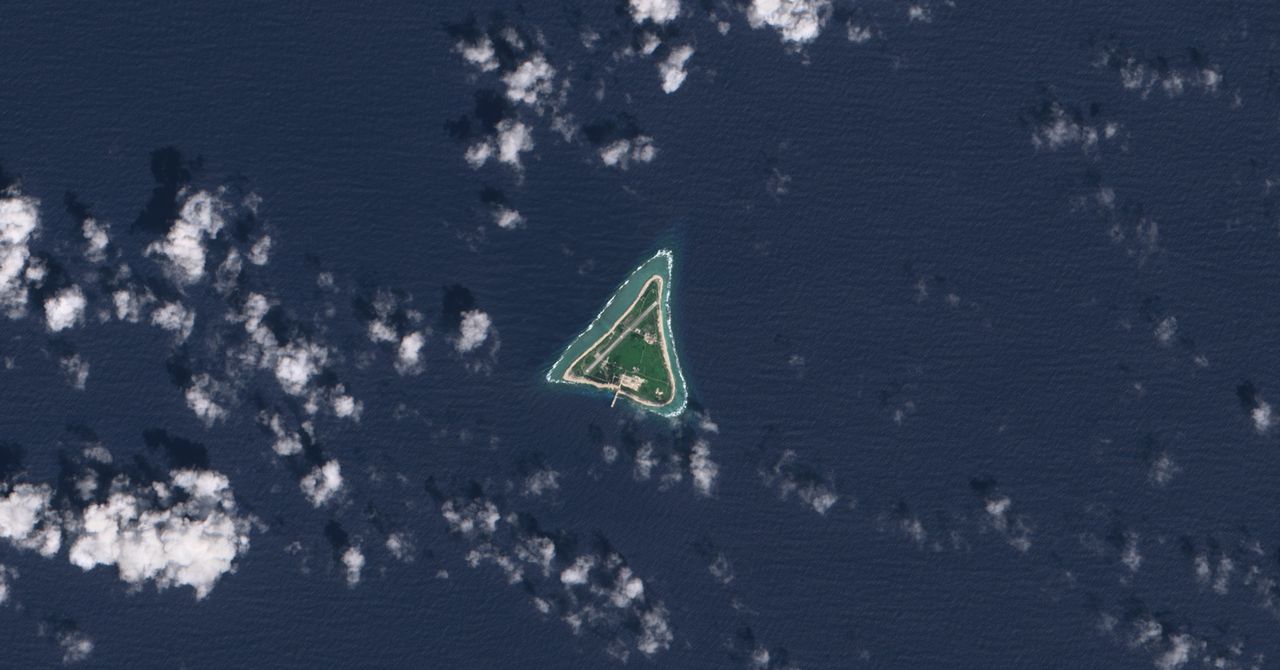
It’s called Minamitorishima, and it’s a small atoll in the Pacific Ocean. It is one of the most remote islands in Japan’s vast archipelago, so much so that it lies nearly 2,000 kilometers southeast of Tokyo. Yet from the depths of the surrounding seas may come a tremendous gift for the country’s economy.
It is there, as deep as 6,000 meters undersea, that a group of Japanese researchers succeeded in a veritable mission impossible: the recovery of sediments containing rare-earth elements from one of the most promising underwater deposits discovered in recent years.
The feat is set to strengthen Japan’s role in the increasingly crucial rare earths sector, a central element in the trade war between China and the United States. Indeed, Japan is the only major industrial country that, while remaining partially exposed, has managed to significantly reduce its dependence on Beijing.
The “Mission Impossible” in the Pacific Seabed
The Minamitorishima operation, conducted with the scientific deep-sea drilling vessel Chikyu, represents the world’s first attempt to sample at such depths.
The Japanese government called the result “a significant milestone in terms of economic security and overall maritime development,” stressing that ongoing analysis will now have to determine the precise quantity and quality of elements present in the extracted samples. But beyond the technical aspect, the value of the undertaking is above all strategic.
Rare earths are a group of 17 metals critical to advanced technologies. They go into the production of high-strength magnets for electric vehicles, wind turbines, electronic devices, semiconductors, radar systems, missiles, and more. Elements such as dysprosium and yttrium, of which the area around Minamitorishima contains estimated reserves of 730 and 780 years of consumption, respectively, have become critical materials for modern industry and defense. According to some estimates, the Japanese submarine deposit could contain more than 16 million tons of rare earths, shaping up as the world’s third-largest reserve.
The Shock of 2010 and the Strategic Shift
Tokyo’s race toward mining self-sufficiency didn’t begin today. It has its roots in 2010, when a diplomatic crisis with Beijing bluntly exposed Japanese vulnerability.
After an incident between a Chinese fishing boat and two Japanese coast guard units near the Senkaku Islands, China blocked rare earth exports to Japan for about two months. At the time, Tokyo was dependent on Beijing for more than 90 percent of its imports of these materials. The embargo caused panic across industries, particularly in the automotive sector, and global prices of rare earths increased tenfold within a year.
That crisis represented a strategic shock. Unlike other industrial countries, which viewed the episode as a circumscribed or temporary strain in those years, Tokyo interpreted it as a structural signal. Overdependence on a single supplier, a regional rival to boot, constituted an existential risk for an advanced and highly industrialized economy.
Since then, Japan has radically changed its strategy. The government launched an extraordinary package of measures: investment in technologies to reduce the use of rare earths, development of alternative materials, enhancement of recycling, the acquisition of stakes in mines abroad—particularly in Australia, with support for the Lynas Group—and creation of strategic stockpiles.
As a result of this policy, Japan’s dependence on China has steadily declined. It has reached about 50 percent in recent years, a level that no other country has been able to match. The decisive factor for the strategy’s success was its integrated approach.
Japan has not only sought new suppliers but has also worked simultaneously on multiple fronts. Japanese companies, with government support, have invested in developing magnets that use less dysprosium. At the same time, research programs on alternative materials have been promoted. This aspect is crucial: Reducing dependence means not only changing suppliers but also reducing structural needs.
Inventory, Innovation, and Competitive Advantage
Another key factor, according to analysts, is inventory. The Japanese government has created strategic reserves of rare earths to mitigate any temporary supply disruptions. This seemingly simple choice, however, requires a long-term vision and capital availability that not all countries have been willing or able to mobilize. Stockpiles do not eliminate dependence, but they provide precious time in the event of a shock, allowing industry to adapt without immediate shutdowns.
Added to these elements is a structural characteristic of the Japanese economy: high technological integration. Japan is not only an importer of rare earths, but an advanced player in their transformation into high-value-added components. This expertise has facilitated innovation and reduction in the intensity of use of critical materials. In other words, the ability to do more with less has become a competitive advantage.


FTAs, PTAs in focus as Sri Lanka aims for growth

Tesco will do ‘whatever it can’ to keep down food prices amid Iran war

Sangeet Syntex showcases innovations at FABTEX 2026

-

 Tech1 week ago
As the Strait of Hormuz Reopens, Global Shipping Will Take Months to Recover
-

 Tech1 week ago
This AI Button Wearable From Ex-Apple Engineers Looks Like an iPod Shuffle
-

 Politics1 week ago
Indian airlines hit hardest after Dubai limits foreign flights until May 31
-

 Entertainment4 days ago
Palace left in shock as Prince William cancels grand ceremony
-

 Sports4 days ago
The case for Man United’s Fernandes as Premier League’s best
-

 Politics1 week ago
Chinese, Taiwanese will unite, Xi tells Taiwan opposition leader
-

 Entertainment6 days ago
Dua Lipa hits major career high ahead of wedding with Callum Turner
-
 Business4 days ago
UK could adopt EU single market rules under new legislation