

Fashion
Milan Fashion Week: Jil Sander, Fendi, Etro, and Loro Piana

Published
September 24, 2025
In a Tuesday deluge of rain in Milan, a deluge of action, with a home-run debut by Simone Bellotti at Jil Sander, a euphoric Fendi show and directional flagship opening, an Etro concert performance and a Loro Piana museum presentation.
Jil Sander: Reducing and protecting
Nice to see a minimalist brand, doing modern minimalism, which was the case at the debut of Simone Bellotti.
A return to the house’s historic Milan headquarters for this show, but not a remotely retro collection, as Bellotti unveiled a thoroughly chic wardrobe of clothes, with the occasional technical explosion.
The cast striding rapidly around a slanted black runway in the all-white show-space, some three decades since Jil Sander first opened her Italian HQ in the shadow of Castello Sforzesco.
A monochromatic look, beginning with lots of sleek super light wool shirt jackets, paper leather blazers and chess piece shaped lambskin redingotes. Everything ironed to perfection. Opening with veteran model Guinevere Van Seenus showing plenty of tummy in a snappy white leather skirt and short electric blue cashmere top. Setting the stage for the collection – with dresses cut to the knee, yet often slit at the hip, revealing flesh regularly.

In crisp tailoring, the debutant cut leather cabans and jackets with great skill, pairing them with leggings and simple shoes.
Experimenting with materials, Simone used acres of technical taffeta in excellent trenches and dusters. Going into overdrive with some remarkable mille feuille cocktails, made of micro layers of taffeta which rippled ever so gently as the models dashed by.
“To me, Jil Sander is a house that has two apparently opposite feelings. There is classicism, formality and rigor, but also, it’s a search for modernity and lightness. So, basically, it was finding the key to balance those elements,” Bellotti argued.
A highly experienced designer, Bellotti joined Jil Sander from Bally after stints with Gucci, Gianfranco Ferré and Bottega Veneta.

He had telegraphed his angular intentions with the invitation – two photos of stacks of newspapers photographed by fine artist Richard Prince. All told, an impressive debut from Bellotti, very much respecting the Sander DNA even as he injected his own style.
At the finale, amid great applause, he took a quiet almost solemn bow, like an old pro who had just hit a home run.
Fendi: Translucently trendy
Is there an Italian designer who has luxury more imbued in her soul that Silvia Fendi? Hard to imagine who, after her latest tasteful, trendy and translucent show for the house of Fendi.

Presented inside the house’s mammoth show-space on Via Andrea Solari, this season revamped into a multi-colored Minecraft checkerboard, designed by Marc Newson. Just like the e-vite, whose pixilation pulsated in the show’s color palette.
With the audience perched on bleacher seats, the cast marched out snappily, oddly enough to industrial rock, “Metallic Life Review” by Matmos.
For day, Silvia wanted ladies to be sexy but always spruce in to-the-knee silk skirts finished with straps; dresses made of woven leather and slashed at the side; or sarongs cut asymmetrically and knitted. Jackets were short, sporty and swing easily.

Emphasizing the upbeat mood the key leitmotif was the daisy, whether dissected into gauzy blouses, or cut into elegant cashmere coats for guys in this co-ed collection. Certain gents walking in the ultimate in self-indulgence luxury – perforated dove gray mink moccasins.
Playing with knits in primary colors – from a blood orange bikini, to a chocolate brown zipped suit and sea-blue bra worn by veteran supe Natasha Poly, part of a multi-generational casting. Before suddenly going into overdrive at the final with a quintet of truly beautiful layered gauzed cocktails – translucent and shimmering.
Like the set, the soundtrack was “pixilated”, as ace DJ Frédéric Sanchez sampled the voices of Italian cinema – Anna Magnani, Marcello Mastroianni, Anouk Aimée and Alain Delon – synthesized in electronic music projects by Scanner and Matthias Schubert. Adding to the sense of achievement when Silvia took her bow to a standing ovation.

In an intense day for the brand, Fendi also opened an inspirational new seven-floor Palazzo Fendi on Via Monte Napoleone. It boasts a special custom-order third floor with a team of permanent artisans, capable of creating myriad versions of Fendi bags in exotic skins or hyper distinctive hardware.
The new Via Monte Napoleone space includes modern art like Glazed Ceramic Column by Anton Alvarez; superb heirloom exotic skin coats from Karl Lagerfeld’s final shows for the house or from Silvia’s epic couture show in the ancient Roman Forum. All the way to a monumental nine-foot-tall beaded, sequinned and metallic coat named Soundsuit made for Nick Cave.
Along with three floors of Langosteria restaurant including a Japanese version and roof top bar. The whole place finished with multiple types of marble floors, changing from floor to floor, private salon to salon.
“It’s emotional and experiential, which is what people want today from great brands. And it represents our Italian heritage,” said fresh CEO Ramon Ros, who was appointed in April.
Etro: The united flags of fashion
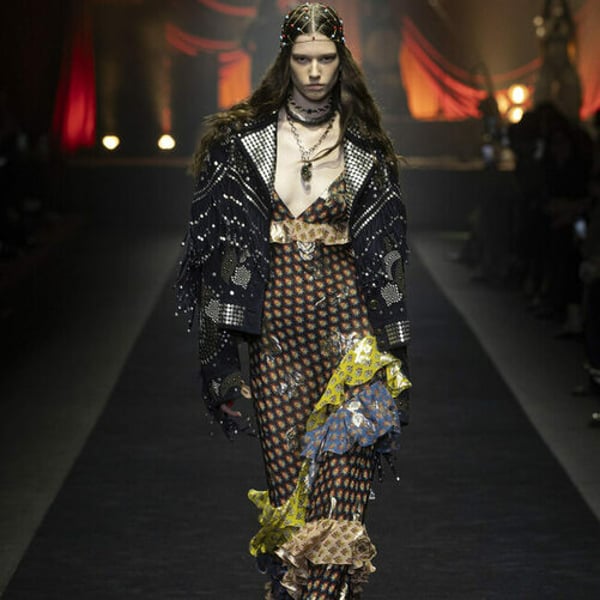
Movement and motion at Etro this season, in a collection inspired by flags, with clothes that fluttered and undulated with each step.

Presented inside a tent within a military barracks in south Milan, the show was driven on by a great live performance from La Nina Del Sud – a poly-instrumentalist, actress, singer songwriter and all-round hottie. The singer yelping and roaring as a half-dozen percussionists played tambourines and bodhráns painted in images of angry snakes.
Using Etro’s key heritage – its remarkable fabrics – in a too-much-is-never-enough collection; the show marked designer Marco de Vincenzo’s best display for the house since he arrived three years ago.
Scores of influencers, pop singers and even the odd buyer sat at the division between two black catwalks, all perched on ottoman’s covered in Etro fabrics.

Kicking off with hyper ruffled posh hippie dresses, completed with fringed rocker or cowboy jackets; followed by colorful crochet tops and huge psychedelic harem pants, along with some striking jacquard redingotes.
For evening, he showed sheer skirts worn over Rajasthan-print leotards, or deep gorge lace gowns. Most models wore bandanas, some giant pirate hats, as if all off to some fabulous private party at a rock festival. Outside, it had been raining all day in Milan. Inside the mood was steamy.
“Mixing and matching without any fear. Brocades with knits and prints. Embroidered denim and suede. Prints on beds of chiffon coated to become magic. Intarsia leather. Fabrics and soul!” enthused de Vincenzo, in a packed backstage.
Loro Piana: Classic clothes with modern art
The star of this season’s Loro Piana presentation turned out to be the setting – Palazzo Citterio, a freshly opened museum dedicated to 20th-century art.

A little-known collection in a municipal gallery, which remarkably boasts works by such legends as Modigliani, Braque, Picasso, and Umberto Boccioni, including a marvelous self-portrait of the latter bearing an easel and wrapped up in a mohair coat and beanie. Cut like one on the head of a stockman nearby in this co-ed presentation.
Every mannequin wore a cap or hat – all the way to a Puritan stovepipe on a lady’s black creamy cashmere coat.

Key new ideas included a remarkable new silk tweed, giving that blend of English aristo and old money Italy that Loro Piana consumers like.
Plus, one discovered some intriguing linen made with a powdery finish to the threads altering how light falls on the material. Seen on a salted caramel-hued shawl collar jacket, next to, unexpectedly, a Don Johnson-worthy Miami Vice double-breasted suit. Then again, an Armani retrospective will open next door on Sunday.
Copyright © 2025 FashionNetwork.com All rights reserved.





PTA prices recorded notable declines across key Asian benchmarks, tracking crude oil weakness rooted in evolving geopolitical signals. The correction was broad-based, spanning China, Southeast Asia, and South Korea, while India**;s CIF price held steady reflecting the lag in import contract structures and limited spot availability in the domestic market on the day.
The *** per cent Polyester Yarn market witnessed a slightly negative trend during the assessed period, with mild price corrections observed across both yarn grades in the Asia Free on Board (FOB) China market. Prices for **s (*** per cent polyester yarn) declined from around $*.***/kg to nearly $*.***/kg, registering a decrease of approximately *.** per cent.
The pivot is urgent because the old model is under pressure. April **** looked strong: Ready-Made Garment (RMG) exports rose **.** per cent year on year to $*.** billion. But the ten-month picture is weaker. From July-April FY****–**, apparel exports stood at $**.** billion, down *.** per cent. Knitwear fell *.** per cent to $**.** billion; woven fell *.** per cent to $**.** billion. The rebound is real, but so is the drag underneath.
AWARE is the sharpest EU-facing signal: blockchain-backed product data for Digital Product Passport (DPP) readiness. Open Supply Hub adds the factory-identity layer, pushing production information into an open platform. GIZ brings the longer reform spine, from May **** to February ****, covering energy efficiency, circularity, chemical management, renewable-energy skills and textile-waste transparency.
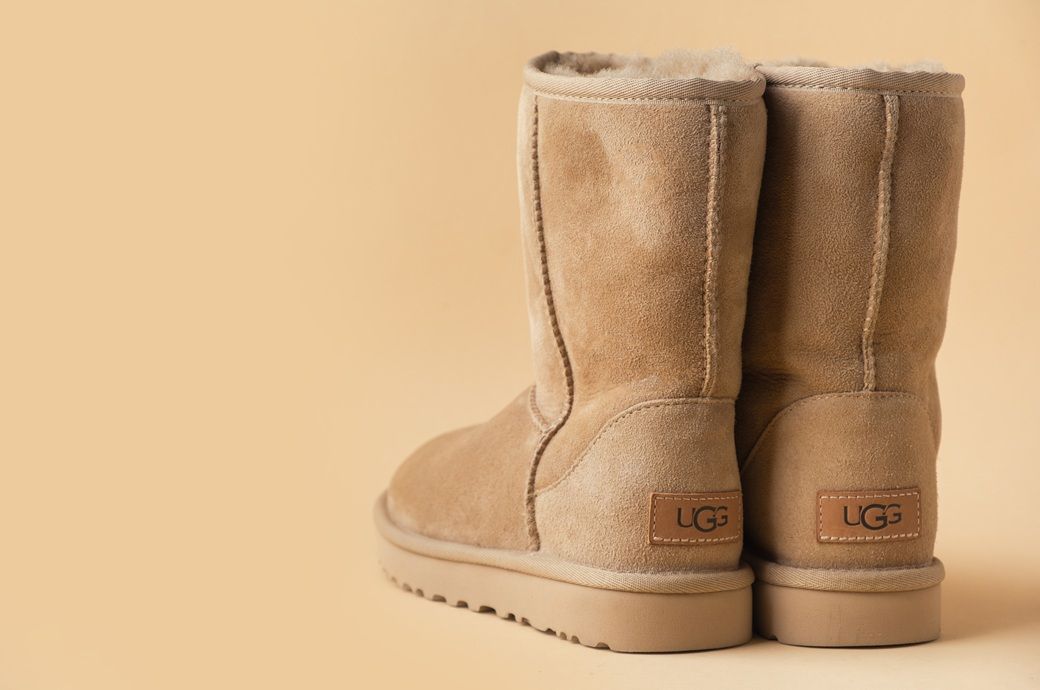
Kenneth Straka, Senior Product Development Manager at Deckers Outdoor Corporation, said that Deckers places strong emphasis on sustainability, noting that founder John Luke often reminded the team that the French word for sustainability is durability. This idea aligned with discussions at the Global Fashion Summit, where the theme centred on “Building Resilient Futures” in the sustainable and circular economy.
Durability has helped UGG become one of the most sought-after boot brands and a key sales driver for Deckers, alongside its sportswear brand Hoka. “One of the things we think about in terms of circularity is making products that last a long time and remain with consumers throughout their lives. We want products that consumers can wear for ** or ** years,” Straka said in an interview with Fibre*Fashion on the sidelines of the Global Fashion Summit in Copenhagen.


Polyester yarn prices ease as PTA weakens on limited demand

The border as lifeline

Bangladesh apparel reset: Compliance edge or energy trap?

-

 Entertainment5 days ago
Conan O’Brien hat tricks as Oscar host
-
 Tech1 week ago
Could Contact-Tracing Apps Help With the Hantavirus? Not Really
-

 Tech1 week ago
I Tried the Best Captioning Smart Glasses, and Only One Leads the Pack
-
 Fashion5 days ago
Italy’s Zegna Group’s Q1 growth boosted by strong organic performance
-

 Sports1 week ago
Bobby Cox, legendary Atlanta Braves manager who led 1995 World Series champions, dead at 84
-

 Entertainment1 week ago
Martin Short: Facing tragedy with joy
-

 Entertainment1 week ago
Tom Brady gets back at Kevin Hart during Netflix roast
-

 Entertainment1 week ago
Martha Stewart: How to make an omelet