

Business
Minerals alone do not ensure prosperity | The Express Tribune

South Asia needs to act strategically as global race for critical minerals intensifies
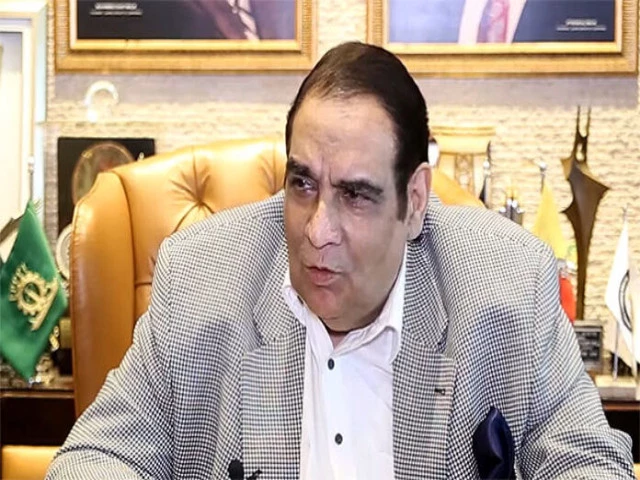
Iftikhar Ali Malik, former president of Saarc Chamber of Commerce and Industry.
LAHORE:
The battle for technological supremacy is no longer being fought only in laboratories or stock exchanges; it is increasingly unfolding beneath the earth’s surface. From lithium-rich salt flats to copper belts and rare earth deposits, the role of critical minerals is fast reshaping global trade alliances and strategic priorities.
In Pakistan, many business leaders think that the whole region should align as global competition for critical minerals and strategic metals is set to intensify due to the fact that major economies rush to secure supply chains for clean energy and emerging technologies.
“Lithium, cobalt, nickel, rare earth elements and copper have become the backbone of modern industrial growth, powering electric vehicles, renewable energy storage systems, semiconductors and advanced defence systems,” said Iftikhar Ali Malik, former president of Saarc Chamber of Commerce and Industry.
According to the International Energy Agency, demand for lithium is projected to grow more than 40 times by 2040 under sustainable development scenarios, while demand for nickel and cobalt may increase by 20 to 25 times.
Copper, often called the metal of electrification, is expected to see a surge in consumption due to the expansion of renewable power grids and electric vehicles. Global investment in energy transition technologies reached $2.3 trillion in 2025, underscoring how deeply minerals are now tied to economic security.
Malik observed that as the world shifts towards green energy and digital transformation, demand for these resources is rising exponentially, triggering a new wave of geo-economic rivalry among leading nations. He emphasised that developing economies, particularly in South Asia, must adopt forward-looking policies to capitalise on this evolving landscape.
Regional cooperation, technology transfer and transparent regulatory frameworks, he said, would be essential to attract responsible foreign investment while safeguarding national interests.
“Countries rich in mineral reserves are now at the centre of strategic partnerships and trade negotiations,” Malik said, adding that without proper planning and value addition, resource-rich nations risk exporting raw materials while importing expensive finished goods. He cautioned that unplanned extraction, environmental degradation and weak oversight could deprive economies of long-term gains.
He urged policymakers to invest in comprehensive geological surveys, modern mining infrastructure and skilled human resources to enhance competitiveness.
Stressing the importance of regional collaboration under Saarc platforms, Malik said integrated supply chains within South Asia could reduce dependence on extra-regional powers and create stronger bargaining positions in global markets. “The race for critical minerals is not merely about resources but about technological leadership and economic resilience in a rapidly changing world order,” he added.
Industry analysts note that South Asia holds significant untapped potential. Geological surveys in the region have identified copper and gold deposits worth billions of dollars, while renewed interest in rare earth exploration is emerging due to their use in wind turbines and high-performance magnets.
However, the region’s mining sector contributes less than 3% to the overall GDP in most economies, compared to over 10% in resource-driven nations like Chile or Australia.
Dr Ahmed Naseem, a Lahore-based economist, said that mineral wealth alone does not guarantee prosperity. “History shows that countries often fall into a resource trap if institutions are weak and transparency is compromised. If South Asian states fail to ensure environmental safeguards, local processing and fair revenue sharing, the mineral rush could widen inequality instead of strengthening economic resilience.”
He added that global supply chains are increasingly shaped by sustainability standards, carbon footprints and traceability requirements, particularly in the European Union and North America. Without meeting these benchmarks, exporters could face trade barriers despite having abundant reserves.
“As geopolitical tensions are influencing mineral trade routes and major economies are signing exclusive supply agreements, the urgency for strategic planning is growing. Unless South Asian nations, including Pakistan, coordinate policies, invest in downstream industries and prioritise value addition, they may miss a rare opportunity to reposition themselves in the global economic hierarchy,” he said.




MUMBAI: Some friction, long viewed as a flaw in digital payments, is now being seen as a feature. An RBI discussion paper proposes to introduce a short delay, or “lag”, for high-value transfers above Rs 10,000. This gives customers time to rethink a transaction and cancel it if they suspect fraud. Customers may also be allowed to whitelist trusted payees so that genuine payments are not delayed.Another proposal is to provide stronger protection to vulnerable users such as senior citizens by requiring an additional confirmation from a “trusted person” for large transactions above Rs 50,000. The paper also suggests a “kill switch” to instantly block all digital transactions in case of suspected fraud.Banks are expected to identify suspicious transactions in real time and seek reconfirmation from customers before processing them. They will need to build systems to implement delays, allow cancellations, and generate risk alerts. Banks are also expected to tighten due diligence by linking the level of activity in an account to the customer’s profile. For instance, accounts with low verified income may face limits on how much money they can receive unless additional checks are completed. A key finding is that most frauds now are the result of human vulnerability. The growth of digital payments has amplified this risk.

The project was part of a package of tech investment promising the UK could become an AI superpower.
Source link

People gather at the Magic Kingdom theme park before the “Festival of Fantasy” parade at Walt Disney World in Orlando, Florida, U.S. July 30, 2022.
Octavio Jones | Reuters
Disney is planning to begin its next phase of cost cutting, which will include as many as 1,000 layoffs, according to a person familiar with the matter.
The cost-cutting initiative comes shortly after Josh D’Amaro took the helm as CEO in mid-March.
The layoffs are expected to mostly affect Disney’s marketing department, according to the person, who requested to speak anonymously because the moves had not yet been made public. That department was recently consolidated under Asad Ayaz, who was named chief marketing and brand officer in January.
Ayaz, who reports directly to D’Amaro and Dana Walden, Disney’s president and chief creative officer, oversees marketing for all of Disney’s divisions — entertainment, experiences and sports — in the newly created role. It’s the first time that Disney brought all of its units under one marketing chief.
Disney’s stock was slightly down in afternoon trading on Thursday. The layoffs were first reported by The Wall Street Journal.
The changes to the marketing department structure occurred in January, when Bob Iger was still CEO of the company. Disney announced shortly after that that D’Amaro would take take over the top job — a long-awaited decision for the company.
D’Amaro, who previously was chairman of Disney Experiences, succeeded Iger after a period of uncertainty for the media and theme park giant — which had included a succession race and recent reorganization and turnaround of the business.
Iger reclaimed the Disney CEO role in late 2022, about two years after his initial departure. He was immediately tasked with a turnaround of the business as its stock price had fallen and earnings began to miss expectations.
By February 2023, Disney had announced sweeping plans that reorganized the structure of the company, cut $5.5 billion in costs and eliminated 7,000 jobs from its workforce.
On D’Amaro’s first official day as CEO in March, he noted the work Iger had done to get the company past one of its most difficult periods.
“When Bob returned to the company a few years ago, his goal was to fortify our business and lay the groundwork for long-term growth, by reigniting creativity and improving performance at our studios, building a robust and profitable streaming business, transforming ESPN for a digital future, and turbocharging our parks and experiences,” D’Amaro said on stage at the company’s investor day.
“We’ve accomplished all of those things, and we’re operating from a place of strength, with ample opportunity for growth.”

[CinePlex360] Please moderate: “Lindsey Vonn cr

Diddy fights against ‘unfair’ trial with twisted arguments
[CinePlex360] Please moderate: “US fleet is mov

-
 Business1 week ago
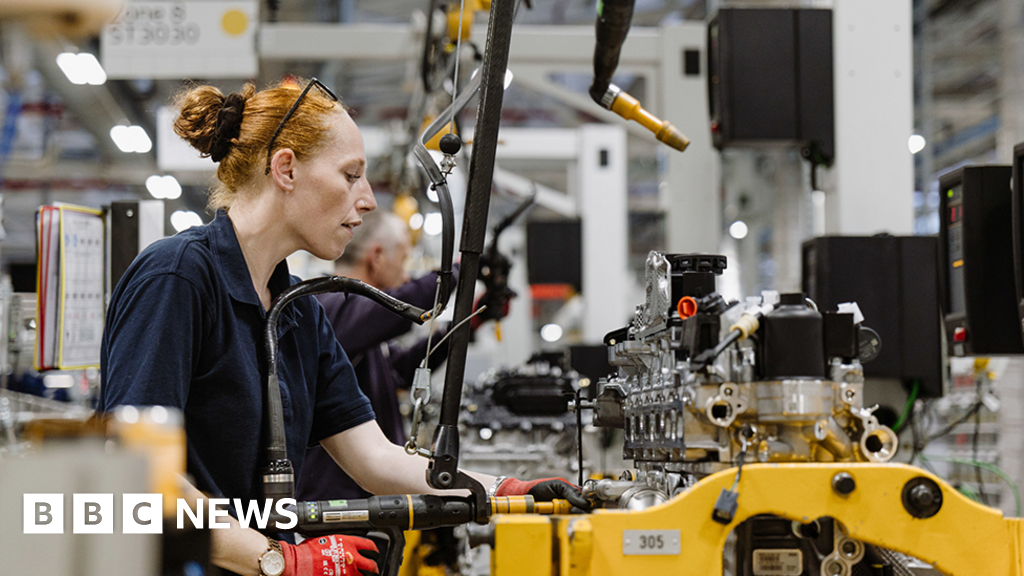
Jaguar Land Rover sees sales recover after cyber attack
-
Uncategorized1 week ago
[CinePlex360] Please moderate: “Trump signals p
-

 Entertainment6 days ago
Joe Jonas shares candid glimpse into parenthood with Sophie Turner
-

 Tech6 days ago
Our Favorite iPad Is $50 Off
-

 Sports6 days ago
UConn Final Four run could trigger a $50M furniture giveaway for Massachusetts-based Jordan’s Furniture
-

 Entertainment6 days ago
Blake Lively reacts to harassment claims dismissal against Justin Baldoni
-

 Fashion1 week ago
China’s Anta Sports posts record $11.62 bn revenue in 2025
-
 Business6 days ago
Video: Why Is the Labor Market Stuck?