

Business
Morrisons reveals £381m annual loss but hails solid festive trading

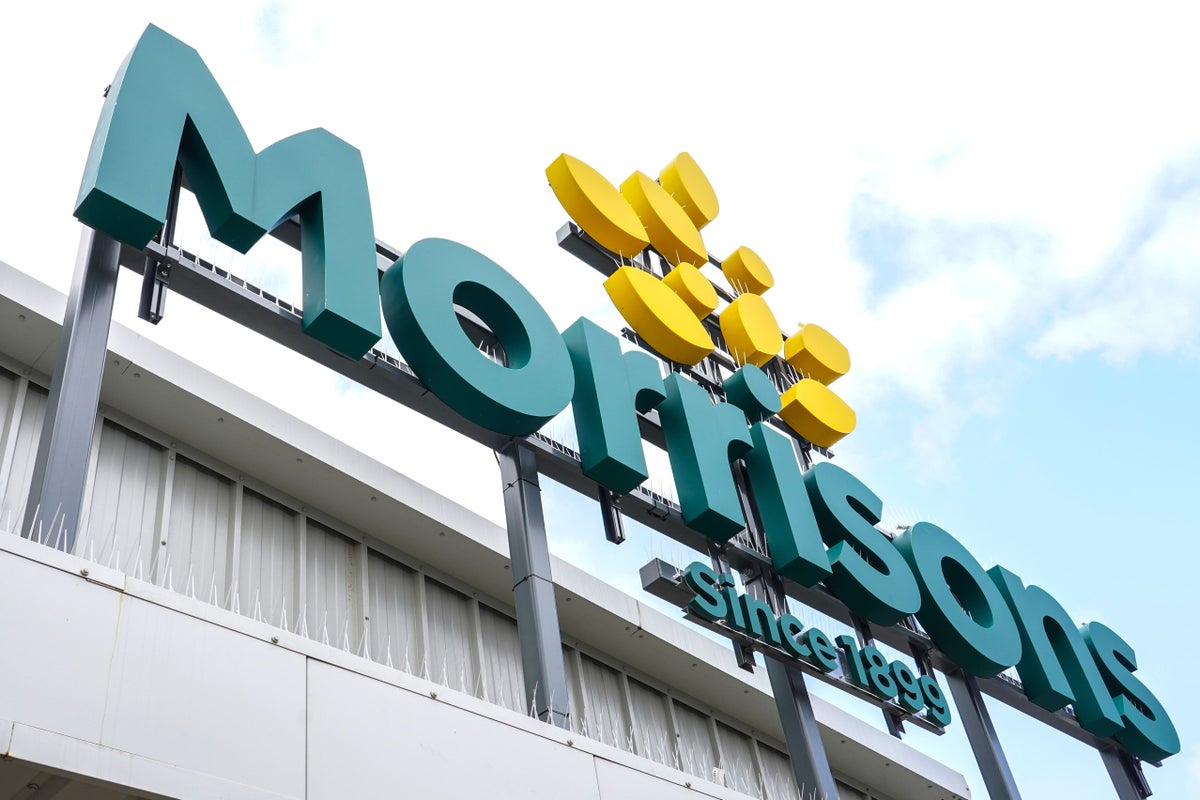
Supermarket Morrisons has revealed annual losses of £381 million after hefty borrowing costs but enjoyed a resurgent sales performance over Christmas.
The UK’s fifth largest grocery chain reported a £381 million pre-tax loss for the year to October 26 after it faced a £281 million interest bill on its debt mountain, although it said this was narrowed from losses of £414 million in 2023-24.
The group – owned by US private equity firm Clayton, Dubilier & Rice – said it cut debts by 10% over the year, but still ended 2024-25 with a £3.1 billion debt pile.
Morrisons added that on an underlying basis and stripping out costs such as debt interest, its earnings remained flat at £835 million, with progress held back by rising costs and a cyber incident that caused an IT systems outage just before Christmas 2024, impacting product availability.
The group said measures in the 2024 budget, such as last April’s national insurance contributions tax hike and minimum wage rise, sent costs surging by £200 million in the past financial year.
It said it cut costs by £233 million in the year to October 26 and is making further savings over the current financial year to meet its £1 billion target.
This is not set to include job losses among its 95,000-strong workforce, although bosses said the group would not replace some workers as they left in an effort to make savings and as it rolls out initiatives such as electronic shelf price tags.
Over Christmas, the firm said like-for-like sales growth picked up to 3.4% in the crucial six weeks to January 4, helped by strong demand for its own-brand premium range, which saw sales jump 17.4%.
It cheered a “good performance in a competitive market”, with non-food sales also up 10% and its clothing range seeing a 4.7% increase over the Christmas period.
The festive sales jump marked an improvement on trading in the full year to October, when like-for-like sales lifted 2.8%, with growth slowing to 2.4% in the final quarter.
Rami Baitieh, chief executive of Morrisons, said: “In a year when consumers were feeling the squeeze, we grew like-for-like sales for a 12th consecutive quarter, maintained Ebitda (earnings before interest, taxes, depreciation, and amortisation) and our market share.”
He said the results “demonstrated our resilience in the face of some tough external headwinds, from the cyber incident, rising inflation and Government cost increases, which we worked hard to offset”.
Mr Baitieh added: “We had a good Christmas in 2025, providing a solid foundation for the first quarter.
“As we enter 2026, the grocery market remains competitive and we are committed to our focus on delivering good value and keeping prices low for customers.”
He said consumers were under pressure at the end of last year, with “the impact of the Government cost increases, with inflation and budget uncertainty all weighing on customer sentiment” and added consumer confidence was still “not at its best” in 2026.
Recent industry data from Worldpanel suggested Morrisons’s market share slipped over Christmas, to 8.5% in the 12 weeks to December 28, down from 8.6% a year earlier despite the sales rise.
The gap with rival Lidl is closing and experts have said the German discounter could overtake Morrisons in the coming months if its current momentum continues.
Morrisons said it cut costs and borrowings in the year to October 26, with its debt now down by 46% from a peak seen in 2022.
Jo Goff, chief financial officer of Morrisons, said: “We worked hard during the year to offset the significant and unexpected cost headwinds arising from the Government’s 2024 budget and other inflationary pressures, with our cost reduction programme delivering savings of £233 million, to take the total to date to £845 million.
“We expect to exceed our £1 billion savings target by the end of 2025-26.”

Analysts fear the disruption to supply could continue for longer than initially thought.
Source link
Policymakers vote unanimously to hold rates at 3.75% after the Iran war prompts a sea-change in the debate over borrowing costs.
Source link
Business
Eli Lilly’s next-generation obesity drug retatrutide clears first late-stage diabetes trial

Eli Lilly on Thursday said its next-generation obesity drug retatrutide cleared its first late-stage trial on Type 2 diabetes patients, helping them manage their blood sugar levels and lose weight.
The drug lowered hemoglobin A1c — a key measure of blood sugar levels — by an average of 1.7% to 2% across different doses at 40 weeks compared to placebo, meeting the study’s main goal. Patients started the trial with an A1c in the range of 7% to 9.5%, and were not taking other diabetes medications.
Retatrutide also met the study’s second goal, helping patients at the highest dose lose an average of 16.8% of their weight, or 36.6 pounds, at 40 weeks, when evaluating only patients who stayed on the drug. When analyzing all participants, including those who discontinued treatment, the highest dose of the drug helped patients lose 15.3% of their weight.
Patients with Type 2 diabetes historically struggle to lose weight, so Lilly is “very excited” to see that the drug led to both a competitive drop in blood sugar levels and significant weight loss, Ken Custer, president of Lilly Cardiometabolic Health, said in an interview.
The company was also “very pleased” with the relatively low discontinuation rates due to side effects, which were up to 5%, he added.
They are the second late-stage results to date on retatrutide, which works differently from existing injections and appears to be more effective, at least for weight loss. Lilly is betting big on retatrutide as the next pillar of its obesity portfolio after its blockbuster weight loss injection Zepbound and its upcoming pill, orforglipron.
But Lilly has yet to file for approval for the drug for obesity or diabetes. The company expects to report findings from seven additional phase three trials on the drug by the end of the year.
There are no head-to-head trials of retatrutide against other drugs, making it difficult to directly compare efficacy.
Still, retatrutide’s A1C reduction doesn’t appear to be the greatest Lilly has seen within its portfolio: The highest dose of Zepbound lowered the measure by more than 2% at 40 weeks in two separate trials on diabetes patients.
But Custer said retatrutide’s A1C reduction is still “very, very strong” compared to other diabetes medications that don’t target gut hormones.
He also said that having options in the obesity and diabetes space will be important because “not everybody is going to be helped with or satisfied with the same treatment.” Choosing which drug to take will depend on “individualized tailoring of solutions and patients,” particularly earlier in their diabetes treatment, he added.
For example, Custer said patients who want to regulate their blood sugar could benefit from either Zepbound or retatrutide. But if they are looking to lose more weight, the latter might be a better option, he said.
In the two separate diabetes trials, Zepbound helped patients lose slightly less weight than retatrutide did. In one study called SURPASS-2, the highest dose of Zepbound helped patients lose an average of 13.1% of their weight at 40 weeks. In the other study, SURPASS-1, the highest dose helped patients lose an average of 11% of their weight at the 40-week mark.
Retatrutide’s safety profile was similar to other injectable diabetes and obesity drugs, primarily causing gastrointestinal side effects. Around 26.5% of patients on the highest dose experienced nausea, while roughly 22.8% and 17.6% had diarrhea and vomiting, respectively.
Low rates of patients experienced dysesthesia, which is an unpleasant nerve sensation.
Dubbed the “triple G” drug, retatrutide works by mimicking three hunger-regulating hormones – GLP-1, GIP and glucagon – rather than just one or two like existing treatments. That appears to have more potent effects on a person’s appetite and satisfaction with food than other treatments.
Tirzepatide, the active ingredient in Zepbound, mimics GLP-1 and GIP. Novo Nordisk’s semaglutide, the active ingredient in Wegovy, mimics only GLP-1.
As retatrutide inches closer to the market, Novo is racing to catch up to Lilly. In March 2025, Novo said it agreed to pay up to $2 billion for the rights to an early experimental drug from the Chinese pharmaceutical company United Laboratories International.
Novo’s newly acquired drug is a clear potential competitor to retatrutide because it similarly uses a three-pronged approach to promoting weight loss and regulating blood sugar. But Novo’s treatment is much earlier in development, meaning it will take several years before it reaches patients.


Signal’s Creator Is Helping Encrypt Meta AI

At last, league and union agree to new WNBA CBA

Australian wool prices decline this week as buyer caution ends rally

Stock market crash today (March 12, 2026): Nifty50 opens below 23,600; BSE Sensex down over 900 points on continuing US-Iran war – The Times of India

UK’s Topshop unveils Tolu Coker capsule collection

India’s textile recycling market may reach $3.5 bn by 2030: Report

-
Business1 week ago
Stock market crash today (March 12, 2026): Nifty50 opens below 23,600; BSE Sensex down over 900 points on continuing US-Iran war – The Times of India
-
 Fashion1 week ago
UK’s Topshop unveils Tolu Coker capsule collection
-
 Fashion1 week ago
India’s textile recycling market may reach $3.5 bn by 2030: Report
-
 Business1 week ago
US ignites Iran war, but Gulf Arab states pay the price | The Express Tribune
-
 Tech1 week ago
Meta Developed 4 New Chips to Power Its AI and Recommendation Systems
-

 Sports1 week ago
Bangladesh crush Pakistan in ODI series opener | The Express Tribune
-

 Entertainment1 week ago
Ed Sheeran makes surprising Benny Blanco confession after hygiene uproar
-

 Tech1 week ago
Labour scarcity is forcing IT leaders to rethink automation economics | Computer Weekly