

Business
Mortgages and AI to be added to the curriculum in English schools

 Getty Images
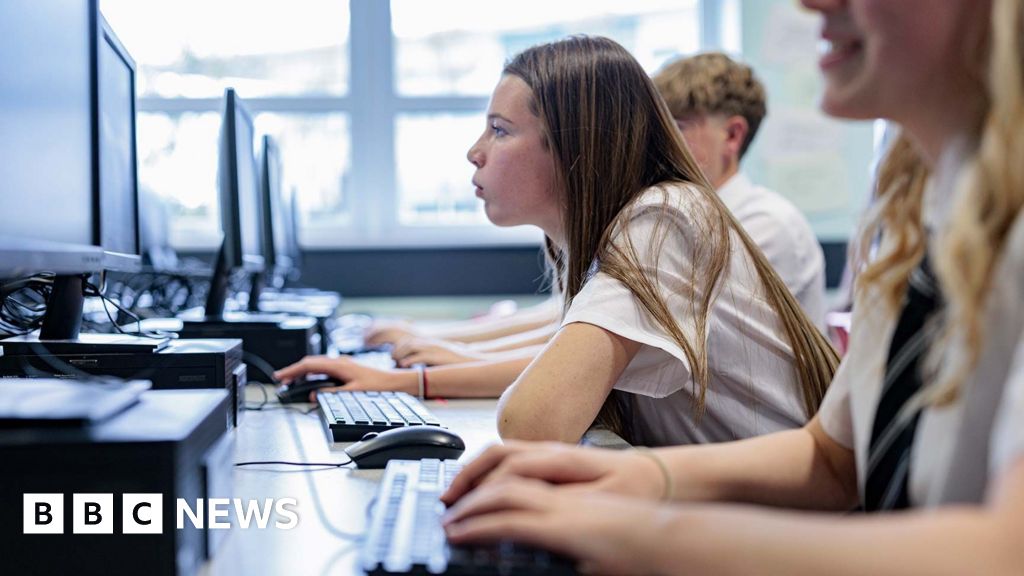
Children will be taught how to budget and how mortgages work as the government seeks to modernise the national curriculum in England’s schools.
They will also be taught how to spot fake news and disinformation, including AI-generated content, following the first review of what is taught in schools in over a decade.
Education Secretary Bridget Phillipson said the government wanted to “revitalise” the curriculum but keep a “firm foundation” in basics like English, maths and reading.
Head teachers said the review’s recommendations were “sensible” but would require “sufficient funding and teachers”.
The government commissioned a review of the national curriculum and assessments in England last year, in the hope of developing a “cutting edge” curriculum that would narrow attainment gaps between the most disadvantaged students and their classmates.
It said it would take up most of the review’s recommendations, including scrapping the English Baccalaureate (EBacc), a progress measure for schools introduced in 2010.
It assesses schools based on how many pupils take English, maths, sciences, geography or history and a language – and how well they do.
The Department for Education (DfE) said the EBacc was “constraining”, and that removing it alongside reforms to another school ranking system, Progress 8, would “encourage students to study a greater breadth of GCSE subjects”, like arts.
The former Conservative schools minister, Nick Gibb, said the decision to scrap the EBacc would “lead to a precipitous decline in the study of foreign languages”, which he said would become increasingly centred on private schools and “children of middle class parents who can afford tutors”.
Other reforms coming as a result of the curriculum review include:
- Financial literacy being taught in maths classes, or compulsory citizenship lessons in primary schools
- More focus on spotting misinformation and disinformation – including exploring a new post-16 qualification in data science and AI
- Cutting time spent on GCSE exams by up to three hours for each student on average
- Ensuring all children can take three science GCSEs
- More content on climate change
- Better representation of diversity
The review also recommended giving oracy the same status in the curriculum as reading and writing, which the charity Voice 21 said was a “vital step forward” for teaching children valuable speaking, listening, and communication skills.
However, the government is not taking up all of the review’s recommendations.
It is pushing ahead with the reading tests for Year 8 pupils reported in September, whereas the review recommended compulsory English and maths tests for that year group.
Asked why she stopped short of taking up the review’s recommendation, Phillipson told the BBC that pupils who are unable to read “fluently and confidently” often struggle in other subjects.
And she addressed the claims that scrapping the EBacc could lead to fewer pupils taking history, geography and languages at GCSE, saying the measure “hasn’t led to improved outcomes” or “improvement in language study”.
“I want young people to have a good range of options, including subjects like art and music and sport. And I know that’s what parents want as well,” she said.
She said ministers recognised “the need to implement this carefully, thoroughly and with good notice”, adding that schools would have four terms of notice before being expected to teach the new curriculum.
Prof Becky Francis, who chaired the review, said her panel of experts and the government had both identified a “problem” pupils experience during the first years of secondary school.
“When young people progress from primary into secondary school, typically this is a time when their learning can start falling behind, and that’s particularly the case for kids from socially disadvantaged backgrounds,” she told the BBC.

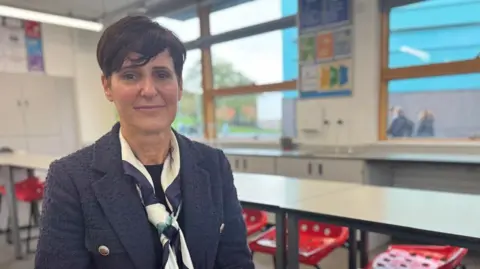
She said the approach to the review was “evolution not revolution”, with England’s pupils already performing relatively well against international averages.
She said the call for more representation of diversity in the curriculum was not about “getting rid of core foundational texts and things that are really central to our culture”, but was more about “recognising where, both as a nation but also globally, there’s been diverse contribution to science and cultural progress”.
Shadow Education Secretary Laura Trott said the changes “leave children with a weaker understanding of our national story and hide standards slipping in schools”.
“Education vandalism will be the lasting legacy of the prime minister and Bridget Phillipson,” she added.
Pepe Di’Iasio, general secretary of the Association of School and College Leaders, said the review had proposed “a sensible, evidence-based set of reforms”.
But he said delivering a “great curriculum” also required “sufficient funding and teachers”, adding that schools and colleges did not currently have all the resources they need.
He said a set of “enrichment benchmarks” – which the government said would offer pupils access to civic engagement, arts and culture, nature and adventure, sport, and life skills – had been announced “randomly” and “added to the many expectations over which schools are judged”.
Additional reporting by Hope Rhodes
The Reserve Bank of India (RBI) on Monday decided against activating the countercyclical capital buffer (CCyB), indicating that current financial and credit conditions do not warrant an additional capital requirement for banks, PTI reported.The central bank said the decision followed a review and empirical assessment of indicators used under the CCyB framework.“Based on review and empirical analysis of CCyB indicators, it has been decided that it is not necessary to activate CCyB at this point in time,” RBI said in a statement.Under the RBI (Commercial Banks – Prudential Norms on Capital Adequacy) Directions, 2025, the CCyB framework is activated when financial conditions indicate rising systemic risks linked to excessive credit growth.The framework primarily relies on the credit-to-GDP gap as a key indicator, along with supplementary metrics.According to the RBI, the CCyB mechanism is intended to serve two broad objectives.Firstly, it requires a bank to build up a buffer of capital in good times, which may be used to maintain the flow of credit to the real sector in difficult times.Secondly, it achieves the broader macro-prudential goal of restricting the banking sector from indiscriminate lending in the periods of excess credit growth that have often been associated with the building up of system-wide risk.The framework was introduced globally after the 2008 financial crisis as part of measures proposed by the Group of Central Bank Governors and Heads of Supervision (GHOS) under the Basel framework to strengthen financial system resilience.
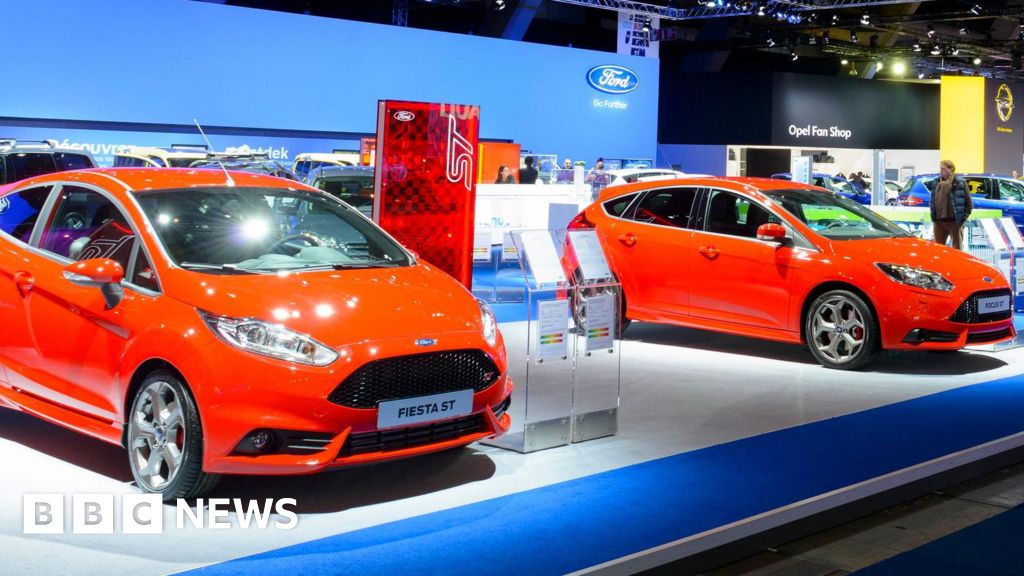
The company has announced plans to build seven new models in Europe including a small electric hatchback.
Source link

“Today’s policymaking is constrained by a more volatile external environment with more frequent and overlapping shocks, a rising public interest bill, in part reflecting market concerns with countries’ elevated debt, and the long-standing challenge of weak productivity growth,” he said.


Turkiye’s current account deficit expected to widen in 2026: Minister

UK’s clothing imports fall 3% in Q1, sharply lower than Q4 2025
RBI sees no signs of excess credit risk, keeps countercyclical capital buffer inactive

-

 Entertainment6 days ago
Conan O’Brien hat tricks as Oscar host
-

 Tech1 week ago
Could Contact-Tracing Apps Help With the Hantavirus? Not Really
-

 Fashion5 days ago
Italy’s Zegna Group’s Q1 growth boosted by strong organic performance
-

 Sports1 week ago
Bobby Cox, legendary Atlanta Braves manager who led 1995 World Series champions, dead at 84
-

 Entertainment1 week ago
Martin Short: Facing tragedy with joy
-

 Entertainment1 week ago
Tom Brady gets back at Kevin Hart during Netflix roast
-

 Sports1 week ago
Jacob Fatu unleashes vicious assault on Roman Reigns after World Heavyweight Championship loss at WWE Backlash
-

 Entertainment1 week ago
Martha Stewart: How to make an omelet