

Tech
MXene current collectors could reduce size and improve recyclability of Li-ion batteries


The vast majority of consumer electronics use lithium-ion batteries, and with each generation, these devices are designed smaller, lighter and with longer battery life to meet the growing demands of consumers. Each new iteration also brings the batteries that power the devices closer to the limits of their size, weight and performance.
Researchers are constantly testing new approaches and materials for making lightweight, high-performance components. The latest contender is MXene, a type of metallically conductive two-dimensional nanomaterial discovered by Drexel University researchers that has recently demonstrated potential as a current collector, the part of the battery that directs electrical current to its electrodes.
A recent paper from Drexel researchers reports that a current collector made of MXene film could reduce the battery’s weight and thickness while improving its available capacity.
Published in the journal Cell Reports Physical Science, the paper reports that MXene current collectors perform as well as the copper foils being used in current lithium-ion batteries, but they are three to four times thinner and about 10 times lighter.
Using them to make the battery components would reduce the overall weight contribution from inactive materials, allowing for more energy-storing material to be used without increasing the battery’s weight, thus improving the battery’s capacity.
The researchers also demonstrated that the MXene current collectors can be readily recycled for use in other batteries, an important step toward reducing battery waste and conserving limited material resources.
Current collectors are key to battery performance because they direct the flow of electrons within the battery, directing them to and from the electrode, which translates the chemical energy into the electrical current that powers electronic devices. They are also prime contributors to a battery’s weight—comprising nearly 15% of its total weight.
“Recent progress in battery technology is centered on improving capacity while reducing their weight,” said Yury Gogotsi, Ph.D., Distinguished University and Bach professor in Drexel’s College of Engineering, who was a leader of the research.
“But the field has also widely acknowledged the importance of finding recyclable alternatives to current battery components in order to ensure their sustainable manufacturing. Our findings suggest that MXene materials could be a strong candidate for use in the batteries of the future.”
MXenes have been tested in dozens of applications—including several in energy storage—since their discovery at Drexel more than a decade ago. Their aptitude for use as a current collector is tied to their exceptional electrical conductivity, excellent flexibility and high mechanical strength. MXenes also remain electrochemically stable in acidic and corrosive electrolytes, and are dispersible in water, which allows for easy processing.
“This is an exciting finding because MXenes are compatible with a variety of electrode materials, so they have the potential to improve next-generation batteries without requiring significant structural design changes,” said Professor Patrice Simon, Ph.D., a co-author of the research from Université de Toulouse in France.
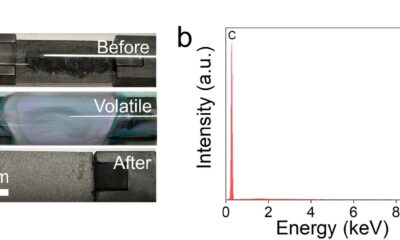
The final test of the components examined the cycling stability and recyclability of the MXene current collector. After eight weeks of continuous charging and discharging, the MXene–graphite electrode maintained good adhesion; the graphite active material remained evenly distributed, and did not detach from the MXene film.
The MXene current collector also preserved its layered structure, showing no degradation. Using a simple and environmentally friendly recycling process developed by the team, the electrode was disassembled and reconstituted using reclaimed materials for the current collector. Electrochemical testing confirmed that its performance remained unchanged.
“As battery materials become increasingly scarce, and sustainability and circular economy become increasingly important, it will be essential to design components that can be reused,” said Yuan Zhang, Ph.D., who is a post-doctoral researcher in Gogotsi’s lab and co-author of the research.
“Thanks to their outstanding electrochemical durability, MXenes can be recycled without losing much of their exceptional properties.”
The investigation was led by Sokhna Dieng, Schlumberger Future Fellow in Gogotsi’s lab, who contributed to the work as part of her doctoral research. She plans to continue exploring MXenes as conductive additives and other passive components in batteries that can improve performance and also enhance safety by preventing dendrite growth.
“We envision batteries with MXene components being used one day in wearable and portable microelectronics, where size and weight are absolutely critical and the amount of material required is minimal,” Gogotsi said.
“Another potential use is in systems where low weight is essential, such as drones or other flying vehicles.”
More information:
Sokhna Dieng et al, MXene current collectors for recyclable batteries with improved capacity, Cell Reports Physical Science (2025). DOI: 10.1016/j.xcrp.2025.102874
Citation:
MXene current collectors could reduce size and improve recyclability of Li-ion batteries (2025, October 13)
retrieved 13 October 2025
from https://techxplore.com/news/2025-10-mxene-current-collectors-size-recyclability.html
This document is subject to copyright. Apart from any fair dealing for the purpose of private study or research, no
part may be reproduced without the written permission. The content is provided for information purposes only.












Apple’s first hardware launch of 2026—not counting the second-generation AirTag it debuted at the end of January—is the next iteration of the price-friendly iPhone: the iPhone 17e. The company announced the handset via an online press release, ahead of its “Special Apple Experience” in New York City this Wednesday.
While last year’s iPhone 16e was widely criticized for its questionable value—it replaced the iPhone “SE” models from yesteryear and jacked the price up from $429 to $599—the newer model in the series has some notable features that were missing in its predecessor, like Apple’s MagSafe technology and the Dynamic Island. The price remains firm at $599 despite the challenging economic environment and the memory shortage.
The iPhone 17e opens for preorder today and will be widely available on March 11.
E for Effort
Apple has stuck with the same 6.1-inch OLED display as the iPhone 16e, down to the same old-school notch design. That means you won’t get the sleek look of the Dynamic Island, which also doubles as a live notifications display. Thankfully, if you’re worried about durability, this iPhone has the same Ceramic Shield 2 front glass protecting the display as its pricier siblings, giving it a nice strength boost from the previous generation.
Apple did not upgrade the screen with its ProMotion refresh rate tech, as it’s stuck at 60 Hz. This capability is the number of times the screen refreshes with images—the higher the better, as your display will appear smoother, with interactions feeling more fluid. It’s something the company has offered in the iPhone Pro models, and finally enabled in 2025 with its entire iPhone 17 range, but you’ll have to upgrade for the luxury. It’s a shame, as most budget Android phones offer 120 Hz as standard, even devices as cheap as $200. That also means the iPhone 17e doesn’t have the option to enable an always-on display.
Arguably, the best upgrade is the addition of MagSafe, the magnetic ring that has been embedded in the back of mainline iPhones since the iPhone 12. Apple confusingly didn’t include it with the iPhone 16e despite a healthy accessory market that would have made the iPhone 16e a little more versatile. While the 16e still had basic wireless charging, with the iPhone 17e, you can take advantage of faster magnetic wireless charging at 15 watts (plus access to MagSafe accessories).
This iPhone is powered by the A19 chipset, which debuted on the iPhone 17, though there’s one less graphics core, so graphics performance is a small step below. That’s in line with what Apple did with the iPhone 16e and the iPhone 16 that came before. Apple didn’t share RAM details yet, but it’s likely that the iPhone 17e has 8 GB of RAM like its predecessor, whereas the rest of the iPhone 17 lineup has 12 GB.
Courtesy of Apple
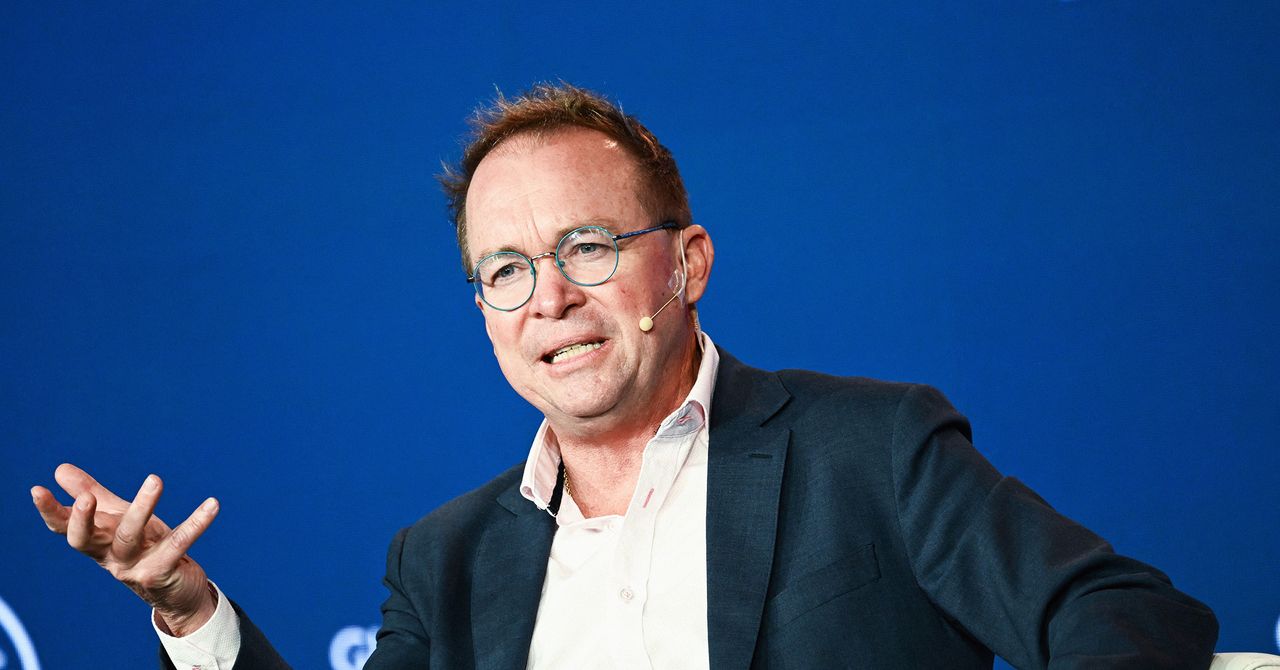
Mick Mulvaney wants to be clear: He really likes gambling. “You’re talking to the only former member of Congress who’s won a poker tournament in Las Vegas,” he tells WIRED. When he was representing South Carolina in the US House of Representatives, he pushed for the state to allow sports betting.
Because of his background, Mulvaney, a former Trump administration official, says he can tell when something is gambling—and that the sports contracts on prediction markets fit the bill. “You know the old saying, if it walks like a duck and quacks like a duck, it’s a duck?” he asks. “If it looks like a sports bet, if it sounds like a sports bet, if it pays off like a sports bet, if it’s on a sporting event—it’s a sports bet.”
Mulvaney, who was President Trump’s acting White House chief of staff from 2019 to 2020, is now leading a new advocacy coalition called Gambling Is Not Investing, which will lobby for prediction markets to be regulated by state gambling laws. He joins a number of other prominent Republicans calling for similar rules. Earlier this month, former New Jersey Governor Chris Christie and current Utah Governor Spencer Cox both spoke out against the current federal approach to regulating prediction markets. (Christie also used the “quack like a duck” line.)
These developments are part of a fierce political battle over how prediction markets are regulated. On the federal level, the Commodity Futures Trading Commission (CFTC) oversees these platforms, which are currently classified as derivatives markets. While a traditional sportsbook will offer customers a chance to place a bet on which team will win or lose a game, a prediction market will offer an “event contract” on the outcome. Critics view the difference as little more than a loophole, and state authorities from across the country are currently pursuing lawsuits against prediction market companies like Kalshi, alleging that they violate state gambling laws. (While these markets offer event contracts on a wide variety of topics, sporting events are their most popular offerings.) “I love the CFTC, but they’re not set up to do this,” says Mulvaney.
Recently, a group of 23 Democratic Senators sent the CFTC a letter urging it to allow these court cases to play out. It did not appear to go over well; CFTC head Michael Selig insists that prediction markets are correctly classified, and that his agency has jurisdiction over the industry. After Selig released a video promising to see those who “challenge our authority” in court, the CFTC even took the unprecedented step of filing a brief in support of the cryptocurrency platform Crypto.com, which faces a lawsuit from Nevada regulators over its prediction market offering.
During the Biden Administration, the CFTC took a notably different approach to prediction markets, even fining Polymarket $1.4 million for failing to register as a derivatives market and temporarily blocking it from operating in the US.
Now, though, the agency’s friendlier approach appears to dovetail with the White House’s interest in the industry. The Trumps have numerous ties to the prediction market world. Truth Social, the social media platform majority-owned by President Trump and his family, is planning its own prediction market offering, reportedly called Truth Predict. Donald Trump Jr is an advisor to both Kalshi and Polymarket, and his venture capital firm has invested in the latter.
But the launch of Gambling Not Investing demonstrates that there is a growing wing of the Republican party that feels the prediction markets need more guardrails. Its founding member organizations include a number of conservative consumer advocacy groups, including Moms for America, Consumer Action for a Strong Economy, and Frontiers of Freedom.
Mulvaney is hopeful that he can make his case to the current White House. “Their default position is going to be to regulate less, not more. And I respect that,” he says. “But I also know that in the first Trump administration, when there were common sense reasons to do some regulation, that we did that.”

Alaqad says that because traditional media outlets pick and choose what to show their audiences, losing on-the-ground journalists means losing parts of the truth. “When the people are being silenced and censored, and they don’t have a space for them to talk or a platform to express what’s happening, and for us to see what’s happening through their eyes, there will always be limitations [on] how much we know,” she says.
In every crisis, when communication breaks down, accountability is lost and injustice becomes easier to ignore. “Injustice is super loud,” Alaqad says. “Justice needs to be louder.”
Targeted
Journalists are also silenced permanently. Reporters Without Borders (RSF) wrote in December 2025 that 67 media professionals were killed that year, 43 percent of whom were killed in Gaza by Israeli armed forces. The total number of journalists killed in Gaza since October 7, 2023 has risen to over 220, according to the RSF. The UN estimate sits at more than 260.
“When we look at it within the framework of imposing a ban on the foreign press entering Gaza now, more than two years into that war, when they are restricting the free movement of journalists within Gaza and into Gaza, when we are talking about an unprecedented massacre of journalists, the targeting of media offices and the targeting of communication infrastructure just becomes another piece of that puzzle, which aims at imposing a media blackout,” Dagher says. Israel has repeatedly denied claims that it targets journalists or media infrastructure.
“Killing journalists means killing and silencing the truth,” Alaqad says. In her experience, this strategy works on multiple levels—killing journalists means fewer people reporting on the ground, but equally, it turns journalists into a threat to the people. “This is also sending a message to the people that all journalists are a threat, don’t talk to journalists, stay away from journalists,” she explains.
She recalls her mother begging her not to wear her press vest and helmet. Meant to signify neutrality and protect journalists in the field, instead, it made her feel like a target. “It’s supposed to protect, but on the contrary, it actually puts risk on your life and even on your beloved ones and the ones around you,” she explains.
Alaqad says it was not always this way. Early on, people would greet journalists, offer them food, and thank them for their work. “After a couple of months, when they’d seen journalists getting targeted, Palestinians started treating journalists differently,” she says.
To report in Gaza was to work inside a landscape where time itself was unstable and not guaranteed. Plans rarely extended beyond daylight. Conversations ended abruptly. Addresses became memorials overnight. “The only certainty in Gaza is uncertainty,” Alaqad says.
She recalls interviewing families and planning to return the next day, only to find that the people she spoke with had been killed in airstrikes.
She has since left Gaza, and is pursuing a master’s degree in media studies at the American University of Beirut. She received the Shireen Abu Akleh Memorial Endowed Scholarship, named for the Palestinian journalist killed by Israeli forces in May 2022.
Digital Truths
Going viral on social media helped her reach people, but it also put her at risk. “It showed millions of people around the world what’s happening in Gaza, but at what cost? Being in Gaza could cost you your life, especially as a journalist,” she says.
Despite the reach of digital reporting, she does not trust its permanence. Accounts disappear, posts are removed and videos are lost. What is available today may be gone tomorrow.


US’ Old Navy launches little navy, a new newborn essentials collection

Charles Barkley scolds sports fans for getting wrapped up in Olympic hockey frenzy

Limited flights leave UAE while disruption continues amid Iran strikes

-

 Politics1 week ago
Pakistan carries out precision strikes on seven militant hideouts in Afghanistan
-

 Tech1 week ago
These Cheap Noise-Cancelling Sony Headphones Are Even Cheaper Right Now
-

 Entertainment1 week ago
Viral monkey Punch makes IKEA toy global sensation: Here’s what it costs
-

 Sports1 week ago
Kansas’ Darryn Peterson misses most of 2nd half with cramping
-
Sports1 week ago
Mike Eruzione and the ‘Miracle on Ice’ team are looking for some company
-
 Business6 days ago
Households set for lower energy bills amid price cap shake-up
-

 Politics1 week ago
Trump says he will raise US global tariff rate from 10% to 15%, following court ruling
-

 Entertainment1 week ago
Talking minerals and megawatts