

Business
Netflix to buy Warner Bros. film and streaming assets in $72 billion deal


Netflix announced Friday it’s reached a deal to buy pieces of Warner Bros. Discovery, bringing a swift end to a dramatic bidding process that saw Paramount Skydance and Comcast also vying for the legacy assets.
The transaction is comprised of cash and stock and is valued at $27.75 per WBD share, the companies said. That puts the equity value of the deal at $72 billion, with a total enterprise value of approximately $82.7 billion.
Netflix will acquire Warner Bros.’ film studio and streaming service, HBO Max. Warner Bros. Discovery will move forward with its previously planned spinout of Discovery Global, which includes its massive portfolio of pay TV networks, such as TNT and CNN.
The blockbuster deal brings together the streaming giant Netflix, which has upended the media industry in recent years, and the storied Warner Bros. film studio, known for its library including “The Wizard of Oz,” the Harry Potter franchise and the DC comics universe. It will also include the content of HBO Max, including “The Sopranos” and “Game of Thrones.”
“I know some of you’re surprised that we’re making this acquisition, and I certainly understand why. Over the years, we have been known to be builders, not buyers,” Netflix co-CEO Ted Sarandos said on an investor call Friday morning.
“We already have incredible shows and movies and a great business model, and it’s working for talent, it’s working for consumers and it’s working for shareholders. This is a rare opportunity,” he said. “It’s going to help us achieve our mission to entertain the world and to bring people together through great stories.”
Netflix’s initial bid for WBD’s studio and streaming assets was for $27 a share, according to a person familiar with the matter. That trumped Paramount’s offer at the time and turned the trajectory of the sales talks in Netflix’s direction, said the person, who asked not to be named because the discussions were private.
The acquisition is expected to close after the TV networks separation takes place, now expected in the third quarter of 2026. The companies estimated the transaction would close in 12 to 18 months.
CNBC has reached out to Comcast and Paramount for comment.
As part of the deal, every Warner Bros. Discovery shareholder will receive $23.25 in cash and $4.50 in shares of Netflix common stock for each share of WBD common stock outstanding following the close of the deal.
Netflix and Warner Bros. Discovery said each of their boards of directors unanimously approved the deal, which is subject to regulatory approval as well as approval of WBD shareholders.
Netflix has agreed to pay a $5.8 billion reverse break-up fee if the deal is not approved, according to a Securities and Exchange Commission filing. Warner Bros. Discovery would pay a $2.8 billion breakup fee if it decides to call off the deal to pursue a different merger.
Edging out Paramount
The merger could invite regulatory scrutiny given the size of the expansive streaming businesses for each company. Netflix said it surpassed 300 million global streaming subscribers at the end of 2024, the last time it publicly reported its customer count. Warner Bros. Discovery said it had 128 million global subscribers as of Sept. 30.
Paramount raised the potential for antitrust concerns earlier this week in a letter to Warner Bros. Discovery management as second-round bids came in, The Wall Street Journal reported.
The newly merged Paramount Skydance made its initial run at Warner Bros. Discovery in September, submitting three bids before WBD launched a formal sale process. The David Ellison-run company was the only suitor bidding for the entirety of WBD’s portfolio — the film studio, streaming business and TV networks.
Paramount’s final bid, received Thursday evening, was for $30 per share, all cash, people close to the matter told CNBC, speaking on the condition of anonymity about confidential dealings. Paramount’s offer included a $5 billion breakup fee if the transaction didn’t win regulatory approval after roughly 10 months, the people said.
Earlier this week, Paramount raised questions about the “fairness and adequacy” of the sale process, contending Warner Bros. Discovery favored Netflix.
“It has become increasingly clear, through media reporting and otherwise, that WBD appears to have abandoned the semblance and reality of a fair transaction process, thereby abdicating its duties to stockholders, and embarked on a myopic process with a predetermined outcome that favors a single bidder,” Paramount attorneys said in a letter to Warner Bros. Discovery management.
— CNBC’s David Faber, Kasey O’Brien and Laya Neelakandan contributed to this report.
Disclosure: Comcast is the parent company of NBCUniversal, which owns CNBC. Versant would become the new parent company of CNBC upon Comcast’s planned spinoff of Versant.







Business
Hair oil, ACs, soaps become costlier: How FMCG companies are dealing with Middle East supply blow – The Times of India

Consumer goods companies in India are facing a sharp rise in input costs due to the ongoing war in the Middle East. Surging raw material prices are forcing firms to track costs on a near-daily basis, review pricing frequently, and focus on short-term decisions instead of long-term planning.As firms are struggling with volatile input costs, company executives have told ET that the sudden spike in inflation has made it harder to manage business, while also raising concerns that higher prices could hurt consumer demand. This comes at a time when consumption had started improving after the government reduced goods and services tax rates on several products last September.Havells India chief executive officer Anil Rai Gupta was cited by the financial agency as saying that the company is taking a cautious approach and reviewing the situation month by month. “I have not seen this kind of price escalation in the recent past or in recent memory. Usually, inflation happens, but it is neither so steep nor spread across all product categories… consumer offtake can get affected if the price hike is too sharp.” Bajaj Consumer Care managing director Naveen Pandey said the company is closely tracking input costs and taking decisions almost daily. Speaking during the company’s earnings call last week, he said costs across the business have gone up between 20% and 60%. He added that the war has created “extreme volatility” in the prices of light liquid paraffin and packaging materials. At the same time, prices of mustard and copra have not fallen as expected and are still at pre-war levels. The company is working on cutting costs across its operations.Industry executives said the war has pushed up commodity prices and crude-linked products, increased freight costs, and made imports more expensive due to the fall in rupee. They added that even after a ceasefire, prices have not come down, and uncertainty remains over whether the conflict could start again.In the past month, companies have already raised prices in several categories, including air-conditioners, refrigerators, soaps, detergents, hair oil, apparel, decorative paints and footwear. Some companies have also reduced pack sizes to deal with higher costs. More price hikes are expected by the end of this month.Parle Products vice president Mayank Shah said the pressure on input costs is very high and the uncertainty is “killing”.Retailers are also seeing more careful spending. Trent Ltd, which runs Westside and Zudio stores, said in an investor presentation that while demand was steady at the start of the January–March quarter, the current situation is affecting consumer behaviour.“Consumers are spending with caution, resulting in moderation of discretionary spending on the back of continuing macro uncertainties and potential increase in cost of living. Structurally the demand levels and the underlying market opportunities remain strong. However, the duration and intensity of disruptions in the Middle East along with its second order effect on supply chain, commodity prices and inflation in general has potential implications for near term demand,” the company said.AWL Agri Business executive deputy chairman Angshu Mallick said the company has already increased edible oil prices by Rs 7–10 per kg to pass on higher freight costs. “Being a staples company, we hike or reduce prices immediately. As we are in basic necessities, the volume impact is usually lower,” he said.Meanwhile, the Middle East conflict is inching closer towards the two month mark. The conflict began back on February 28, when the US and Israel launched joint strikes on Iran. In retaliation, Tehran choked the crucial Strait of Hormuz, a pipeline that carries 20% of global energy supplies, straining flow across the globe.
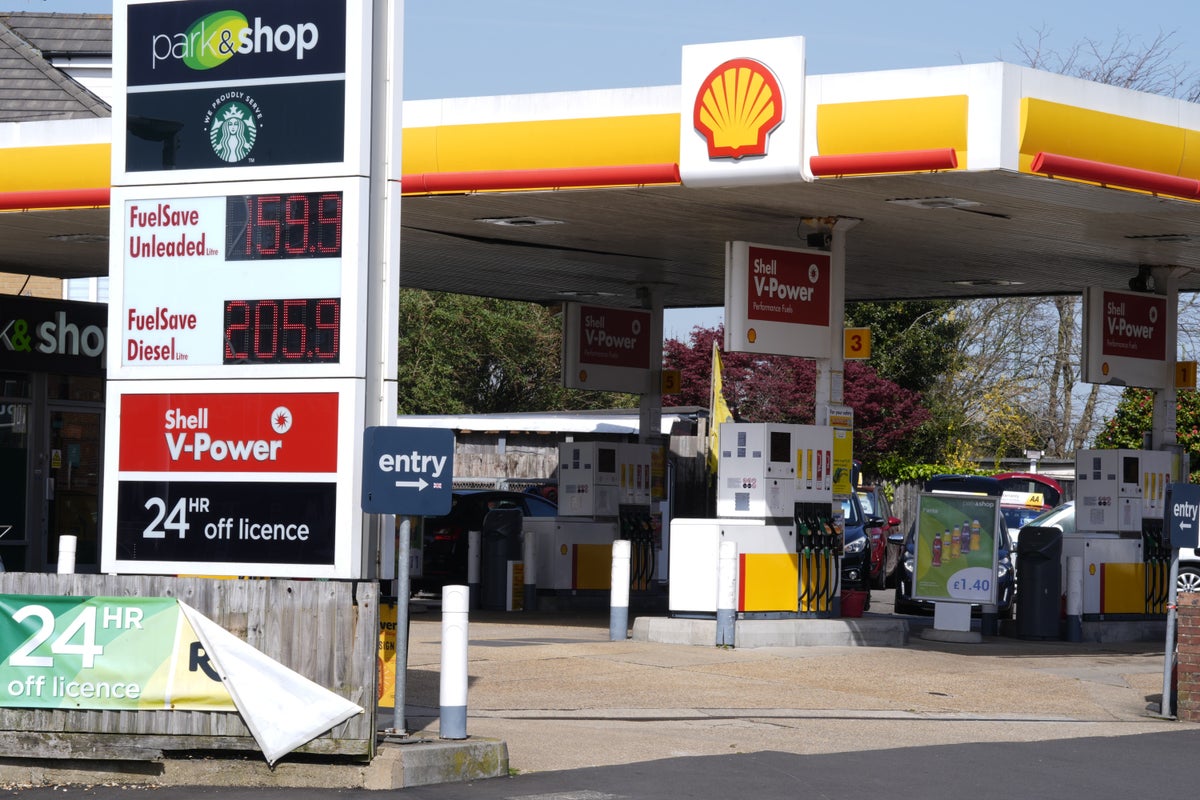
UK retail sales returned to growth last month as they were pushed higher by motorists stocking up on fuel as prices shot higher because of the Iran war, according to official figures.
The Office for National Statistics (ONS) said the total volume of retail sales, which measures the quantity bought, rose by 0.7% in March.
It compared with a 0.6% fall in February, which was revised slightly lower.
The latest reading was also stronger than expected, with economists having predicted a 0.1% dip for the month.
Statisticians said March’s increase was particularly driven by a spike in demand for fuel, which saw sales volumes jump by 6.1% for the month, the highest level since April 2021.
They indicated that this was especially linked to a short period, of less than a week, of particularly elevated sales as unfolding geopolitical events in the Middle East caused a significant rise in prices at the pump.
The value of sales, the amount of money spent, for fuel was up 11.6% amid the jump in petrol and diesel prices.
Recent data from the RAC shows that petrol prices have risen by 18.5% to 157.34 pence per litre, as recorded on Wednesday.
Meanwhile, diesel is up 33.4% to an average of 189.88 pence per litre.
Elsewhere, clothing stores also had a strong month, with sales volumes across the category rising by 1.2% in March amid a boost from better weather conditions.
Technology retailers also saw sales grow after they benefited from new products launches.
However, food sales were weaker, slipping by 0.8% for the month.
The ONS said overall retail sales volumes are up 1.6% for the first three months of 2026, as the industry was also supported by positive growth in January.
ONS senior statistician Hannah Finselbach said: “Retail sales rose in the three months to March, with commercial art galleries doing well earlier in the quarter and sales in beauty products stores rising as retailers reported launching new collections.
“Motor fuel sales were up on the quarter, with retailers commenting that many motorists had been filling up their tanks in March following the start of conflict in the Middle East.”
Elliott Jordan-Doak, senior UK economist at Pantheon Macroeconomics, said: “The first batch of hard data on consumers’ spending since the start of the Iran war was better than expected.
“Granted, stocking up on motor fuels drove headline sales higher, but even excluding petrol retail sales volumes nudged up showing that households largely brushed off the initial shock of higher energy prices.”
Business
Top stocks to buy today: Stock recommendations for April 24, 2026 – check list – The Times of India

Stock market recommendations: Bharat Electronics, and Colgate-Palmolive (India) have been recommended as the top stocks to buy today (April 24, 2026) by Bajaj Broking Research. Take a look at the target prices and expected returns:Bharat ElectronicsBuy in the range of ₹ 440.00-450.00
The stock is in structural up trend forming higher high and higher low in all time frame signaling strength and continuation of the uptrend. The entire up move of the last 8 months is in a rising channel as can be seen in the chart highlighting sustained demand at an elevated level.On the smaller time frame, the stock is at the cusp of generating a breakout above the bullish Flag like formation as post a sharp up move in the first 3 weeks of April the stock went into a consolidation phase in the last four sessions. It is seen resuming up move and is at the cusp of generating a breakout above the bullish Flag formation highlighting continuation of the up move and offers fresh entry opportunity.We expect the stock to extend the up move and head towards 495 levels in the coming months being the confluence of the 123.6% external retracement of the previous decline 473 – 400 and the upper band of the rising channel of the last 8 months.Colgate-Palmolive (India)Buy in the range of 2120-2160
The share price of Colgate-Palmolive has generated a breakout above bullish Flag pattern signaling continuation of the up move and offers fresh entry opportunity.We expect the stock to head higher towards 2330 levels in the coming months being the measuring implication of the bullish flag breakout.The daily 14 periods RSI is in buy mode thus supports the positive bias in the stock.(Disclaimer: Recommendations and views on the stock market, other asset classes or personal finance management tips given by experts are their own. These opinions do not represent the views of The Times of India)


Bangladesh, EU sign Partnership and Cooperation Agreement
Hair oil, ACs, soaps become costlier: How FMCG companies are dealing with Middle East supply blow – The Times of India

Sarah Ferguson puts King Charles in tough spot with bombshell offer

-

 Fashion1 week ago
France’s LVMH Q1 revenue falls 6%, shows resilience amid Iran war
-

 Entertainment1 week ago
Is Claude down? Here’s why users are seeing errors
-

 Sports1 week ago
PSL 11: Peshawar Zalmi win toss, opt to field first against Quetta Gladiators
-

 Tech1 week ago
The Deepfake Nudes Crisis in Schools Is Much Worse Than You Thought
-

 Tech1 week ago
CYBERUK ’26: UK lagging on legal protections for cyber pros | Computer Weekly
-
 Business1 week ago
PepsiCo earnings beat estimates as North American food business improves
-

 Fashion1 week ago
Raymond unveils luxury Chairman’s Collection Store in Mumbai
-

 Sports4 days ago
NCAA men’s gymnastics championship: All-time winners list