

Politics
Netherlands sets global standard in flood defence and water management

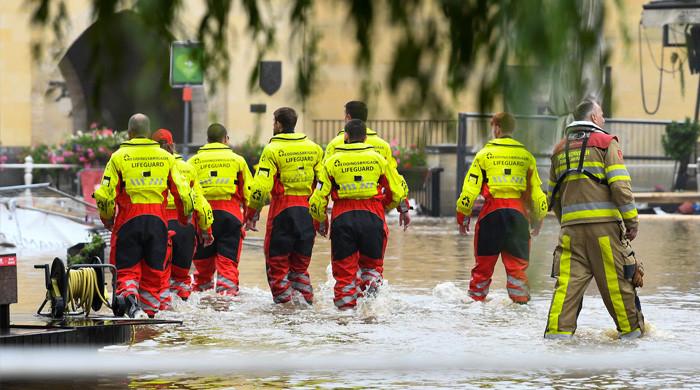
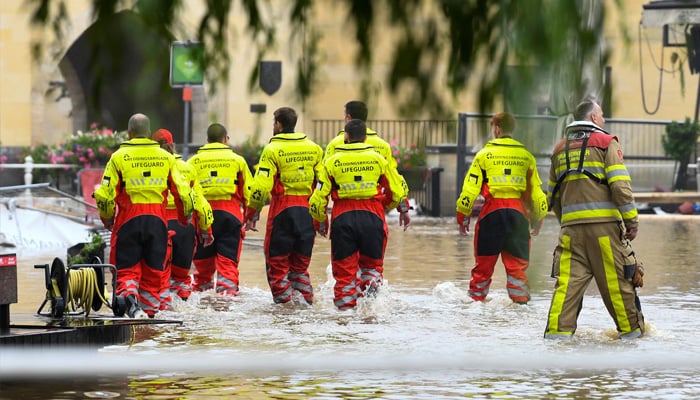
The Netherlands has emerged as a world leader in protecting land from rising waters, investing up to 1.3 billion euros each year to maintain an extensive system of dikes, polders, canals, windmills, concrete barriers and embankments that keep floods at bay, The News reported citing a research.
Moreover, artificial dwelling hills or Terpins have also been built to increase the land elevation.
Similar to Bangladesh, the Netherlands has also created a scheme that alerts citizens of possible floods 24 hours before the otherwise uncontrollable waters hit the country.
The anti-flood system they have built over decades is on a scale unmatched anywhere else in the world.
The Dutch have also built a giant sea gate guarding the port of Rotterdam, the largest port in Europe, and a c rucial hub for industries of all sorts.
A media house maintained: “The gate has two curved arms; each as tall and twice as heavy as the Eiffel Tower. When needed, they swing out into the water to lock together and sink to the bottom, forming a 22-meter-high wall against the sea. The barrier is one of the largest moving structures on Earth; its two ball-and-socket joints, anchored in the embankment on either side of the canal, weigh 680 tonnes each.”
From 1962 until 2004, the 31,500-acre Rotterdam was the world’s busiest port by annual cargo tonnage. It was overtaken first in 2004 by the port of Singapore, and later by Shanghai and other very large Chinese seaports.
In May 2019, global investors had enthusiastically embraced a national Netherlands 5.98 billion-Euro Green Bond designed to fund projects to cope with current and future climate change impacts and an advanced low-carbon economy.
Much of the bond focused on using coastal and river ecosystems as a safeguard for negative climate impacts such as high flood risk.
Investors responded to the bond immediately, oversubscribing the issuance by more than 15.2 billion Euros!
Although global warming can overwhelm the measures the Netherlands has taken to control floods, the risk of these water-related disasters has been reduced from once every 100 years to once every 1,250 years.
The region has a long history of devastating floods that continually reshape the land. For more than 1,000 years the residents of this region have devised ways to reclaim land from encroachment by the sea.
The Rhine, Meuse and Schelde are Holland’s three chief rivers.
The densely-populated Netherlands or Holland is known for its low elevation and approximately two-thirds of its area is vulnerable to flooding.
While 15 million people in the Netherlands live below the sea level, the river Rhine and its tributaries, the Meuse and the Mosel, have often attacked Holland, Belgium and Luxembourg.
The first river dikes had appeared near the river mouths in the 11th century, where incursions from the sea added to the danger from high water levels on the river.
The 17th and 18th centuries were a period of many infamous river floods resulting in much loss of life. They were often caused by ice dams blocking the river. Land reclamation works, large willow plantations and building in the winter bed of the river all worsened the problem.
The “Encyclopedia Britannica” states: “The first Dutch food in 1287 had caused more than 50,000 casualties. A significant percentage of the country’s population perished in the disaster, and it has been rated as one of the most destructive floods in recorded history. Called the St Lucia flood, this event also created direct sea access for the village of Amsterdam, allowing its development into a major port city.”
The 1421 floods had killed up to 10,000 people.
In more recent history, February 1953 had seen one of the biggest natural disasters hitting the Netherlands ever, killing 2400 humans.
Around 770 square miles of southern Holland were inundated, forcing tens of thousands to flee.
Many were overtaken by the icy waters as more and more flood walls failed. The storm also devastated parts of England, Belgium and Germany.
Urbanisation is one of the major causes of flooding in Netherlands.
The urban population here accounts for 82.9% of the total population. A lot of buildings, roads, and cities have thus been built over the course of centuries, leading to destruction of vegetation, hence reducing the interception of rainfall when a storm is to occur.
Additionally, the excessive use of tar and cement to pave roads and sidewalks inhibit water from infiltrating the soil, which increases the chances of surface runoff.
These artificial structures are impermeable, and water is forced to flow back into the ocean through surface runoff, increasing the peak discharge in the area. Due to this, the lag time for water to flow back into the ocean has decreased, increasing the chances of flooding.
Due to land reclamation, areas close to the shoreline become more prone to coastal waves. Erosion takes place resultantly and the fast-sinking land leads to floods.
And then for the sake of urbanisation and providing land for agriculture and ploughing, deforestation has taken place.
Being the world’s second largest exporter of agricultural products, agriculture plays an immense role in the Netherlands’ economy. Presently, over 70% of the country’s land is used for agricultural purposes.
The Guardian reported that the low-lying Netherlands has been fighting back water for more than 1,000 years, when farmers built the first dykes.
“Windmills have also been pumping the stuff off the land since the 14th century. One of the most densely populated countries on the planet, 60% of the Netherlands is vulnerable to flooding, and its peat-rich agricultural soil is subsiding even as climate change is raising sea levels. The country’s universities are producing some of the world’s best water engineers and managers and it is exporting its expertise abroad; the Dutch government has advised on water governance projects in China, Africa and Australia,” the report stated.
Meanwhile, The British newspaper revealed “there are no financial packages for people who have to move.”
It quoted a government official as saying: “They get the market value of their house and that is all. We will help them find another place, but not financially. The only thing we do is to make sure that they do not lose money.”
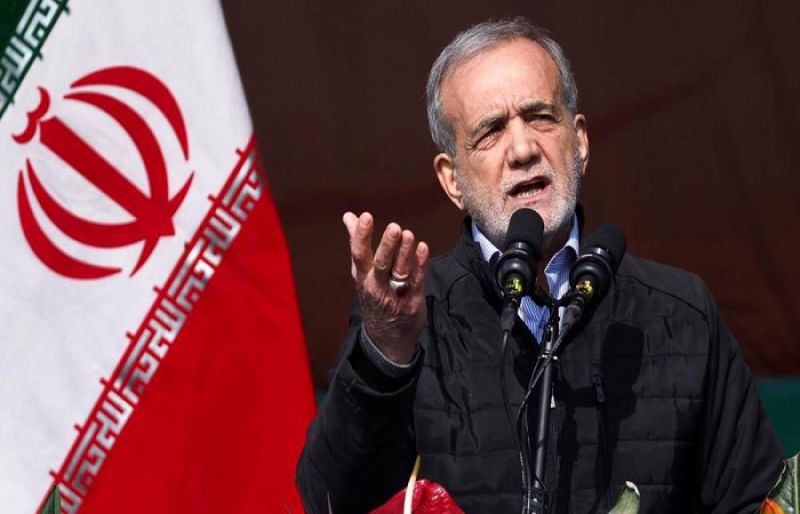
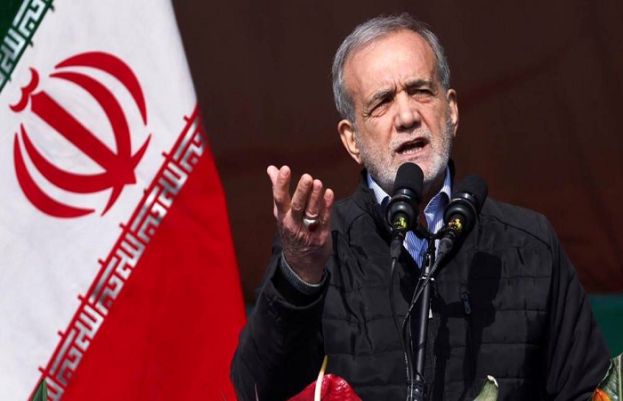
The Islamic Republic of Iran has invariably welcomed dialogue and agreement, but Washington’s constant breach of commitments, naval blockade and military threats remain the main obstacles to genuine negotiations, President Masoud Pezeshkian said on Wednesday.
In a post on X, the president reiterated Tehran’s openness to diplomacy while calling out Washington’s contradictory behavior.
“The Islamic Republic of Iran has welcomed dialogue and agreement and continues to do so,” Pezeshkian wrote.
“Breach of commitments, blockade and threats are the main obstacles to genuine negotiations. The world sees your endless hypocritical rhetoric and contradiction between claims and actions,” he added.
The United States and Israel launched their illegal, unprovoked war of aggression against Iran on February 28, assassinating Leader of the Islamic Revolution Ayatollah Seyyed Ali Khamenei and striking military installations and civilian infrastructure, including schools, hospitals and bridges.
Since then, Iran has demonstrated its responsible approach by agreeing to a two-week ceasefire brokered by Pakistan, despite having the upper hand on the battlefield after 100 waves of decisive retaliatory strikes under Operation True Promise 4.
Despite the ceasefire, Washington keeps highlighting a naval blockade of Iranian ports. Tehran considers it illegal under international law and a clear violation of the truce.
The United States has also threatened further military action, while its officials have issued contradictory statements about their commitment to diplomacy.
Iranian officials have said no decision has been made yet on whether to take part in a second round of negotiations in Islamabad, citing US violations of the ceasefire, including the naval blockade.


A composed half-century from captain David Warner, supported by a late surge from Khushdil Shah, guided Karachi Kings to a five-wicket win over Lahore Qalandars in Pakistan Super League (PSL) 11 encounter at Lahore’s Gaddafi Stadium on Thursday.
Set to chase a daunting 200-run target, the visitors knocked off the winning runs for the loss of five wickets and eight balls to spare to keep their playoff hopes alive.
The Kings got off to a shaky start to the pursuit as Ubaid Shah dismissed right-handed opener Jason Roy (nine) in the second over with just 10 runs on the board.
Warner then shared brief partnerships with Reeza Hendricks and Salman Ali Agha, who could contribute 10 and 14, respectively.
The skipper then received ample support from the other end in the form of Moeen Ali, and the experienced duo put together 58 runs at a brisk pace before Ubaid struck again, dismissing the latter, who made a 17-ball 39, laced with four sixes and a four.
The Kings then suffered another setback nine deliveries later as wicketkeeper batter Azam Khan, who scored 14 off eight balls, was cleaned up by Daniel Sams.
His dismissal paved the way for Khushdil Shah to walk out and bat at No.7, and the left-handed batter turned the game on its head with belligerent hitting, the highlight of which was the pulsating 18th over, bowled by Shaheen Shah Afridi, which went for 23 runs.
With just 11 runs required off 12 deliveries, Khushdil hit Haris Rauf for back-to-back sixes and steered the Kings over the line in the penultimate over.
Khushdil remained unbeaten with a swashbuckling 14-ball 44, comprising five fours and two sixes, while Warner top-scored with 63 not out from 44 deliveries, laced with 10 boundaries, including a six.
Ubaid was the pick of the bowlers for the Qalandars, taking three wickets for 41 runs in his four overs, while Daniel Sams and Haris Rauf made one scalp apiece.
Khushdil was named Player of the Match for a match-winning 44 off just 14 balls.
Kings captain David Warner’s decision to field first backfired as the holders piled up 199/6 in their 20 overs, courtesy of a century-plus partnership between Fakhar and Shafique.
The Qalandars, however, had a shaky start to their innings as Warner sent back young opener Mohammad Farooq (18) with a direct hit in the third over with just 24 runs on the board.
Fakhar was joined by Shafique in the middle, and the duo steered the Qalandars into a commanding position by knitting a 110-run partnership for the second wicket off just 61 deliveries until the former was dismissed by Moeen Ali in the 14th over.
The left-handed opener made a brisk 61 off 41 deliveries, hitting five fours and three sixes.
Moeen struck again in his next over, getting rid of Charith Asalanka (zero), and brought the total down to 148/3.
Shafique, on the other hand, was cleaned up by debutant Rizwanullah in the next over and walked back after top-scoring for the Qalandars with a 36-ball 62, studded with five fours and three sixes.
With the scoreboard reading 160/4 in 16.5 overs, all-rounders Sikandar Raza and Daniel Sams (20) stitched a handy 23-run partnership, which culminated with the latter’s run-out on the fifth delivery of the penultimate over.
Meanwhile, Raza remained unbeaten with a 12-ball 18 and ensured adding crucial runs to the Qalandars’ total at the backend with captain Shaheen Shah Afridi, who made 10 off four.
Moeen was the standout bowler for the Kings as he took two wickets for just 26 runs in his four overs, while Rizwanullah and Hasan Ali made one scalp.
- Pentagon says US forces boarded tanker carrying Iranian oil.
- Says it will continue maritime enforcement against illicit networks.
- Ceasefire only meaningful if not violated through blockade: Ghalibaf.
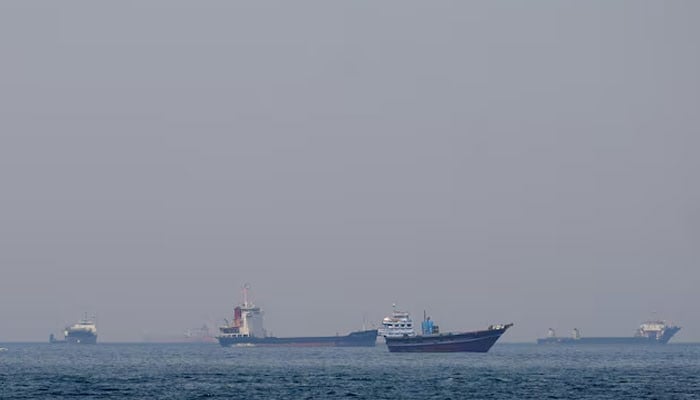
TEHRAN: President Donald Trump ordered the US Navy on Thursday to destroy any Iranian boat caught laying mines in the Strait of Hormuz, putting more pressure on a fraying ceasefire as disruption from the Gulf stand-off battered the world economy.
Trump’s announcement came after the US fleet boarded a vessel in the Indian Ocean that was transporting oil from Iran and after a senior Iranian official said Tehran had banked its first proceeds from the tolls it exacts on shipping through the strait.
With plans for renewed peace talks in Pakistan hanging in the balance, more fuel-hungry airlines cancelled flights, oil prices climbed higher once again and the keenly-watched S&P Global PMI index showed eurozone business activity shrinking for the first time in 16 months.
“I have ordered the United States Navy to shoot and kill any boat, small boats though they may be… that is putting mines in the waters of the Strait of Hormuz,” Trump posted.
Iran vowed it would keep the strait closed to all but a trickle of approved vessels for as long as the US Navy blockades its ports, brushing off demands from Trump to both reopen Hormuz and surrender its enriched uranium.
The US responded to Iran’s action by imposing its own blockade of Iranian ports, and on Thursday the Pentagon announced on social media that US forces had “carried out a maritime interdiction and right-of-visit boarding of the sanctioned stateless vessel M/T Majestic X transporting oil from Iran, in the Indian Ocean”.
The post included footage of US military personnel rappelling from helicopters onto the deck of a large tanker.
The statement said the US would “continue global maritime enforcement to disrupt illicit networks and interdict vessels providing material support to Iran, wherever they operate”.
‘Not possible’
While strikes around the region have mostly ceased since the two-week-old truce began, there has been no letup in the confrontation over Hormuz, with both sides seeking economic leverage — only for Trump to announce an indefinite ceasefire to create space for more talks.
“A complete ceasefire only has meaning if it is not violated through a naval blockade,” said Iran’s parliamentary speaker Mohammad Bagher Ghalibaf, who led Tehran’s delegation at a first round of talks in Pakistan.
“Reopening the Strait of Hormuz is not possible amid a blatant violation of the ceasefire.”
Ghalibaf’s deputy, Hamidreza Hajibabaei, said Iran received its first revenue from tolls it is imposing on ships seeking to cross Hormuz, a route that in peacetime accounts for a fifth of the world’s oil and gas flows, and other vital commodities.
Analysts said Tehran, in particular its hardline leaders associated with the Islamic Revolutionary Guards Corps (IRGC), believes that Iran’s blockade gives it sufficient economic leverage to force Washington to back down on its main demands in peace talks.
And some, such as Danny Citrinowicz of the Tel-Aviv Institute for National Security Studies, criticised Israel and the US for misreading the Iranian government’s position.
“Tehran has consistently demonstrated a willingness to absorb economic pain while holding firm on what it views as core national interests. There is little reason to believe this time will be different,” he said in a social media post.
“Rather than moving toward concession, Iran is positioning itself to escalate.”
A brief from the Soufan Centre think tank said Iran’s hardliners “argue that a prolonged elevation of global energy prices and mounting global shortages of some goods will increasingly pressure Trump to accede to Iran’s positions, end the war, and eventually withdraw US forces from the region.
“Trump and his team calculate the opposite — that the US blockade of Iran’s seaborne trade, which carries all of its oil exports, will quickly cripple Iran’s economy and force Iran to accept US demands.”
Peace talks
On Wednesday, Trump told the New York Post that talks could resume in Pakistan within two to three days, even though Iran has not confirmed participation and Vice President JD Vance put his travel to Islamabad on hold on Tuesday.
Iran’s Revolutionary Guards on Wednesday said they forced two ships to the Iranian shore from the Strait of Hormuz.
The US military’s Central Command said, prior to Thursday’s announcement, that its forces blockading Iran’s ports had so far “directed 31 vessels to turn around or return to port”.
After agreeing the ceasefire with Iran, the United States helped broker a truce between Israel and Lebanon, including Hezbollah.
Despite the declared truce, Israeli strikes killed five more people on Wednesday, Lebanese media said.
Israel and Lebanon will hold a second round of talks in Washington on Thursday, during which Beirut will request a one-month extension of the ceasefire during the meeting, according to a Lebanese official.
Israeli attacks on Lebanon have killed more than 2,450 people since the start of the war, according to Lebanese authorities.


Vietnam-India seminar boosts textile, leather ties

22 India-backed terrorists killed in Khyber intelligence-based operation, says ISPR

Former Giants co-owner Steve Tisch seen in team’s draft room

-

 Fashion1 week ago
France’s LVMH Q1 revenue falls 6%, shows resilience amid Iran war
-

 Entertainment1 week ago
Is Claude down? Here’s why users are seeing errors
-

 Tech1 week ago
The Deepfake Nudes Crisis in Schools Is Much Worse Than You Thought
-

 Sports1 week ago
PSL 11: Peshawar Zalmi win toss, opt to field first against Quetta Gladiators
-
 Business1 week ago
Standard Life buys rival in £2b deal to create savings giant
-

 Tech1 week ago
CYBERUK ’26: UK lagging on legal protections for cyber pros | Computer Weekly
-

 Fashion1 week ago
Raymond unveils luxury Chairman’s Collection Store in Mumbai
-

 Sports4 days ago
NCAA men’s gymnastics championship: All-time winners list